
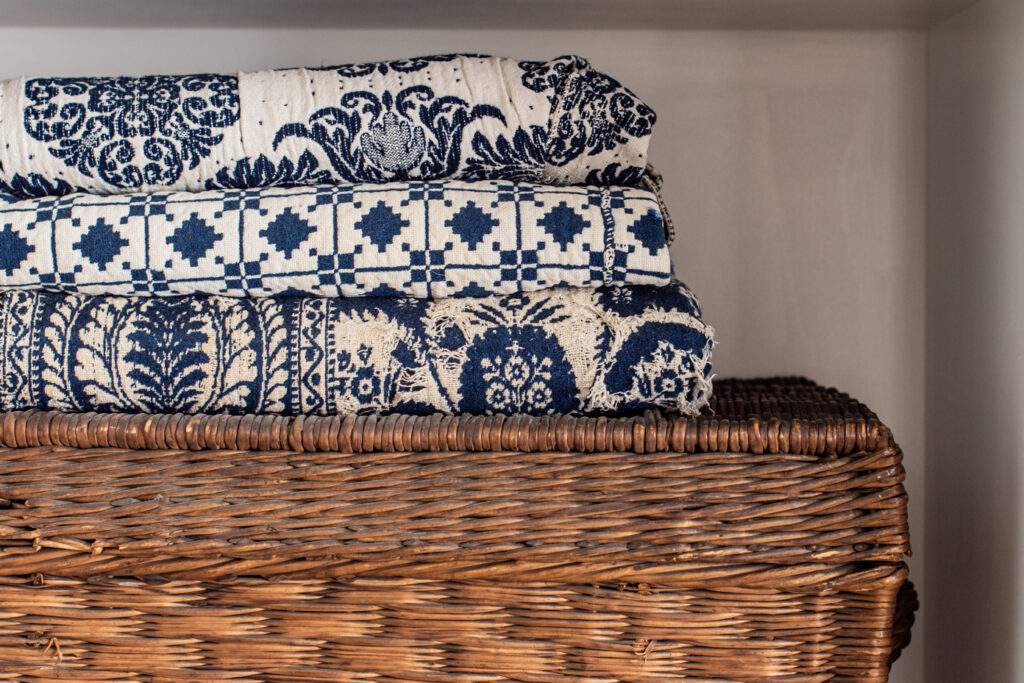
As I’ve been sharing our living room makeover over the past few weeks, several people have asked about the blanket over the back of the sofa. Even though it sometimes annoys my family, I’ve always liked having a quilt, coverlet, or throw folded over the back of sofas and chairs. Not only does it add a bit of color and give me another place to display some of my favorite antique textiles, but it helps extend the life of the piece of furniture (or the slipcover between washings.) The blanket on the back of our living room sofa is sadly not something that I can simply link to. It’s an antique overshot coverlet from the mid-1800s. But, since you may have never heard of any overshot coverlets, let me tell you a bit about them, share some tips on where to buy them (and how much to pay), and give some ideas for using them in your home.

Let’s start with the basics. What is an overshot coverlet? It is a style of woven wool blanket that originated in Northern Europe and became popular in colonial America in the mid-1700s. The term “overshot” describes the way the horizontal weft yarns were woven over multiple yarns of the opposite color, which created the pattern. The patterns often had significance, relating to the region or even a specific family. Particularly prized antique overshot coverlets have a signature in the corner, showing who made the coverlet, where, when, and for whom.
Because signed coverlets are highly valued by collectors, they tend to be the most expensive. I only have one signed coverlet that I purchased for around $300 on eBay, which is a good deal given its excellent condition and compared to the $600+ price tag they usually demand.
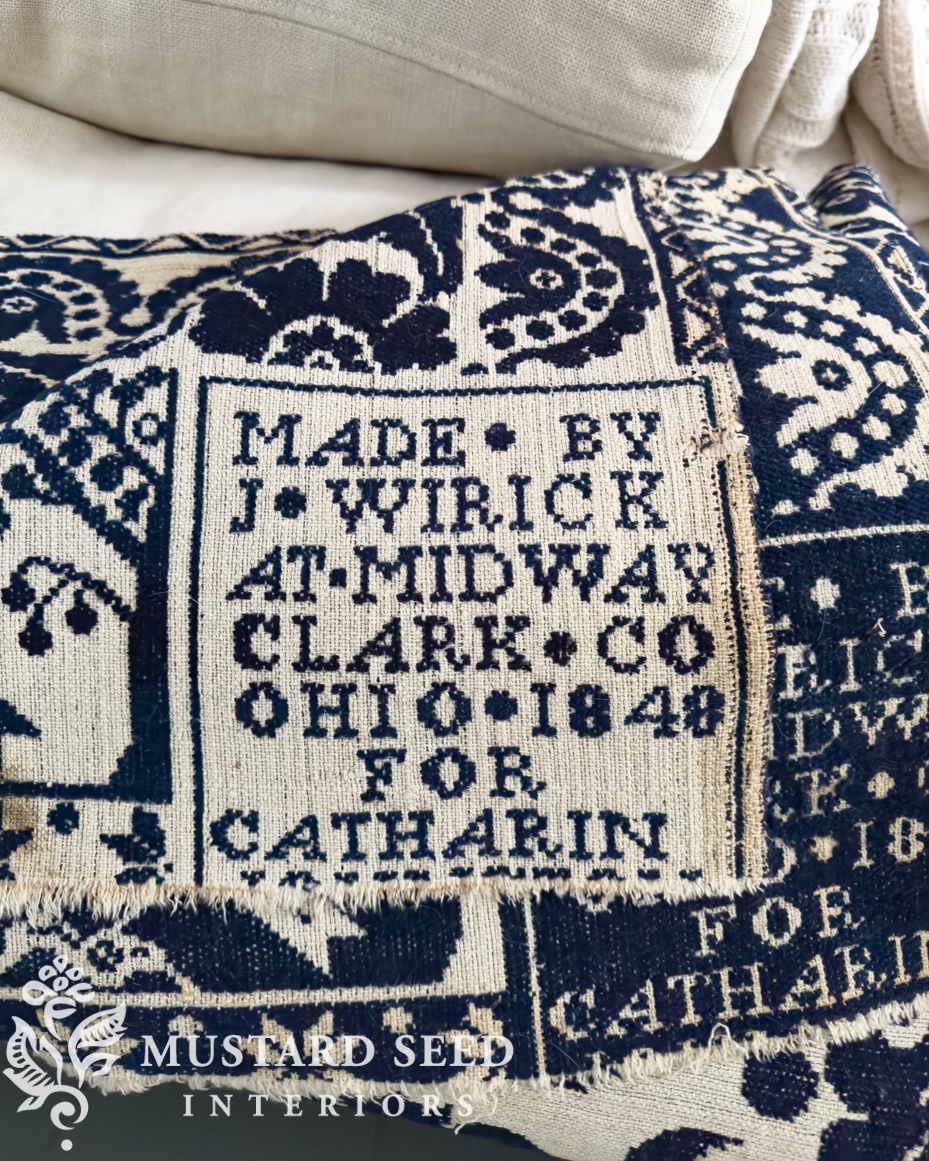
I also love the flowers, trees, and birds depicted on this particular coverlet. It’s definitely my favorite, which is why I’ve given it a prominent place in our home.

I was able to find information on the weaver who made by coverlet in the book American Coverlet and their Weavers.

This is why I love antiques. The blanket on the back of my sofa was made by someone who was born over 200 years ago. It’s a little piece of obscure history that I can enjoy every day. So cool.
I have collected several overshot quilts over the years. I think I have five or six and, of course, all of them are blue and white. Overshot coverlets were made in different colors like black, red, brown, and mustard, but naturally blue and white are my favorite. A couple were given to me as gifts and the others I’ve purchased at antique stores when I find them for a good price. I try to buy them at $150 or less and I don’t mind if there is a little bit of wear as long as it doesn’t detract from the overall aesthetic of the coverlet.

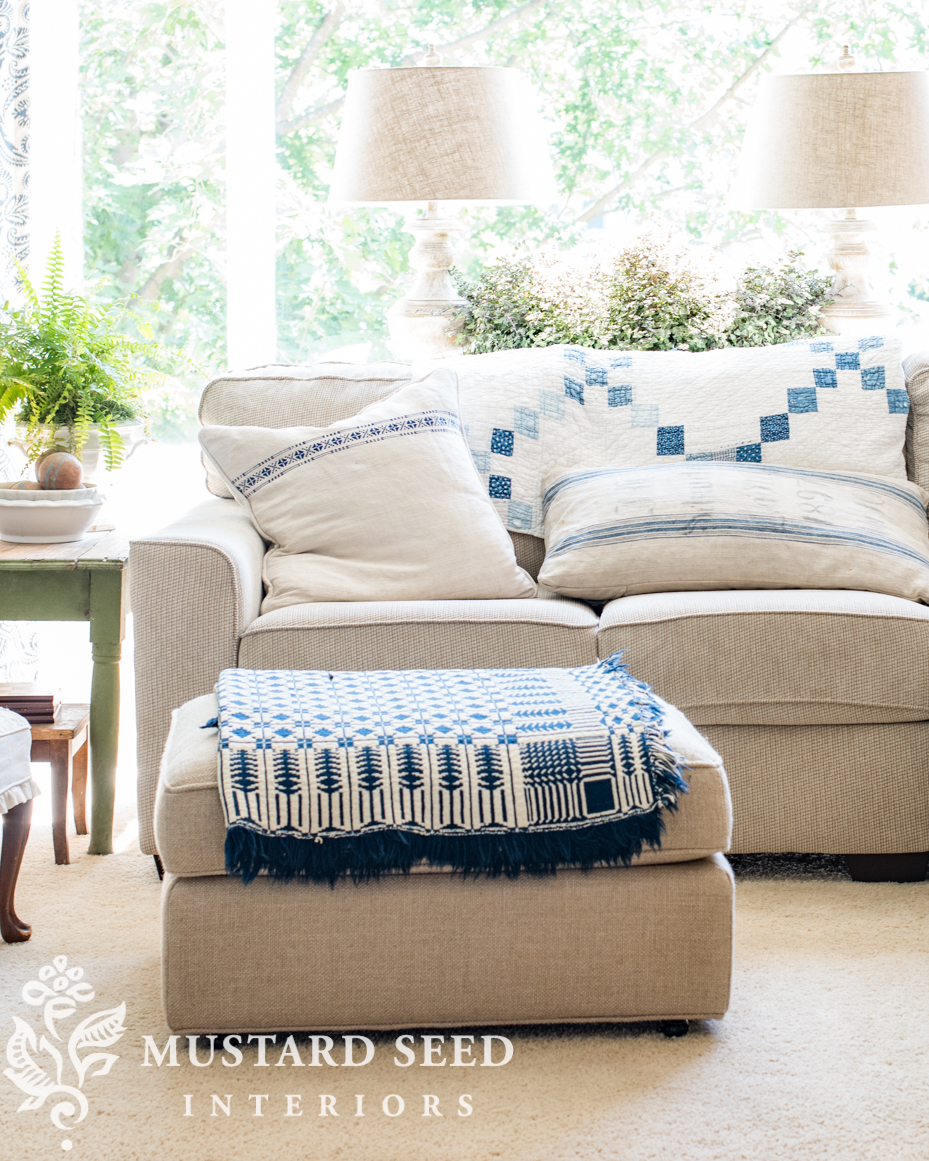
Because they are tightly woven of quality wool yarn, they are heavy and tend to be very hard-wearing. That’s one reason I like using them over ottomans and the back of our sofa since they generally aren’t as delicate as antique cotton quilts.
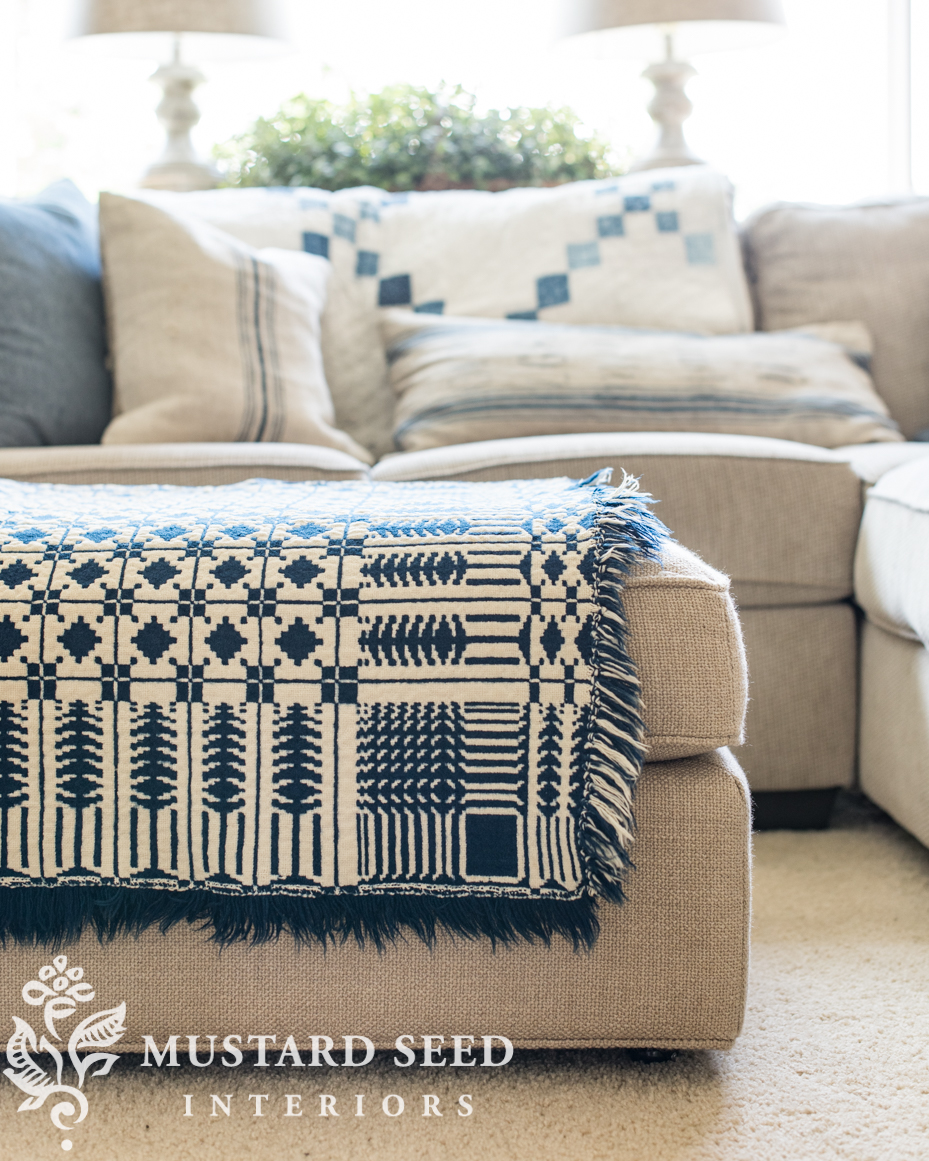
When looking at overshot quilts, you’ll often find a center seam. A weaver could only make a coverlet as wide as their loom, so panels were sewn together to create coverlets large enough for the average double and 3/4 bed.
When it comes to collecting antique overshot quilts, antique markets, malls, stores, estate sales, auctions, Etsy, and eBay are going to be your best bet for finding them. You might get lucky and find one at a thrift store or yard sale, so it helps to keep your eyes peeled.
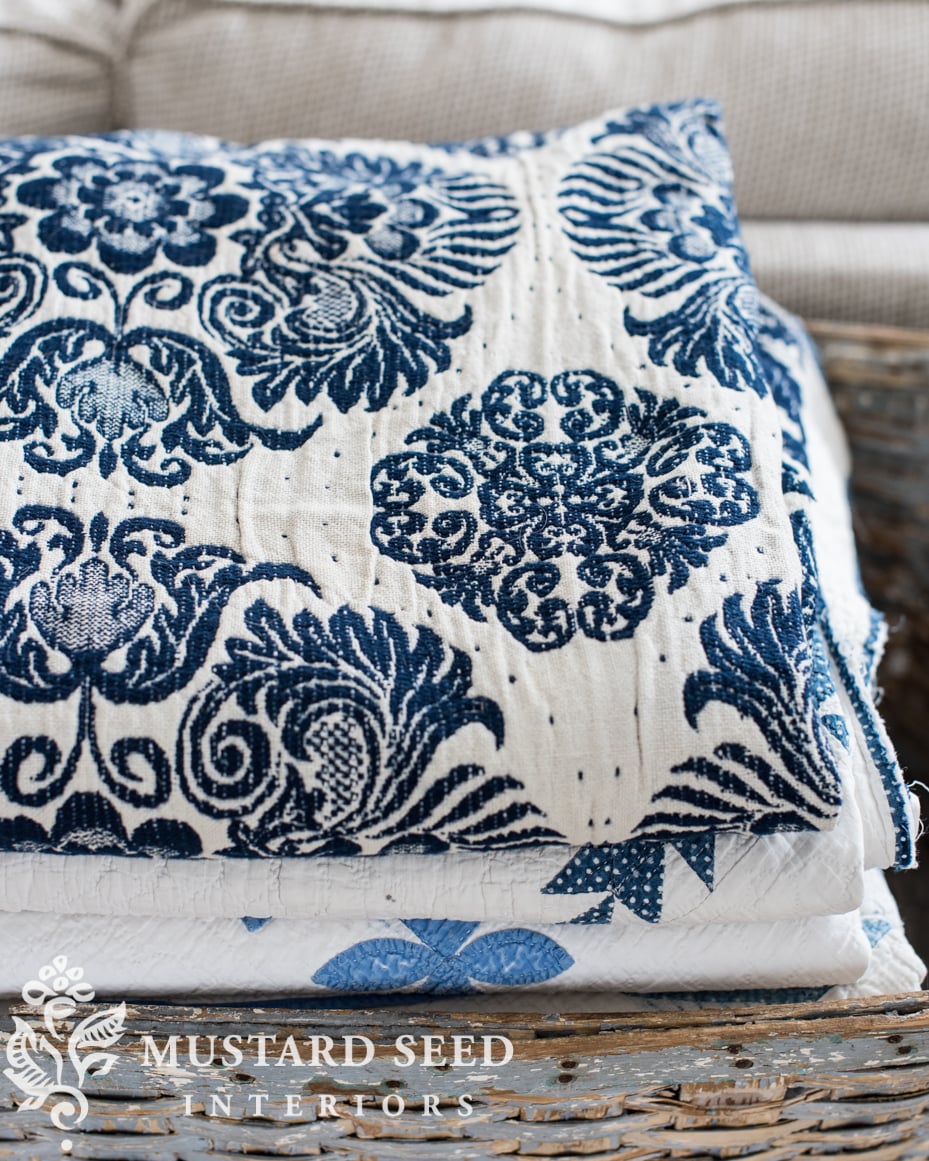
If you’re looking for antique overshot coverlets on a budget, then look for “cutters” that have substantial holes and tears that might be hidden when folded or can be cut up to make other things. I’m always on the lookout for those as well as pieces since they make stunning pillows.
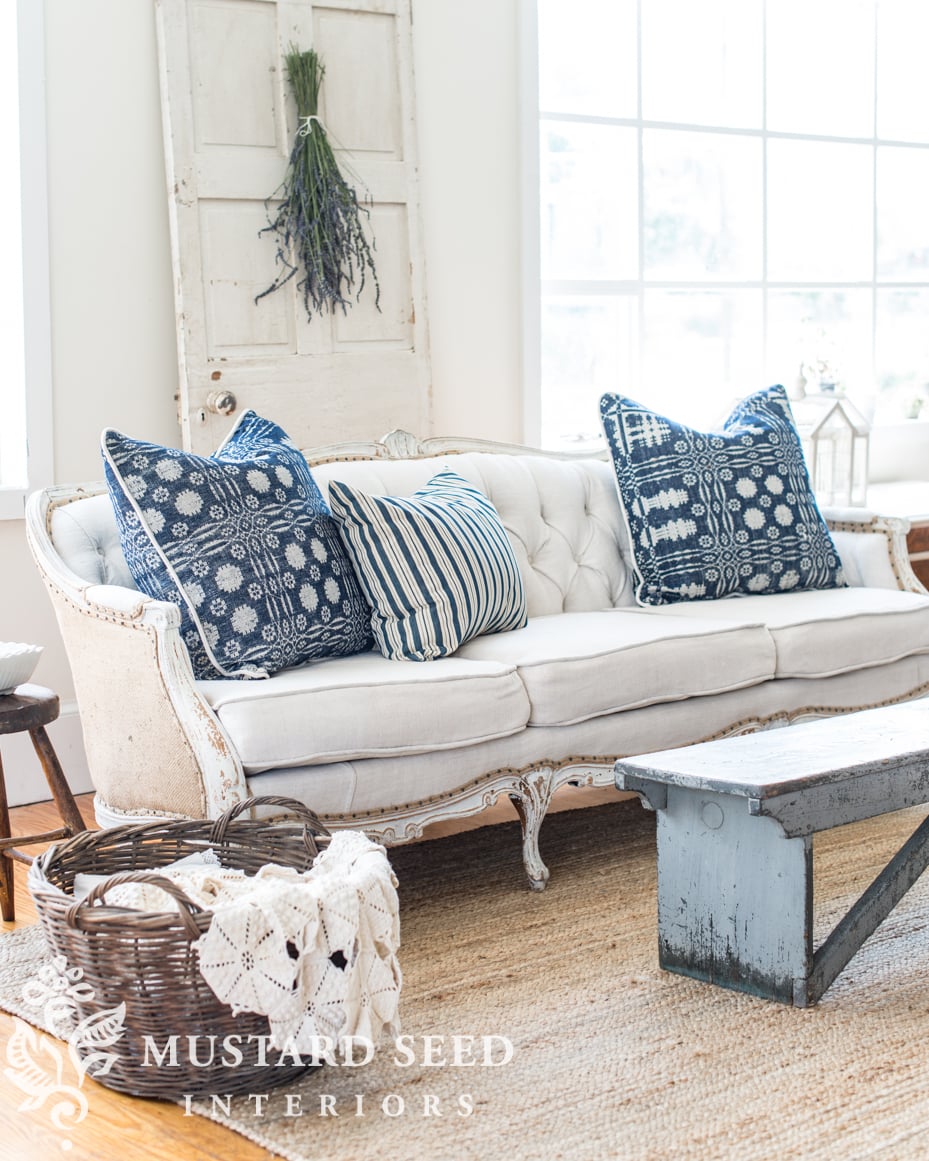
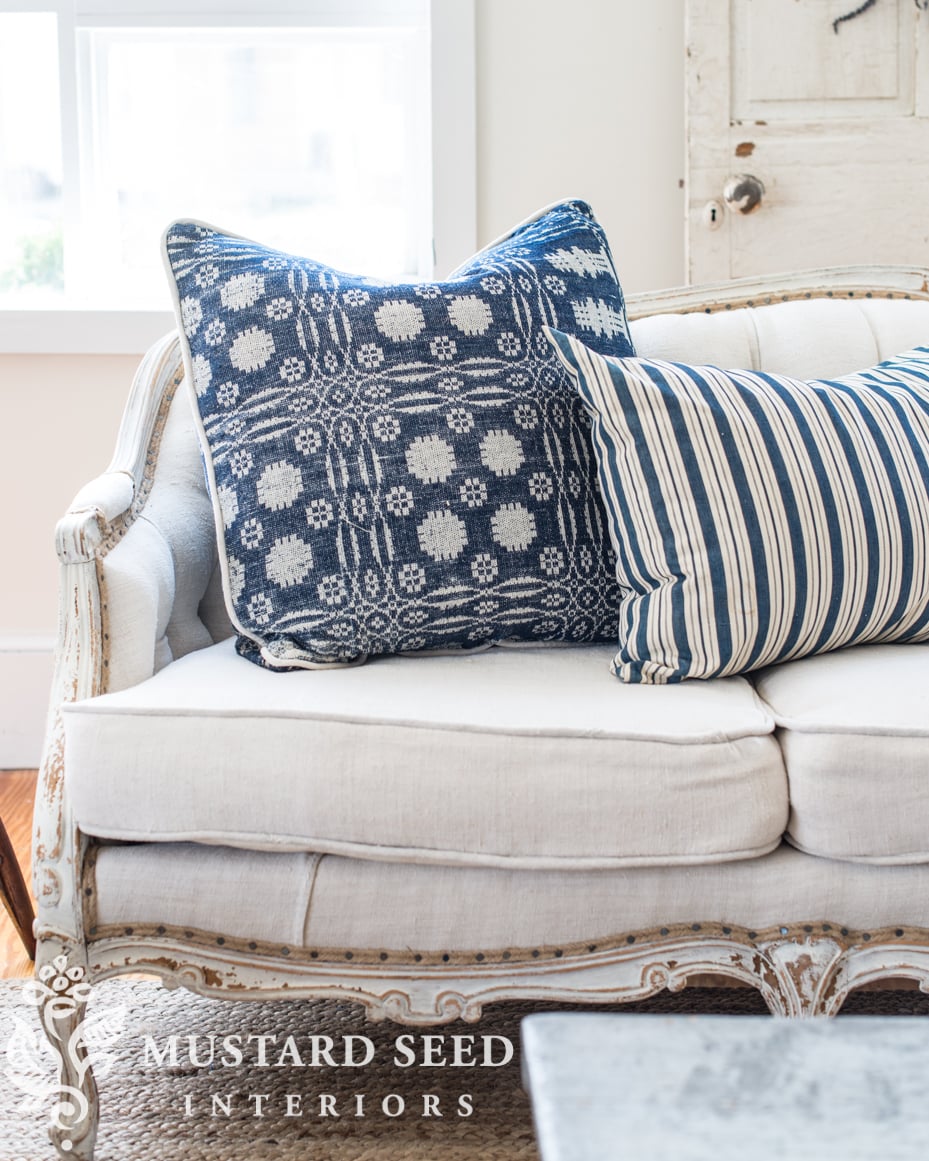
I’m sort of sad I sold these because they were gorgeous pillows! You can find a tutorial for how I made them HERE.
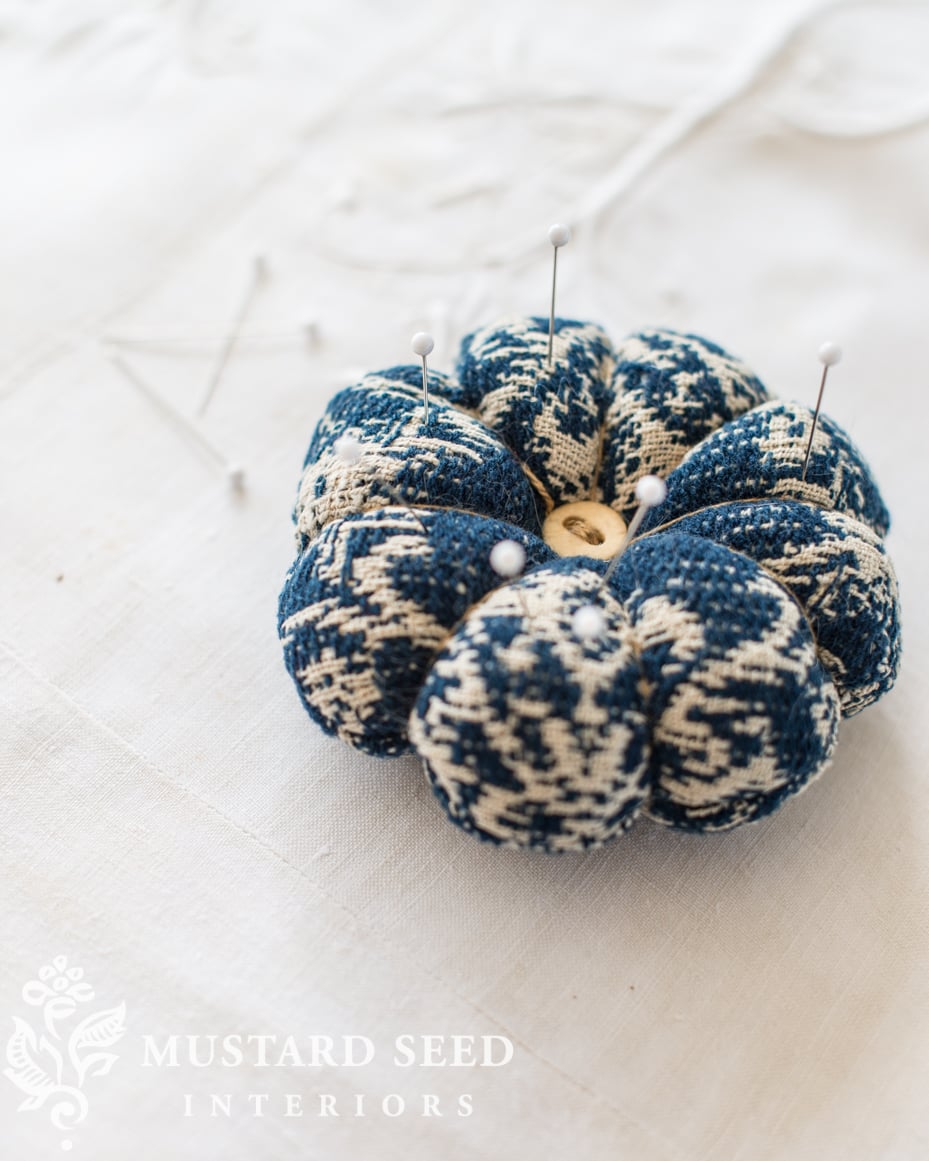
I also bought a pin cushion made out of a piece of an antique overshot coverlet, which is such a good idea for small remnants.
I’ve also seen pieces framed, made into tote bags (when lined) or even used for upholstering chair seats.
Expect to pay around $40-60 for a good-sized remnant and full coverlets typically start around $80 and can sell for over $1000. The price depends on the quality, age, pattern, condition, and desirability of that particular coverlet style. You can find some good deals, though, that will be budget-friendly and still beautiful.
As far as caring for antique overshot coverlets, I just give them a shake now and then, let them air out, and fold them in a new way. If a quilt or coverlet is folded the same way for too long, the fabric can deteriorate quicker at the folds and can also fade where the textile is exposed to the sun. While I always feel the freedom to wash my antique cotton quilts (they need to be functional in our home), I don’t wash the wool coverlets. They are heavy when dry and I can’t imagine how heavy they would get when wet. I would guess the average washer would have a tough time with them and it’s not best to wash wool anyway. Wool is naturally resistant to odors and a coverlet like this doesn’t generally need to be washed. If you do get a spill, try spot cleaning or take it to a trusted dry cleaner.
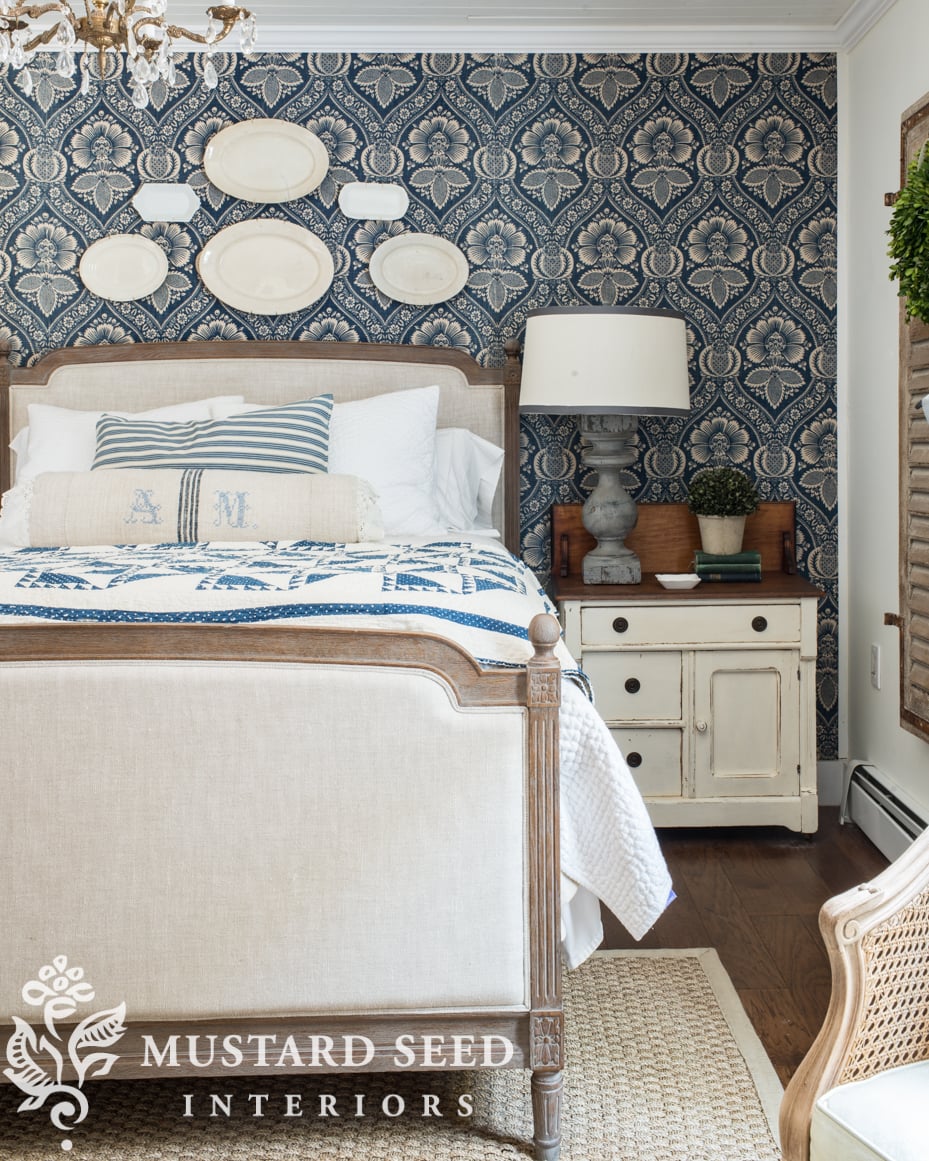
Before signing off, I thought I would show a couple of examples of how my love of antique overshot coverlets has inspired other decorating choices. The fabric I used behind our bed in our PA house was a woven blue and white fabric that had an overshot coverlet vibe. (You can read about how to starch fabric to a wall HERE.)
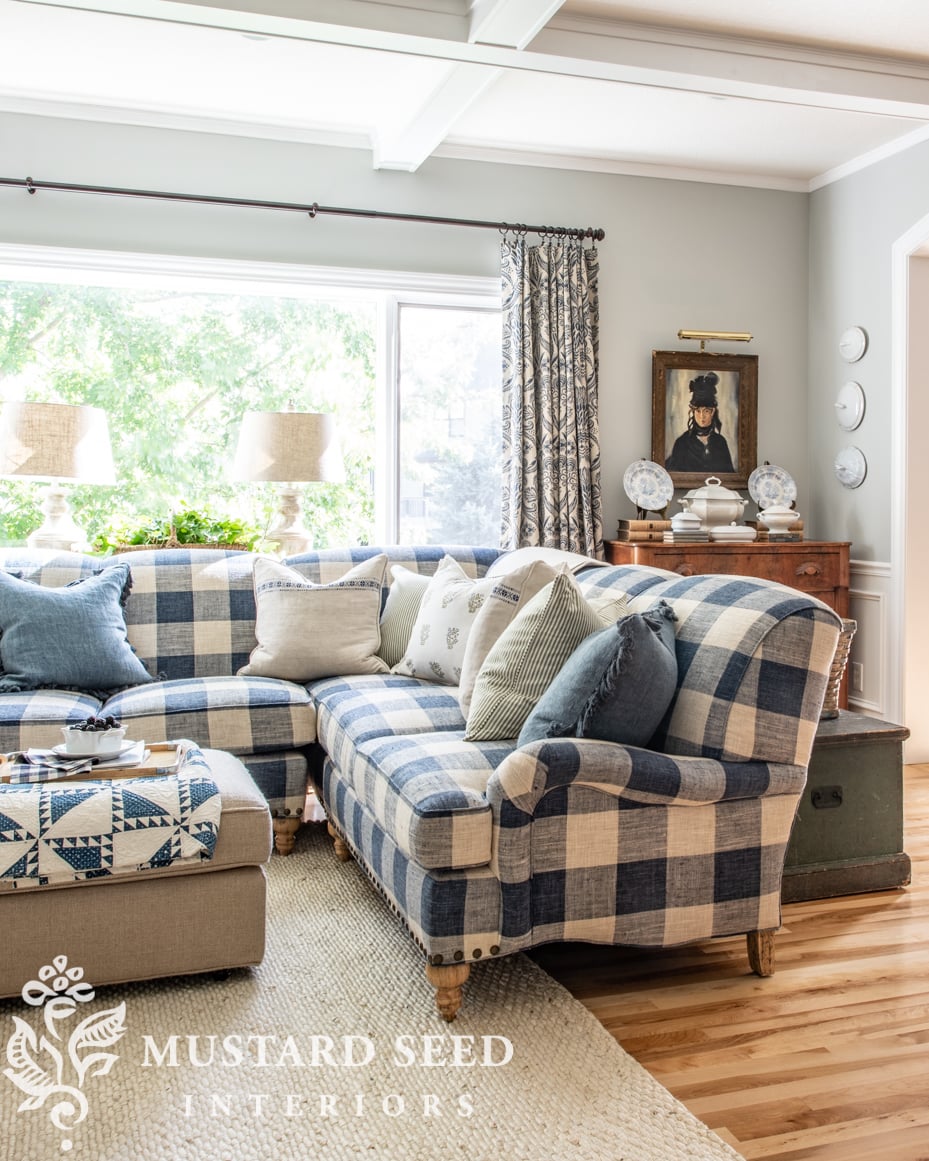
…and the fabric I selected for the curtains in our living room and kitchen in our MN house also had a historic coverlet feel.
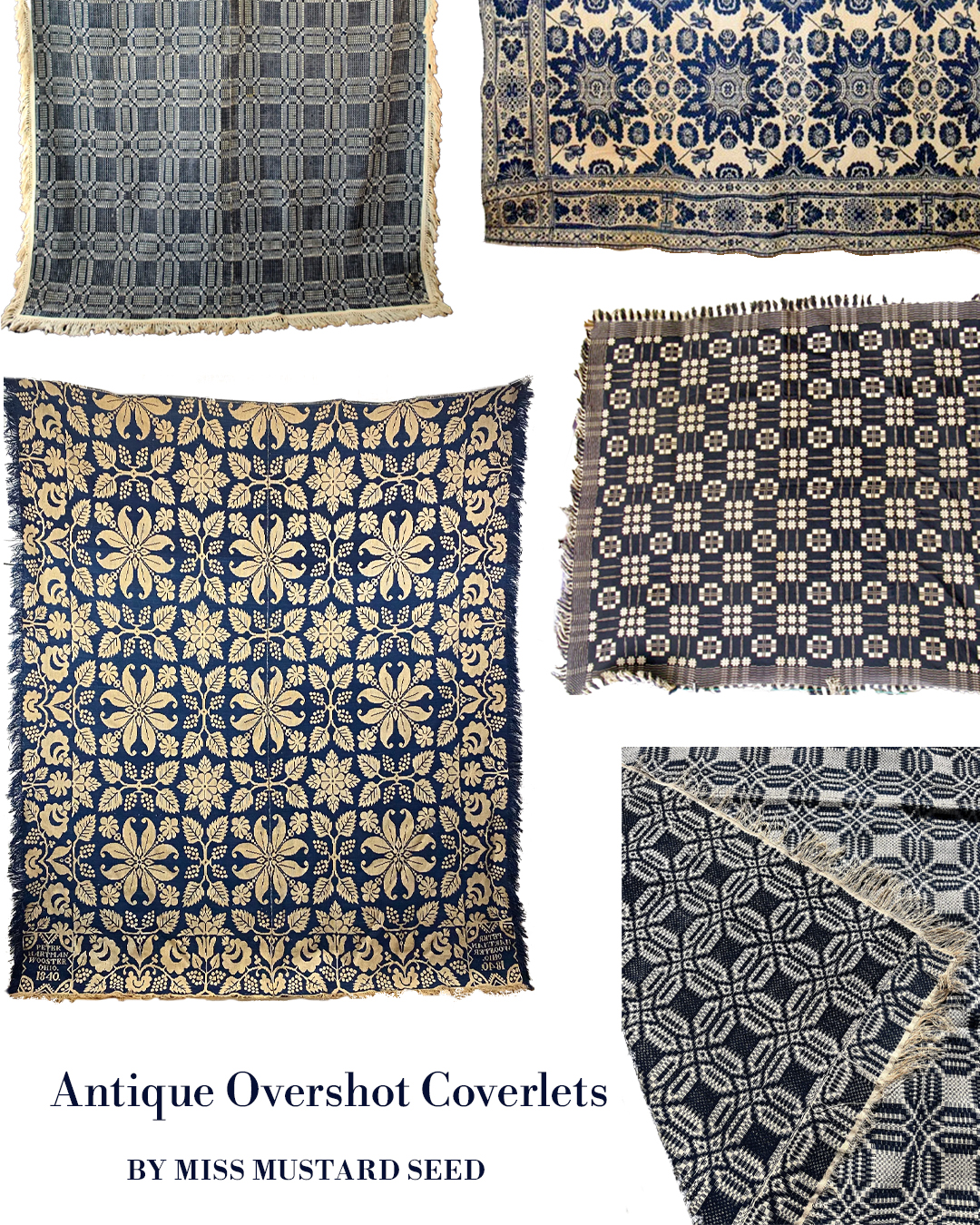
If you’re interested in purchasing an antique blue and white overshot coverlet, I did a bit of window shopping for a few. Some are high-end antiques while others are more accessible.
Are there any other overshot coverlet lovers out there?









19 Responses
I have both of your books. Please start on another. Thank you.
I have a question about the last pic, of the living room with the blue print drapes. I notice that you have a rod with two supports showing and I assume more on the ends. Can you close those curtains all the way with those supports there? I’ve got a big three window section to cover and love the style, but they must be able to easily be drawn totally for privacy reasons. Is this possible or must I place a set of drapes between each rod support? Hope this is not too confusingly worded!
I was not able to fully close those curtains because of the supports but the width of the window was so long that one bracket was not enough to support the rod without sagging.
Funny story…I bought a simple but lovely blue and white coverlet in good condition at a thrift store for a pittance. Later, I decided I needed to downsize my collection of antiques, I took it with some other items to an antique store to sell. The husband of the owner looked at it (she wasn’t there) and said “This has a seam down the middle. It’s not even a solid piece.” LOL! Needless to say, I kept it and still have it and too many other antiques.
The pillows you made were lovely but ok that sofa! Do you still have it?
Thank you so much for this fascinating bit of history and historic textiles. I have seen these pieces on your blog throughout the years, but was never very curious about them. I so enjoyed the historic details and the links to available overshot coverlets. I just bought my first quilt (it’s more like a summer coverlet) at an antique mall. I had to send a picture to a quilter friend to get the name. It’s on the bed in our guestroom and looks perfect!
Marian, you live about an hours drive from the National Museum of the American Coverlet in Bedford, Pa. The museum is housed in a beautiful large 1800’s grammar school. It is filled with many coverlets and the wooden looms that were used to make them. It’s a scenic drive to Bedford, which is a cute historical town with several antique shops and great restaurants. You would love it!
I second Valerie’s recommendation on visiting Bedford and the coverlet museum. So many other attractions and quaint shops. Stay at the Historic Bedford Springs or the lovely Jean Bonnet and make sure you dine at the taverns at each. Please report back with a lovely post. xox
How do you CARE for one? I recently acquired one (did not know what it was called or history- just that it was beautiful), It has not been cleaned in many years- how do you CLEAN yours? Are they actually machine washable? I’d hate to dryclean it with chemicals, but would love for it to look and SMELL fresh.
I touched on that in the post. Since they are 100% wool and heavy, I would suggest washing it unless you just felt like you had no other choice. If one was really gross, I would have no problem hosing it off in the driveway to clean it and make it useable. If it’s just musty, dusty, I would try giving it a beating (like a rug) on a deck railing or something and let it air out on a breezy, sunny day. That can do a lot for old textiles.
just read Marian’s reply and I have to disagree. If just airing your antique coverlet over an outside railing (2-3 days if necessary and bringing it in each night) doesn’t do the trick and you need to wash it, this is what you should do. Open up your coverlet and place it in a large plastic laundry basket. Place the laundry basket in your bathtub and using cool water and ORVUS soap, gently wash, then rinse your coverlet. Keep your coverlet in the laundry basket throughout this process. After you have rinsed your coverlet, press as much water out the coverlet as you are able – do not wring – it pulls on the fibers. Lay a clean sheet on your lawn and lift the coverlet out of the basket and spread it on the sheet to dry. If not dry at the end of the day, lift the sheet with the coverlet on it (again to protect stretching or pulling on damp threads) and bring it in the house. return to lawn next day to finish drying. Placing your coverlet on a driveway will be risking picking up more dirt/stains.
Okay, your idea is better!! 🙂
That is a very practical suggestion for washing large linens! May I also recommend that you do not lay wool in the sunshine, however. Sunshine is wonderful for cotton and linen, but not wool.
I slept under a red and white overshot quilt that had belonged to my great grandmother throughout my childhood on a bed my grandfather found in a barn and restored (which my mother also slept in.) Love the history behind these lovely pieces! Thank you for sharing your collection. I have often thought of them as the American version of Welsh blankets. So beautiful!
I love my 1847 blue Coverlet from Ohio. It is in a cabinet in my living room and I see it every day along with my quilts. I love the history behind textiles and imagine our ancestors using them.
Marian, not understanding why family gets annoyed with something on the back of your sofa?
One of my all time favorite things was your fabric-covered wall in your old bedroom and your instructions for how to do this technique, which I have never done, but appreciate knowing. That fabric was gorgeous and very coverlet-y!
Fascinating! I learn so much from being a regular reader of your amazing blog, Marian. Thank you! Love those pieces. Just stunning.
Thank you so much for featuring my coverlet in your favorites. I couldn’t figure out why I was getting extra likes on Etsy, and now I know! It’s on it’s way to a new owner! 😊 I love the extra info you have here. It’s been fun learning about the history of these.