
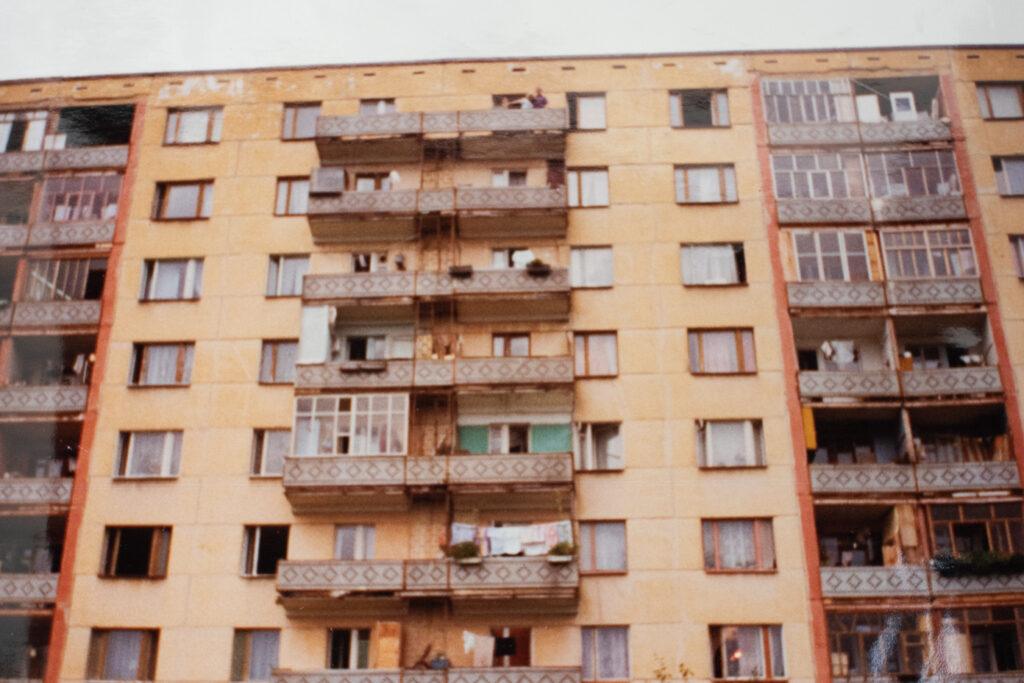
All of our fellow travelers from the US and Canada stayed with Russian families for our summer in Izhevsk. Since I was under 18 and my dad had his own apartment, I would be staying with him. My dad rented this apartment for a few years, so he had his own place to stay when he was working in Izhevsk. You might think it was outfitted with American luxuries and amenities, but it was bare-bones and typical of a working-class Russian apartment. It might’ve even been a step below the apartments of most of our Russian friends since my dad was always happy to make do. Now that I think about it, I don’t ever recall my dad splurging on material possessions. He’s never had a fancy car, designer clothes, a tricked-out man cave, or even a really nice TV. His guitars are probably the only place he’s ever really treated himself.
Izhevsk, Russia, is the capital of the Udmurt Republic, west of the Ural Mountains. During the weeks I lived there, I learned my turf, which was fairly limited – our apartment complex, the tram route I took to the school, the school and grounds, a few local places to eat, and shops where I could buy groceries. Our apartment building was a typical communist-era block of flats. It was painted an ocre yellow and lined with balconies populated with clothes lines and container gardens. While the building was technically yellow, it wasn’t cheery, homey, or welcoming. Everything was very gray and worn, and there was a sameness in most of the urban buildings. Hard edges, desaturated colors, free from flair and personality. While the playgrounds, lawns, and park benches between the buildings were used, they were sorely neglected, unkempt, and tired.
Our building had a few stairwells and elevators (three or four, maybe) that led up to the apartments. I have always been claustrophobic (mostly due to several traumatic instances when I was locked in bathroom stalls and stuck in elevators as a child), so I initially only took the stairs, but since we were on the top floor, I broke down and started taking the elevator when someone else was with me. The stairwells always smelled of urine, and the elevator buttons were often burned off or otherwise vandalized in senseless ways. The people who lived there would just shrug, because that was just how it was. The playground, elevators, and stairwell were tangible remnants of communism. When everyone owns something, no one truly takes ownership of it.
I remember being confused by that as an American teenager. Wouldn’t you want a nice, clean elevator to welcome you home each day? I lived several years in a German apartment building on an American army base. Everyone who resided there was assigned there temporarily, yet people would plant flowers in the small garden beds by the stairwell doors, kids would get a talking-to if they ditched their bikes on the sidewalk, and the stairwells almost always smelled like commercial cleaner. It was just a different culture and mindset.
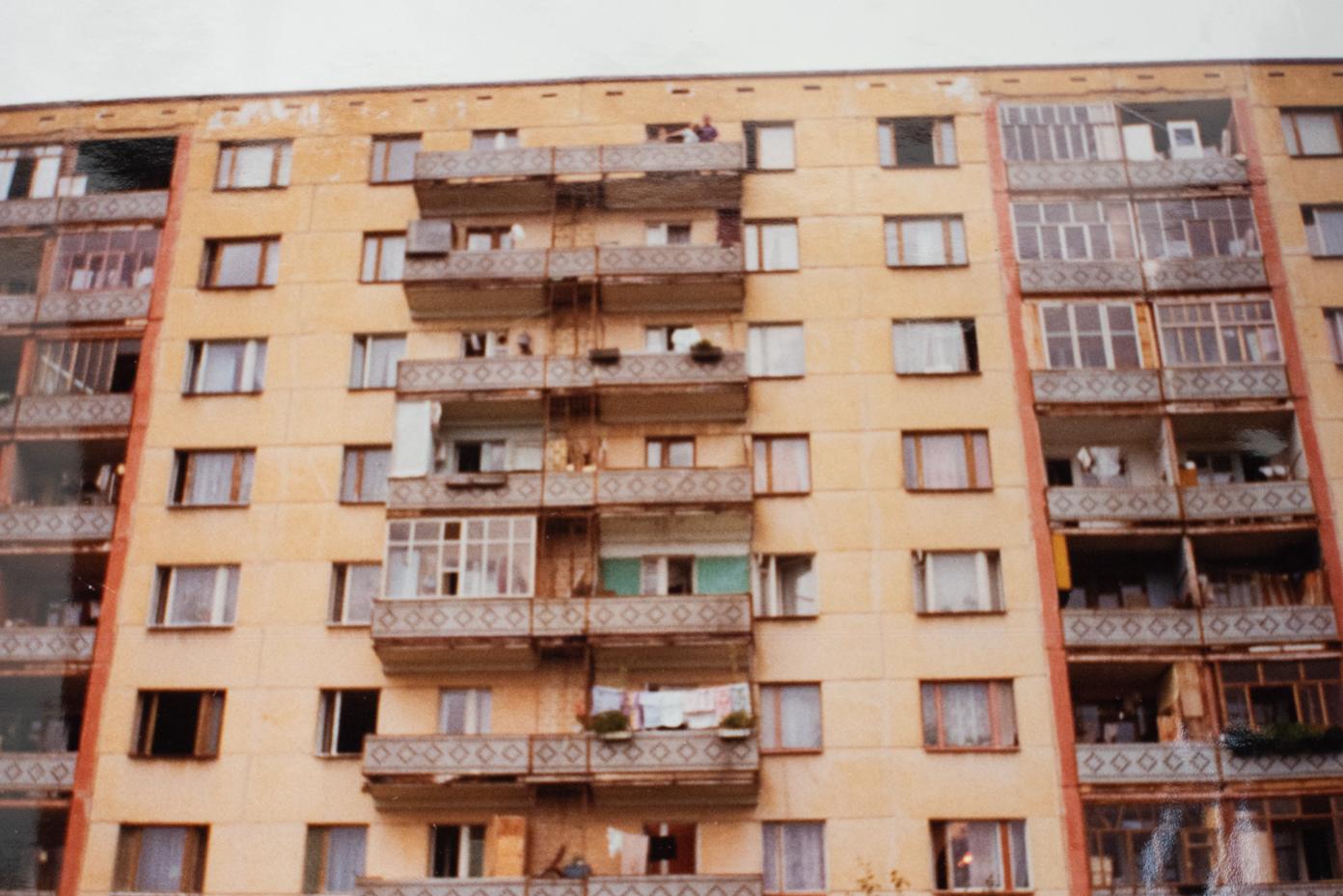
Our apartment was on the 9th floor of building 401. (You can see Dad and me on the top balcony in the center of the picture above.) My dad wanted an apartment on the top floor due to the lack of air conditioning. There were cooler breezes higher up, and on warm days we could open the windows and patio door without inviting in mosquitoes. Sometimes he’d set up an old Army cot on the balcony and sleep there. The apartment was small, consisting of just two rooms, a kitchen, and a windowless bathroom divided into two rooms – one for a pull-chain toilet and the other for a tub and sink. The bathroom was straight ahead when you walked into the apartment door. There was a hallway to the left that led to the kitchen, then a smaller room that was my dad’s bedroom and office, and ended at a larger room, which was our living room by day and my bedroom at night. It was common in Russian apartments at the time for families of four or more to live in an apartment like that, usually sleeping on futons that could be converted into sofas during the day. Every room had a door, including the kitchen, with fluted glass to allow for some privacy when it was closed.
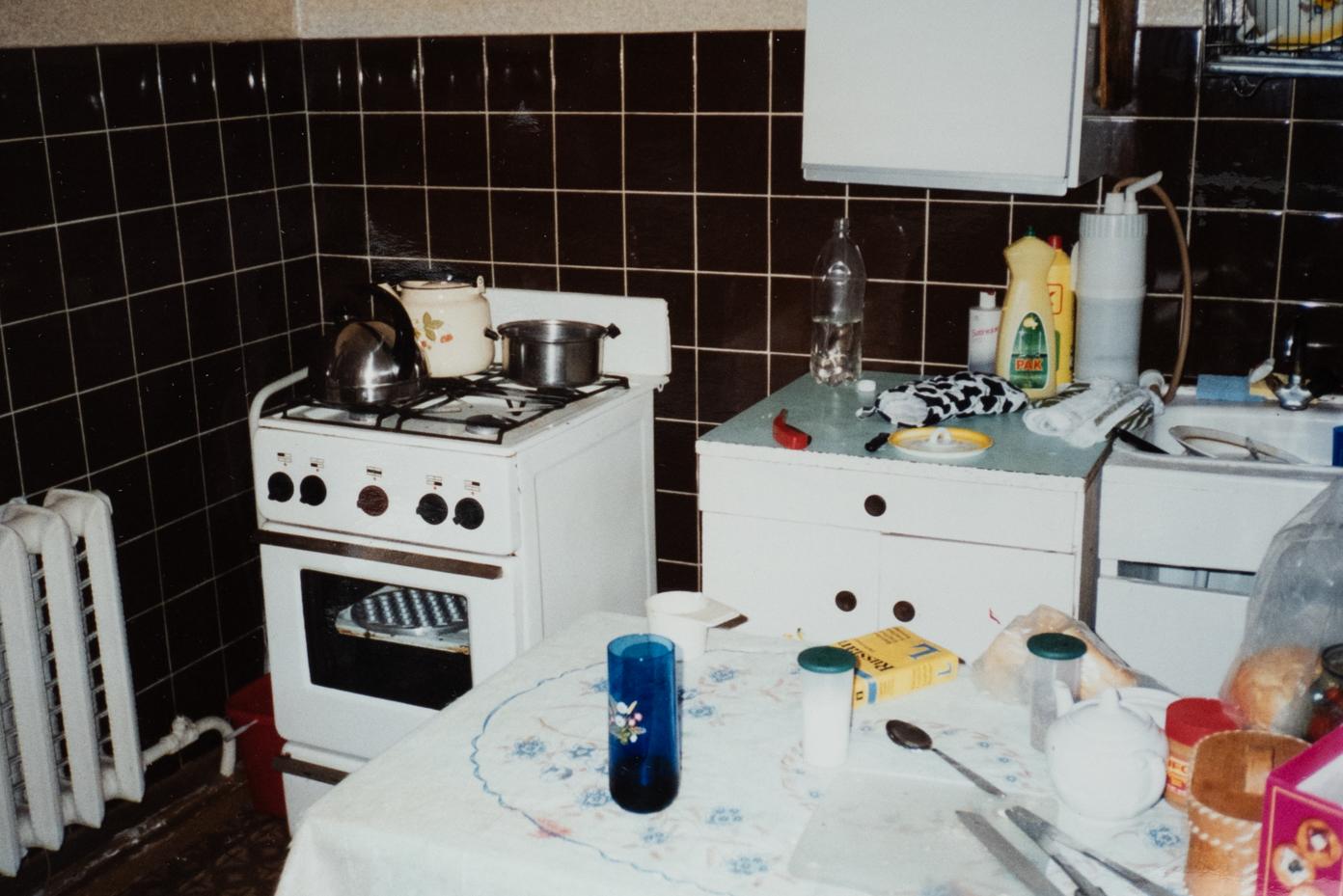
The kitchen consisted of a small table, a fridge about the size you’d find in a studio apartment, a tiny gas range, and about two feet of cabinet and counter space, next to the sink. The walls were lined with brown tiles, and the room was almost always cluttered due to the lack of cabinet space. We’d put stuff on the top of the fridge, around the sink, on the floor, and on a corner of the table to make it work. The stove had to be lit manually, which I learned the first time I tried to scramble up some eggs. I kept turning the dial, filling the kitchen with gas fumes, wondering why the stove wasn’t working. My dad intervened and showed me how to use the lighter to ignite the gas, and I was a pro by the end of the summer.
The bathroom sported the same brown tile, and the tub and sink shared a faucet with a long neck that could swing between the two. You had to be careful not to leave the faucet on when it wasn’t pointed into a vessel with a drain! It would just pour water all over the floor.
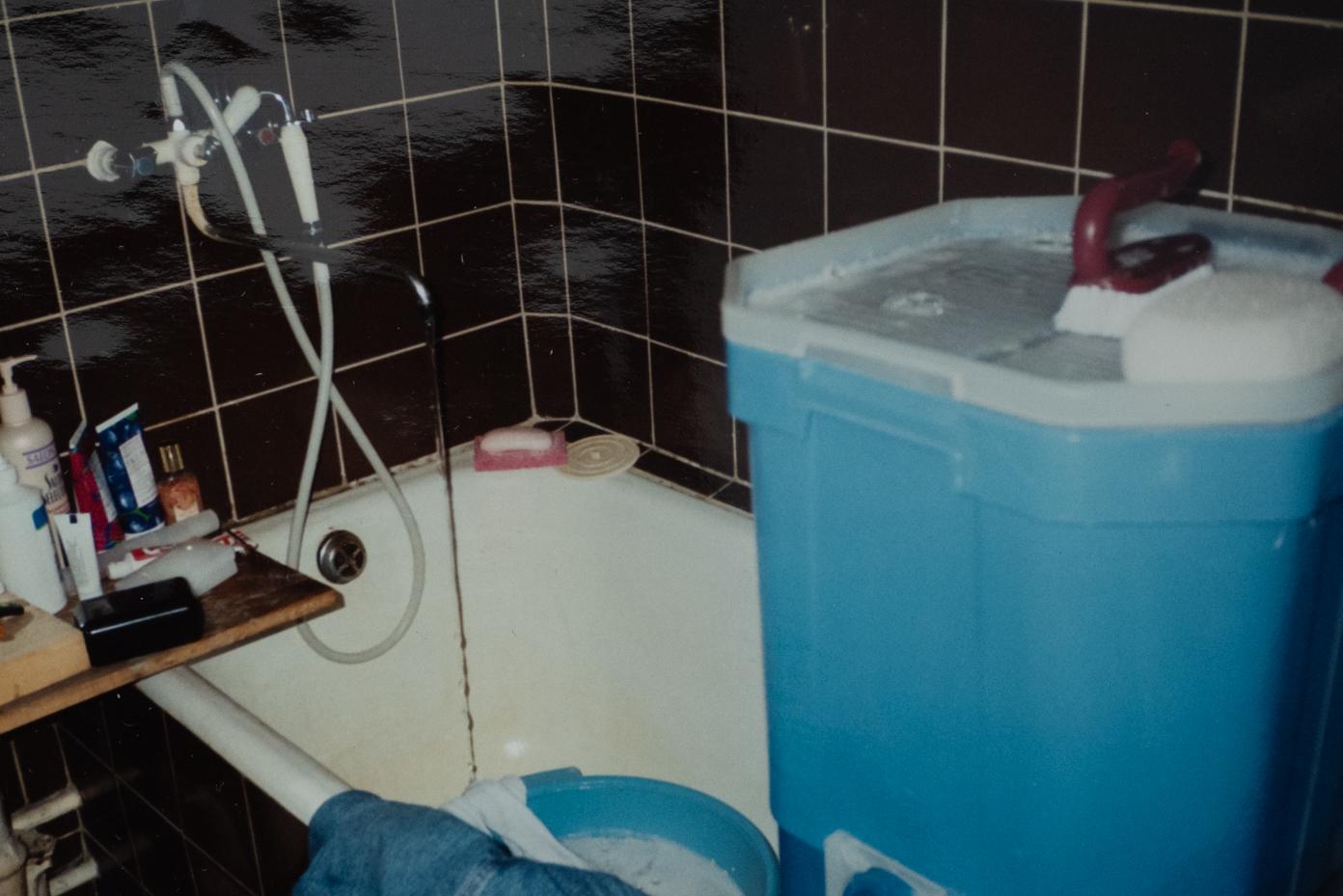
We didn’t have a washer and dryer, but Dad purchased a wind-up washer that could be hooked to the one bathroom faucet. It was propped on the bathtub with boards; an absolute eyesore. (It’s the big plastic tub on the right of the photo above.) Dad used it, but I mostly did my washing by hand (on the white plastic washboard on top) because it was a pain to hook up and didn’t work that well anyway. When we did laundry, we would string up the clothesline in my room and watch our heads as we walked through the space. It would take over a day for jeans and sweatshirts to dry, so everything was worn multiple days, and I tried to wear light dresses when the weather was warm.
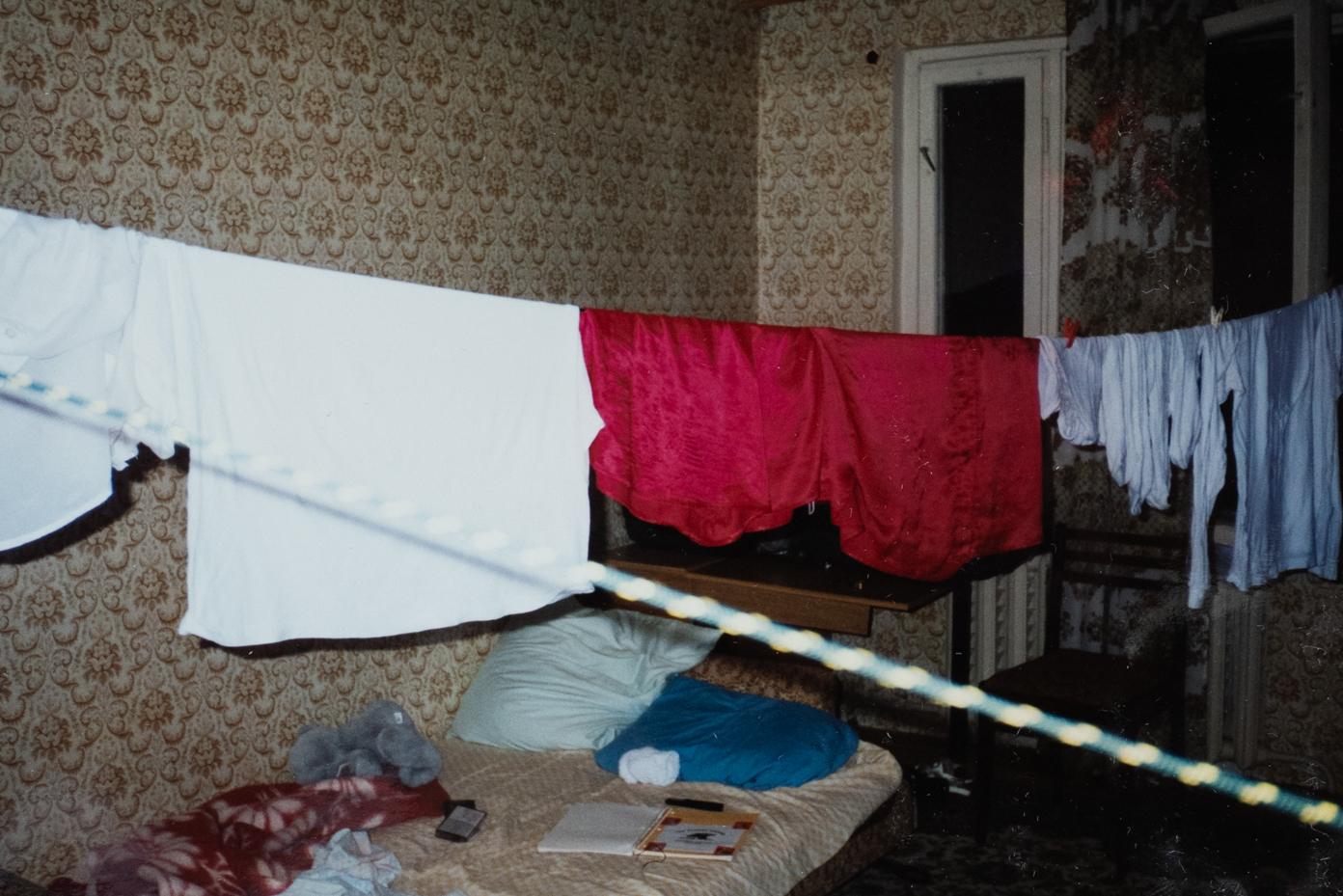
My dad’s strong hands were our spin cycle. I was always in awe of how much water he could twist out of fabric, even after I wrung it out with all my strength.
We had a TV I never watched because everything was in Russian and a radio I never listened to, also because everything was in Russian. Our entertainment was a deck of cards, a piano (neither of us played with any proficiency, but we’d plunk occasionally), and books. I spent most of my time in the apartment doing chores, listening to music, reading, or writing in my journal. Since there wasn’t much to do, I ventured out as much as possible.
The thing I missed more than TV, a washing machine, and a real bed, though, was hot water. It was common for pipes and water heaters in buildings to undergo maintenance during the summer, since hot water was crucial for the cold Russian winters, so it was a regular joke that you never knew when or if you’d have hot water in your apartment during the summer. It was a regular topic of conversation. Do you have hot water today? Has your hot water come back on again? Most of our crew had hot water at some point during the summer, but we didn’t have it at all in our building. Not one day.
I remember my first bath in the apartment like it was yesterday. I was trying to be positive about it. This is going to be great. It’ll be refreshing, and I won’t miss hot baths at all. It wasn’t great; it wasn’t refreshing, and I missed hot baths almost daily. There is an intentional cold shower that is invigorating after doing yard work on a hot day, and then there is a glacier-cold bath that takes your breath away on your first morning in your Russian apartment after days of traveling on planes and a train. My teeth were chattering, and I was gasping every time water hit a new patch of skin. Most days, I would boil a few pots of water (which took an eternity on our little range) and bring it to a tolerably lukewarm temperature. I’d sit in about 2″ of bath water and wash as quickly as possible. A couple of times during the summer, I was so desperate for a hot bath that I boiled water for several hours while I read a book until I could sink into a tub of warm water.
In addition to boiling water for laundry and washing, we had to boil it for drinking. It just wasn’t reliably clean drinking water, so we would regularly boil water in pots, let it cool, and then fill empty 2L plastic bottles to store in the fridge. We even used boiled water for brushing our teeth.
In the beginning, everything the apartment lacked made me deeply homesick. I missed the comfortable and familiar. I missed what was safe and easy. But ever so slowly, I minded the inconveniences less and less, and they became my new temporary normal. Seeing how our Russian friends dealt with those same challenges encouraged my own resilience. They would laugh, throw up their hands, and with an eye roll, simply say, “кошмар”. (It sounds like “kashmar”). It means “nightmare”, but it wasn’t said in a way that we might use it while recounting a harrowing experience. It was said with a tinge of humor, acceptance, and camaraderie. It was laced with a moment of understanding and finished with a stiff pat on the back to buck up and carry on because this is how life is here. There was a lot wrapped up in that one word.
“No hot water today?”
“Kashmar.”
“Da. Kashmar.”
I eventually became grateful for the experiences because I had the rare opportunity, as an American teenager, to really live in Russia. Over the years, I have realized that I don’t say I visited Russia for a summer, like I visited Paris or Beijing or Florence. I lived in Russia for a summer. I didn’t stay in a westernized hotel, sticking to the best restaurants and tourist destinations. I lived in an urban apartment building among Russian families, shopped for groceries, prepared meals, walked most places and took the tram, and learned to navigate the inconveniences.
I had the gift of witnessing and experiencing beauty in everyday things instead of just the places shined up for visitors.








14 Responses
And this is what the socialist in America want for all Americans. None of them know what it’s really like.
Remember when the Berlin wall came down? Not one person moved over to the eastern side (Russian controlled). That tells you everything you need to know about communism/socialism.
Socialism isn’t communism. Ask a Scandinavian.
Remember when the Berlin wall came down? Not one person moved over to the eastern side (Russian controlled). That tells you everything you need to know about communism/socialism. Too bad the youth are so easily sucked into believing the so-called Democratic Socialist lies.
I loved this story. I always wanted to be an exchange student, but was not able to. I wonder if I would have had some of the same experiences. I was shocked the first time I traveled in continental Europe and the UK how luxurious the average home in the US is compared to there. Things we take for granted like central heat,supermarkets, kitchens with large refrigerators, and hot water any time you want it didn’t exist in most places there.
Not in a hundred years would this happen to the US!
Some Americans, call them what you want, only suggest that there are some who pocket money like never before, making millions, billions caring nothing about those who have lost their health insurance, cutting down the medication doses because the price got too high, there is no empathy for the poor. Each week I volunteer at a food pantry, and we see more and more people. A large layer of the population has no $ at the end of the month, richest country they say.
I appreciate reading about your travel experiences as a young person. So much to learn and see in this world. Thank you for sharing!
I’m really enjoying these stories!
Looking forward to next week:)
Wow Marian, this is so cool for you to have experienced! Doing without is good for the soul, we take so much for granted in the USA.
Is there any chance your father would let you write a book about the things he is comfortable talking about when he had his assignments in Russia. I was lucky to meet your Dad once at Luckett’s Market Day the last time you were there before you moved . Your Mom and Dad were both so genuine and I could see where you got your out going personality. I am sure he saw some things in Russia that we would never even imagine or think about here in the U.S.
Really enjoying these!
Oooh, thank you so much for teaching me the concept of “kashmar.” My family is, in multiple ways, in a season of hardship, and “kashmar” really resonates with me. Both because you get to admit that certain things are a nightmare, but then you just move on
Also, I second Deb’s idea of asking your father if he’d consider writing a book? I would totally read it!
Yeah, I should ask him if he’s ever considered it. He’s one of the most well-read people I know and has lived a very interesting life.
We have friends who lived in Russia for 5 years doing Christian missionary work. They, along with their 3 young children lived the life you described. I was so amazed at the dedication it took to leave all the comforts of America and live as the Russian people live. I was often reminded how fortunate we are to have working sewers, hot water and air conditioning. Among MANY other conveniences. These lessons are priceless and have set the passions of those once young girls for the dedicated lives they now live in Thailand working alongside each other and their own families serving the Thai people as Christian missionaries.
Your experiences are incredible! I can click my heels together and say…”there’s not place like home”…