
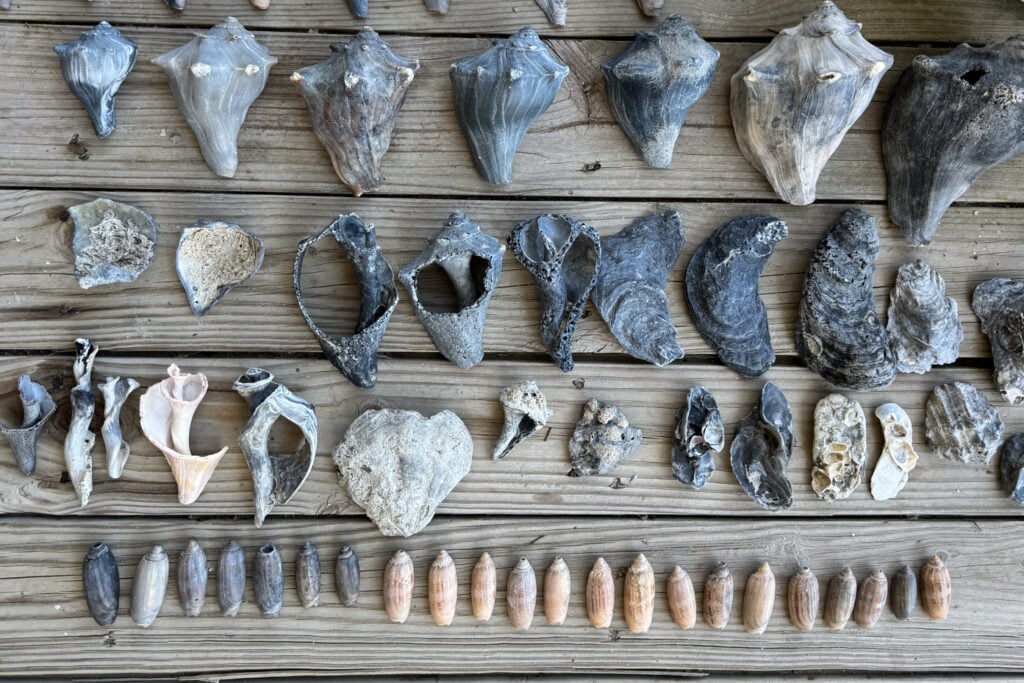
Back in 2022, I wrote a post sharing Shelling Tips on Isle of Palms, and a year prior to that, I wrote a post with general Tips on Shelling. I’ve since been back to Isle of Palms two more times and have stayed in another location further up the island in the Wild Dunes resort area, so I thought I would share an updated post sharing more specific tips as well as some favorite shelling locations.
In my 2022 post on shelling on Isle of Palms, I divulged our favorite beach access for shelling – Access 42. We usually stay on 41st Street, so it’s an easy walk or golf cart ride to hit the beach. We rented a larger house closer to the heart of town in 2022 and used Beach Access 9 but didn’t find it to be a good area for shelling. We ended up driving down to Access 42 for our serious shelling excursions and decided not to stay on that end of the island again.
For this most recent trip, a creative retreat with my friend Shaunna, we stayed in a condo in the Tidewater Condos in the Wild Dunes resort. I hadn’t been to that end of the island since it is only accessible to residents and guests, so I had no idea how the shelling would be. (As a note, the beach is public, but there is no public parking or access points, so you have to walk up the beach if you want to do some shelling there and do not have a Wild Dunes pass.) Finding the shelling hotspots would take some exploring, but I was up for the challenge!
For those who have trips planned to Isle of Palms, here is a map showing our usual beach access point and the new location where I stayed with Shaunna. Both are pointed out with an arrow and marked with a yellow & white star.

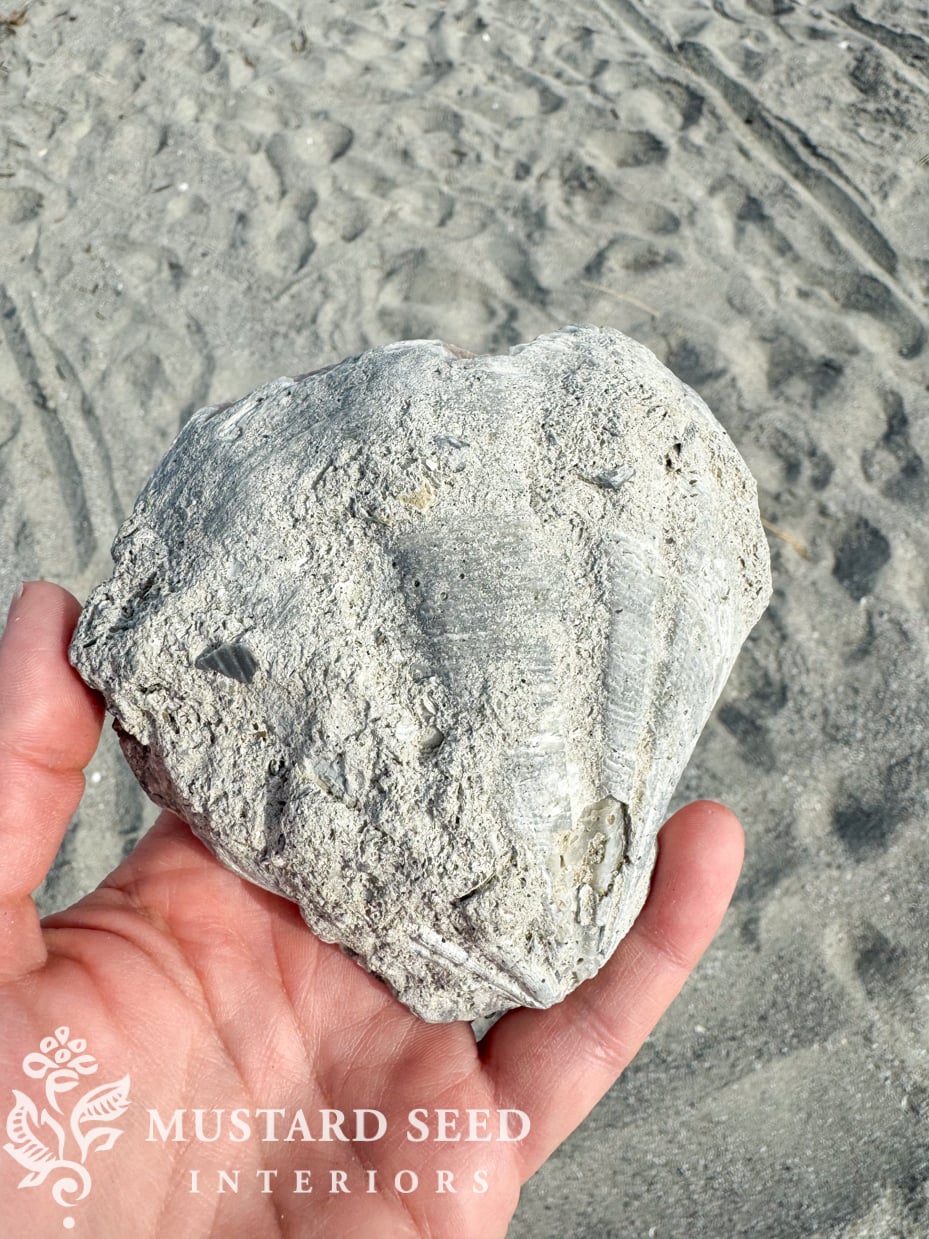
Shaunna was delayed due to a family emergency, so I ended up staying in the condo for the first day and a half by myself. It wasn’t as planned, but I made the most of it! I was still on the beach at Isle of Palms and I was going to enjoy it. I set out to the beach the evening I arrived to get a feel for the beach and potential shelling areas. I took a left from our condo and walked up the inlet a bit. I wasn’t on the beach for a minute and I found a lion’s paw fossil. It was tucked in the sand right next to the path as if it was waiting for me. The convenient thing about these fossils is that most people overlook them because, at a glance, they can just look like natural concrete or a boring rock.
I have found several of these fossils in different places on Isle of Palms, so keep an eye out!
In addition to the fossil, I found some olive shells, a couple of small whelks, and some oysters.


Almost none of them were found directly in front of the condo, which was pretty flat and seemingly devoid of shells. I was encouraged as I noticed an increasing amount of shells spread over the beach followed by a clear high tide shell line as I got closer to the inlet. That evening, about an hour before low tide, I found the majority of shells sprinkled in the high tide line near and on the inlet beach.
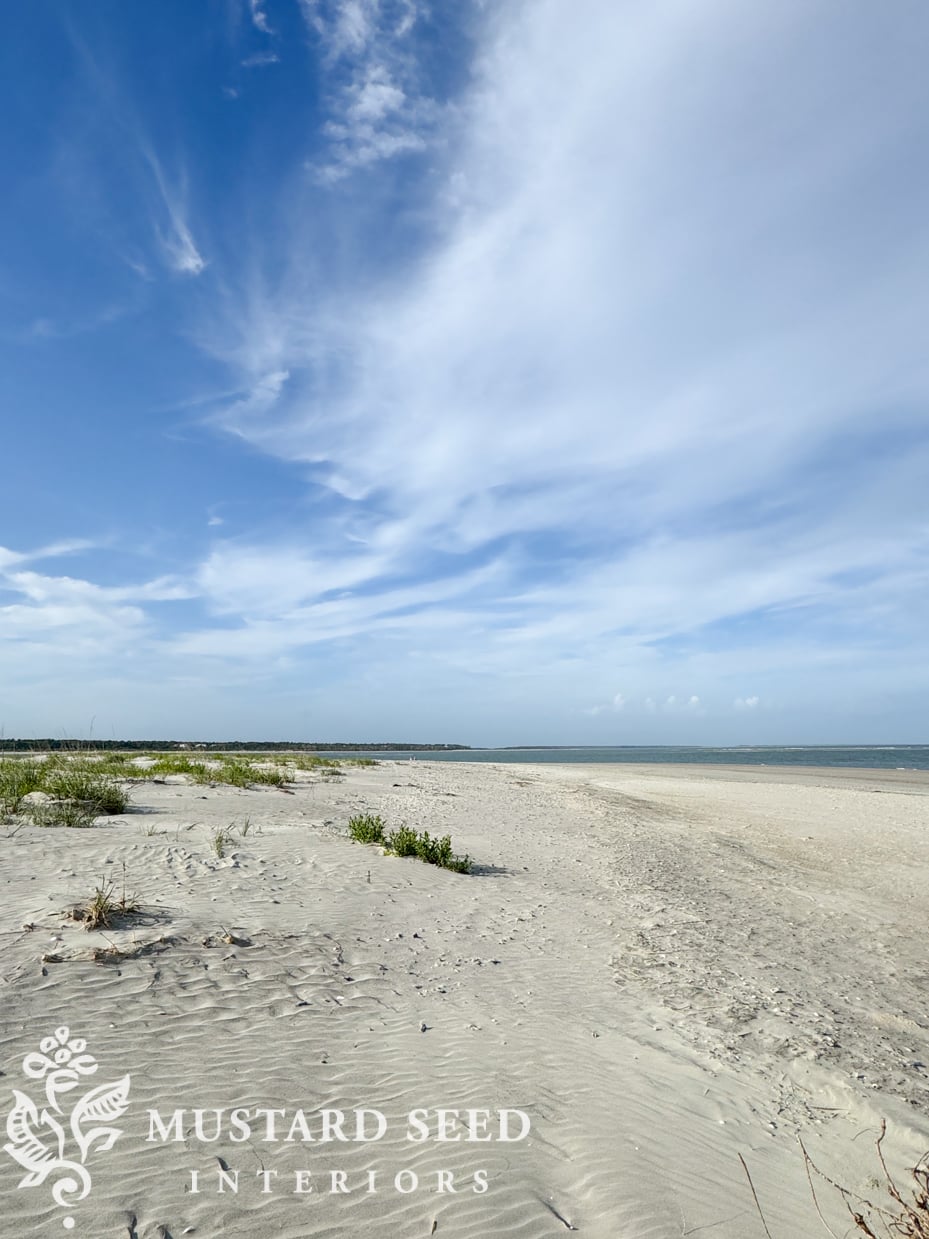
As a non–shelling-related comment, the inlet was beautiful! I took so many pictures there to use as references for painting. It was really a lovely area of beach for walking and enjoying the natural beauty of the area.
The next morning, I decided to walk towards my old stomping grounds at Beach Access 42. I had looked on Google Maps and saw it was about 2 miles away, so it seemed like that might be a reasonable walk on the beach. I also wanted to check out the beach between my usual spot and my new spot to see if there were any great shelling areas. I set out at 7:00 that morning (low tide was at 8:00 am), empty heavy-duty grocery bag in hand, and ready to collect some information, shells, and lots of steps on my pedometer. Since I was there alone, I also checked in with Jeff so he knew where I was and that I would check in again when I was back at the condo.
I didn’t find any noteworthy shelling areas between the condo and the area I was familiar with around Beach Access 42, but I only made it as far as Beach Access 53 before I felt ready to turn around. I was able to see a unique house with a flat, bright blue roof that was a landmark for a shell cache and pools left by high tide. We were able to find a lot of large, intact whelks in that area when visiting in March, especially right after the storm that hit our first morning there. The cache was also a good place to find interesting oyster shells, fossils, and whelk pieces.
This is the tidal pool area and there was a large cache of shells to the left of the pools, up the beach a bit further. (This is labeled as area #2 on the map below.)
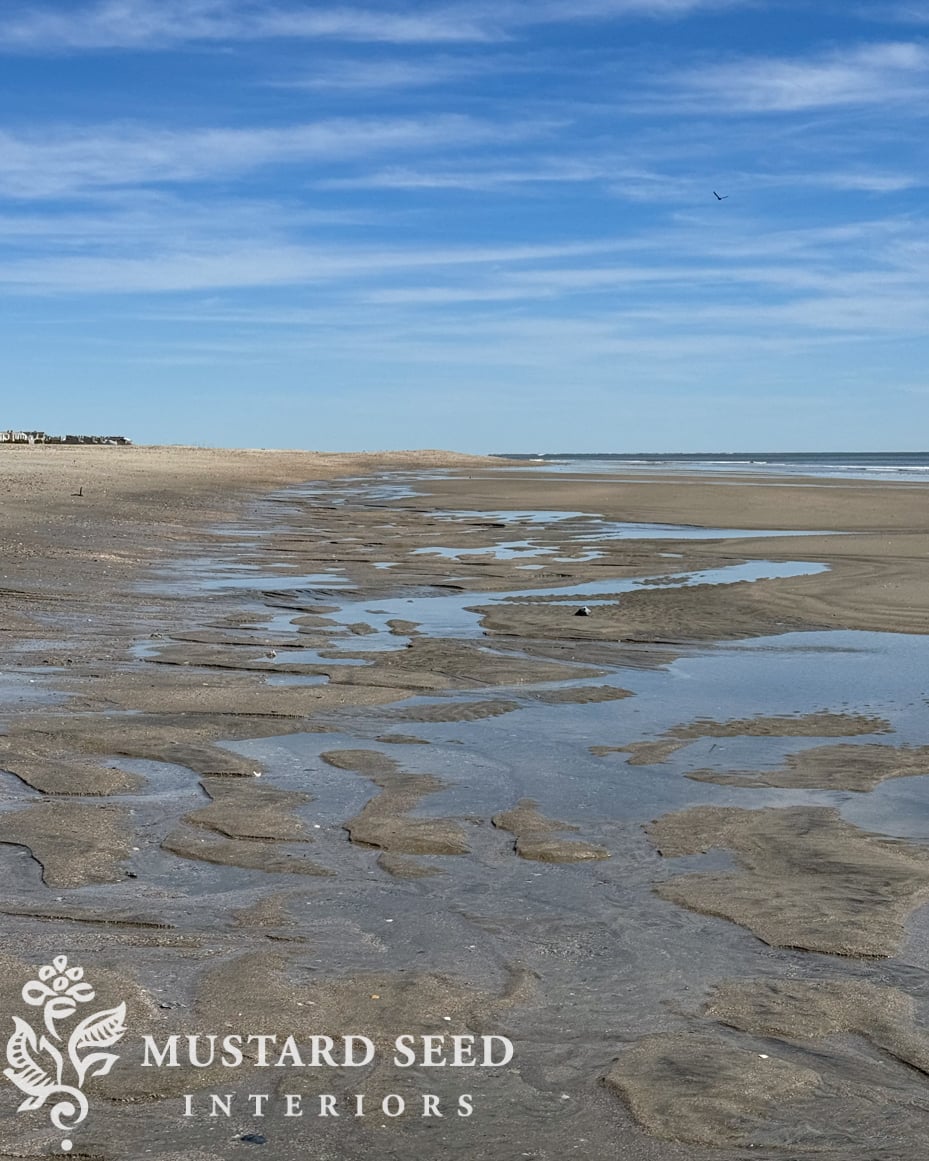
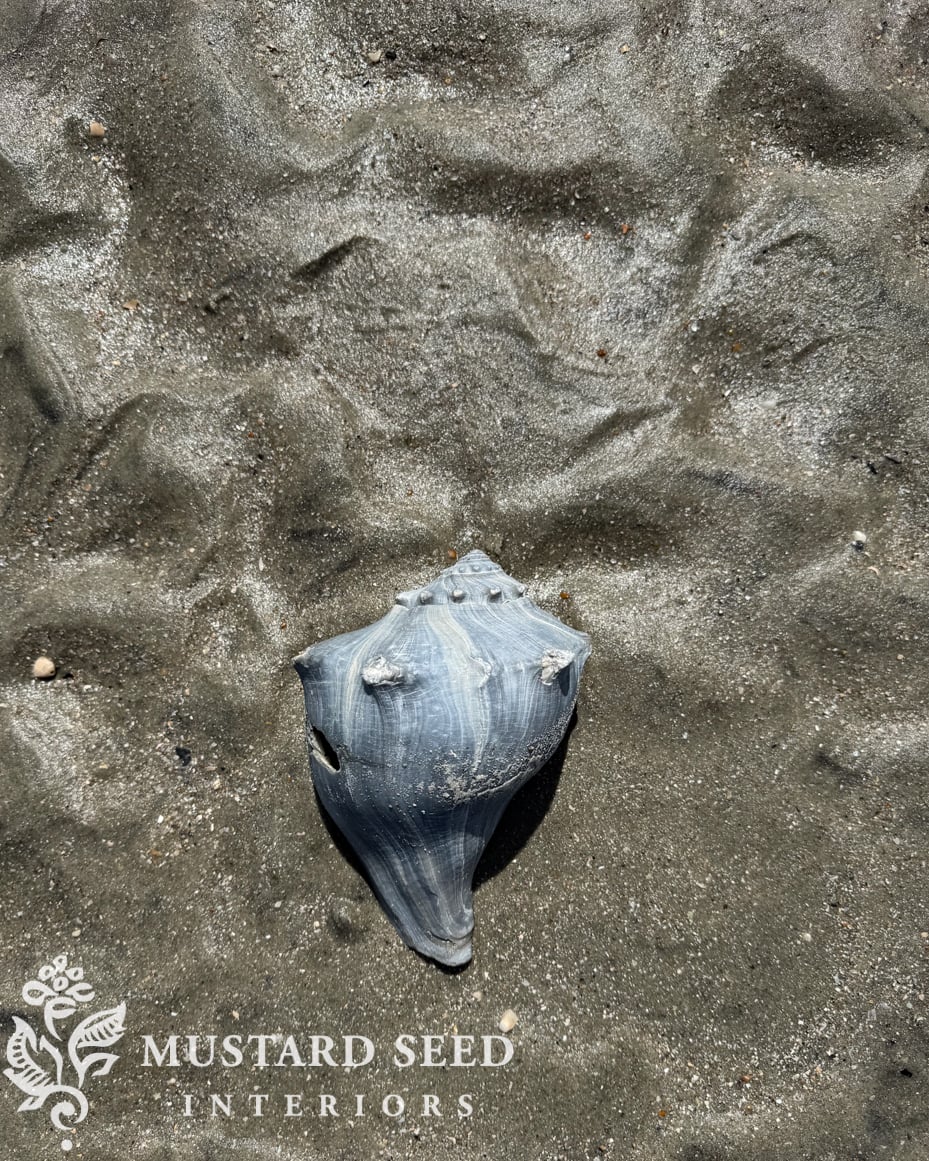
There might be some good shelling between the two locations, but there wasn’t much that caught my eye on that particular morning. There were distinct sand bars offshore, which can impact shelling on the beach, so that is a factor to consider when doing your own exploring. In my observations, I didn’t see many piles of shells in the surf or on the beach, a line of shells deposited during high tide, or tidal pools where shells tend to collect. The water was also on the rough side, so I didn’t wade out too far to see what was in the surf. I did find some interesting oyster shells and even a couple of sand dollars, but nothing too exciting.
After a five-mile morning shell reconnaissance walk, an afternoon of beachcombing on the inlet, and over 18.000 total steps, I felt like I had a reasonable lay of the land and decided Shaunna and I should focus our shelling attention on the inlet or drive down to Beach Access 42. Here is a map showing the locations I considered to be shelling hotspots…

(2025 addition: When the tide was low, I waded in the area in front of the Citadel Beach Club, marked on the map between 1 and 2, and it was a great place to find whelks and olives in the surf when it’s calm. The beach curves a bit in that area and it seems to create a good collection point.)
The shelling ended up being so good in the area around the inlet that we skipped the drive down to Beach Access 42.
The collection of shells below is from the area labeled #3 on the map above. It was a great area to find smaller shells in shell piles at low tide and along the water line when it was calm.

The best shelling conditions were on our last full day spent at the condo. It was about 2 hours before the morning low tide when I started walking on the beach and decided to comb the inlet water line for olive shells on the way out, check out the high tide line on the way back, and then wade into the ocean where it meets the inlet to check for whelks. The water was very calm, so it was a perfect day to wade without getting too battered and the visibility in the water was good.
I found a bunch of olive shells along the inlet, both in the water and along the high tide line. I also found a number of larger olives in the surf when I started wading where the ocean meets the inlet.
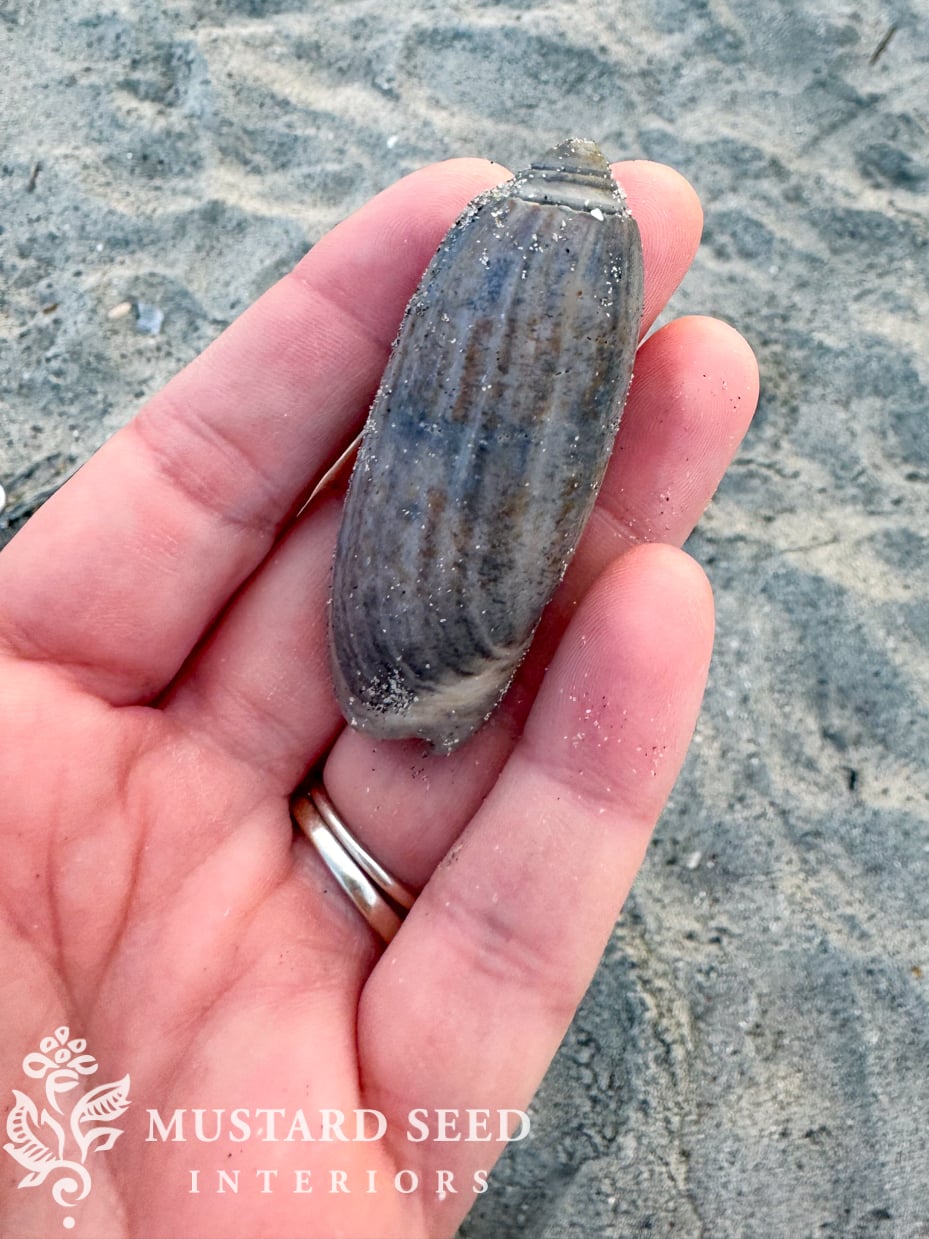
A note of caution about wading in the inlet. When the water is calm, it almost looks like the banks of a lake. The water laps gently on the beach and it’s a great place to look for shells. The water in the inlet has a strong, usually invisible current, though, as the tide rises and falls. I would caution against wading and swimming in the inlet unless you are familiar with reading the tides, and currents, and are a good swimmer. There are also places where the inlet floor was flat and descended at a gentle grade and other places where it dropped off suddenly. I waded to about my mid-calf in the flatter areas to get shells but stayed away from the sections that dropped off. I just want you to be aware since it looks so calm and deceptively tame.
This is also why I chose to wade in the ocean waters instead of the inlet waters. I still benefited from a calmer surf, but the water only pushed me towards the beach, not into the intercoastal waterways or out to sea. When I was satisfied with my search of the inlet, I started walking to the surf to wade for whelks. Another woman had already beat me to it! She was hugging a plastic grocery bag filled with shells to her stomach and I could see her bend down to pick something up. She chucked it onto the beach and proceeded to repeat that process, tossing another large gray whelk onto the shore. I called to her, “Are you going to keep all of those?” I wasn’t sure if she was throwing them up on the beach to collect later or if she was making them visible for others. It was the latter and she welcomed me to help myself to her finds. Knowing that shells are abundant, I waded into the area and started feeling around with my feet for whelks. Between the waves, the water was clear enough to get a good idea of where to look, but feeling with my feet helped me know if the shell was just a piece or something substantial. Some whelks were completely visible, sitting on top of the sand waiting to be collected, while others just barely peeked through the sand.
I was able to find some stunning whelks, several of which were sizeable and largely, if not completely, intact. Wading for whelks or other larger shells like horse conchs can be done anywhere on the beach, but it’s easiest to do in areas where or when the water is calmer.

This post was prompted by messages I received from others who have been to Isle of Palms (or were even visiting the same time I was) and weren’t having the same kind of shelling experience I have shared. Now that I had explored more of the beach, I wanted to give more specifics about where to find certain types of shells and what conditions are optimal. I rarely get completely skunked and come back with an empty bag, but I also don’t get amazing shells every time I go out during low tide. It’s not normal to walk out and find amazing shells right away. It takes walking, training your eye, and persistence. A stretch of beach might be bare one day and piled with shells the next.
Here are a few more tips for shelling success…
- Always bring a bag with you. You’ll inevitably find the most amazing cache of shells when you have no way to carry them!
- Talk to other people who are shelling. I always ask what they are looking for, what they are finding, and if they found any particularly good spots to hunt. Most beachcombers are enthusiastic and enjoy showing off their finds and sharing information.
- Keep an eye on the weather and tides. Shelling is best about two hours before low tide through low tide. That doesn’t mean you can’t find shells at other times, but that is when the greatest amount of beach is exposed and the surf is still depositing new shells as the tide recedes. It’s also great to shell after storms and when tides are higher than normal.
- Be persistent. When I’m at the beach, shelling is one of my main pastimes and I schedule my day around the tides. I typically go beachcombing twice a day and I rarely just sit on the beach. I get antsy and want to walk to see what I can find.
- Be willing to explore. As I shared, I walked over five miles and covered a lot of beach to find the good shelling spots. If I just stuck to the area right in front of our condo, I would’ve been pretty disappointed.
- Stand still and look. I have found it helpful, especially when wading or looking in the surf for shells, to just stand and watch an area for a while. Often, I’m able to see olive shells rolling around in the surf and can grab them between waves. I’ve also seen whelks tumbling around. I might’ve missed them if I was walking by and just glancing between one wave.
- Ask locals about shelling hotspots. Several locals as well as avid beachcombers have told me about neighboring beaches that are known for being great shelling locations. I haven’t visited any of them since the shelling is so good on Isle of Palms and I don’t want to spend my beach time in the car, but it’s worth checking out if you’re not finding what you hoped for. Folly Beach, Edisto Beach State Park, and Kiawah are some of the nearby areas known for shells.
And, just as an FYI – The Isle of Palms area is particularly good for shelling because the shells regenerate. Oysters, whelks, and olives all grow their own shells and shed them when they die.
When shelling, especially in a new area, know the local laws. Shelling is prohibited or restricted in some areas. In addition, don’t ever take home live shells or creatures. It’s not nice and will stink up your car. If you find a shell with an occupant, put it back in the water.
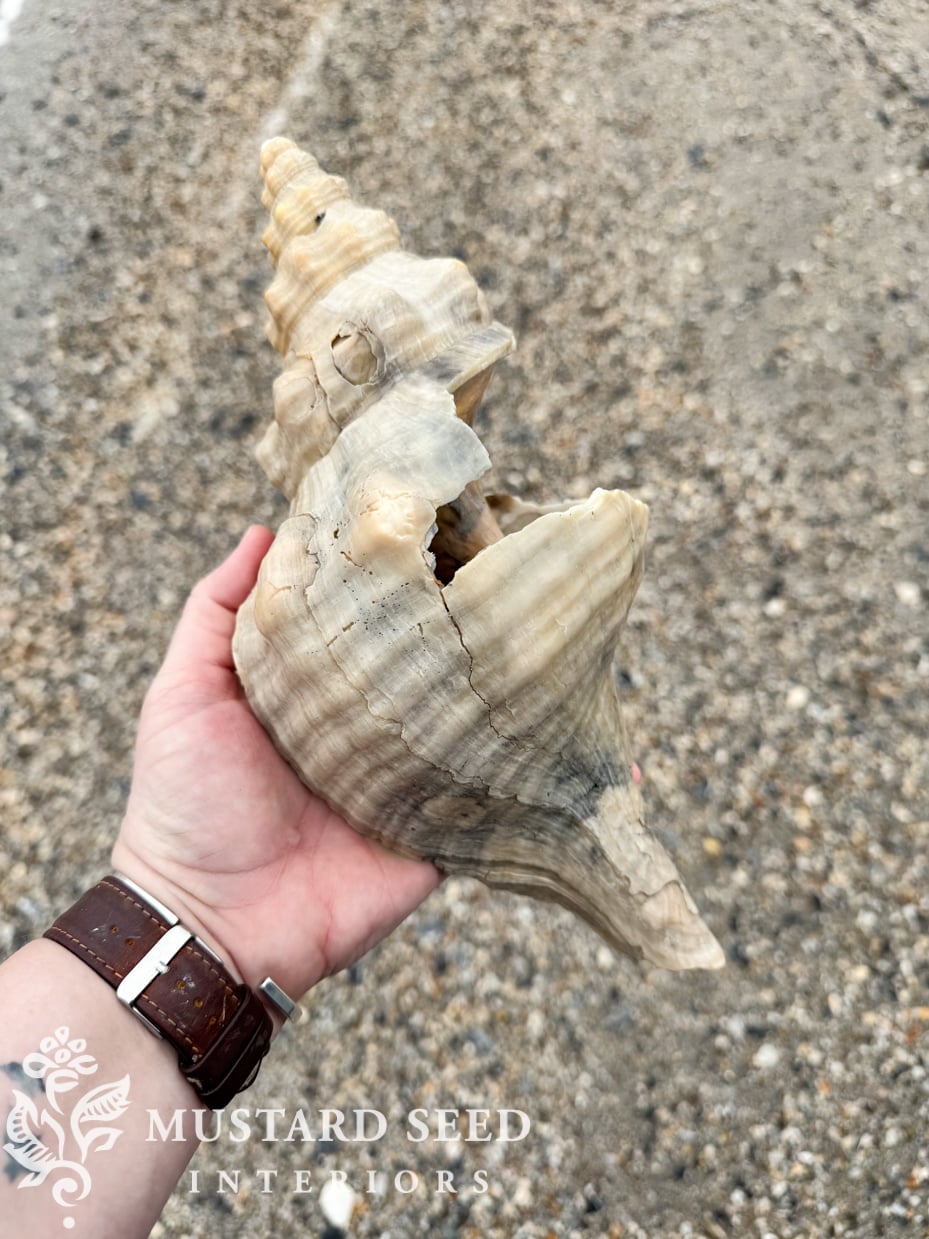
So, once you find a bunch of shells, what do you do with them? Here are some posts about decorating with shells…
Decorating with Shells in the Garden
Decorating with Shells at Christmas
I hope this post gives you some good information for shelling on Isle of Palms as well as beachcombing in general. Happy shell-hunting!











7 Responses
Hi Marion,
Great shell seekers guide!
I remember you once shared your several pages long retreat questions with us readers. Had to subscribe to get it as I recall.
Is it possible to make the pdf available again?
I found it really useful years ago and think of it whenever you mention going on a retreat.
Thanks–for all the joy you bring us readers.
Hope your time with Shaunna is (was?) absolutely perfect.
What type of shoes do you wear when you go shelling? It sounds like your feet could get cut walking on those shells. Thanks!
I just go in my bare feet, but I have had my feet cut on shells before. I actually had a piece stuck in the bottom of my foot like a splinter in March! I just prefer bare feet on the beach, but my mom wore Sketcher sandals and tennis shoes she could get wet because she needs the foot support.
Thank you so much Marian for sharing on the great areas at IOP’s for shelling. I was one of those who was visiting back in mid-March the same week as you and didn’t have much luck. Now, I see I was not in the same areas as you. We do intend to go back to IOP’s soon, so I hope to have better luck based on the info you provided. Hope you had a wonderful retreat and enjoyable trip with your friend. By chance, did you get to Mt. Pleasant Antique Mall right down the road from IOPs?
I didn’t! I had it on my list to go, but really wanted to focus my time on the beach, spending it with Shaunna, and reading/playing for the creative retreat.
This brings back happy memories from my childhood looking for shells along the Gulf Coast of Alabama and Florida with my grandma, my mom, and my sister. It’s really hard to STOP looking for shells once you get going! You don’t realize how far you’ve gone until you have to turn around and head back!