
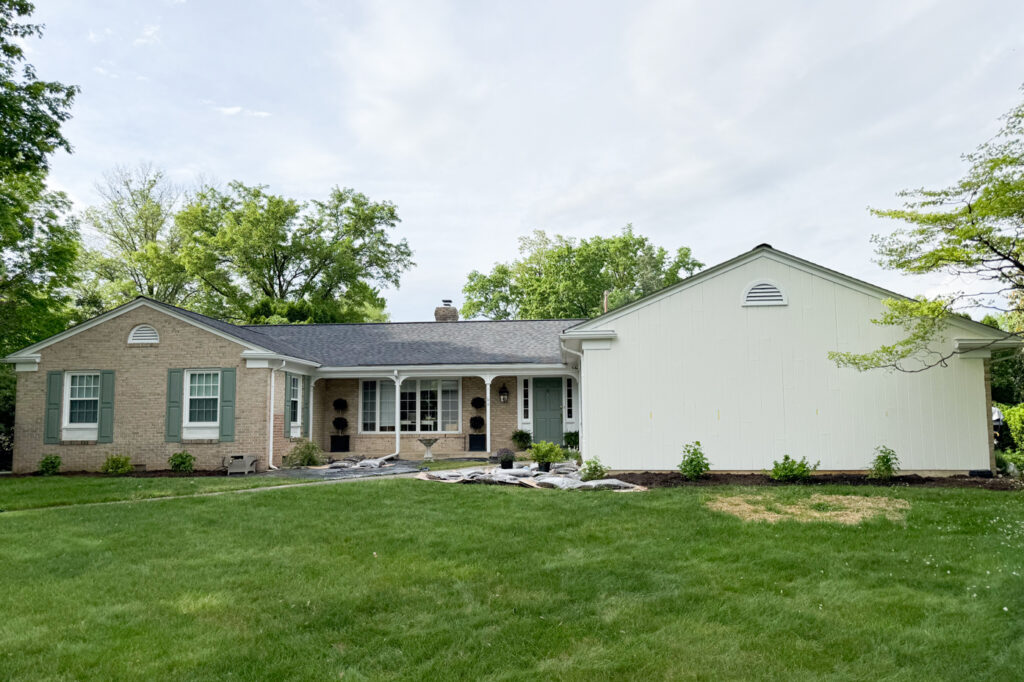
In case you haven’t noticed by the subject of my recent posts, gardening has been my main focus over the past few weeks. I feel like I have to take advantage of the weather before it starts getting really hot and also get the backyard cleaned up before we open the pool. I keep feeling a pull to the easel to get some paintings done and I’m excited about finally painting the dining room, but I have to follow the seasons and plant when it’s prime planting time. And, I need to get ahead of the weeds before they get out of control even more than they are. In addition to the sense of seasonal urgency, I’m really enjoying it. I put my headphones in and listen to an audiobook or music and completely lose track of time. I’ve been gardening some evenings until it’s so dark I can hardly see! It’s been rewarding, though, as I’m making slow and steady progress and getting my 10,000+ daily steps in as I do it.
So, let me first give an update on the Bishop’s Weed situation. As I’ve done a ton of online research, I have found several helpful articles, but I haven’t found anyone sharing their “Bishop’s Weed Eradication Journey.” It’s not a fun or pretty journey, but I figured I might as well record my efforts and experiments for the benefit of others who are fighting the same battle. I found myself wishing I could see pictures of the process and results and there just wasn’t much of that available. There are a lot of forums where people ask for advice and others answer with things that have worked and things that haven’t, but without images and detailed information about specific tools, techniques, or products. It’s funny… when I searched for images, I just found my own!
You can read my initial post about Bishop’s Weed HERE, which is a good place to start if you’re unfamiliar. I was completely ignorant to the fact that this ground cover, which was very popular at one time because it spreads quickly, is so hearty, and is actually quite pretty, is also incredibly aggressive and very, very difficult to eradicate. It will take over a yard if it goes unchecked. Unfortunately, I didn’t know that when I just let it grow and bloom and spread since we moved in almost two years ago. In my searches, several people said it is one of the worst if not the worst weed to battle in a garden.
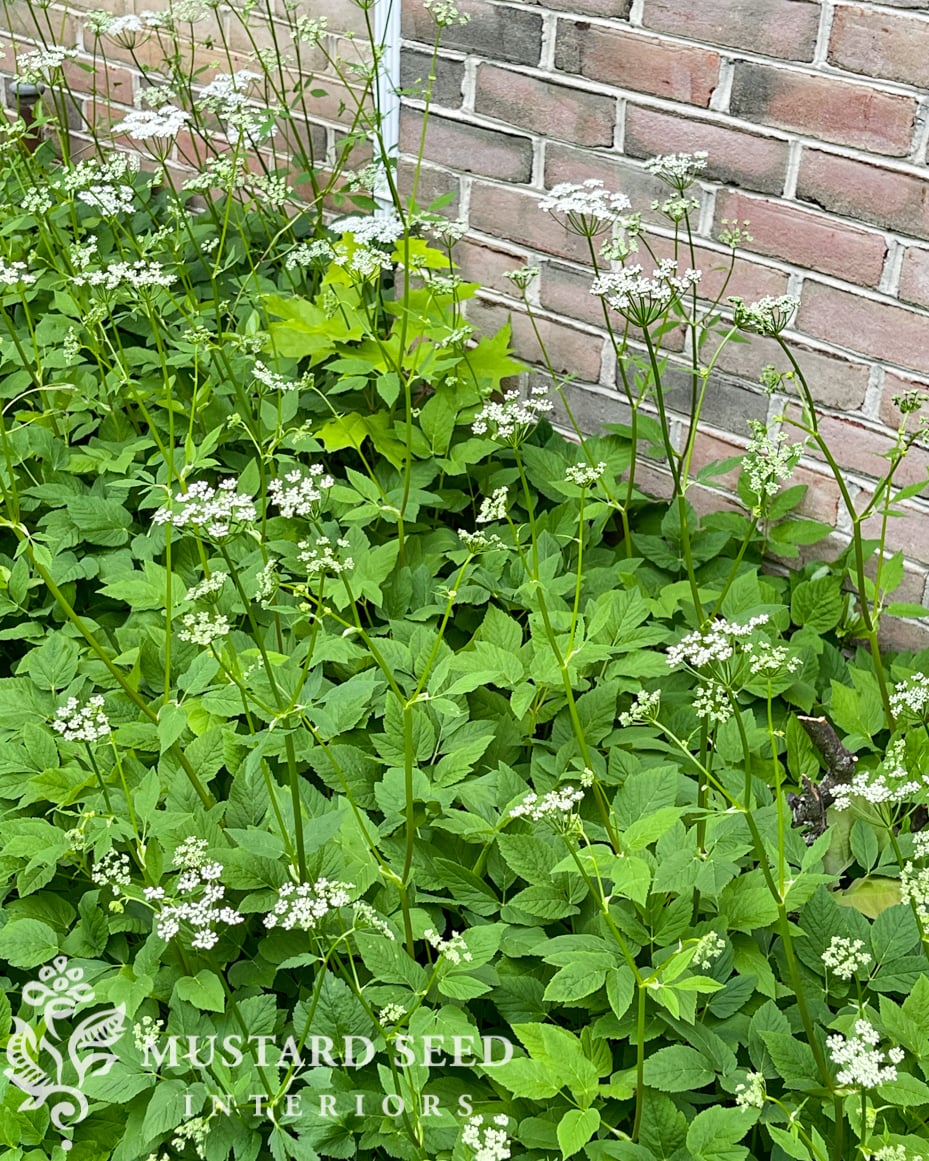
Since I’ve been very hard on Bishop’s Weed, I want to point out that it is a medicinal and edible plant, so it has its uses. It’s also known as Goutweed because it was used to treat gout. It also is a very lovely ground cover if you have an area you want to let go wild. I imagine a field of Bishop’s Weed is beautiful. It’s just not fun to have in a garden where you don’t want it to take over.
So, after reading a bunch of articles, combing through forums, and watching YouTube videos, I decided to take a multi-prong approach to see what method or methods are most effective. My hope is to eradicate it in certain areas where I want to do serious gardening and keep it under control in areas where I’m just planting bushes. I don’t think I’ll ever be able to completely eradicate it from the entire yard since it’s nestled among mature bushes and along the fence line I share with my neighbors (therefore it’s on their property as well), but I have declared war, researched my enemy, and I’m ready for a long fight.
I’m using five different methods in my garden to fight Bishop’s Weed, depending on the growth density in an area…
- Smothering with cardboard & mulch
- Tarping with black plastic
- Digging out the plant, roots, and rhizomes
- Death by a thousand cuts through mowing, weed whacking, and plucking any visible sprouts as soon as they pop up.
- Spraying
In areas where there are just a few sprouts and where I also want to plant, I am smothering with cardboard and mulch. I have been laying out the cardboard, overlapping by several inches and doubling the layer, and then weighing it down with bags of mulch. After leaving it for 2-3 weeks, I’ll lift up the cardboard to check on the progress. Most of the smothered plants have died, but the Bishop’s Weed is clearly evident, still sending out shoots to find light. I pull those shoots and replace the cardboard. It’s going to take much longer than 2-3 weeks to kill it, but I want to keep making it weaker by pulling any sprouts or shoots that might help the plant survive.
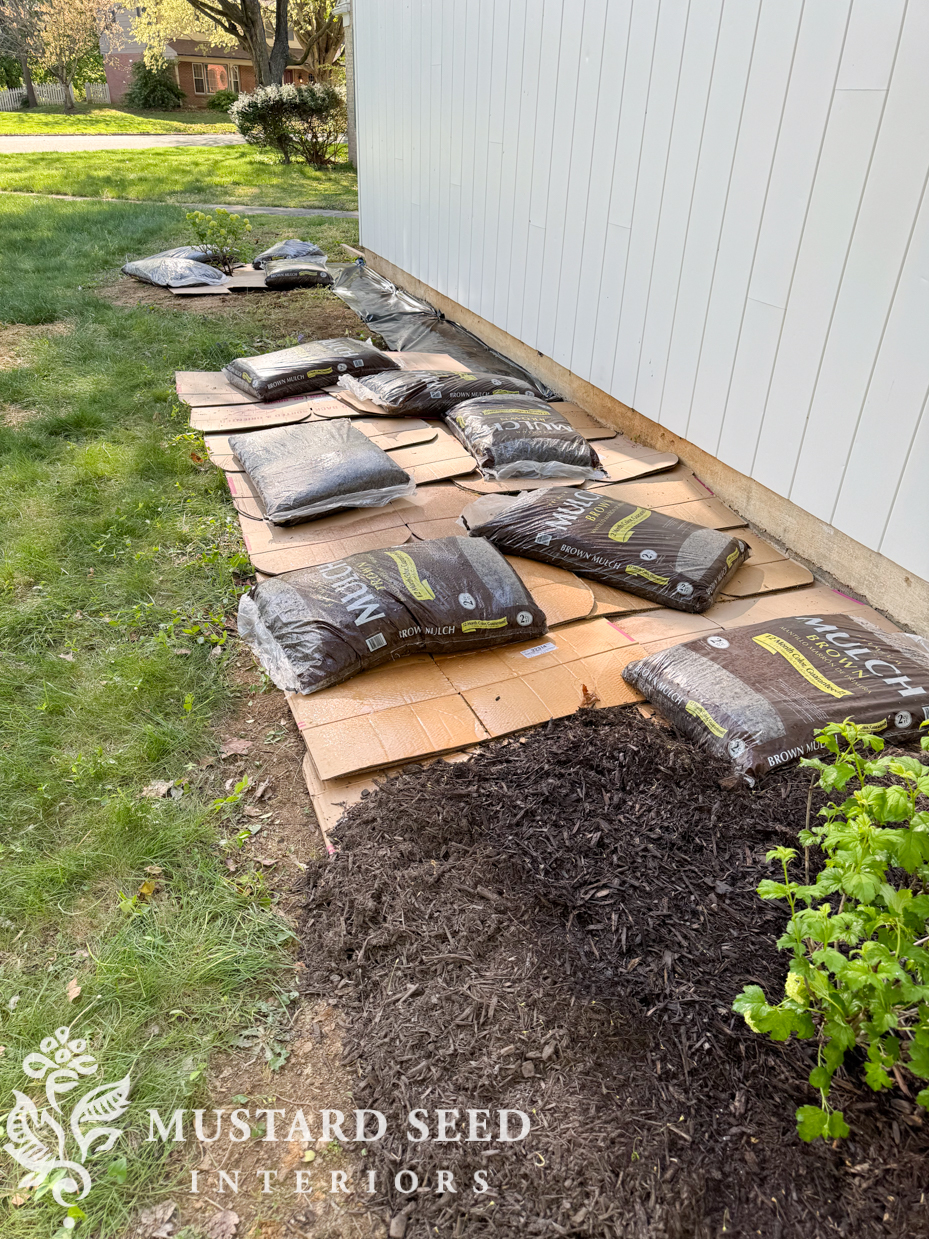
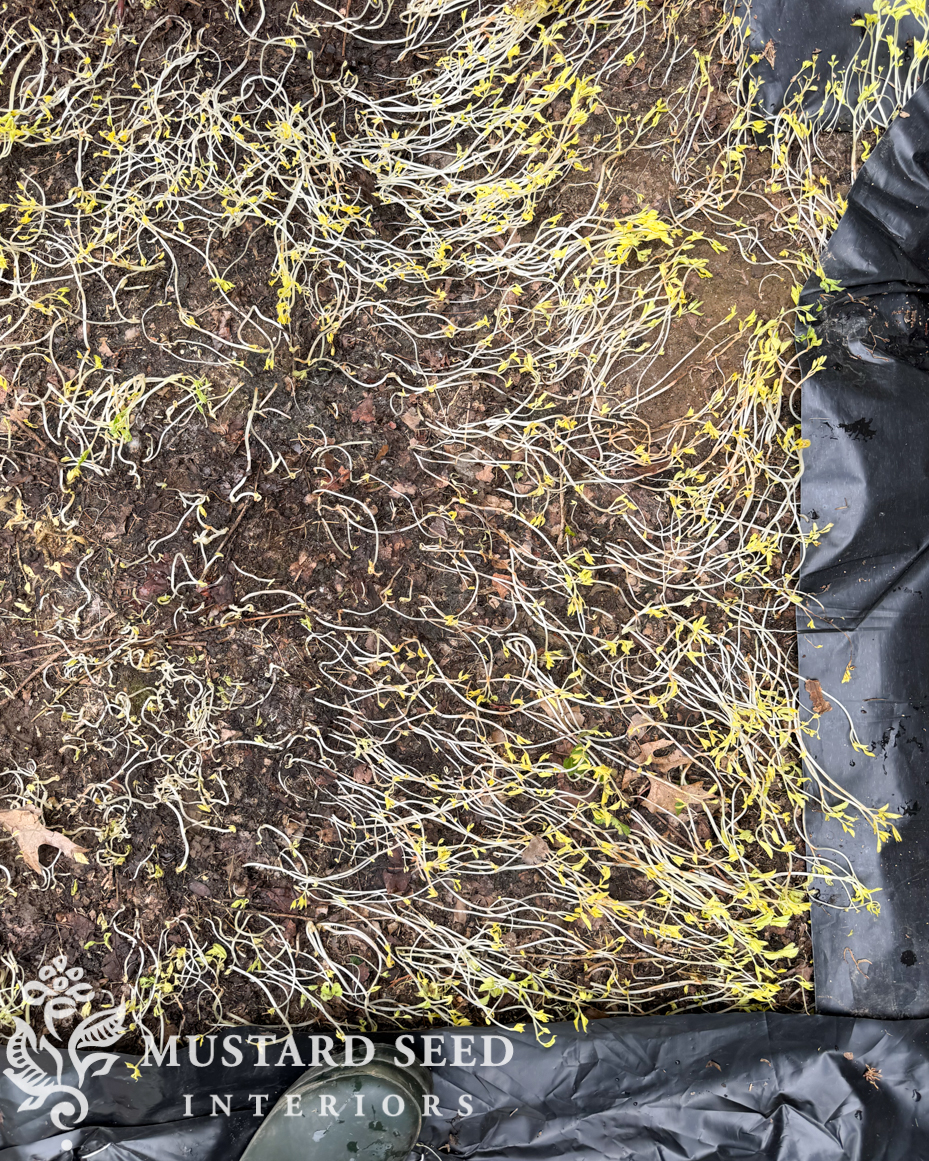
Here is what an area looked like after about three weeks of smothering with cardboard weighed down by bags of mulch. The other weeds are like, “Yeah, we see we’re not wanted here. We surrender and will compost ourselves.” Bishop’s Weed, however, silently quotes Dylan Thomas at me, “We will not go gentle into that good night. Rage, rage against the dying of the light!”
That is seriously what came to my mind as I looked at those reaching shoots, desperate to photosynthesize. ‘We will not go gentle!” It’s almost admirable and probably a good sermon illustration for Jeff to have in his back pocket, but it’s disheartening to see an unwanted guest in your garden have so much determination.
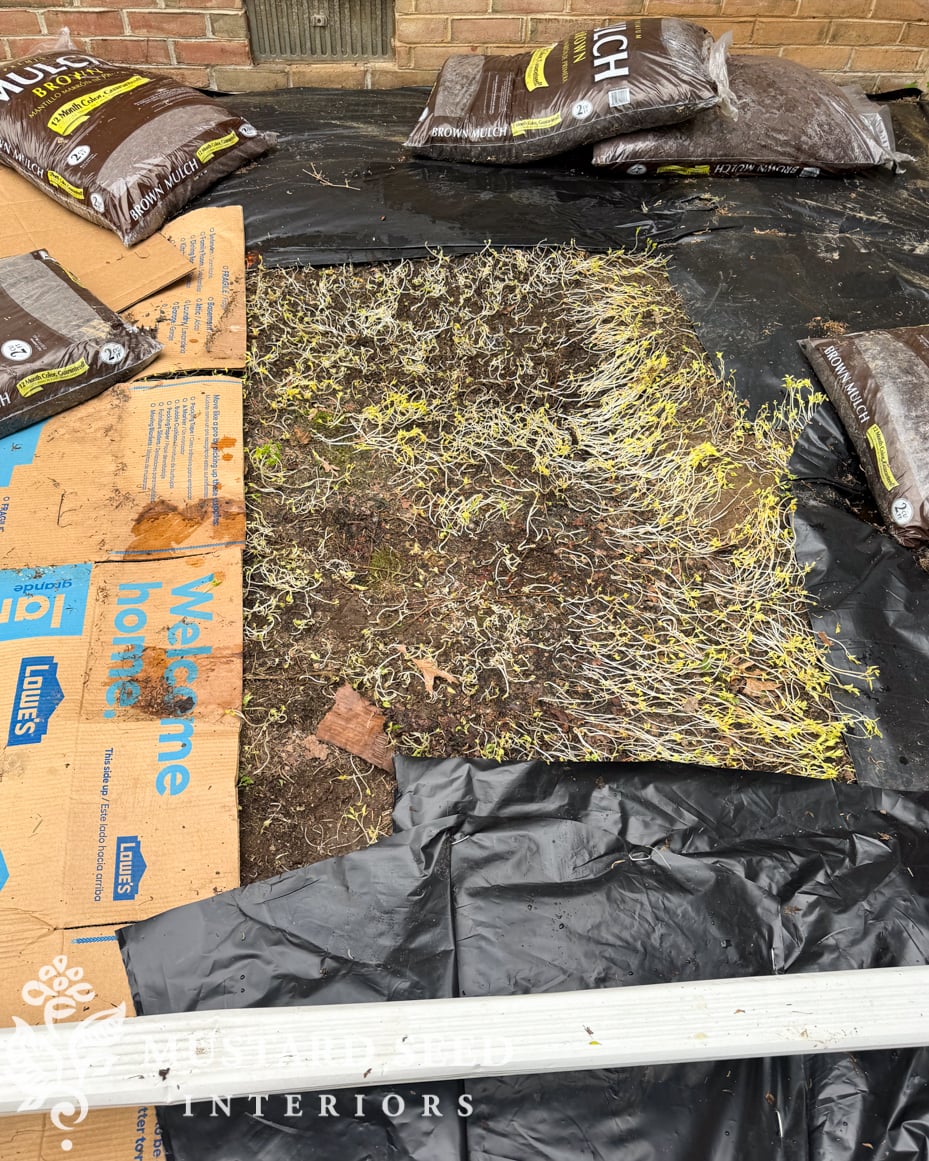
Since this area is so overrun and it’s also an area I want to fill with bushes and perennials, I’ve decided to pull the shoots, remove the cardboard, and tarp the entire area in black plastic. This will continue the smothering process, but will also deprive the soil of water and, in the summer heat, will burn anything under the tarp. It’s the most drastic measure and, I’m guessing, will be the most successful.
I’m going to leave it tarped until next spring and then we’ll bring in new topsoil and Leafgro compost to grade the garden away from the house and revitalize the soil. Most articles I read said the area should be tarped for six weeks to a year, specifically during its most active growing season in the spring. A few people in forums suggested up to two years, but I’m hoping that’s overkill. If a plant can survive a full year under black plastic, I tip my hat to it.
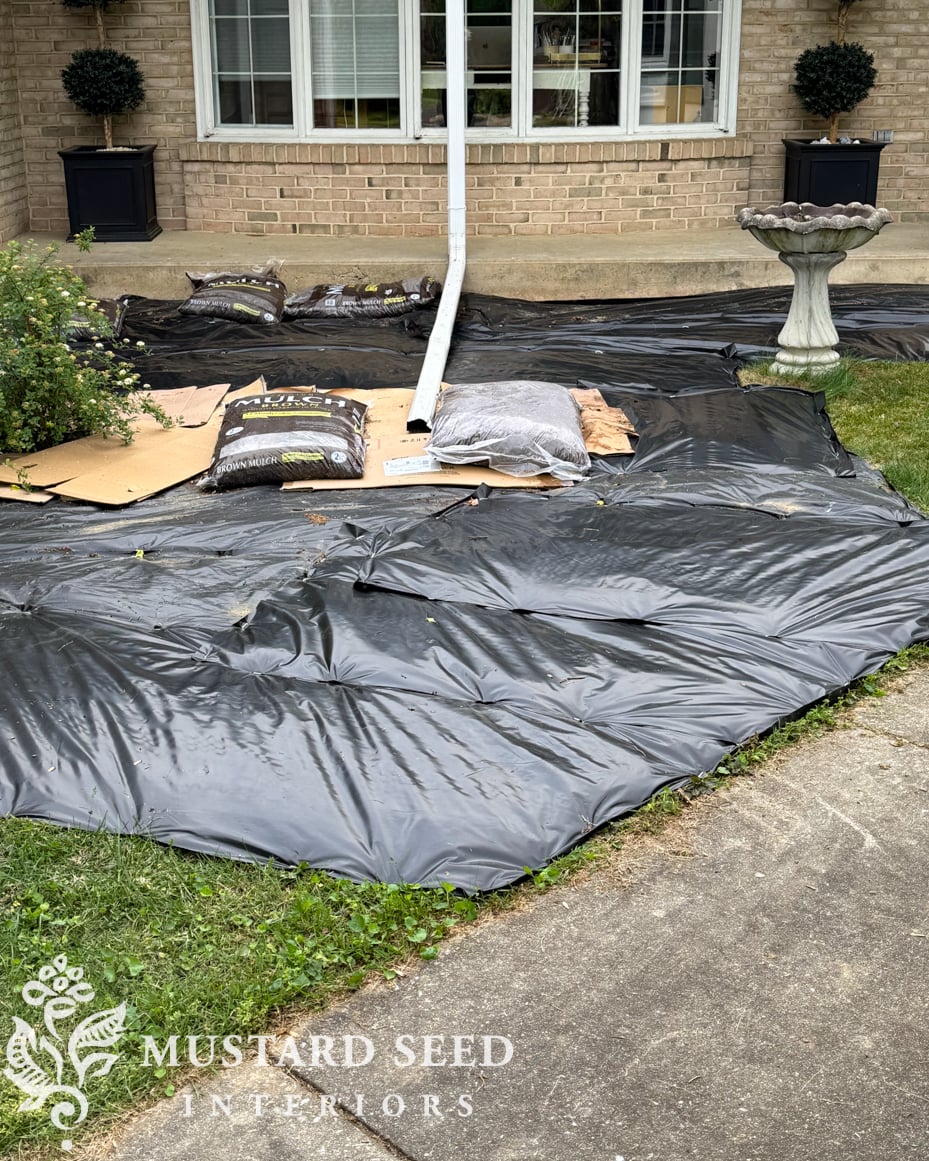
I started removing the cardboard and tarping the area yesterday, but I still need to finish. I ended up removing the Spirea I just planted a couple of weeks ago to keep it in a pot while I fully tarp this area. Bishop’s Weed wasn’t where I planted the Spirea, but it was close enough that I was afraid it would creep to the light and water I was offering the Spirea to survive the tarping. If I’m going to tarp it for a year, I might as well tarp the entire area and (hopefully) get it over with.

It’s going to look ugly, but I think most people will understand that I’m prepping it to garden. Thankfully, the other areas in the front weren’t affected or just had a small patch to smother and/or dig out, so I can make those look nice.
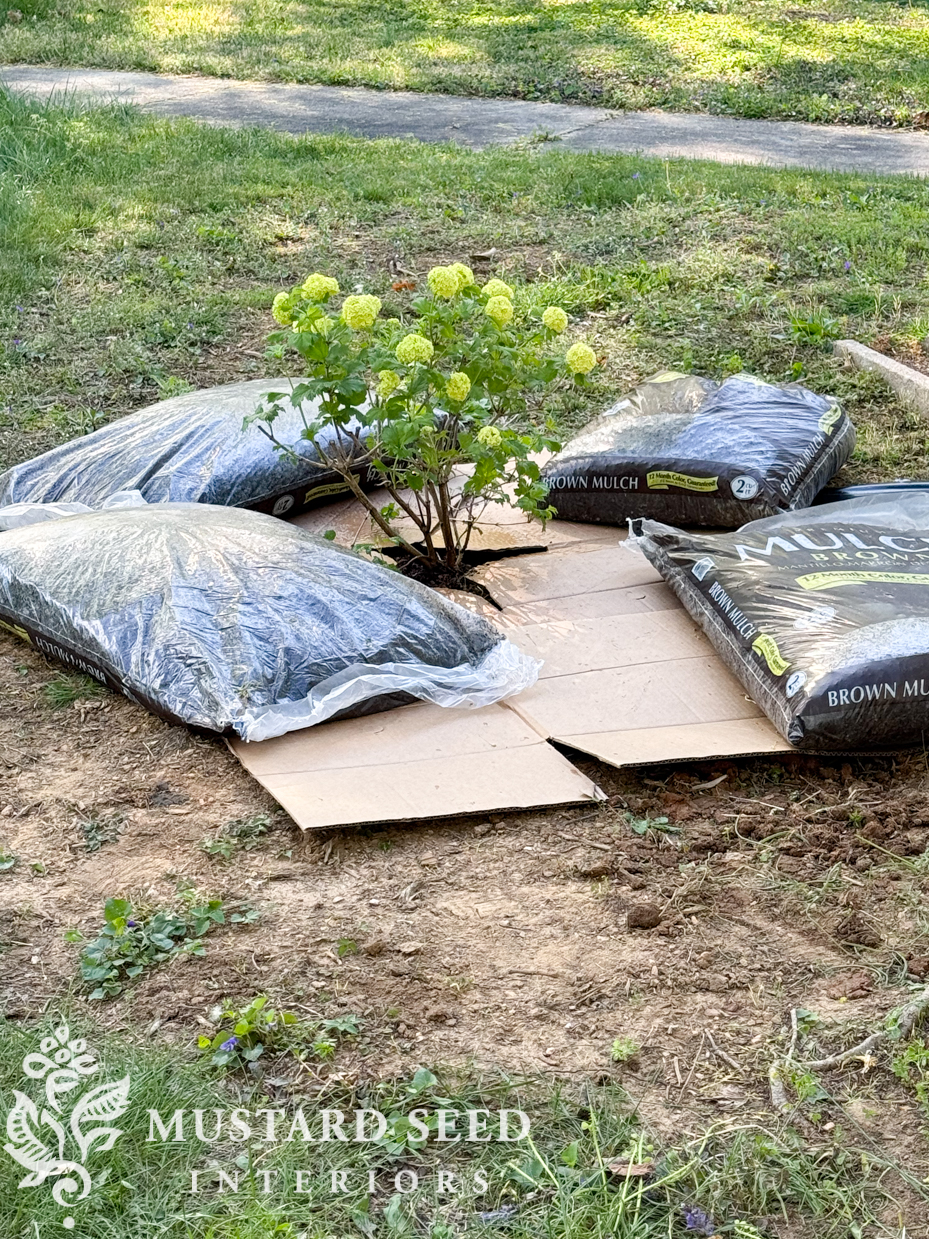
In the areas that aren’t contaminated with Bishop’s Weed, I am still using cardboard around new plantings to kill grass and any normal weeds before I mulch. As I shared before, the boxes will compost down over time. They will allow water through but will slow weed growth to give my new plants a chance to get established. Since I’m trying to either make new beds or reestablish ones that weeds have taken over, I need more than mulch to do the trick. As a side note, I am mowing, weed whacking, and pulling weeds before I put the cardboard down.
Oh, and I found two snowball viburnum bushes! Those were on my “must have” plant list and I can’t wait to cut blooms from them each spring as they grow.
In the corner of the backyard, the cardboard and mulch smothering is doing a pretty good job so far of keeping the Bishop’s Weed under control. It is popping up at seams, edges, and around some of the new plantings, so I moved the mulch, added cardboard “patches” to cover those problematic seams, and replaced the mulch. I’ve also been hand-pulling any new sprouts to weaken the plant.
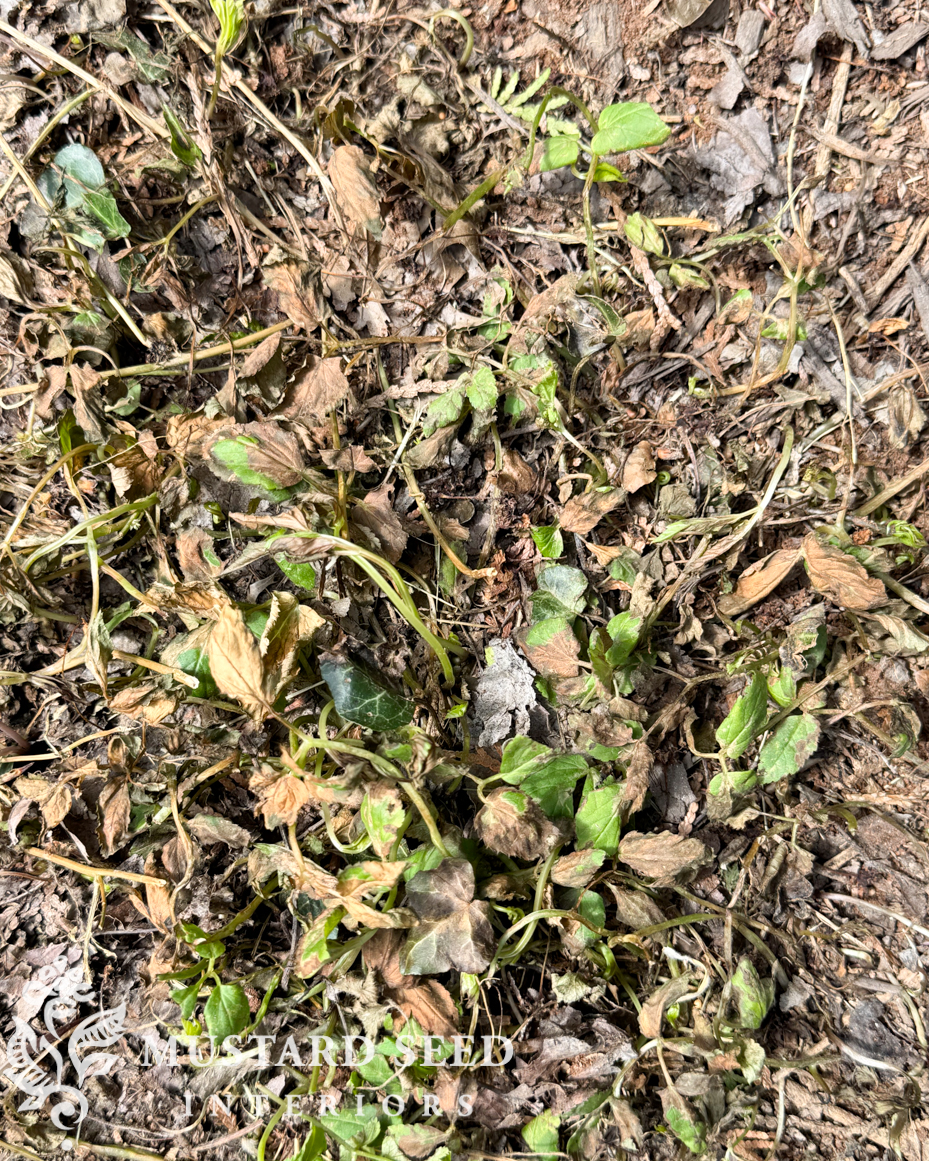
There is a weedy patch in front of this new bed that has ivy and Bishpop’s Weed, so I’ve been testing out Round Up’s Ivy & Tough Brush killer on that patch. Vinegar and other weed sprays are not effective on Bishop’s Weed, but this one is effective. The downside, of course, is you have to use a chemical, which I know is controversial, and you have to apply it several times to completely kill the plant. It’s not ideal.
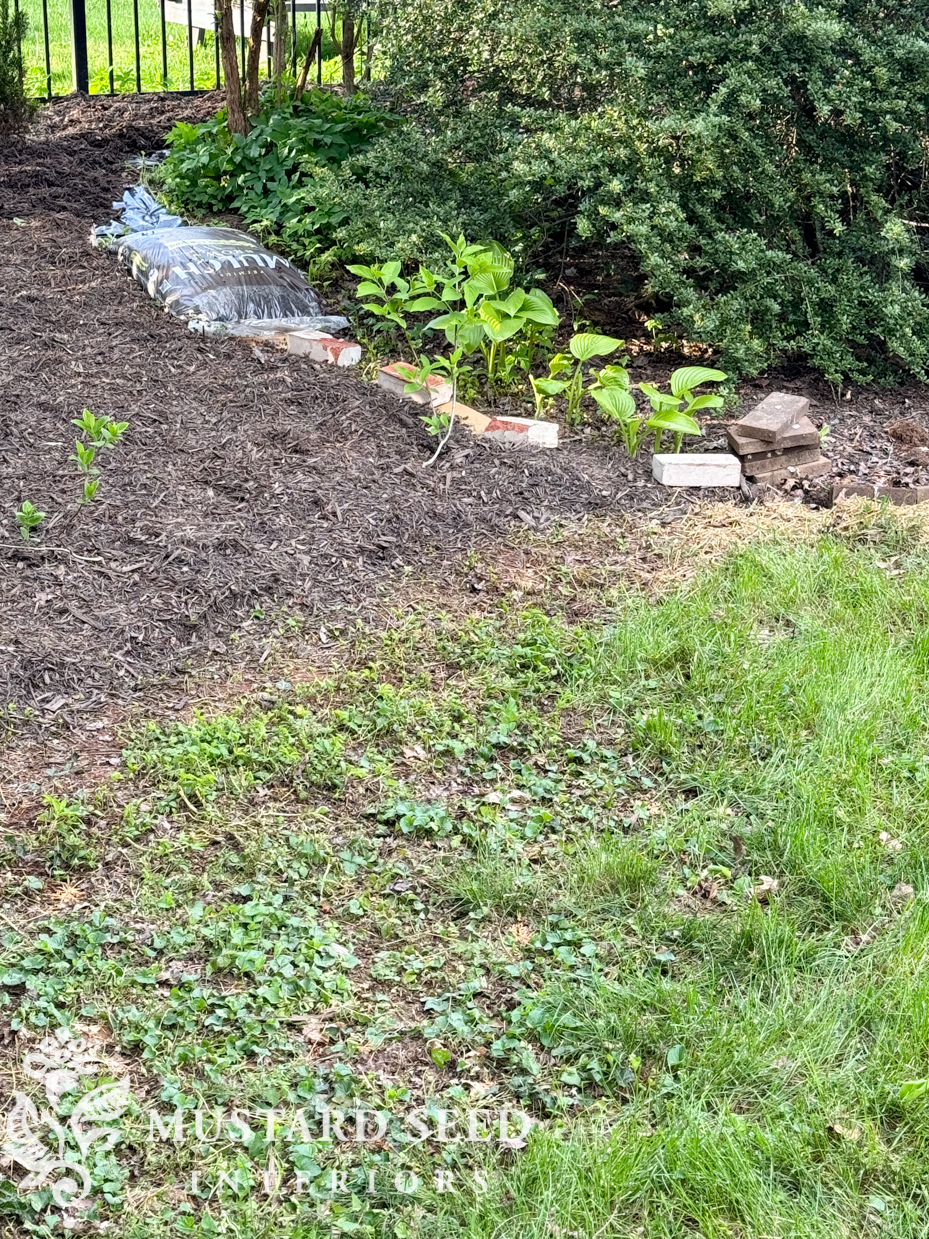
I’ve been mowing this area short and then spraying the new, tender shoots. It has been effective, but new shoots continue to show up so I’ll have to keep applying it if I want to pursue that method. I prefer to use non-chemical means, but I felt like I needed to test it out since I have to deal with it in so many areas of the yard. Here’s how it looks a couple of days after the initial application.
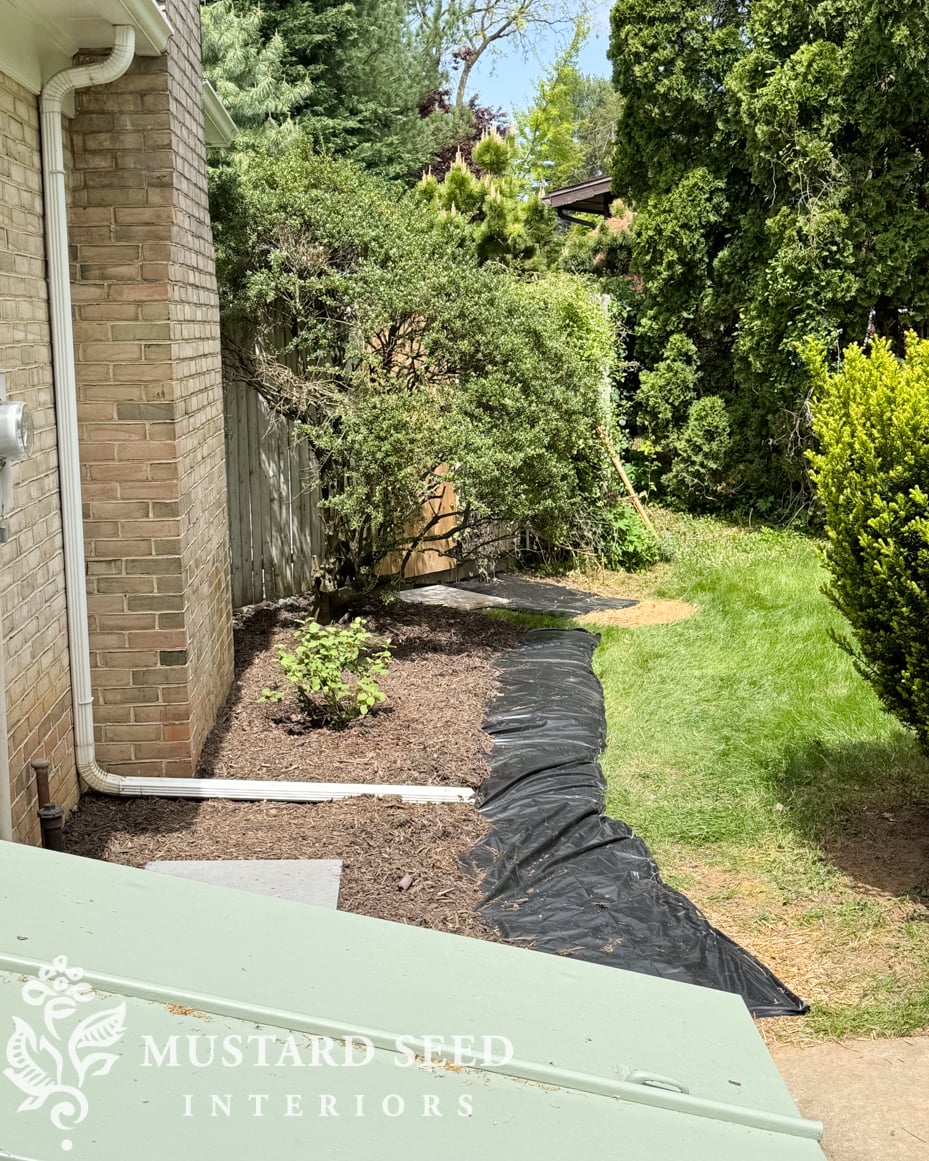
I wasn’t quite aggressive enough with the smothering in the area along the garage side of the house, so I added black plastic to kill any shoots that were creeping out or were already growing beyond the bed and I just hadn’t noticed because it was mowed. I think I’ve got it all covered now and I’m slowly working on the area on the other side of the gate. It’s a tangle of Bishop’s Weed, normal weeds, and Sweet Autumn Clematis. I’m hoping to save the Clematis, but I’ll have to dig it up, clean it, and put it in a pot. In addition, removing it will also take down the fence, so I need to wait until we’re ready to install the new fence to take that out. It’s a mess of a corner at the moment!
In smaller patches of Bishop’s Weed, I’m digging with a Hori Garden Knife and gently pulling out the rhizomes. I’m then watching the area for new sprouts and digging those out when I see them. In areas that I haven’t worked on yet, I’m mowing and weed-whacking to keep the patch as short as possible to not allow it to flower or have the strength to spread. I’ll eventually tarp, smother, or dig those areas, too.
Ha, that was a lot more on Bishop’s Weed than I was planning to write, but it really has taken up most of my gardening time recently! The odd thing is I sort of enjoy the methodical process of pulling, digging, and running the dirt through my fingers to remove all of the rhizomes. It’s not fun work, so I’m not sure why I enjoy it. I suppose I enjoy knowing it’s necessary to take this garden where I want it to go. It’s also nice to be outside, working with my hands, and enjoying creation.
Let’s move on to things that are a lot more fun than fighting persistent & pervasive weeds – designing the trellises!
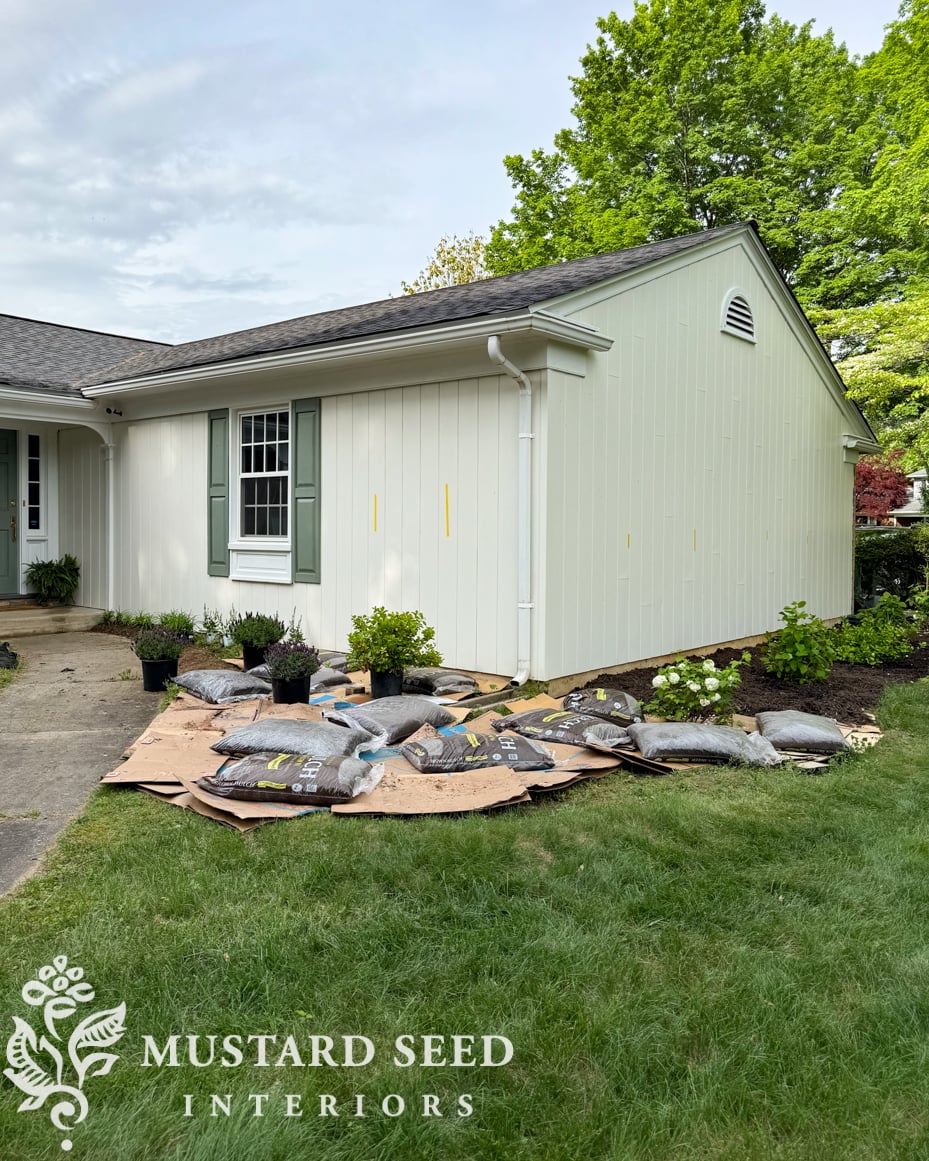
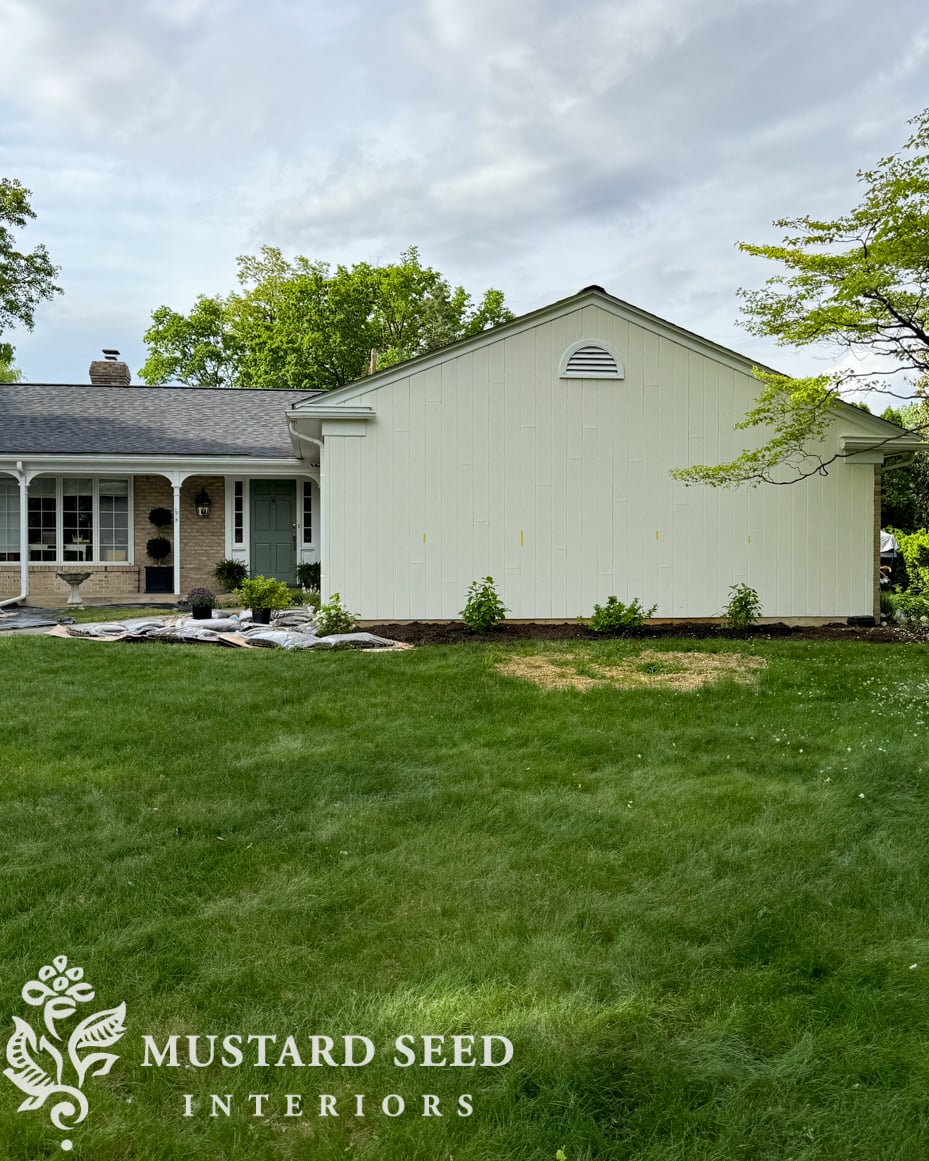
Initially, I planned on building one large trellis to cover that blank wall of siding. The structure I had in mind was going to be a big build that would require a lot of wood and, most likely, footings or at least good, deep holes, for the upright posts. When I was taking a break from carrying mulch one evening, I sat under the shade of one of our large maples and stared at the house. Maybe I was overcomplicating things. Maybe we could make something simpler. I thought one trellis was necessary to cover that much wall, but then it occurred to me that two would be much better. It would still visually cover the wall, would be much simpler to build and install, would be less expensive, and would mimic the two windows on the adjacent wing of the house. They would balance out better.
I had this thought before I went on my creative retreat and I was looking forward to getting back home, taking measurements, and drawing up a plan. I also want to add a smaller trellis to the right of the garage window for an evergreen climbing bush. I went outside with a tape measure, a roll of tape, and some graph paper to figure out where I wanted the trellises and how big they should be.
I discovered through measuring and taping that the peak of the roof is a few feet off-center! I thought I was going crazy thinking that the bush I centered under the gable didn’t really look centered and my eyeball was right. So, I had to move the tape to center the trellises under the peak of the roof and not the center of the wall.
painting exterior siding | painting the shutters
Tape is my favorite way to get a visual idea of scale. The tape lines confirmed how tall and wide the trellises should be to look appropriately scaled for the wall.
So, I went to my desk with the measurements and drew up trellis plans for the space based on a vintage trellis I saw on Facebook Marketplace.
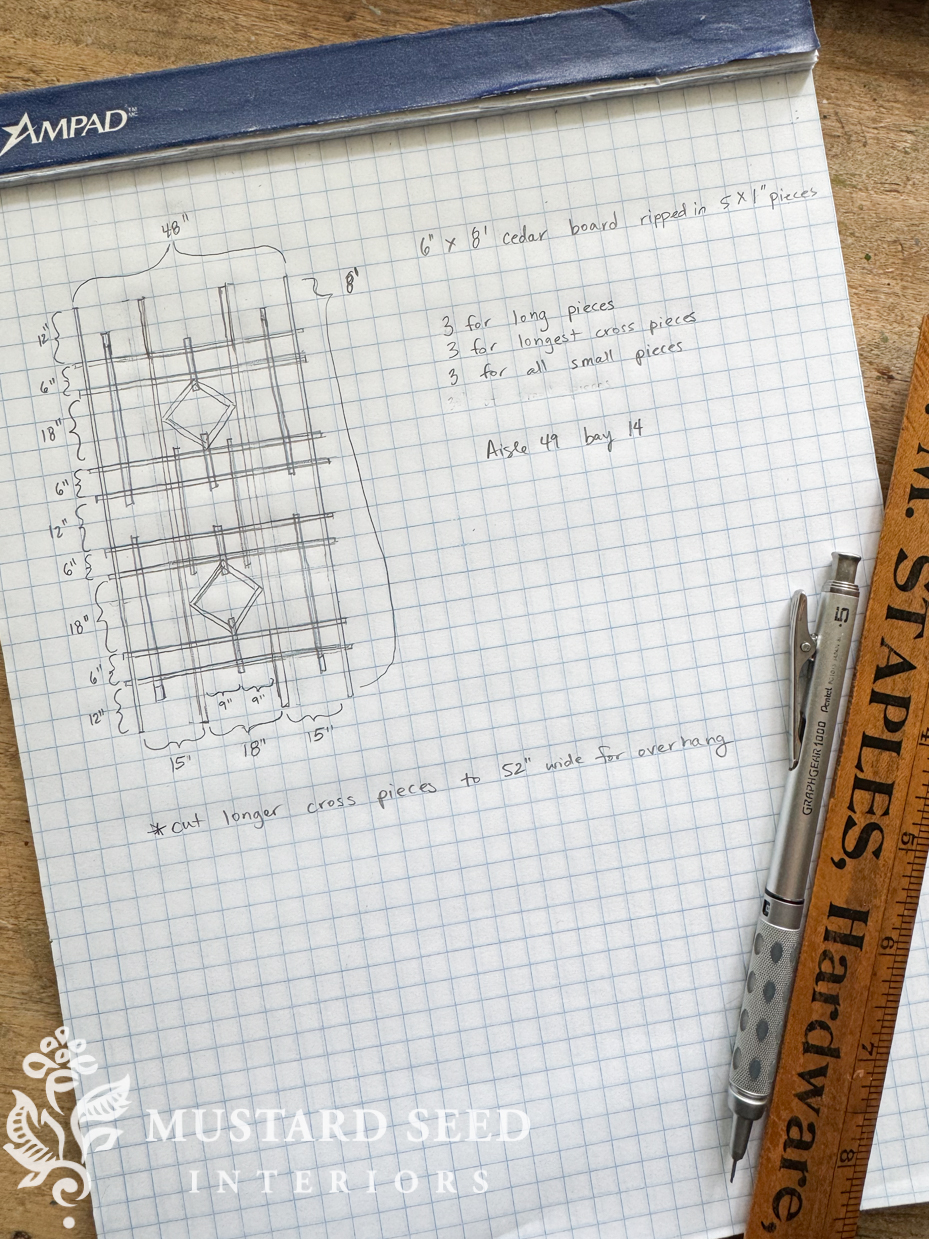
I was going to rip the boards to one inch wide after watching a few woodworking tutorials on building trellises, but I called an audible and decided 1 1/2″ wide was better for the size of the trellis and scale of the space. I bought all of the cedar 1 x 2s they had in stock (that weren’t corkscrewed), but I needed to buy some 1 x 6″ boards for Jeff to rip down on the table saw. I’ll share the building process once we have them built.
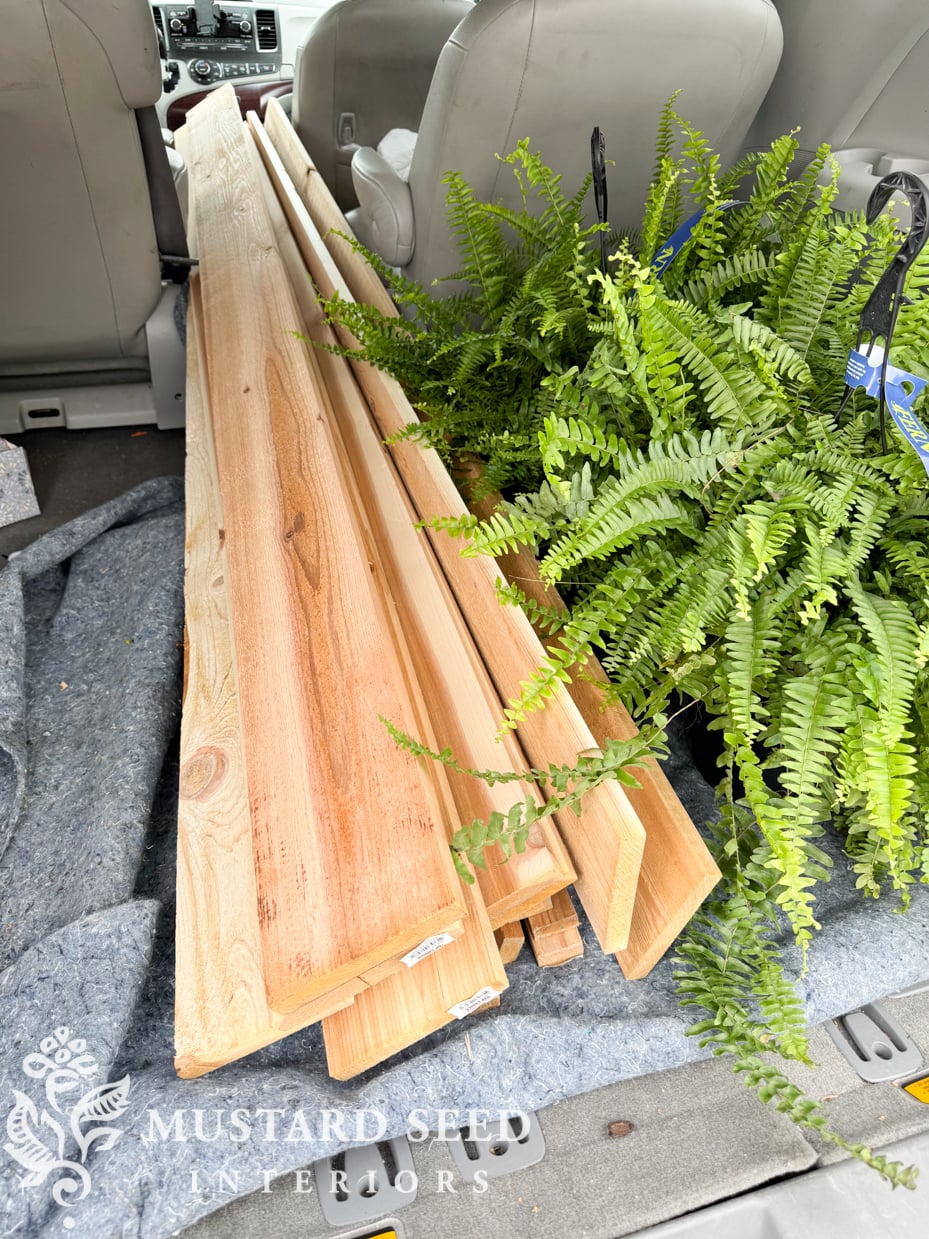
Oh, and I bought ferns to flank the front door. They were on sale and I thought they would be perfect.
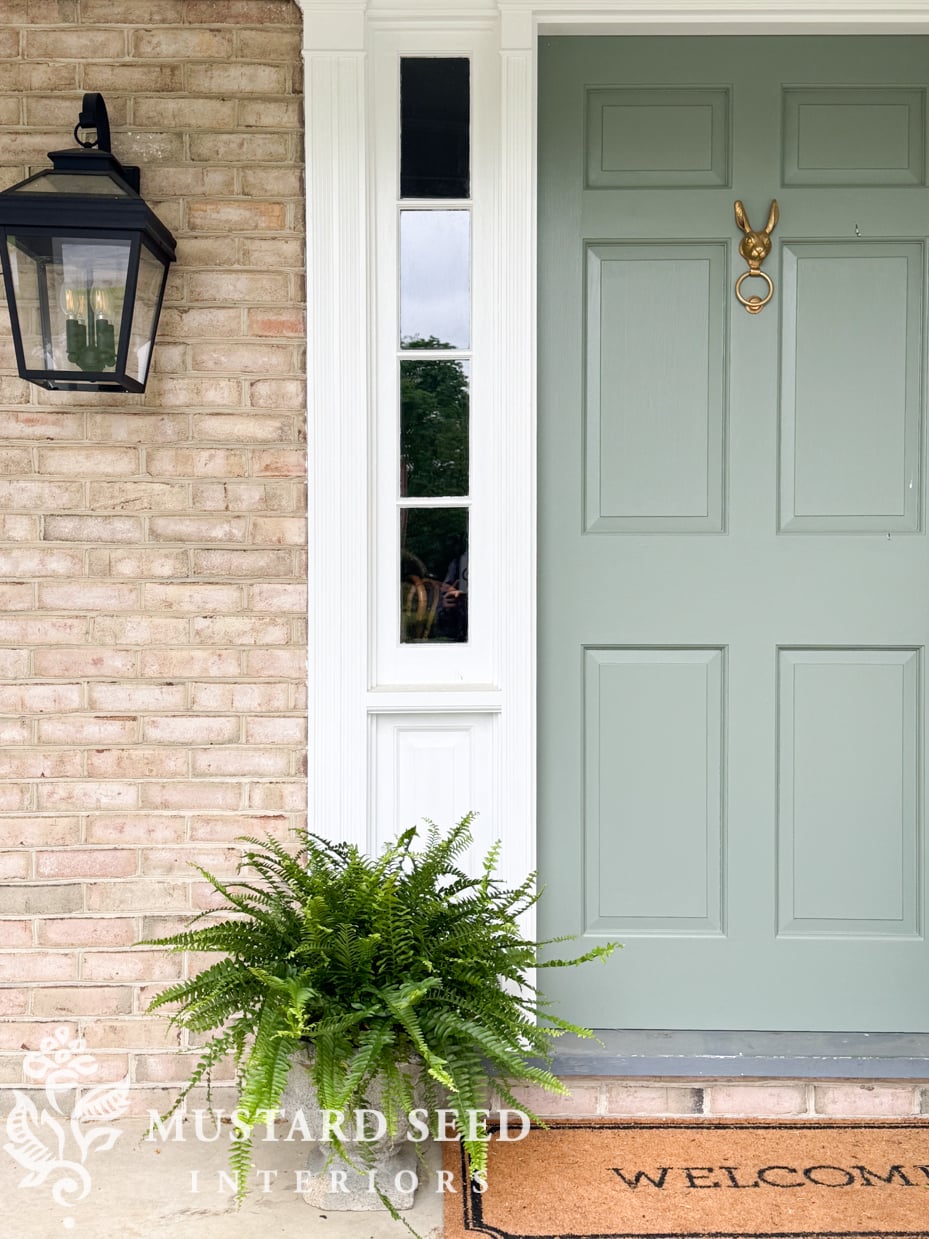
painting the front door | new exterior lights | door knocker
I’ve slowly been weeding, planting, and mulching along the garage window and hope to get more of that done over the next few days…
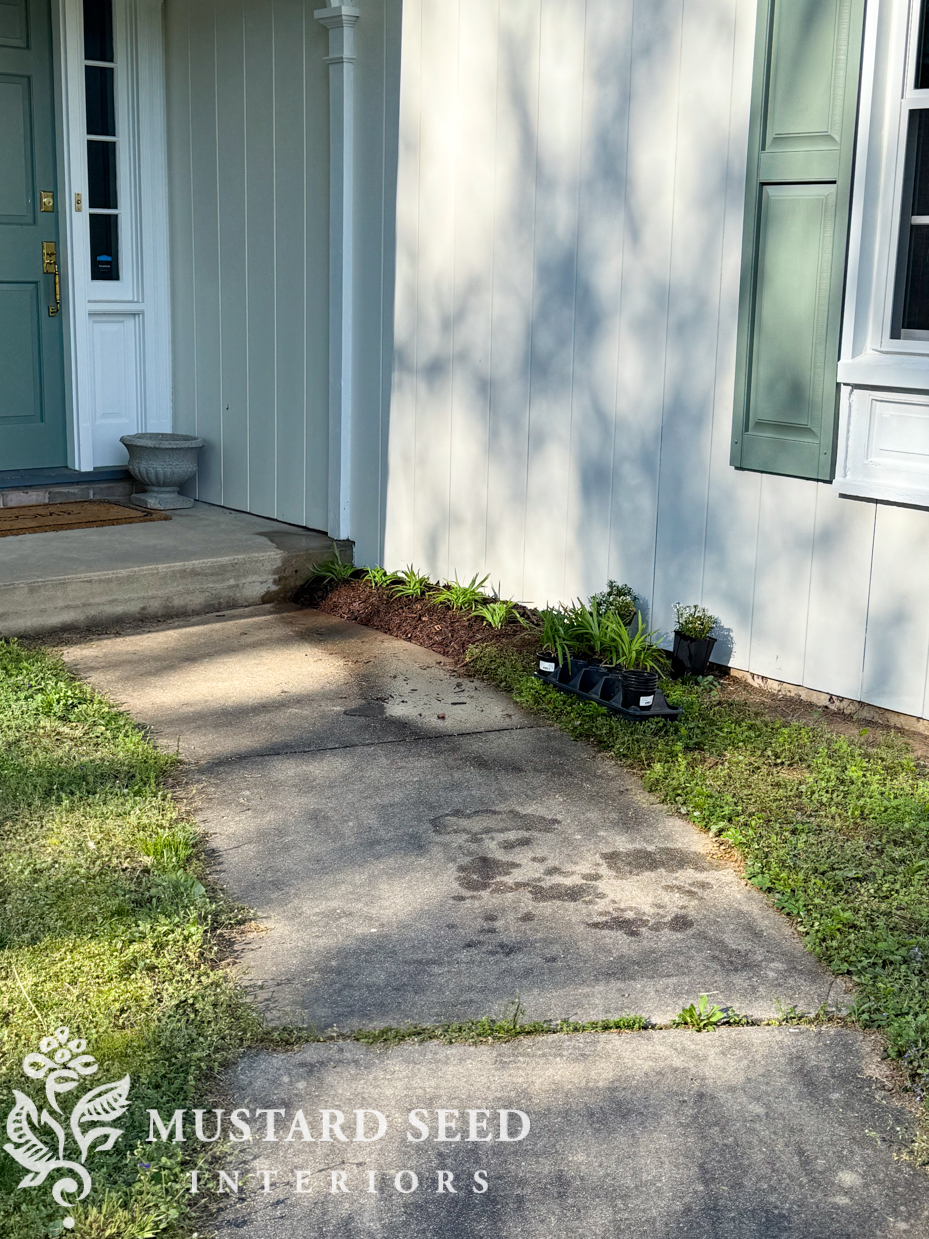
I also got the Annabelle hydrangeas planted and some evergreen bushes that can be shaped between them on the brick wall and the siding wall. I’ll eventually plant a boxwood hedge and some perennials in that area, but these are the foundation bushes that will get things started. I need to make a neat border edge, too, but I ran out of steam.
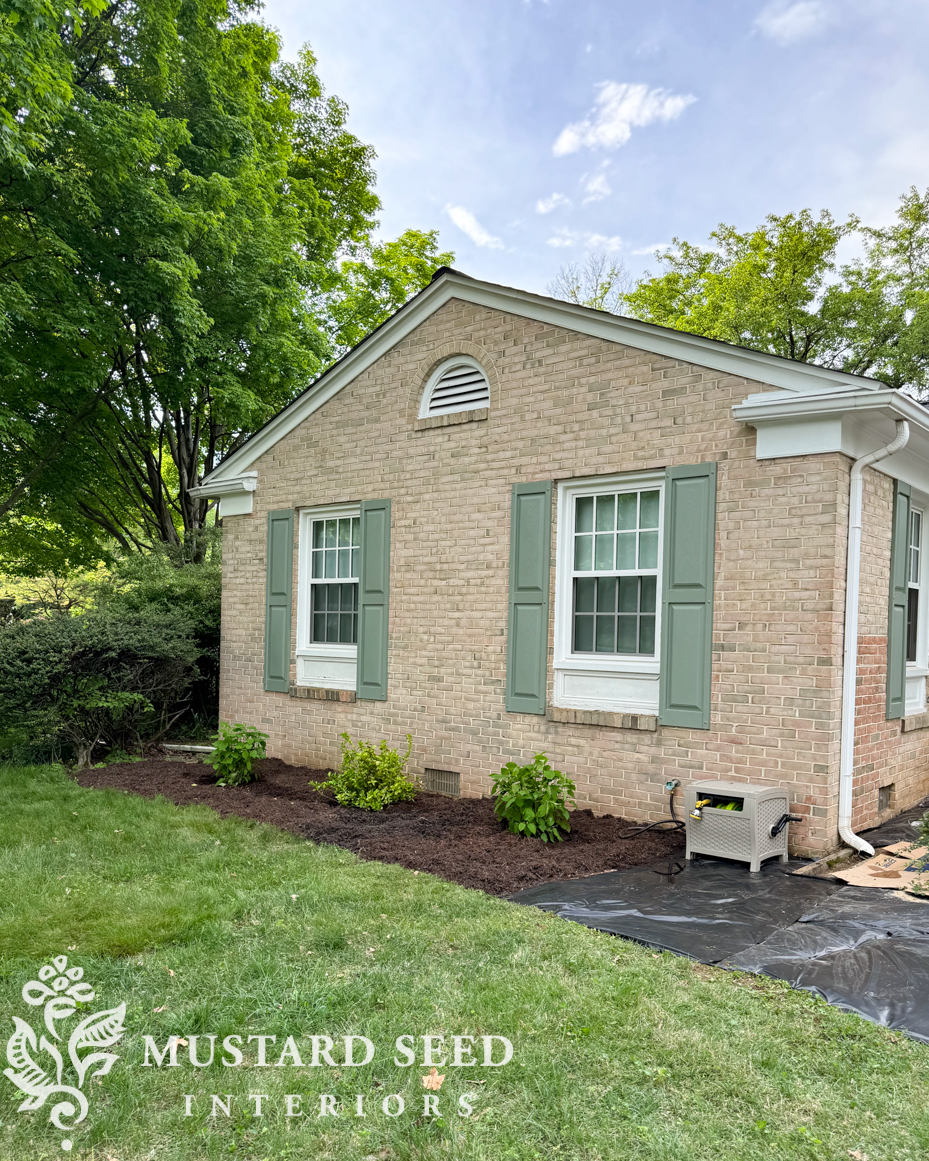
hose hideaway | best hose spray nozzle
At some point, I’ll draw out the entire plan to share what I’m putting where. I’m hoping the end result will be textured, layered, and have a traditional English garden feel. There will be more curves, height variations, and interest as things grow and more is added over the years. Right now, it’s looking a little boring, but I’m doing almost all the work by myself, so it’s slow going and I have to take it one step at a time.
I was going to share some updates on the backyard as well, but I’ll save that for another post…














24 Responses
So you are going to design and build your own trellises? My hat is off to you! Also a tiny bit jealous of all your skills! Must be honest.
The Bishop’s Weed has met it’s match…tenacity wise.
my nemesis is wild garlic I have dug it. I have clipped it, and I am resorting to round up next spring when it is small green clumps, and other plants are not up. It grows in the middle of plants so must be clipped. That seems to invigorate it. wish me luck!
2 trellises will be perfect! Great idea.
WOW. What an ordeal. My word, when this is to your liking you will so be able to sit back and say “I won.”
Hang in there – so much work. I never knew about this horrible plant till you mentioned it the first time.
Gout or not, it doesn’t belong in your soon-to-be amazing garden beds.
Instead of making that garage wall a focal point with a trellis, I would plant a few small native trees that would form a canopy (or even 3 of the same species so it doesn’t look too busy) in front of it to act as a screen. Then under plant with shorter shrubs and an herbaceous layer.
I’m exhausted reading this!
I live on about 25 acres with about 6 of them needing to be actively mowed. There’s a tractor for the bulk but still a lot of hillside the tractor can’t reach. It feels never-ending this time of year.
Bishops Weed is so pretty, and I’d love if that was growing here instead of the hardcore stuff that our weed trimmer can’t handle. But, I can imagine facing it in the garden is overwhelming.
We have a torch for spot weeding. Hook it up to a propane tank and roll it around. There’s also a zapper thing in the Sharper Image catalog I’m interested in. It’s supposed to zap to the root for more spot killing.
I hate Roundup, but burning and mowing it is dangerous so it’s either vinegar, the zapper or the last resort.
You have such wonderful patience and tenacity.
I had a similar battle with quackgrass at my old house. It was in my vegetable garden/orchard. I used a similar approach–but no chemicals due to the proximity to my veg. Since it was in the pathways and not my front yard. I just laid down heavy duty cardboard (like from the appliance store) wood chips. The first year was great. I just pulled any that showed it’s head in my raised beds. The second year it was doing the same thing your bishops weed was doing–reaching for the light I laid more cardboard more chips and spent more time hunting for the little searching heads than in my veg (or at least it felt that way). After 4 years, I finally think I got it under control–but then we moved 🙂 Keep at it, you can win! This house has something called White top or hoary cress it is also very pretty in bloom (especially with the tulips that are in that bed) but it is also quite invasive. Always something with gardening. Oh yeah, one of my small trees (still has about a 3 inch trunk) is COVERED in scale. I think I’ll just cut it down…
Thanks for all of your information Marion. I inherited a garden with Bishop’s Weed in a small city garden. I thought I had pulled all of it out and eliminated it. However, it came roaring back and, once again, I dug it out. This year it has returned with a vengeance. I will try some of your methods, and hopefully, get rid of (most) of it this year. Thanks for all of the research and practical advice!
OMG I cannot believe how much you have jumped into this with both feet. You have done a ton of research but I will add something we do out west. We use CLEAR plastic not black to cook everything under it. Research out here shows the sun beating through heat much better than black plastic. We leave it 6 weeks during the hottest part of the summer to kill weeds and other diseases. Of course our summer temps get in the 100’s during this time. Good luck!
Yes, I did read about solarization with clear plastic and had considered that, but it seems like you have to apply it, remove it, pull the sprouts, apply the plastic again, etc. It seemed like leaving black plastic in place, especially since I have such large areas that are affected, would be better. I might try the clear plastic method in a smaller area this summer, though. It’s worth testing out!
I’m not a fan of it usually but if you don’t like the look of the tarp you could cover it with astroturf or whatever the more realistic looking ones are called.
I need to start cardboard and mulch for some ivy in our new garden.
Here in England we call this ground elder. The more you dig it or the beds it is in the more you end up with . I think you are on the right track. Sarah Raven also suggests planting tagates which helps keep it at bay. It worked for her but I had too much and did not find it helped. In the end I just left it to mingle with the other plants as I was never going to get rid of it all. Nightmare plant even though it looks so pretty. Good luck
I belong to a goutweed support group on Facebook. Imagine! A support group to tackle this invasive weed in our gardens.
I’d love to join. Would you e-mail me the link to the group? Marian@missmustardseed.com
If you love English gardens, please check out Gardeners World (I watch on BritBox) – Monty Don explores gardens all over, the history and creation of his own Longmeadow Garden is fascinating.
The gout weed battle will give you one thing in the end: experiential knowledge. This is worth its weight in gold, but it will only be acquired by being on the front lines of the process. We all have our various weeds and other garden thugs to deal with wherever we live, and it is so wonderful that we can all compare notes with each other easily in today’s world! This is so much better than “the olden days” and can save people so much time! Thank you for being on the cutting edge of gout weed “research”! I’m working on “team bindweed” at my house.
I feel your pain, I have been dealing with Russian sage and VINCA!!!!! Vinca is the worst!!!! I have found the secret. Doing all the cardboard etc…. DID Nothing to stop it!!!! I finally, dug down 6-8 inches and threw it all away….not scrapping…DIGGING!!! Then I treat the cleaned out area with 30% vinegar or higher (Home Depot or Amazon) with a a squeeze of Dawn dish soap and then sprinkle the area on top with table salt. NO!!! You cannot plant for one year after…but it doesn’t seem like you are anyway. I have a VERY large yard and the areas that I have completed, have stayed clear, 3 years now. I even wrote to Linda Vater to ask her. She greatly sympathized and wished me luck but had no answers except staying on it.
PLEASE, PLEASE PLEASE do not use the Roundup. It stays in the soil and is very bad for you to dig around later. Will go to your liver. They cannot even tell you how long it stays around. If you walk by and see a shoot and pull it….it gets into your system. Then you also have to watch what gloves and tools your using , for cross contamination. It is treacherous stuff!!! The 30% or higher vinegar does a better, cheaper and safer job!!!!! BE SAFE!!!! And only a quick rinse of gloves and tools does the trick.
Also, although you can’t really plant for a year, there is no need to have it all covered up with the plastic/cardboard. Also…you should put some kind of a border blocker. Like a 2X4, because whatever system you use, it can leach onto the grass or areas you don’t want to remove. Rainfall can also spread it around. Try to keep it contained.
Good luck!!!!
I don’t know which kind of climate zone you are in but Bisschop weed is terrible in a tad warmer climate. I inherited it in my side garden because of my neighbour. I live in zone 7/8 and it can’t be killed, my neighbour even used Round-Up. I choose the less toxic route. I use dense root plants like the Darmera, Epimedium, and ferns. And grasses like Miscanthus and Stipa gigantica, and dense growing Geranium. Even after three years under black plastic, it is still alive. I doubt concrete can stop it. It is as bad as bamboo. I pick up the leaves that come up through the dense roots of the others. It is manageable this way. I understand it can take away the pleasure of gardening for you.
I wish you lots of luck with your Bishop’s weed. It’s been in my yard for over 20 years and I’ve never won the battle yet. It does help to keep digging it out and getting as much root as possible. That keeps it a little under control, but doesn’t eradicate it. I’ve used Round Up on it and unfortunately it killed the other plants around it, but not the Bishop’s weed. It came from my neighbor’s yard, so I have no hope of ever winning the battle since she doesn’t fight it at all. Ironically, her last name is Bishop. And somehow, it jumps around the yard popping up where it’s never been before. But still I fight on because the alternative is that it will take over everything if you turn your back on it.
I’ll trade you my poison ivy for your bishop’s weed. 😉
I’m loving your color scheme for your gardens. I love the creams, whites and greens! Timeless and elegant.
Every page I scroll up to brings a smile to my face.
Thank you!
Enjoy~
Your yard will be beautiful when you are finished! Just a quick idea, have you thought about using your hot water kettle & burning some of these nasty weeds? I know you have a big area to cover, but maybe you could control some of the trickier spots.