
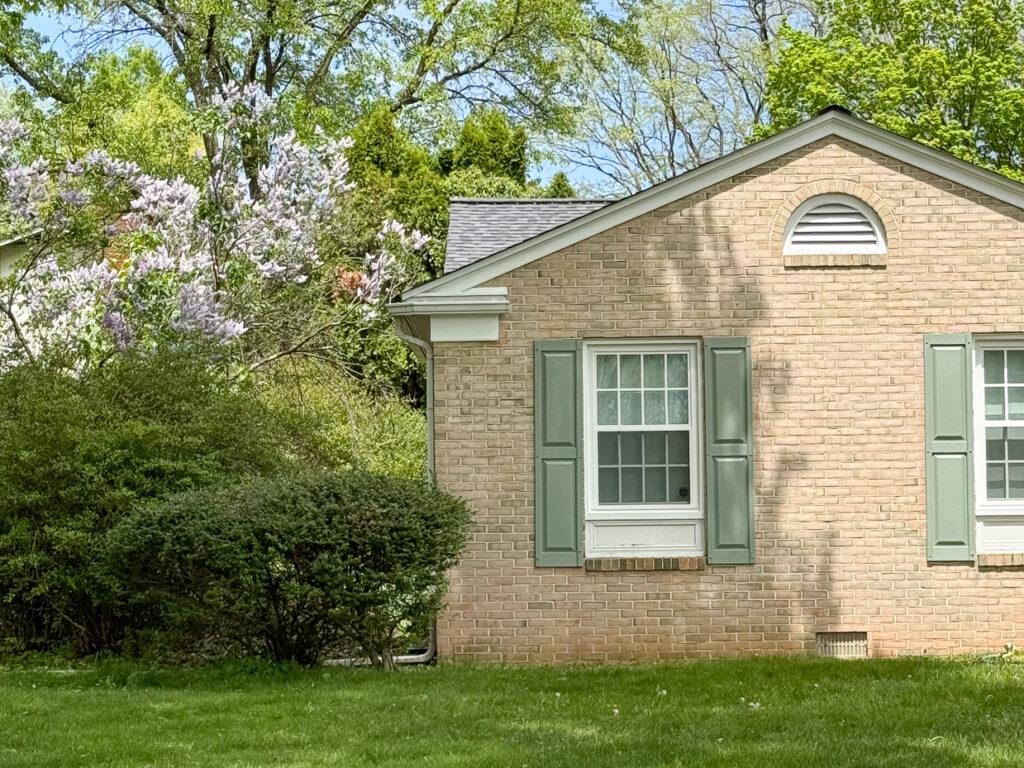
In the final days of February, we kicked off the yard work season of 2025. We had a few warmer days and wanted to be outside, so we decided to start cleaning up the left side of the house. This is the side of the house we’ve avoided the last two Springs because it’s such a tangled mess and seemed overwhelming. Jeff has wanted to rip it all out since we bought the house, but I’ve been protective of it and insisted it would be better to trim it all back. It’s a nice hedge of beautiful bushes that would cost a lot to replace. He was willing to leave them but was itching to cut them way back, so that’s what we did.
As a reminder, this is what the house looked like when we bought it…

And this is what it looked like last summer while I was working on the landscaping…
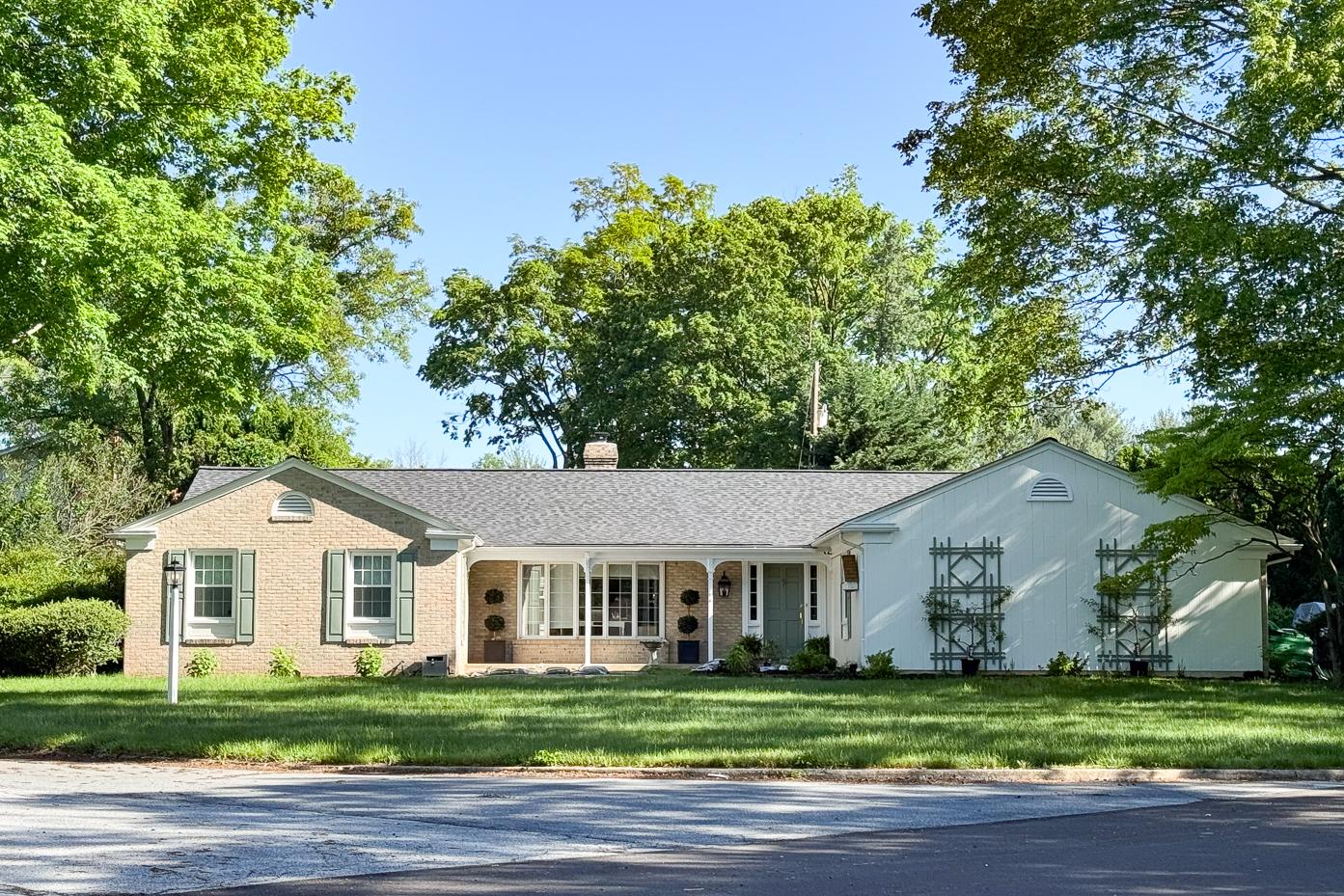
The entire left side of the house has been pretty much hidden from view by an overgrown Abelia hedge and a half-dead lilac bush that has grown taller than the house. It’s so big that we actually thought it was a dogwood tree. As Jeff keeps calling it a tree, I keep reminding him it’s a bush!
Despite being overgrown, half-dead, and hidden behind the Abelia, the lilac has bloomed (which is how I knew it was a lilac!) Its blooms are higher than the ridge of the roof, so I haven’t been able to clip any for bouquets. I’m hoping that once we trim everything way back, remove the dead material and debris, and get the ivy under control, those beautiful bushes will be happier, healthier, and more productive.
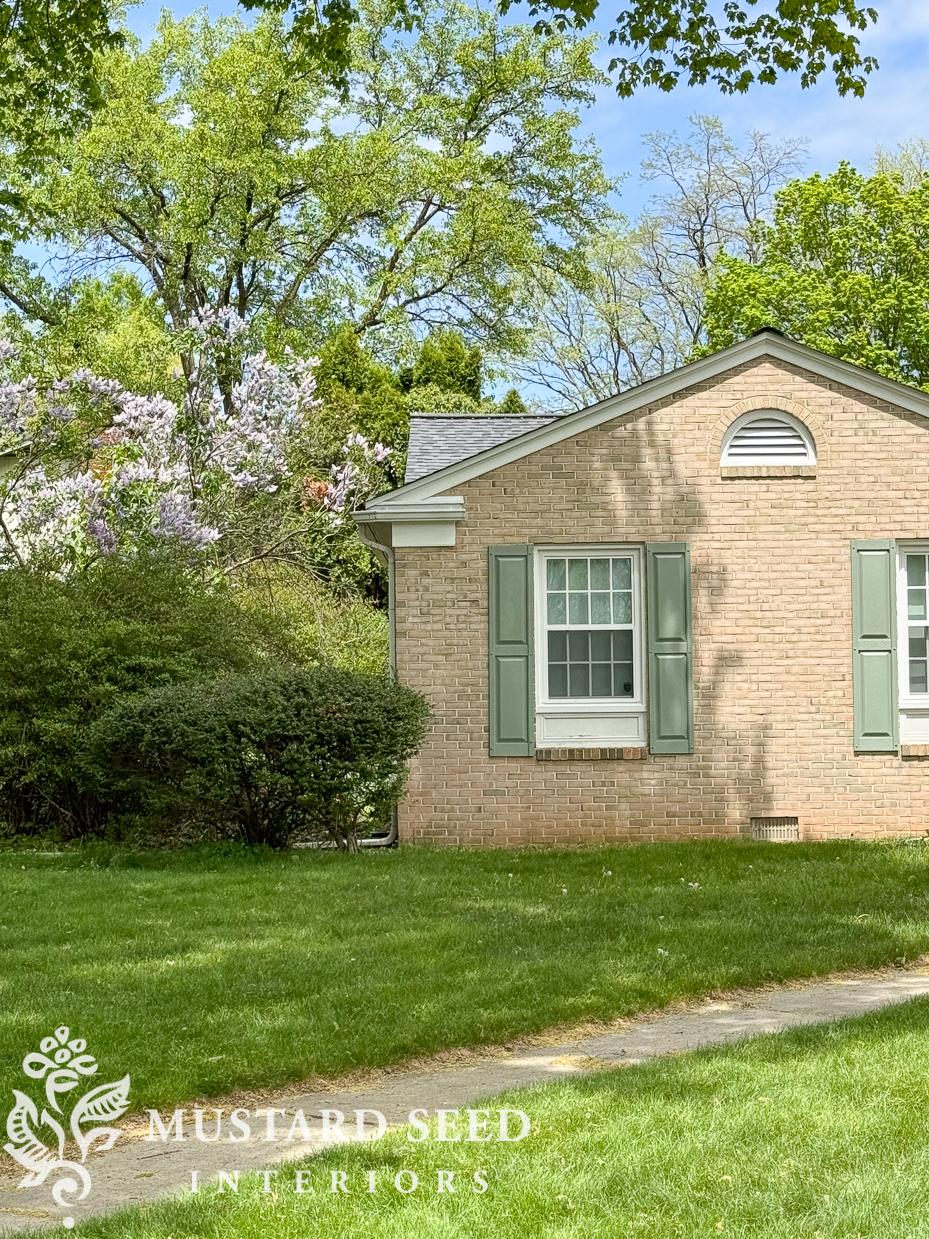
I don’t have a good picture of it in bloom, but the abelia hedge is a half-moon shape that arcs from one side of the house to another. On each corner of the house, a Japanese Holly bush flanks the hedge. The lilac bush is planted in the middle of the half-moon hedge, I imagine it was intended to be a feature surrounded by the abelia. I’m sure it was beautiful in its prime and I think it can be beautiful again. Both Abelia and lilac are hearty and do well after pruning.
I asked Jeff to cut them to about three feet, so he came out one afternoon and started at the hedge with some garden loppers. He lopped and I used hand shears to cut the branches down into manageable piles to take to the local dump.
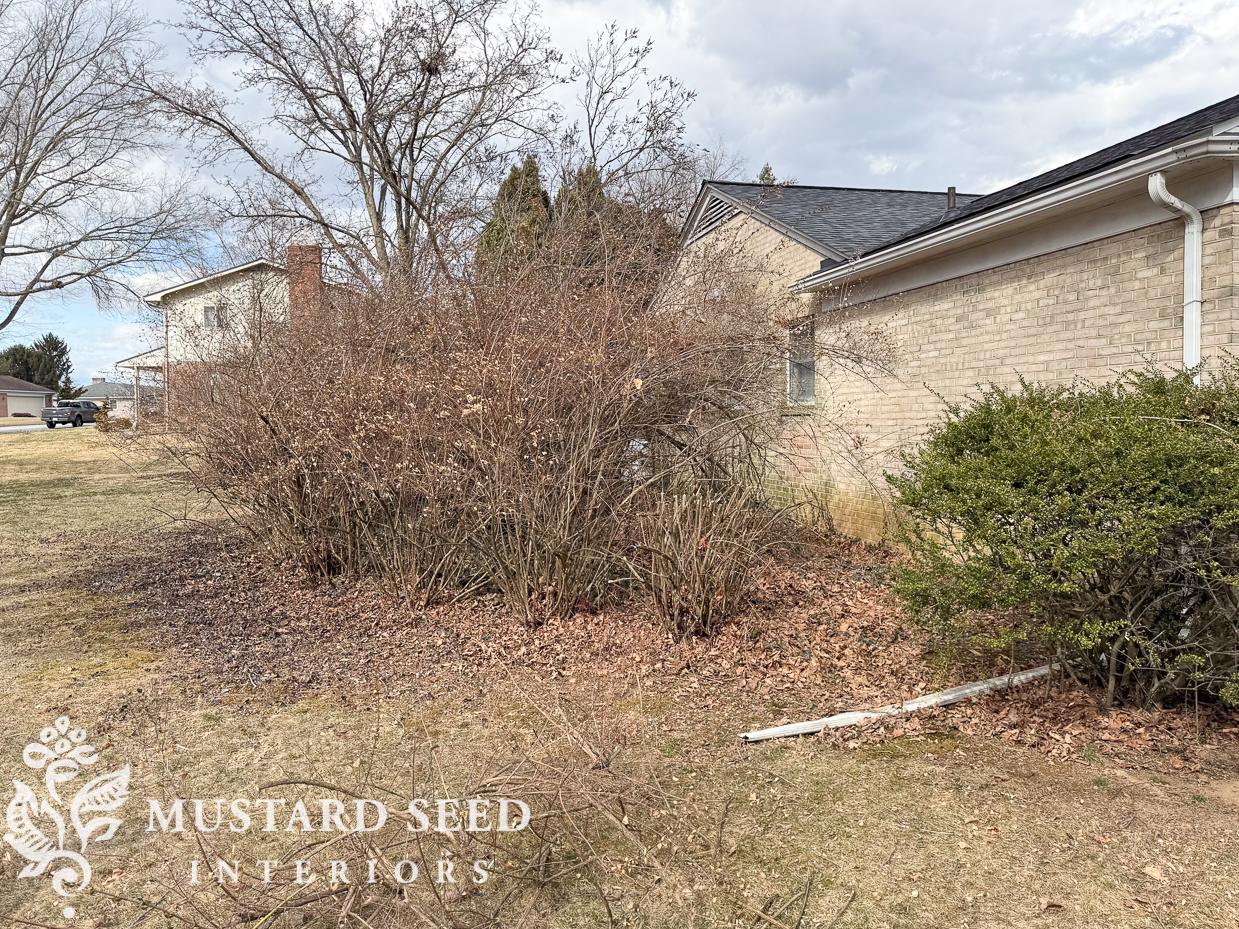
I asked Jeff to snap a picture after trimming one bush so I could share how it looked…
It was completely hiding the house and was also causing some problems. Because it blocks all the sunlight, green mildew is growing on the bricks along the bottom of the house. In addition, ivy is running rampant and it’s difficult to keep in check because it’s hidden and hard to get back there. Before we bought the house, some of the ivy was even growing into a couple of the basement windows! So, trimming the hedge and lilac won’t just be good for the bushes and landscaping, but it’ll be better for the house.
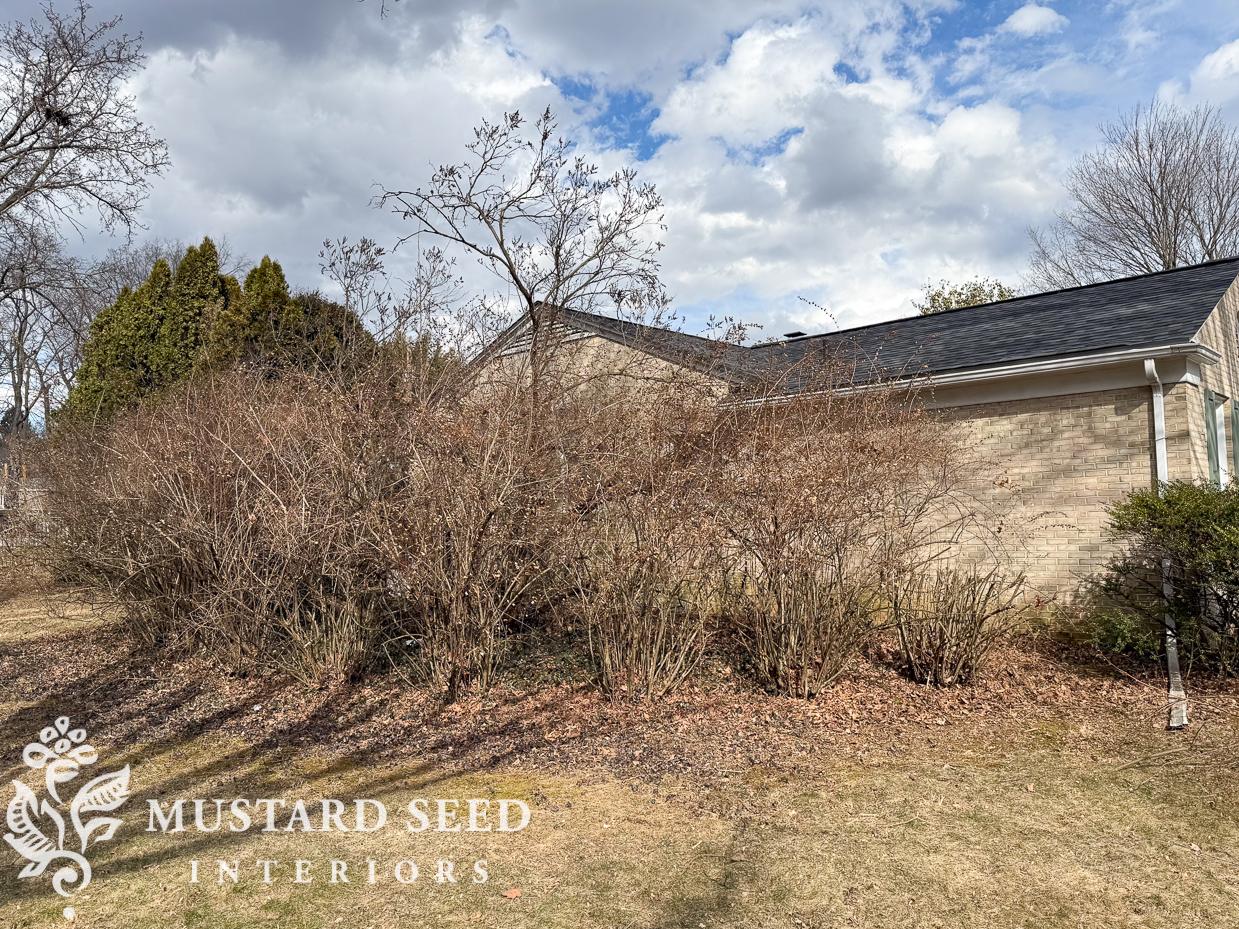
Here’s how it looks after all of the abelia bushes were trimmed.

We realized we had way too much brush to try to transport in loads to the dump in our minivan, so Jeff suggested we rent a uHaul truck for the day. I never would’ve thought of that, but it was brilliant. We recruited the boys and all worked together to break the brush down to reduce the bulk and then loaded it in the truck.
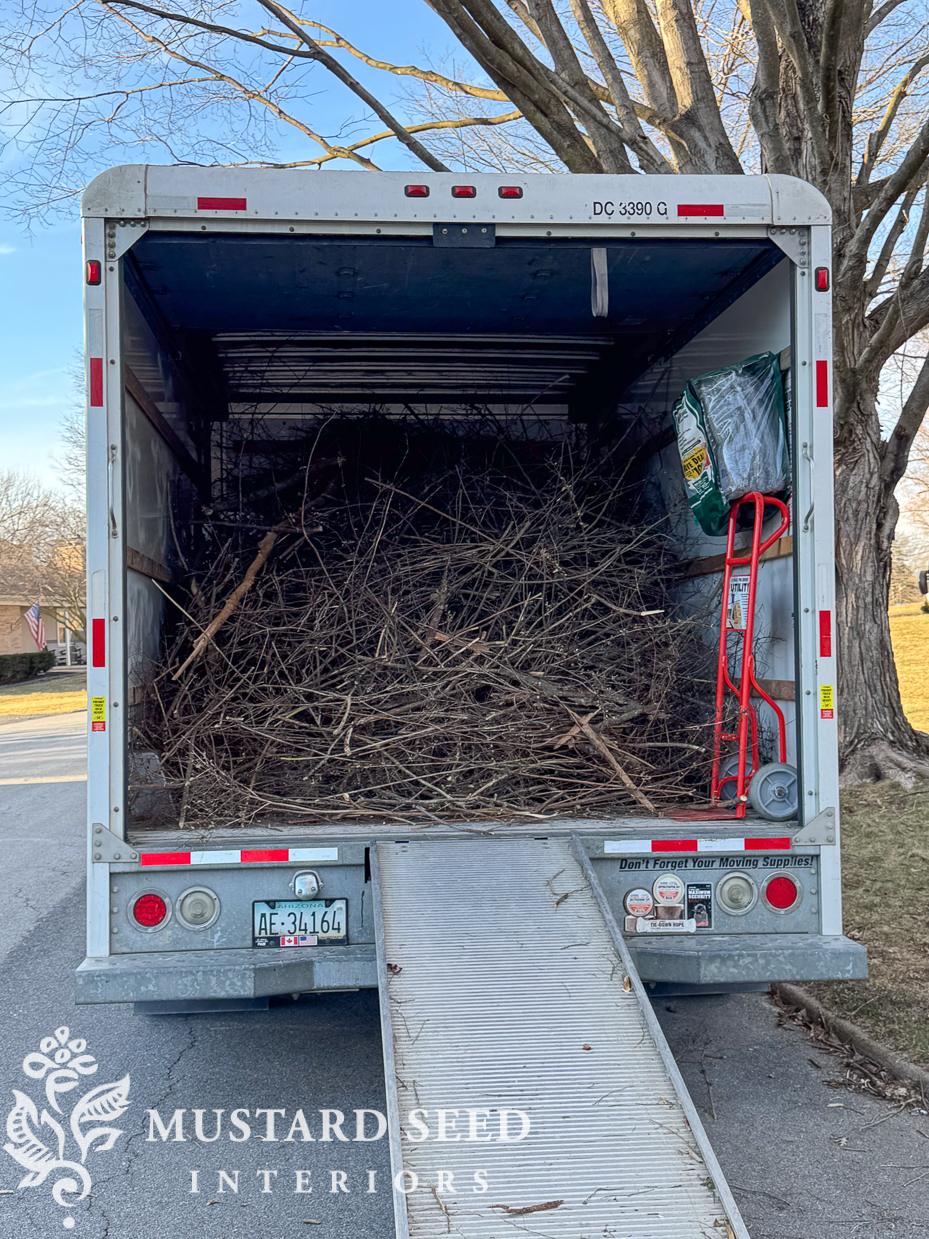
Jeff was going to cut the lilac bush way back while we had the truck, but we were all pretty beat!
Phase two will involve cutting back the lilac and also a nearby mock orange bush that’s falling over on itself. I think we’ll wait until both of them bloom, which is around the same time, and then cut them back. We’ll also rake out the debris (leaves, sticks, ivy, and weeds), power wash and clean the brick, clean and paint the trim, and put down some kind of weed barrier, and mulch.
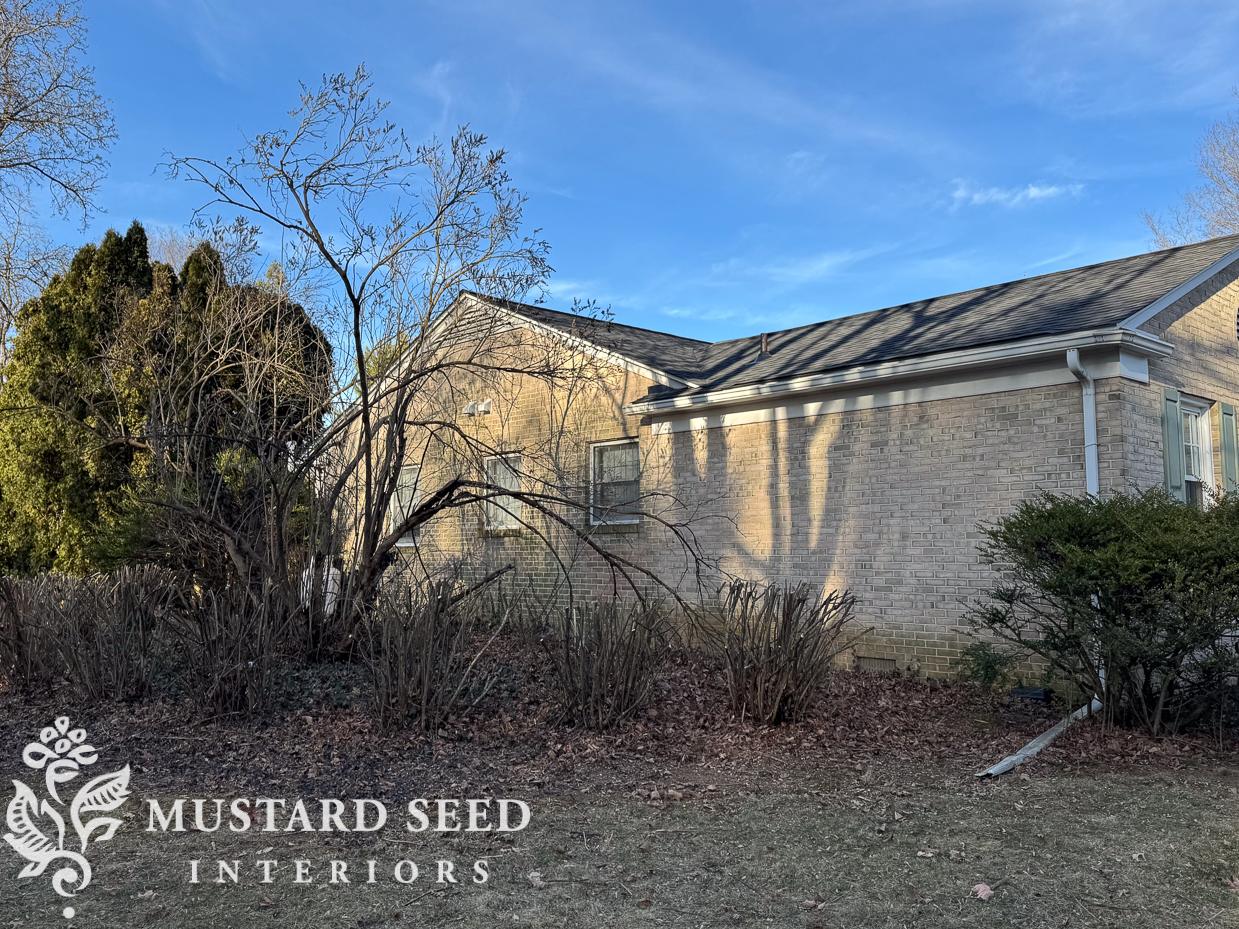
And, we need to put on a new gutter extender since Jeff and I have both stepped on the current one so many times it’s comical. It really does make me laugh to look at it because it’s so pathetically squashed.
When Jeff first headed out with the loppers, I was honestly not too excited about this project. It was not only going to be a lot of work, but I knew it would reveal more work that needed to be done. At least the bushes hid the mildew, trim that needs a refresh, and ivy climbing up the walls. But now that the hedge is trimmed, I’m excited to get more done and see how it looks by the end of the summer. In the end, it’s going to be a low-cost project that involves a lot of sweat and elbow grease and will add to the overall curb appeal of the house.
If you want to see more of our 1970 home renovation, you can find posts HERE. If you want to see other landscape and exterior work we’ve done, you can find those posts HERE.














16 Responses
Oh my goodness what a project, a big job.. So glad you have such amazing helpers. Getting it done early will be a blessing.
I’m glad your sweet house has someone to love it all over again! Watching your progress has been so enjoyable…forge on…your progress is amazing
Wait until after the lilacs are done blooming! And within a week or two. Or you’ll cut off next years blooms!
Given how high the blooms are, I’m not too hopeful about having blooms next year, anyway. We have to cut it way back to get it to a reasonable size, so we’ll be cutting off all of the parts that currently bloom. Most of them are 12-15′ off the ground!
So is that picture of the lilacs blooming from a previous year?
Yes, that is from last Spring.
There are both lilac TREES and BUSHES, actually. We have both. As for trimming lilacs of any kind – the time to trim is immediately after they quit blooming. If you do at any other time it will be several years before it blooms again. It takes a lot of patience when that happens, as I found out the hard way myself. You are so ahead of us in seasons. It snowed today. Can’t wait for my lilacs to bloom. We have 3 huge bushes and I give cuttings to everyone. Wish I could send you some in late May or early June when they bloom here.
The lilac will come back a nd bloom beautifully, if done at the right time. I have a 100+ year old bush that was transplanted from its original spot, cut down to about one foot, and bloomed the very next year!!! It was short, but it bloomed. If mine could bloom after all of that change, yours will definitely come back lovelier than ever. And the fragrance of those old bushes is beyond compare!
So sorry you cut back your lovely lilac tree. You needed to do this last spring after it bloomed. There is always information online about proper pruning.
No, we haven’t cut it back yet and will likely wait until after it blooms along with the mock orange. I am working with a husband to wants to rip it all out, so I have to make compromises with him in this matter! 🙂
if you cut it back severely after it blooms, then don’t touch it all year, it will be spectacular in the spring of 2026.
(one year my dad mowed down my mom’s lilac bush in the spring and the following spring it was amazing – and the first time i realized it was a lilac)
Have you guys given any thought to the possibility of buying a utility trailer? With the amount of pruning, cutting back and removal of overgrown shrubs, trees and bushes in your yard it might be worth the investment.
I was wondering if they had city pick up that regularly picked up limbs and leaves. Just pile it on the side of the road, by their house, and it gets picked up. I have that here where I live(Tennessee).
Now that your abelias are cut back, it’s a good time to thin them by going in and cutting out the oldest branches to the ground (or as close as you can get). Also, since the new branches will start growing just below all those cuts, altering the length of your cuts will help too, so that when they start to re-sprout, the new growth won’t cause more crowding.
Your lilacs will benefit from a renovation- you should be able to find instructions online to do this.
And please don’t use weed barrier! As the mulch breaks down, it amends the soil, adding organic matter which works its way down through freeze-thaw cycles and organisms in the soil. It will still break down on top of the barrier, but only the weeds that germinate from seeds blown into it from mowing and other means will benefit.
Good luck!
I’ve never liked the idea of using deciduous shrubs as hedges, especially privacy hedges, because most are very ugly after they lose their leaves. Abelias are an example of this. These may not have originally been planted as a privacy hedge, being on the side of the house like that, but red twig dogwood would have been a much nicer option with their red twigs in the wintertime. There’s a yellow twig dogwood, too.
Don’t bother with a weed barrier. It will cause more headache than help. Much better mulching and occasionally weeding than fighting with weed barrier that has weed plantsgrowing in, under and around. If you need, you CAN soak some cardboard and lay it down in sheets all around the plants leaving it a few inches away from the base, cover the cardboard with mulch and let it break down over time. The cardboard will smother weeds the first season so they can’t reseed, and then eventually break down.