
I have had a boat load of questions lately about top coats, so I thought I would dedicate a post to them.
First of all, let me say that there are dozens, maybe thousands of techniques and products out there, so I’m just sharing the ones I use and like. It’s also pure coincidence that all of the products I am sharing are by Minwax. Those are just the images I found easily.
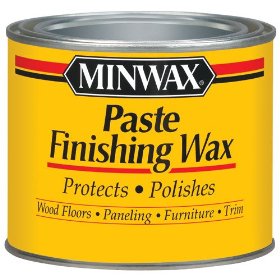
Paste Wax –
How it’s applied: Wax on, wax off. Rub the wax on with a soft/clean cloth. Allow it to dry to a haze and then buff it off.
What I like it for: Natural wood, painted surfaces, especially when I want a soft luster to the finish, not a shine. I also like that it provides a hard finish and no brush strokes.
What I don’t like it for: Pieces with a lot of texture or detail. The wax gets clumped in the details and it’s a mess and a pain to get out. I stick with smooth pieces.
Creative Uses: Dark Wax is a wonderful way to antique and provide protection all in one step.
One piece I used it on: My dining room table top.

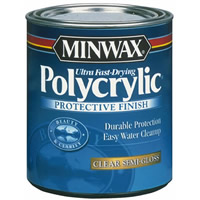
Polycrylic –
How it’s applied: This can be brushed or sprayed. It’s water based, so it’s easy to wash out of brushes and equipment.
What I like it for: I use this most on chippy pieces that need to be sealed. I can slather it on with a brush and it provides a hard, satin finish that protects my family from lead paint. I also use my paint sprayer to apply this to painted furniture when I want a clean finish that isn’t distressed.
What I don’t like it for: Natural wood or pieces where the brush strokes are going to show. This product leaves a lot of brush strokes, so I prefer to use it on pieces with texture (like chipping paint) or apply it with a sprayer. Also, it does dry clear in most cases, but it can slightly yellow some whites or change the color of some paints. You may want to test it on a small area before applying it to the entire piece.
Creative Uses: You can mix paint with it and use it as a glaze or extender.
One piece I used it on: My traditional hand painted dresser.


Wipe-On Poly –
How it’s applied: Wipe it on with a clean, soft cloth. Lightly sand with a fine sand paper or steel wool between coats.
What I like it for: Natural wood and dark painted pieces.
What I don’t like it for: Light painted pieces, because this product will really yellow paint.
One piece I used it on: The top of my vanity.

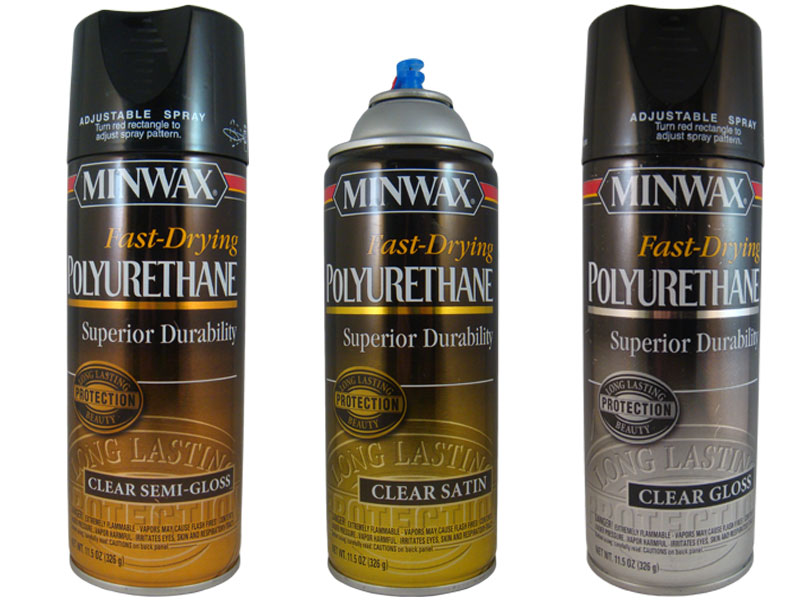
Spray Polyurethane –
How it’s applied: Self-explanatory, I think! Remember to use long, even strokes and hold the paint can an even distance from the piece you’re painting. It’s better to apply several thin coats, instead of one thick (and drippy) one.
What I like it for: Sealing rusty metal pieces or finishing smaller pieces like accessories, chandeliers, etc.
What I don’t like it for: Furniture (just a personal preference) and light painted pieces (again this product yellows.)
One piece I used it on: A rusty chicken feeder.

Does anyone have anything else they’d like to add? How about any other questions?
I’m getting ready to go to Blissdom! My flight leaves tomorrow morning and we’re expecting 3-5″ of snow, so please pray I get out safely and without delay.
**Please remember to follow all manufacturer’s instructions for use, safety and proper disposal of these prodcuts. Also use extreme caution when sanding finishes that may contain lead paint. Please educate yourself before diving into a project!













76 Responses
Thank you for all the tips! =) I needed this!
xoXOxo
Jenn @ Peas & Crayons
You are so awesome! You are so generous with all of your knowledge on the projects you are doing. Thank you for that:) I know many of us really appreciate it.
~Debra xxx
Capers of the vintage vixens
Thank you for such an informative post…especially the examples of how you used each product!
Sherry
This is great information! I also really appreciate that you added the health and safety precautions at the end of your post — so important! Thanks, and have a wonderful time at Blissdom.
such a great informative post. thank you for sharing.
You are a good sharer Marion. Thanks so much, AGAIN!
Awesome and informative post!I am going to bookmark this one!
Great information, thanks for sharing. Finishing a piece is always a bit stressful to me. I hate to mess it up at the end!I love your traditional HP dresser. I must have missed it somewhere along the line, absolutely stunning!Hope your trip goes well~
I'm learning so much from you…a big thank you!
Rondell
Great post, wish I read it before I sealed a pink antique dresser. I used wipe on poly and it shinier than what I was going for. Ya think I could just sand it back gently and apply this on the dresser surface? Thanks, Sue
Safe travels, friend! And, thanks for this info. Invaluable!
Donna
great information! what do you think would work best to seal and protect light color painted kitchen cabinets?
thank you and safe travels!
I am looking for a paint spray gun. Do you have a brand that you recommend?
Thanks,
Latisha
You're so awesome for sharing all your tips with us! Thank you for sharing!
I have been wondering if we could spray the polyacrylic through the sprayer.. You answered my question. Thanks!
Thanks! 🙂
We're on the same page with finishes, I've used all the above except wax and it's on my shopping list!!
The only addition I have is brush on polyurethane…for those surfaces that need to be heavy duty strong and might endure occasional liquid spills, like the bar I made out of an upright piano. (just in case!)
This is exactly the kind of info I need! thank you once again for sharing 🙂
Safe travels!
I keep thinking about you every time I check the weather!!! I'll be praying for a safe and "on time" flight for you!!
thanks for such an informative tutorial. love seeing the different pieces sealed in different ways. I've just bought the water based brush on poly and sealed a little white coffee/lamp table with it. you can see the brush strockes but i quite like it and at least it all feels smooth and sealed now.
What a fabulous post, thank you for sharing! 😉
Great post..Thank You not only for the products used but mainly for the explanation..I needed that..
I love that finishing wax. I use it on my painted furniture surfaces! Great stuff!!
Thanks for the post.
~Kathleen
Great post. I've used all the products except the finishing wax. I'll have to give it a try.
This is SO helpful Marian – thank you! My confusion about these products alone have kept me from a few projects. I'm ready to dive in.
Thank you for the tips! I do have one for you, if you are working on wood furniture that is going to be outside, Marine Varnish is the way to go. It is used to seal the hull of boats, so it will make your furniture virtually water proof for years. It is not real fun to work with, as it is extremely thick and can run easily. I use a high quality brush and slowly and evenly brush it on, using multiple thin coats. This can also be used on wood counter tops to seal them and make them food safe. It does tend to be glossy, so make sure you don't mind a glossy finish. Even the semi gloss finish is pretty glossy.
Great information. Thanks for sharing your expertise!
based on your suggestion a few months ago (via email), i used the paste wax on a wood frame. the frame is made from an old building rafter and i wanted it to stay as natural as possible. (you told me not to buff the wax off.) i am happy to say that it worked beautifully!!! i can tell the wood is protected but the appearance of the wood wasn't changed at all. not one little bit. it looks great! thanks so much! you'll get to see the painting and frame in my dining room reveal in a few weeks.
I really like to use Minwax Polyurethane when it is on a surface that will come in contact with water. You can use it over Water Based Paints and glazes, just a different animal to work with, very smelly, but necessary if the piece will get wet.
I also really love Liberon brand waxes. The black makes a really neat antique look. I buy this product online. Thanks for your tips!
Great topcoat post. I always use Briwax, but it can be hard to find.
Minwax is probably less expensive. I look forward to trying it.
I like polycrylic too. I have found that it can 'milk' on med. to dark colors if you use multiple coats.
Question, please: Do you know of a brush on, water based, FLAT or MATTE varnish?
Praying for a safe and inspirational trip!
Thanks-
Rhonda
I love your hand painted dresser! Could you post an article about how you did it? Or have you already? If you have please let me know the link of the article. I have a wooden box that I want to hand-paint it but it needs new background paint and so and I would love to know the right steps to proceed. Thanks in advanced! Hugs! Alina
I add my thanks with everyone elses!
I have been experimenting with a lot of sealers and wish I could find a polyurethane to use in my sprayer that doesn't yellow on whites. Clear lacquer is great, but I haven't found one that I can use in the sprayer. I love the paste wax! Lowes is ordering the special dark wax for me. It's a great product that you introduced me to before! Thank you so much for sharing.
When I get my blog going I would like to link to this post if that is okay with you.
Great info! Thanks!
Thanks for all the great info!! I have never tried paste wax…I will now. Sounds like what I have been looking for.
Hugs
SueAnn
Morning Miriam,
Paste wax is my go to finish for my canvas floorcloths. Leaves a durable, but flexible finish for years of wear. The floorcloth can be lightly sanded and new layer of wax applied after a few years…fabulous stuff.
Thanks for the pointers.
Janet
Have fun at Blissdom
Safe flying and much fun at Blissdom!
Great tips and hope all is well!
Thank you for this info! I've found that spray poly leaves a slightly bumpy textures, which is why I don't like it for table tops. I love wipe-on poly for small projects, expecially chairs (no drips). I have a hard time getting even coverage on large flat surfaces with it. I've never tried paste wax, so that might be the solution to the next furniture project!
Thank you, I always wondered what the finishing paste was used for.
Thanks for your opinions on these products. I do have a question though. On the paste wax commentary, you state that you used it on your dining room table top. However, the tutorial for the table doesn't mention that product – just wipe on poly. Just wondered if you used it after the poly or misspoke. I getting ready to refinish my table and have considered paste wax so am interested in clarifying. Thanks.
Great tips, I know after I went crazy painting everything White I did use the paste wax to seal and keep it from turning yellow, leaned that the hard way. Great Post.
Pattie
lots of great info here, thank you for sharing it!! susan
Perfect timing for this post! I always look forward to your posts because I know I will learn something new every time! I have another tip, we live in the country and have 14 acres with lots of trees. Every spring and fall we find bird nests of all kinds on the ground around the trees. I pick them up and put them in a ziploc bag then spray it until it is soaked with bug spray (while it's in the bag)(I do this outside and leave it out there for days at a time) after it's dry I spray it with polyurethane to seal it. I usually use several coats of it to make sure it doesn't "shed". I have some nests that I have out on shelves that I have had for years, I don't have to worry about them because they are completely sealed. I display them with paper mache eggs and birds I create out of quilt fabric. I also do this with bee hives. Thanks for being such an inspiration! Michelle
I really like to use Tung Oil on metal pieces. It gives you a light sheen and really brings out the color, rust and details of a piece.
The piece with the birds on it. WOW. I prefer a paste wax myself. Your work is getting better and better and better not that it was ever bad I'm just amazed by it. Off topic question, what did you ever do w/ your bathroom?
Thanks so much for this. I've saved it for future reference! Thanks so much!
Susan
3977…almost there…are you ready Miss Mustard Seed??? I'm just checkin' in with you…
Thanks for those really useful tips. I love the fact that you added real examples of how you used each product, that was really helpful.
This was really wonderful because you told us how each product is appropriate for a particular type of application. I've been confused by this for a long time, and I like the examples, too. Thank you so much!
Thank you! This comes at a perfect time as I am redoing a craigslist find 😀
5…..5 more to go…whoopee the fun begins soonnnnn!
Mel's Cabin is waiting….so eager to see what you two have been up to…..
Thanks for sharing..
Wonderful tips, I needed this…LOL
I have learned alot from you.
sandraallen260@centurytel.net
Thank you for writing this post, it is very informative. I've bookmarked it and will be sure to go back to it multiple times.
Thanks!! Just refinished a dresser and was wondering what would work. So perfect timing!! 🙂
Goodness, what a great blog.
Just beautiful. This is my first visit, I landed on a page where you shared different furniture finishes. Very nice, and thank you.
Have you heard of Country Living's Caromal Colours? they have a beautiful past wax called Liberon, made in England-smells really nice. On my blog I have some photos posted, please take a peek? I'd love to know if you've heard about Caromal Colours or used it.
I have to disagree that Polycrylic leaves brush srokes. If used properly it will not. Brush on light coat in one direction only. If basecoat is smooth-you can lightly sand between coats of desired. If base coat is textured-don't sand. If your base coat has dark colors that might bleed- especially true if craft paint has been used, Polycrylic comes in a spray can. The spray can leave a texture so immediately after spraying smooth with a brush. Spray on first coat and apply following coats with brush on Polycrylic. This will keep basecoat from bleeding. As for whites being stained. Polycrylic doesnot change that coloring of any basecoat. I have been using this product for 4 years on my heavily textured and multi colored projects with excellant results. I prefer a high gloss finish and use up to ten coats on some pieces. I highly recommend this product.
wish I read this before using poly spray on my white coffee table ):
It yellowed and now I have to redo it…uggh
Great Post! I will come back for reference.
Thanks so much for the great info! I'm excited that I can spray the Polycrylic through my sprayer! I've been looking all over the web with mixed results, but I know I can trust you. 🙂
God Bless!
Help, I think I just messed up!!! I removed the stain off the top of my dinning room table, restained the top, then applied the Minwax rub on poly instead of the dark wax that you recomended. The finished product is not as shiny as I would have like it to be, can you go over the top of the rub on poly with a dark wax and then buff or do I start all over again?? I know you are on vacation but I just had to ask. Can I just say I love your blog, I have learned so much and attempted more in the last two months because of you and your generous tutorials. Thanks and I sure hope you can help. Much love, Tamela Moore at jmoore1@mindspring.com
Hi Miss Mustard Seed 🙂
I have a question for you about waxing on stain. I sanded and restained a coffee table top and then put Hannant's clear wax on top of that. I brushed on a pretty thin coat and then left it to dry. When I went back it didn't feel like there was any wax on it at all! It felt like bare/stained wood and there was no cloudiness or sheen whatsoever. So, I just assumed that it had simply soaked in completely and I needed to add another coat of wax. I added a slightly thicker coat of wax and left it to dry overnight. Then I left it to dry for 7 more nights! It never did feel like it wasn't slightly tacky even though I polished my heart out. I have resanded and restained and plan to use wipe on poly instead this time. My question is whether Hannant's wax can be used on stained wood or if it must be the Minwax Paste Finishing Wax you reference at the top of this page?
I cannot tell you how much I have learned scouring your website. I feel so reassured knowing that if I am having a problem doing something I can most likely find the answer here 🙂
Thanks so much for any guidance you can provide,
Molly
(molly12345@sbcglobal.net)
WOW! Receintly found your blog and I'm so inspired and in LOVE with this type of decorating! So much the so that I'm planning a whole house makeover! My husband is not nearly as excited as I am, but I think he's warming up to it, LOL! Thank you so much for sharing all of this increadible info!! I find myself up all hours of the night searching and reading. You have just a plethora of info, WOW!
So your dining room table is gorgeous and I wanted one! On my first outing I found exactly what I was looking for(6 chairs & table with leaf with a danty look) YAY! And it was only $150. YAY YAY!!! Now my question is do you have to reaply the Minwax over time? Does it hold up to cleaning chemicals?
Thank you bunches again!
Thank you so much for sharing so many tips for painting furniture. I used the Minwax paste for the first time today and I have a question. Do you put on coats of paste like you do for poly? Or is it just a one coat finish? Thanks for your help.
I already asked this once, but I got an undeliverable message back to my email. I know you said you've had some wacky stuff going on with your site right now. Anyway, I used the Minwax paste recently and wanted to know if you are supposed to put on more than one coat. Thanks so much for all the great information you provide on your blog! (jeanne_karst@att.net)
Oh, I am just so thankful that I found you! I have a desperate question and am hoping you could help! I bought this beautiful table at Luckett’s. (link to image of table)
http://justagirl.typepad.com/gabriellemessina/2011/02/supper-club.html
It was scratching what metal rubbed on it, so I decided to coat it in polycrylic. Over time(about a year), it’s become almost tacky; where the paint can be easily peeled off with your finger nail. I have no clue what the next step would be. I’m desperate to protect it and avoid it from happening more. Thank you!
I’m getting ready to refinish a large dining room table and have tried to find all the details of how you did yours. I think it is absolutely beautiful!! Could you tell me if you only used the paste wax to seal it and if that is enough protection to keep it from getting ring spots? Any details you could give me would be greatly appreciated! Thanks!
Do you have any thoughts on bar top resin? I have been dying to try it on a shell mosaic shelf i did, but i am terribly afraid of it(bubbles, getting an even top, not drying properly, act).
Thank you.
When you use a wax sealer you don’t use anything else?? It seals it well enough?
Do you have a tutorial of how to do the table (you said it is your dining room table top) that is the top picture of this post? It is absolutely beautiful!! I love the stain color and your paint color.
Thanks for the auspicious writeup. It in reality was once a enjoyment account it.
Look complicated to far added agreeable from you!
By the way, how can we keep up a correspondence?
I am going to use some chalk paint to re-finish a crib. I want to finish it with Minwax finishing paste. Is this paste safe to use on a crib where a baby’s mouth may come in contact? I want to be sure I’m not using a product that could harm the baby.
Thanks for you help!
Thank you so much for sharing so many tips for painting furniture. I used the Minwax paste for the first time today and I have a question. Do you put on coats of paste like you do for poly? Or is it just a one coat finish? Thanks for your help.
I would like to know if there is some kind of white or gray paint I can mix into polycrylic paint to use inside kitchen cabinets I am remodeling to put in our kitchen. I have one coat of the clear polycrylic on (to cover the old lead paint in them) and then got to thinking I should add some white or gray to it to make it a one step process for the next and last coat of paint. Can I do this? What would you recommend me to use to add to it so it would kind of be like a whitewash look? The old paint is a baby blue color. Thanks.
OK, another question for you. My husband got me a can of Zinsser Bulls Eye water base Primer (white) and can I mix this with the polycrylic to paint the inside of my cabinets? I already have one coat of the clear polycrylic on them. OR can I paint them again with the primer by itself over the polyacrylic and then paint over the primer with the clear polyacrylic as my last coat? Also, there will probably be a day or so between the painted coats. Would it be better to just paint the white primer on and not use any more of the polyacrylic? Thanks so much!
I’m a little confused as why you would want to put polycrylic over primer. Primer is meant to be a base coat to “prime” the piece you’re painting. Some help paint adhere (adhesion/bonding primers) and others seal in smells or colors. You would then want to apply a coat of paint over the primer. If you use a paint with a satin or semi-gloss finish, you don’t need to add polycrylic on top. Just allow the paint 30 days to cure. If you use a matte finish paint, you can apply a polycrylic or other top coat to make it durable. I hope that helps!