
We had a slow start on day two in the Cotswolds. Mom and I were feeling the effects of being awake for over 24 hours and didn’t want to spring out of bed early for a long day of sightseeing. Over a breakfast of fresh bread, butter, and raspberries, we made plans for the day while a load of laundry cycled through the small washer in the kitchen. After village hopping on our first day, Julia suggested visiting a National Trust property with a Grade-1 listed 10-acre garden in Gloucester, not far from where we were staying in Chipping Campden. (You can read about the thatched cottage where we stayed HERE.)
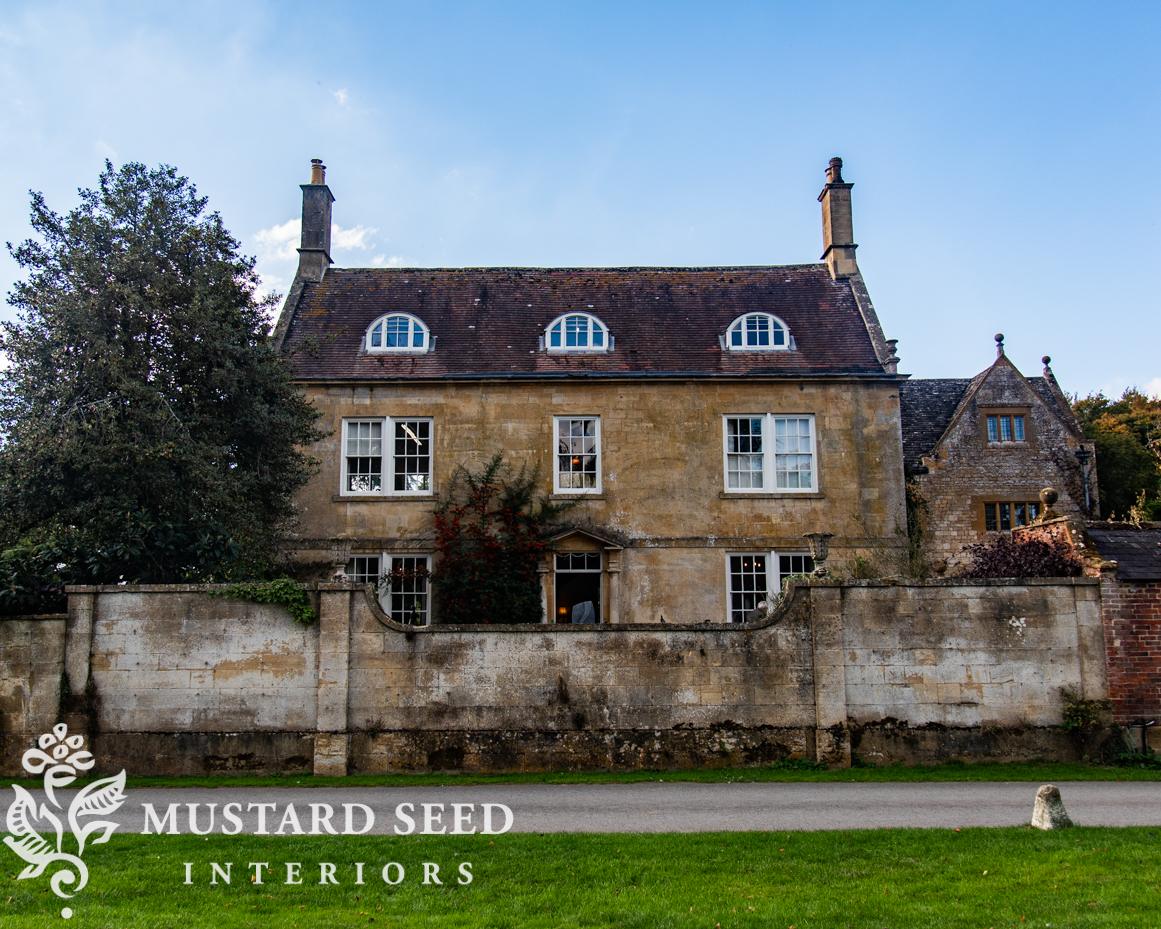
While the main draw of Hidcote is the gardens, you are able to tour the first floor of the house and see inside several other follies and outbuildings like the thatched barn, the potting shed, and the chapel that now serves as a second-hand book shop. To see the front of the house, you have to walk past the entrance along the property wall, and, from that vantage point, you can see the symmetry and get a feel for how the house looked from the country lane. I’m guessing the high stone wall was a later addition.
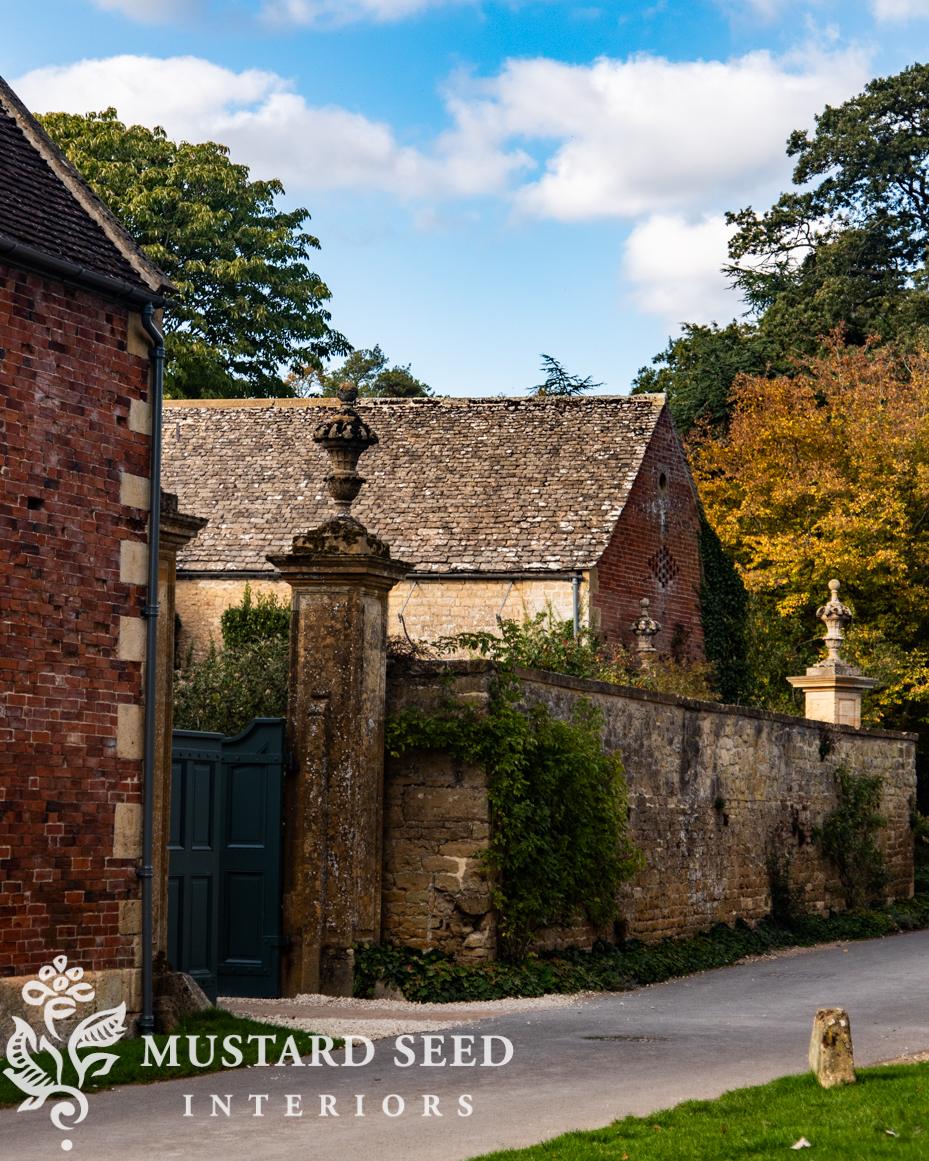
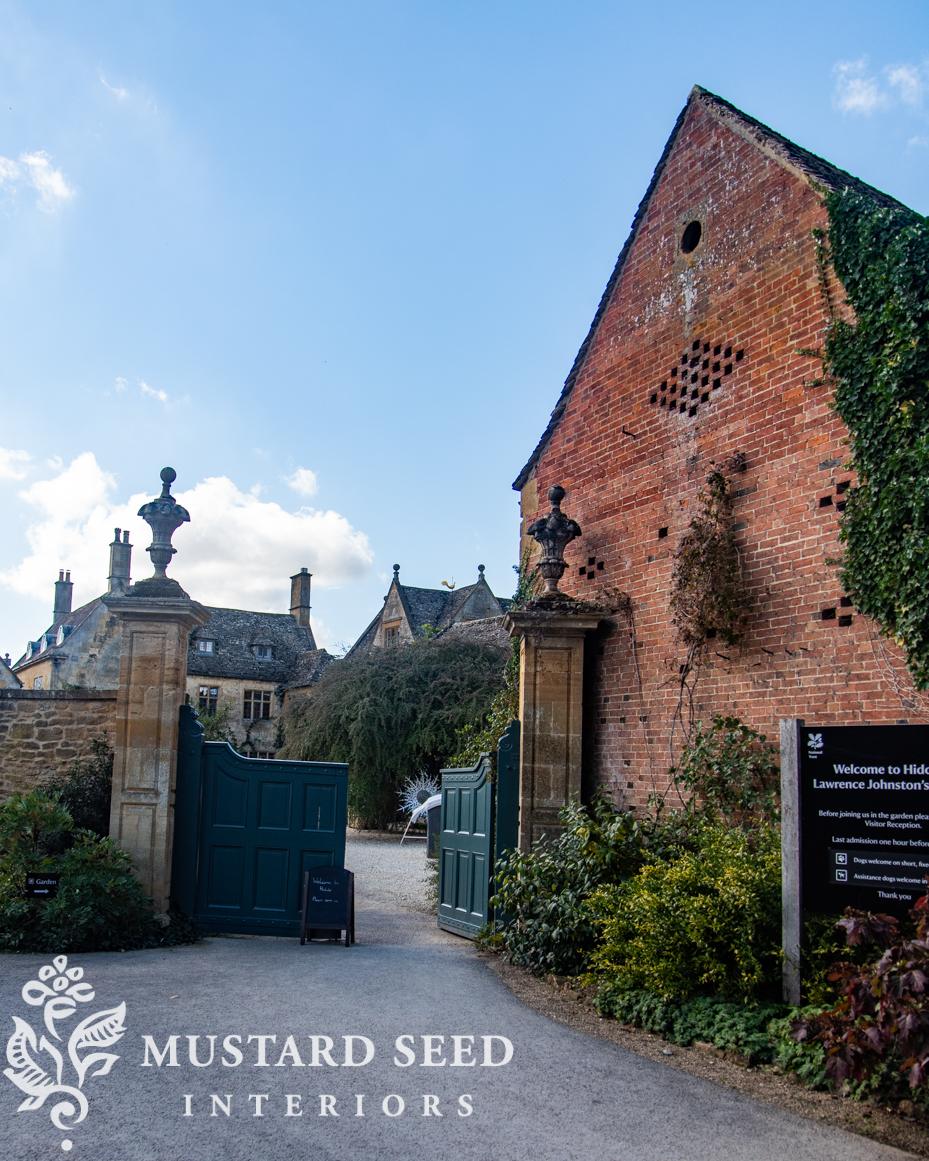
Visitor reception is at the Hidcote garden center and then you cross the small road to enter through the gates into the courtyard.
Here is the garden center and you can see the entrance between the two urns just beyond the garden center’s brick wall.
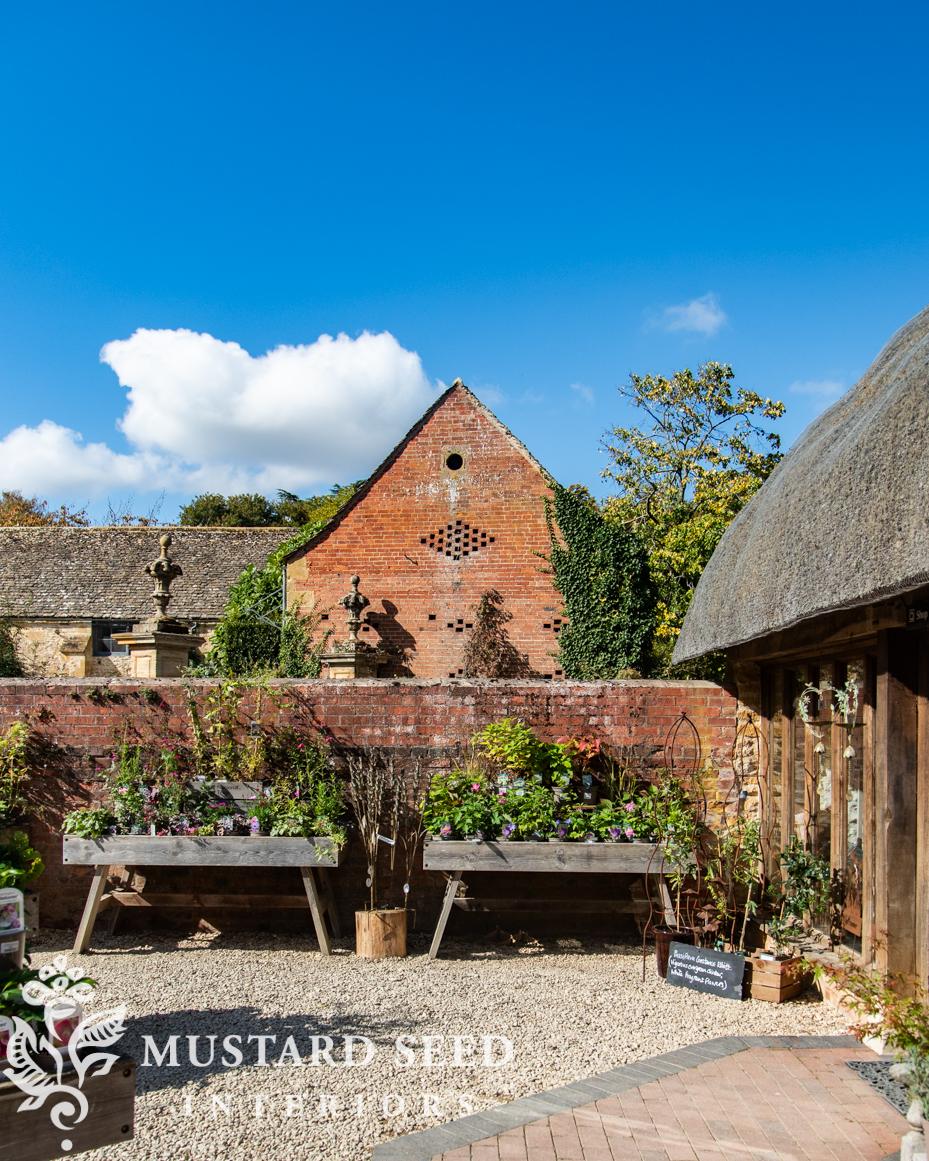
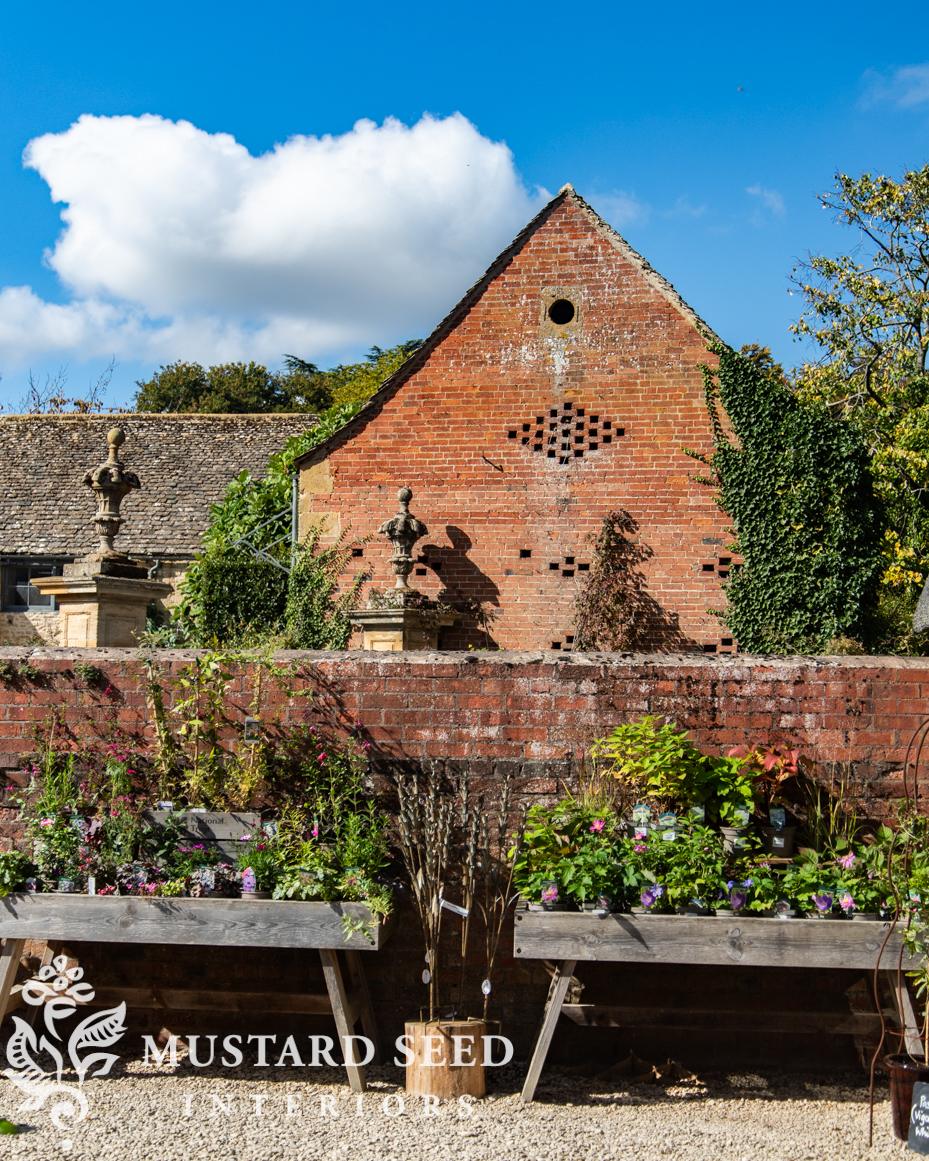
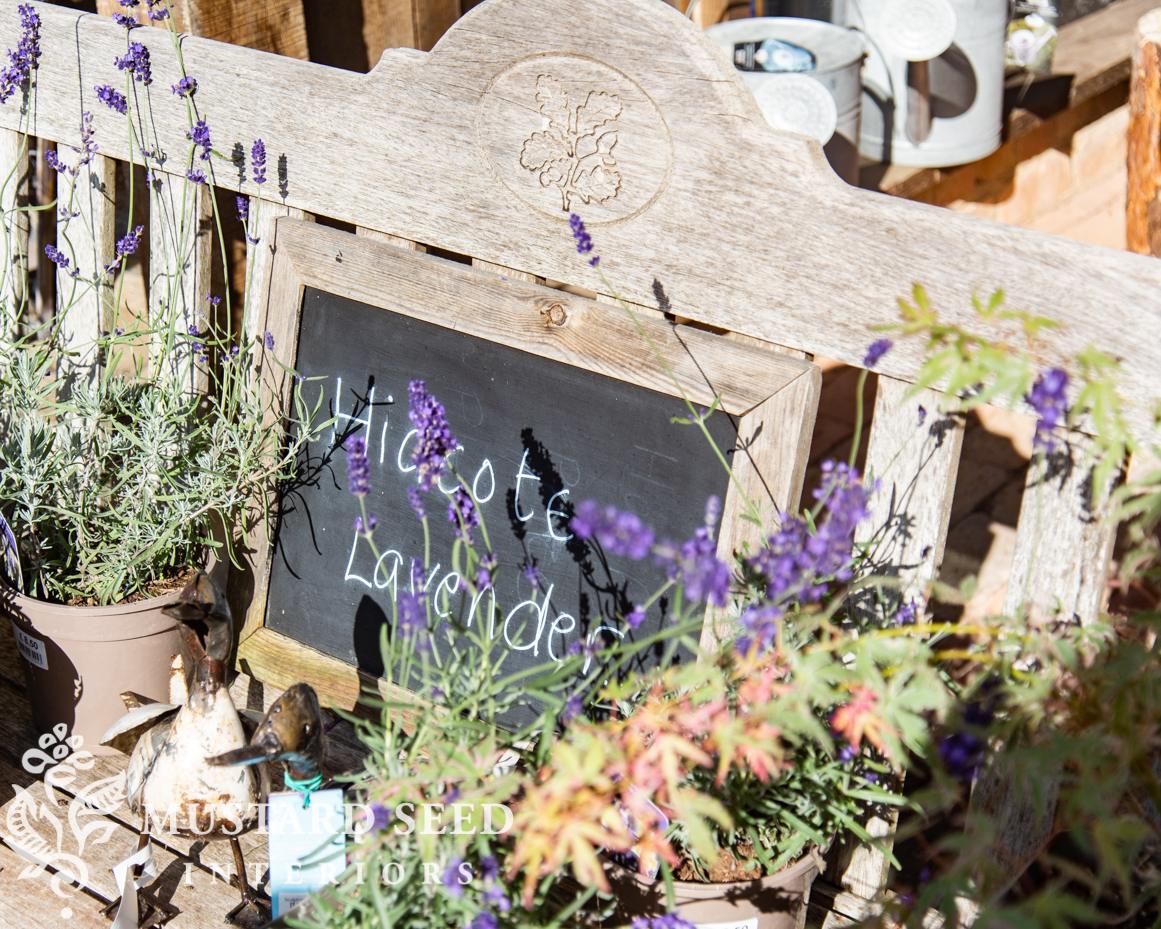
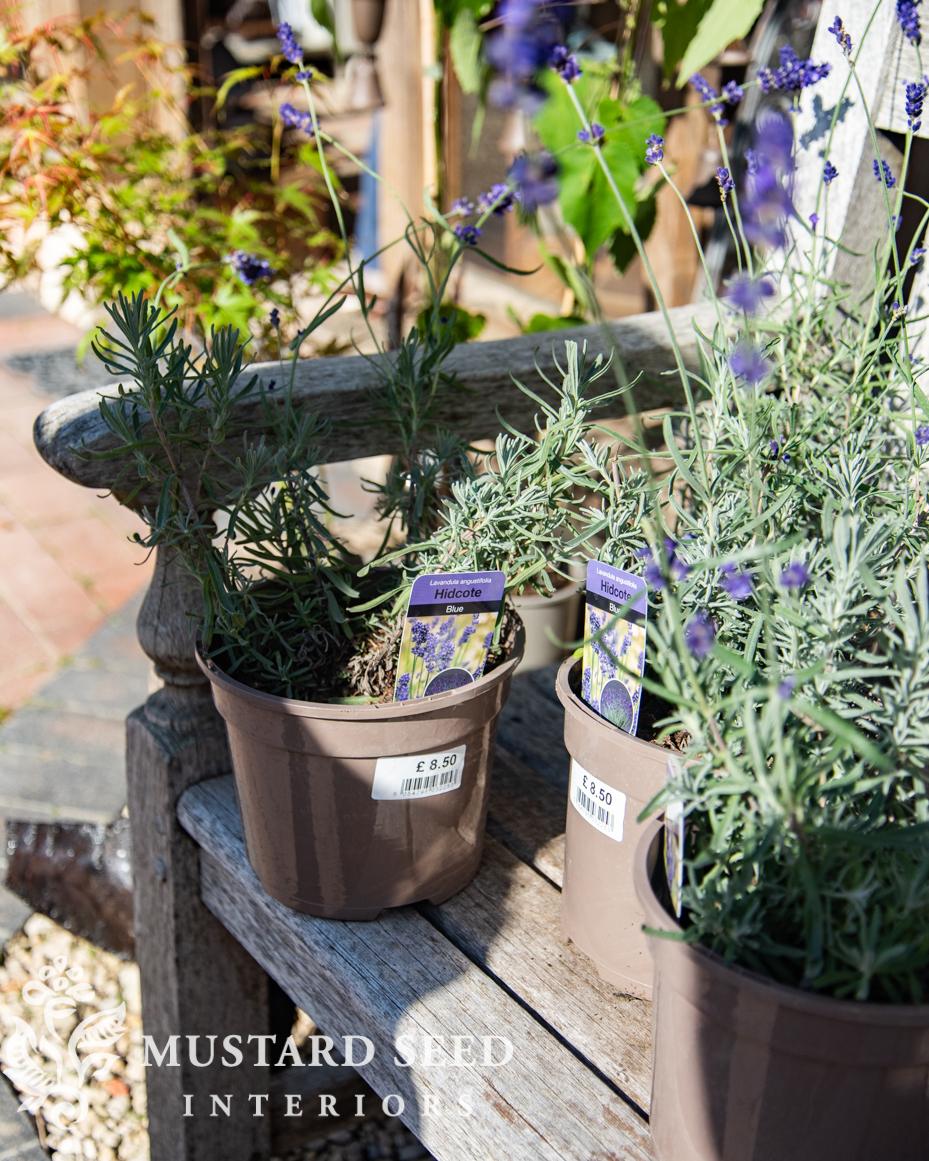
Of course, we had to have a look around in the garden center. Hidcote is famous for their lavender, which was cultivated in 1911 by Lawrence Johnston. You can purchase Hidcote lavender in the the garden center, but it is also available in online and nurseries around the US. I actually thought I had some in my garden, but I checked my gardening notebook and was mistaken. I’ll try adding some next Spring, though.
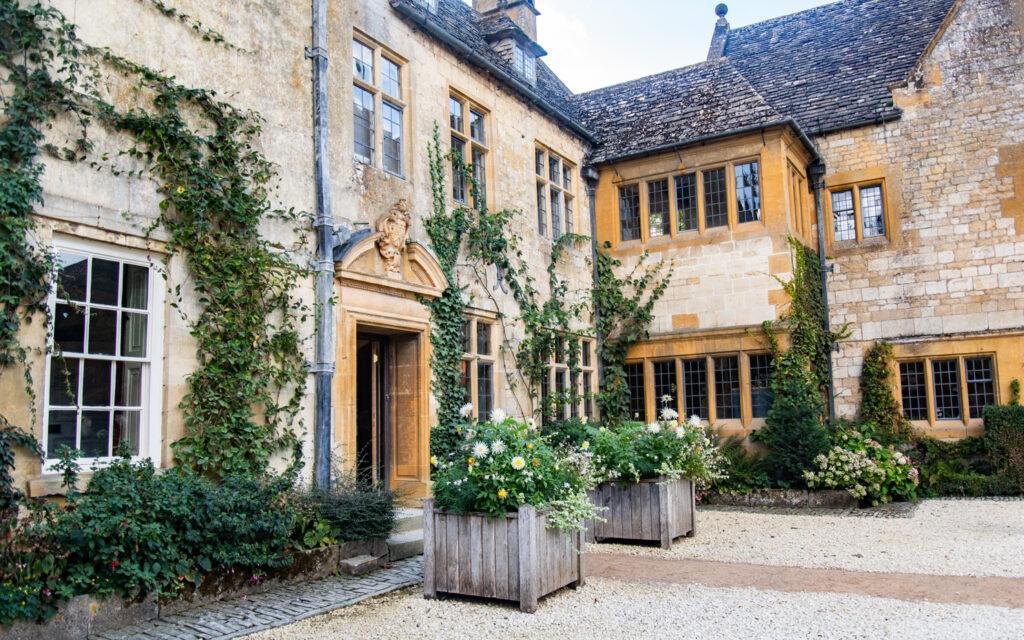
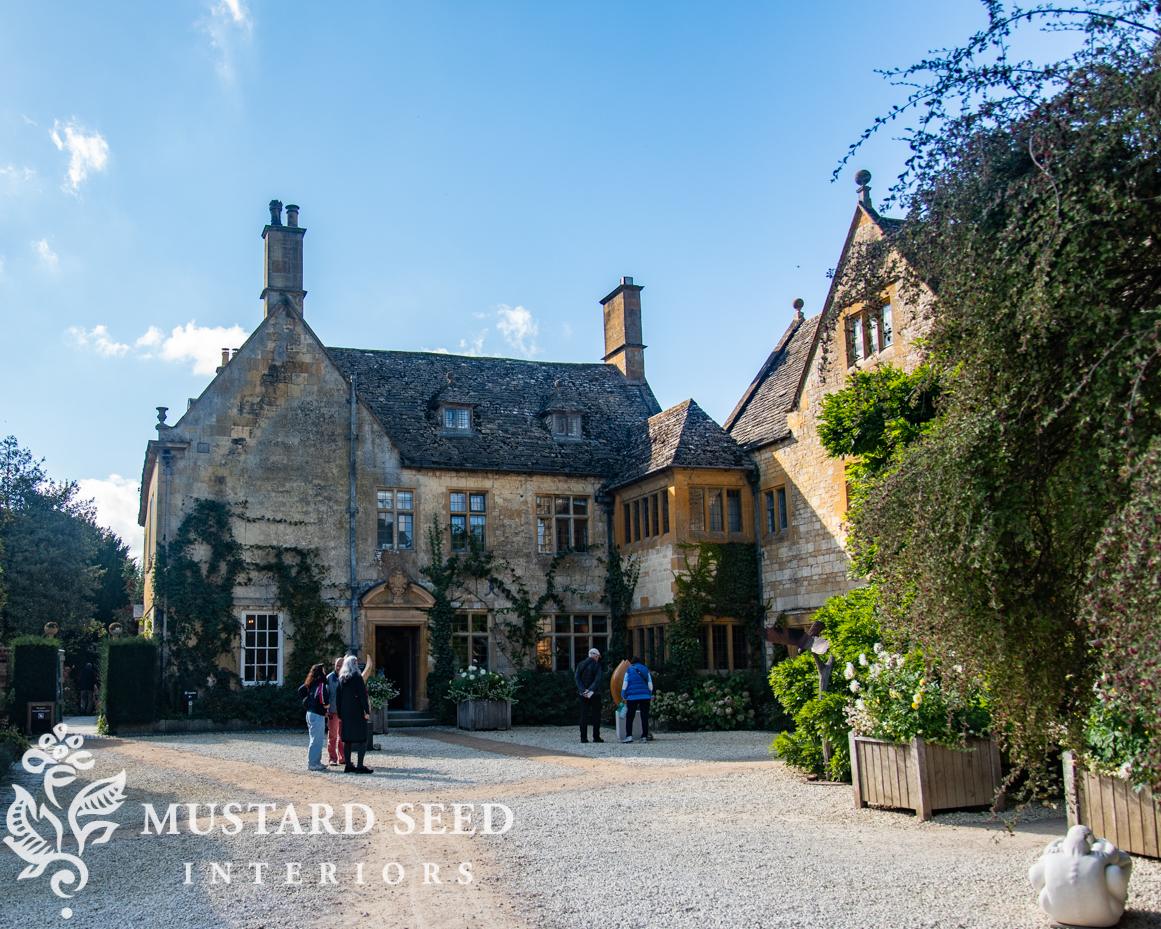
We then proceeded through the gates into the courtyard, and I was smitten with Hidcote immediately.
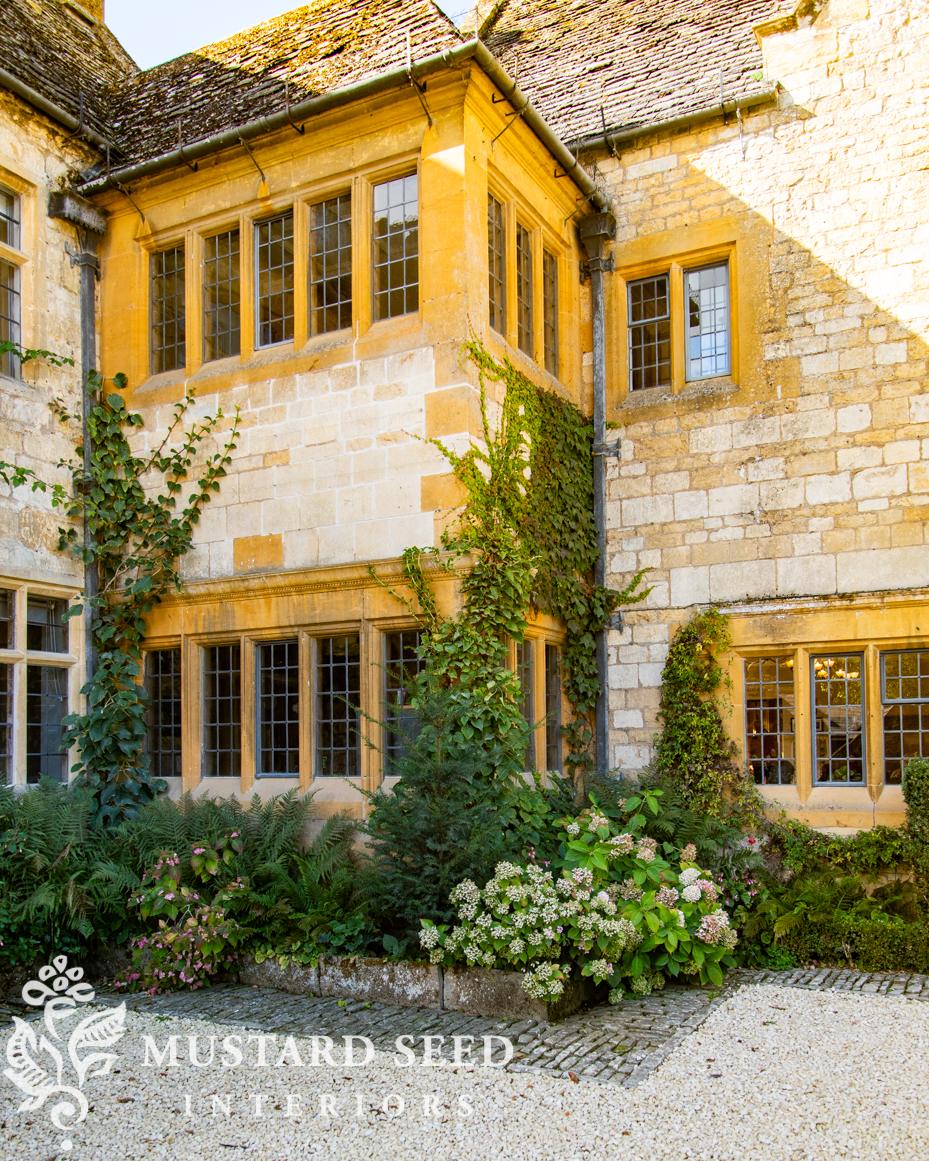
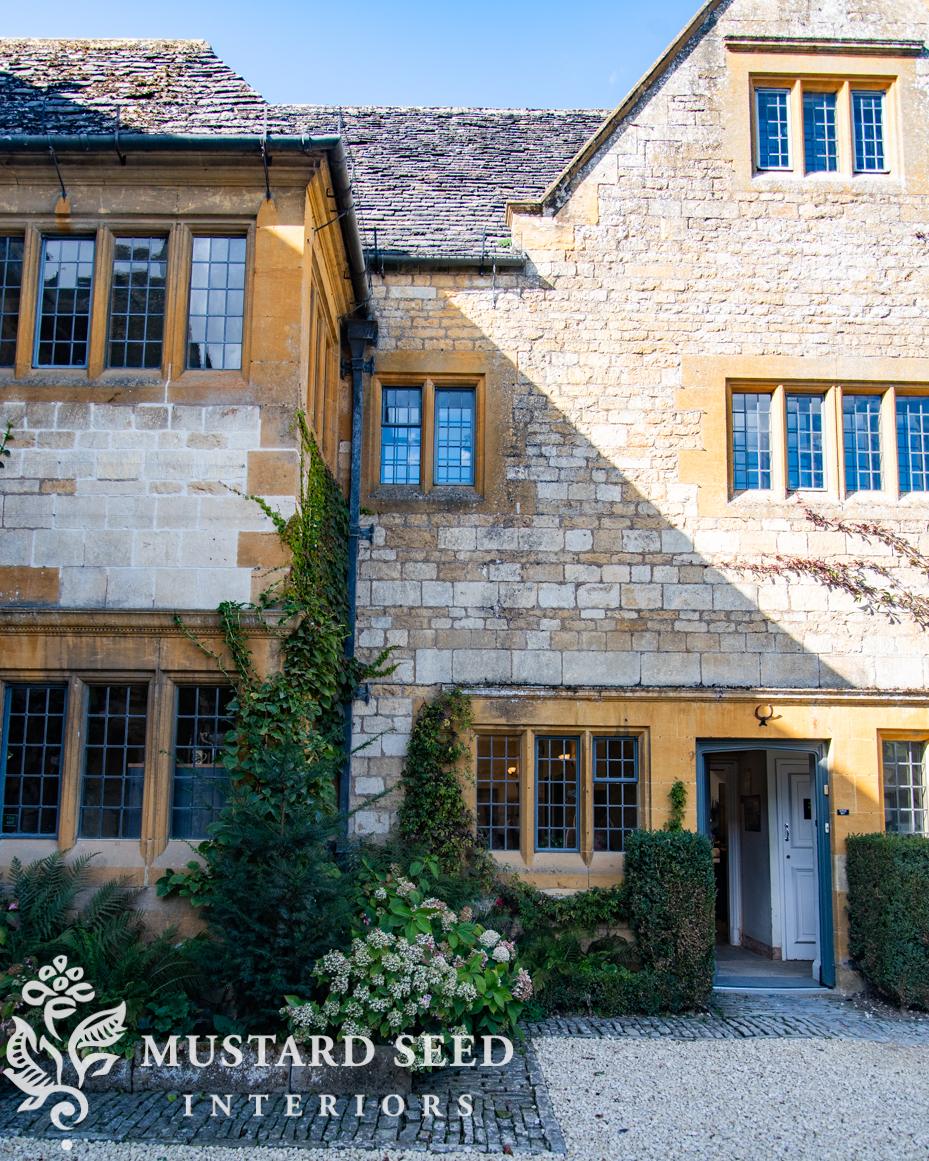
I mean, what’s not to love? It really is a dream property with well-tended landscaping that feels like as much a part of the house as the leaded windows and stone walls. You can imagine carriages pulling into the courtyard for dinners and parties, and, later in the home’s history, military vehicles dropping off American soldiers who were billeted there.
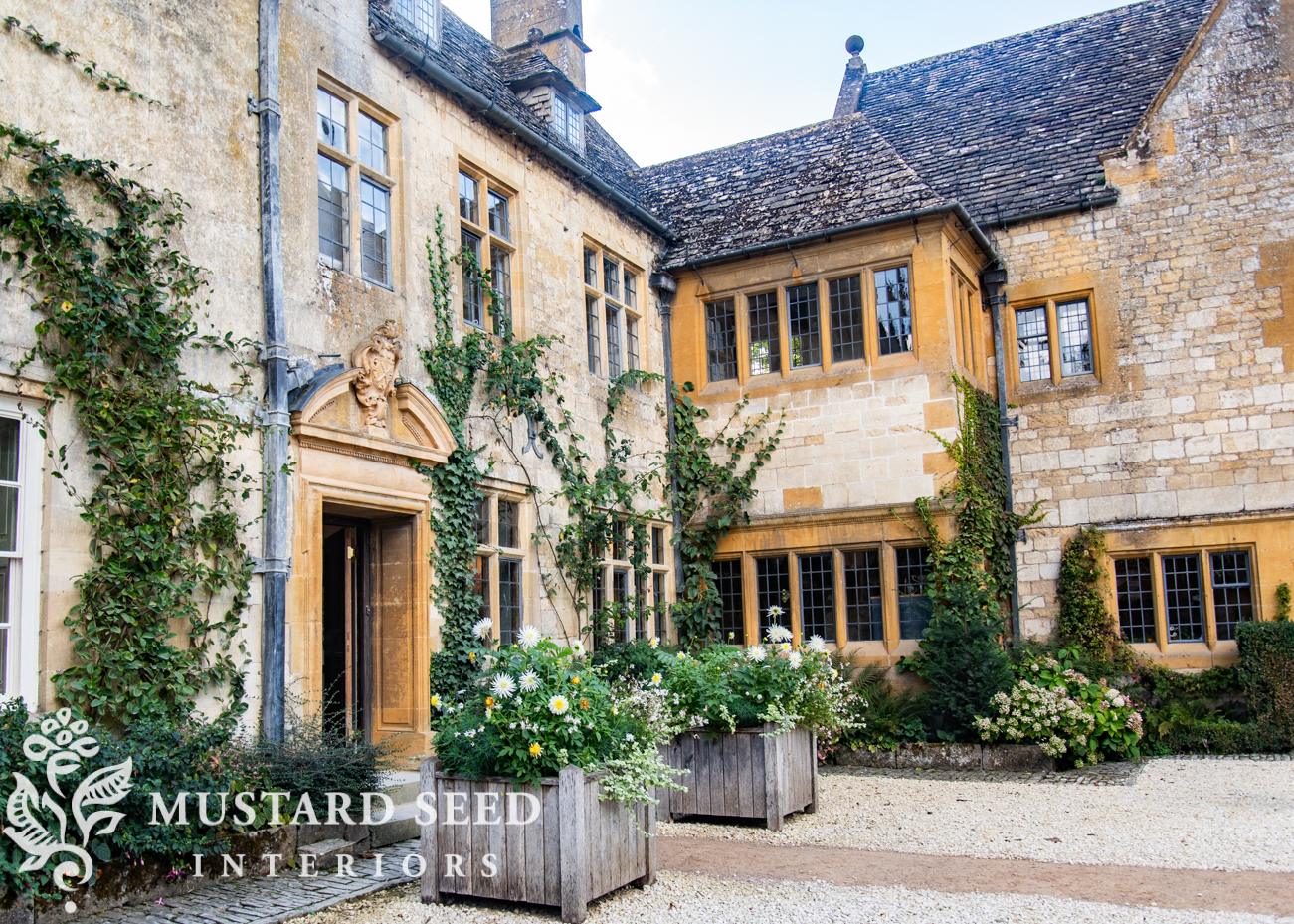
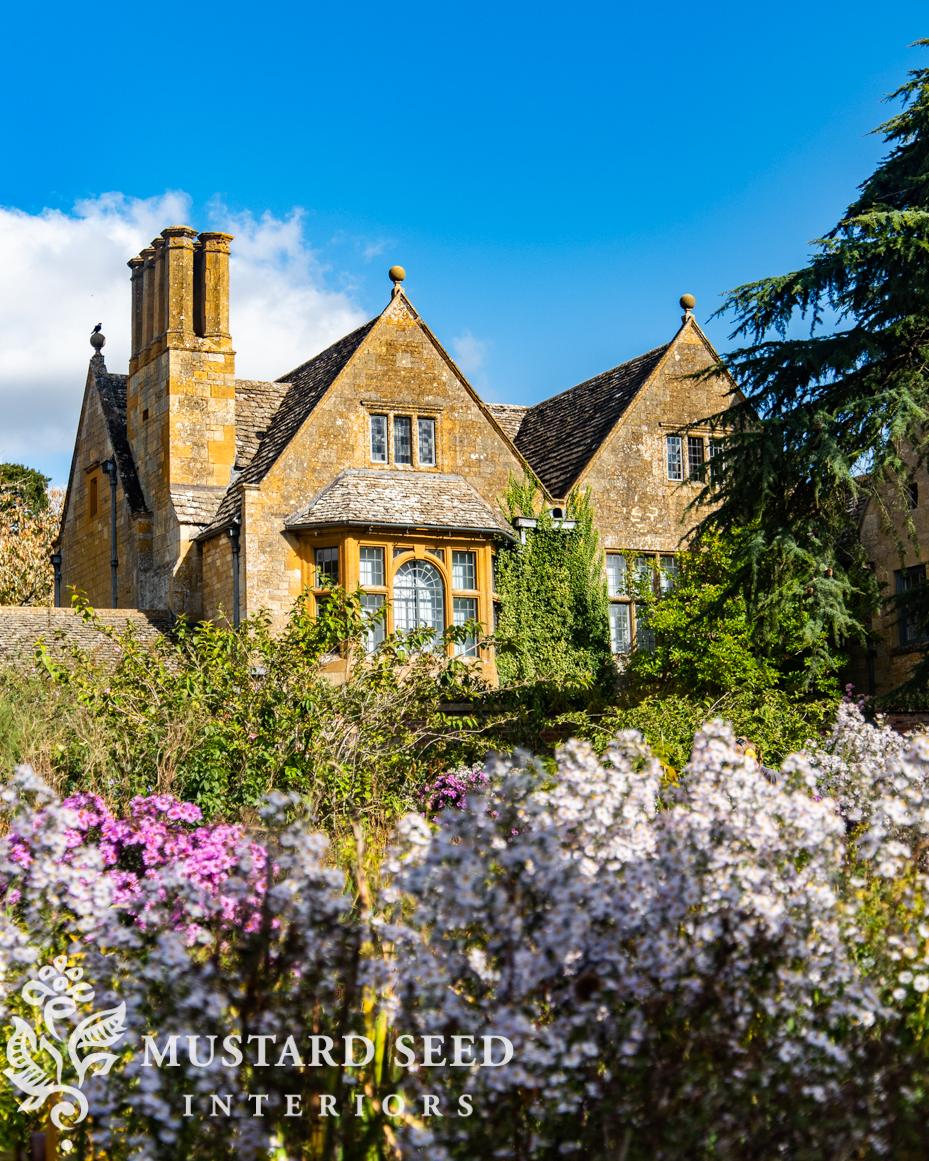
As with all the homes I had seen so far in the Cotswolds, I was enamoured with the details—the ornate gutters and straps, the door handles, and the pediments above the doorways.
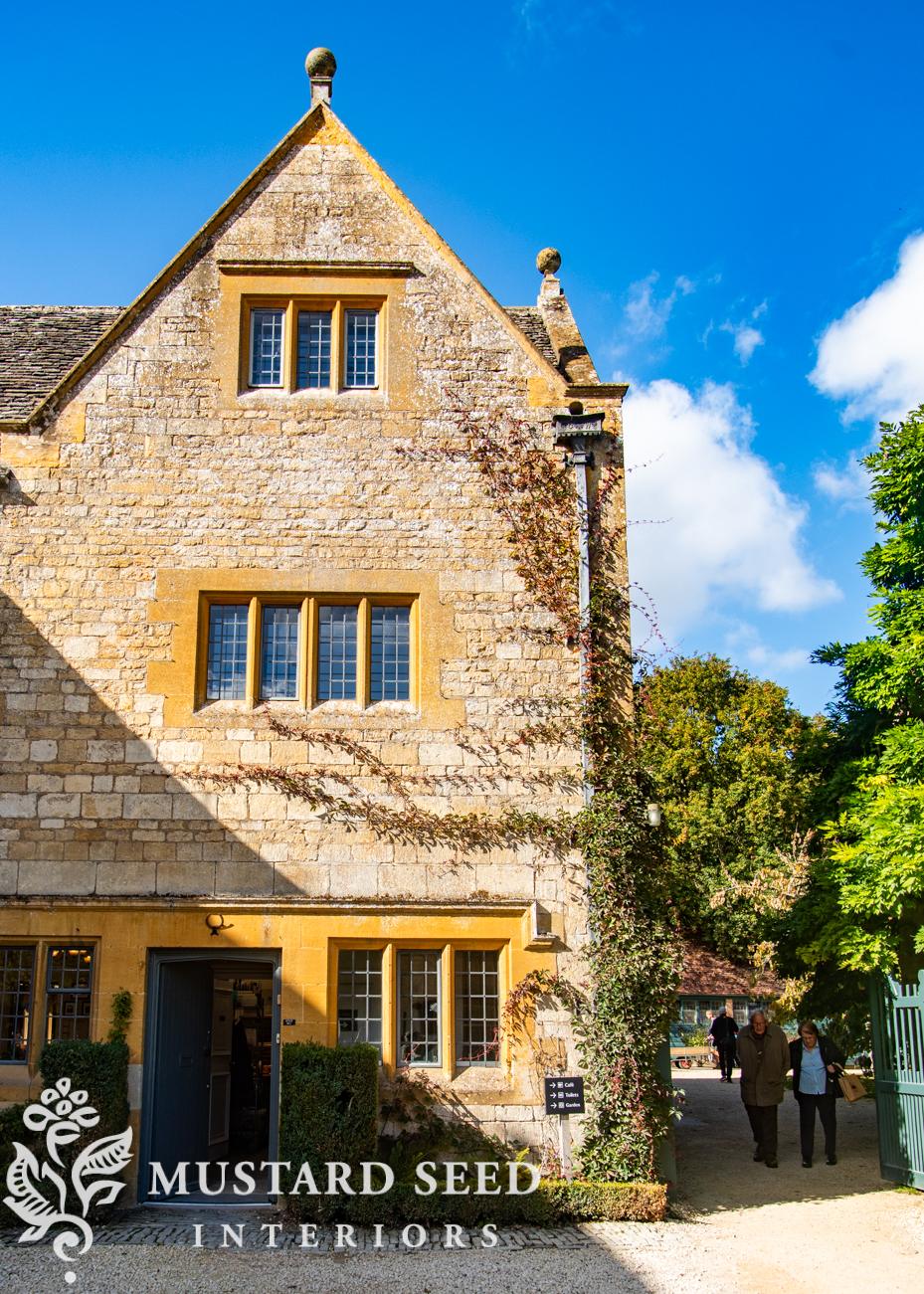
I also love how the golden stones were used around the windows to give them more presence.
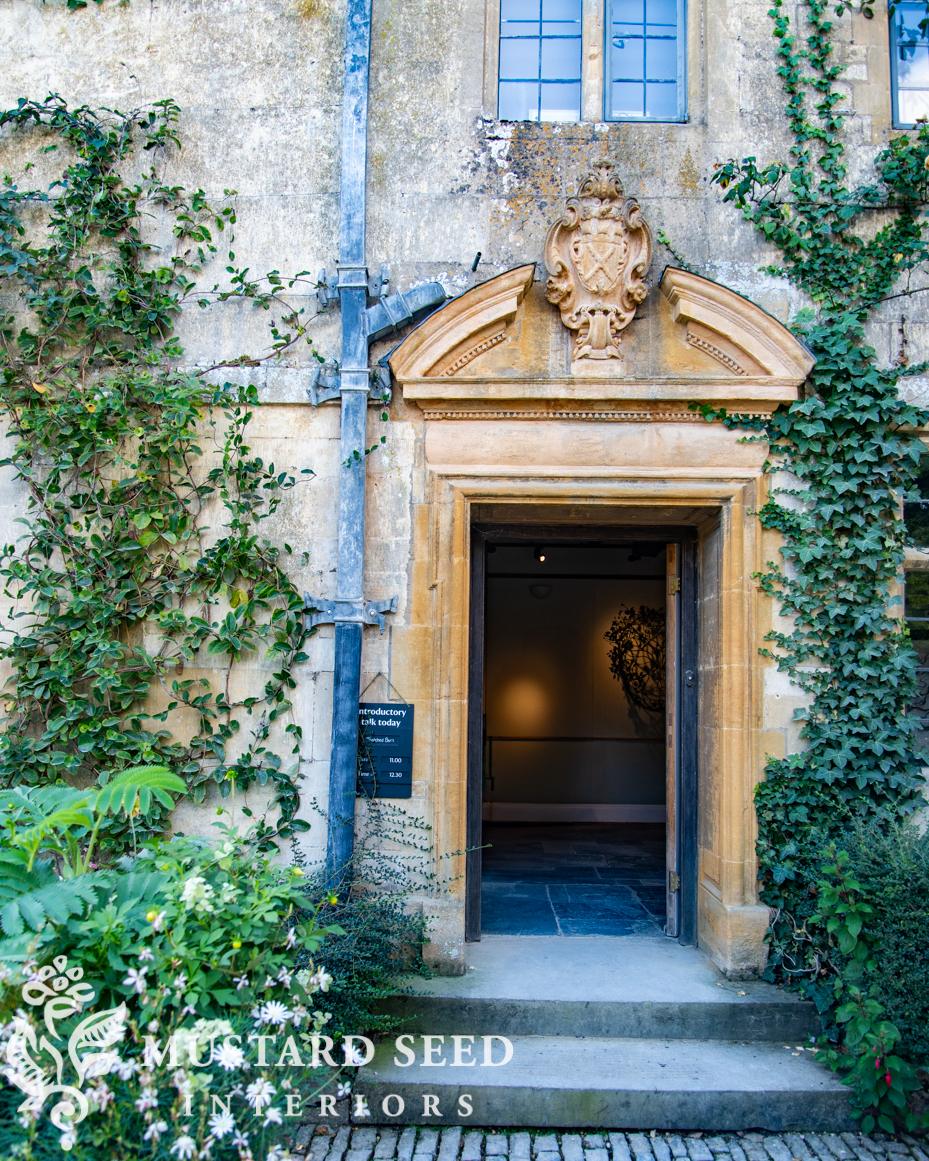
Tours are available at certain times, but you can walk freely around the home’s first floor to see the office, parlor, and foyer. Apparently, the actress Vivien Leigh once stayed here.
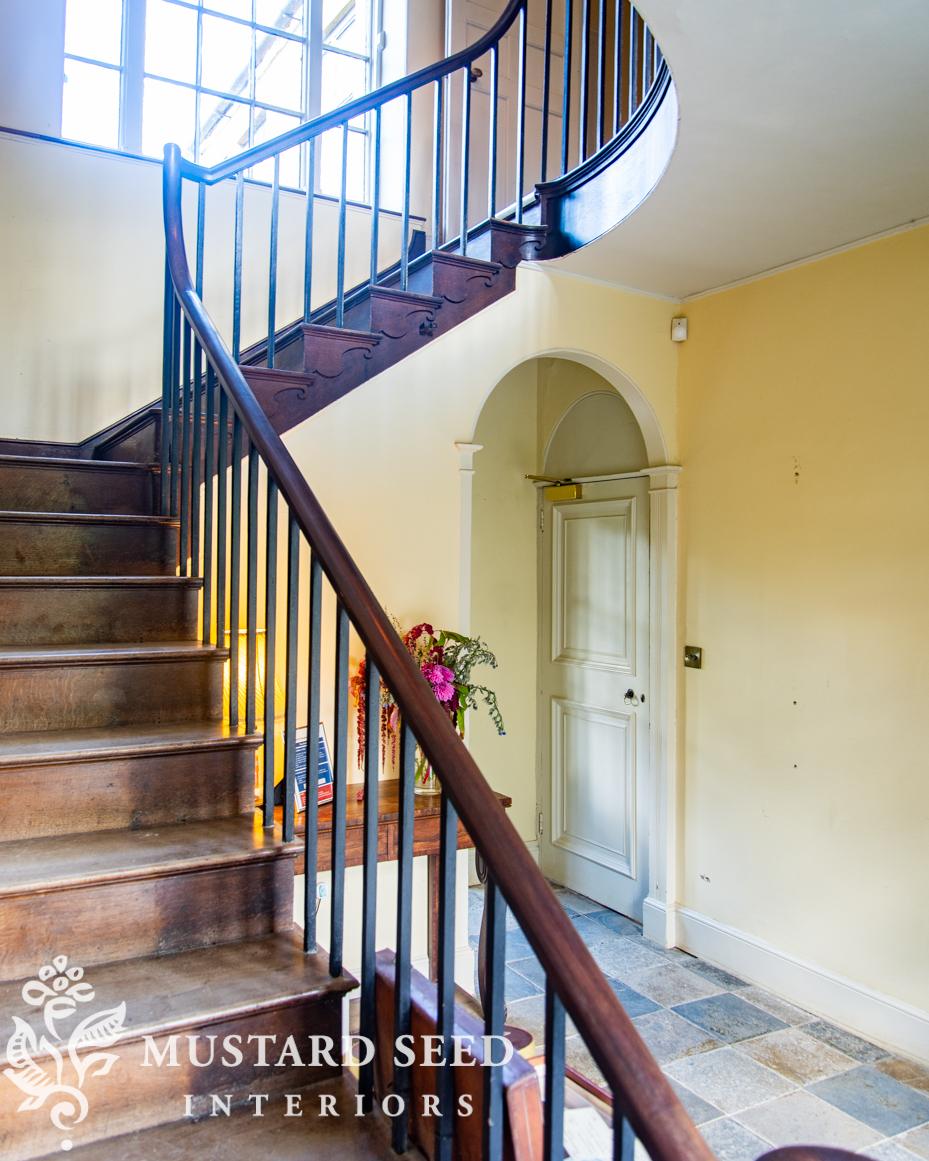
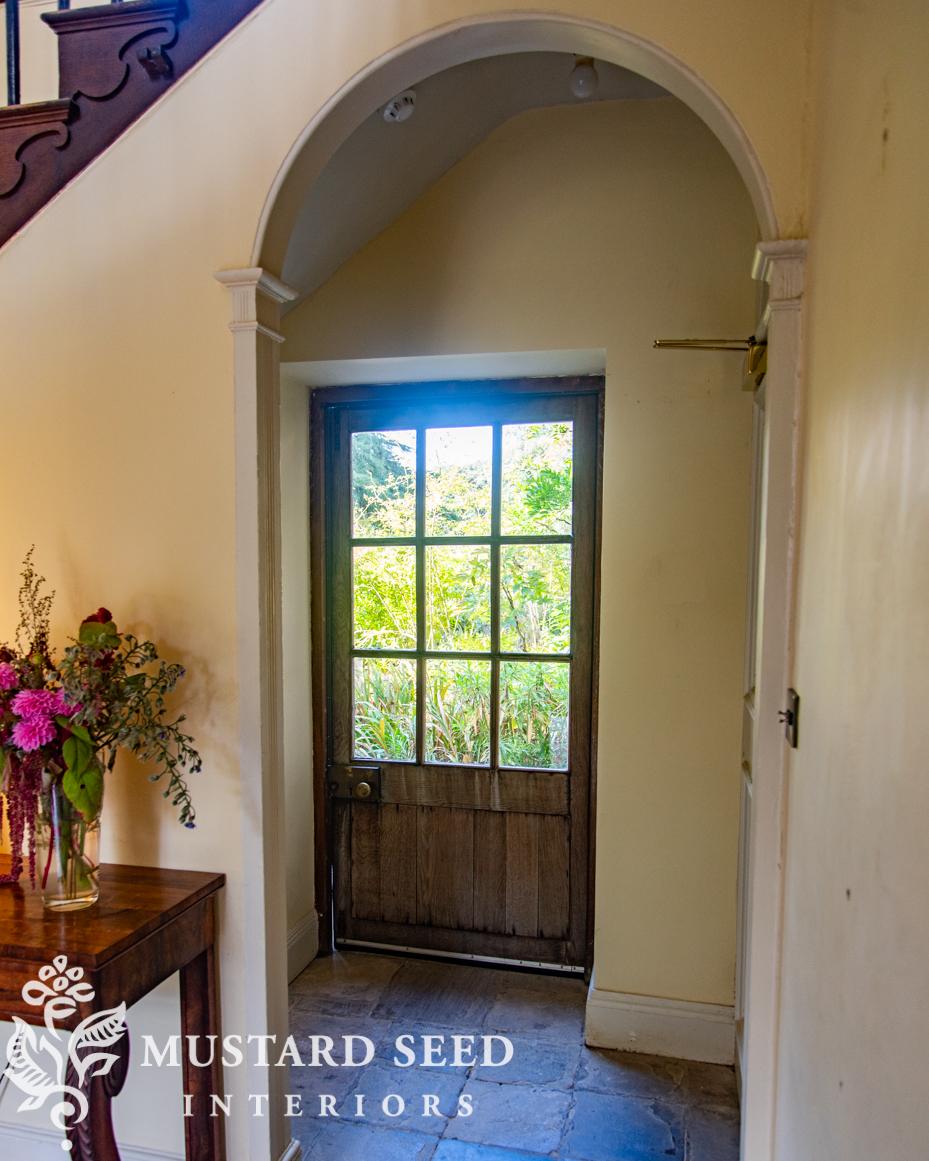
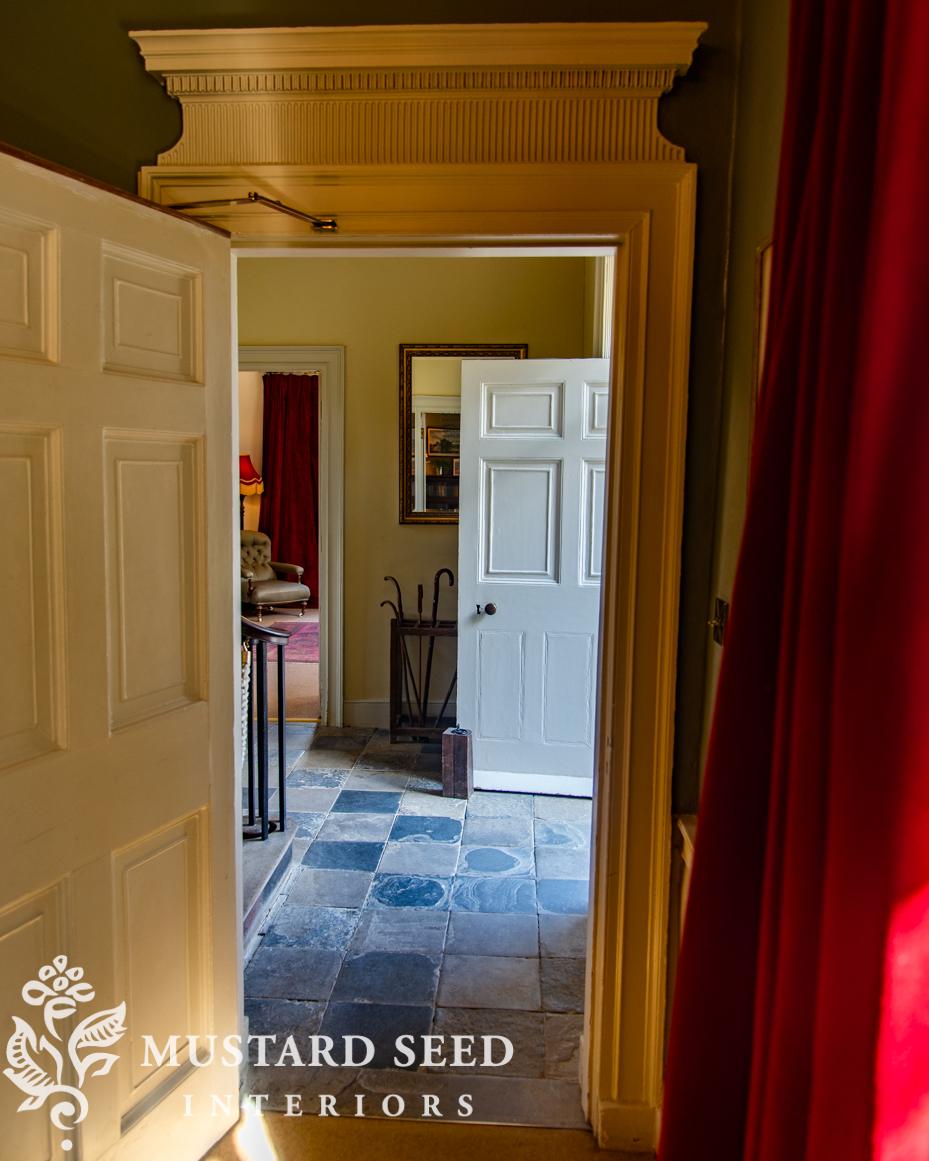
After a short walk around the house, we started our garden tour.
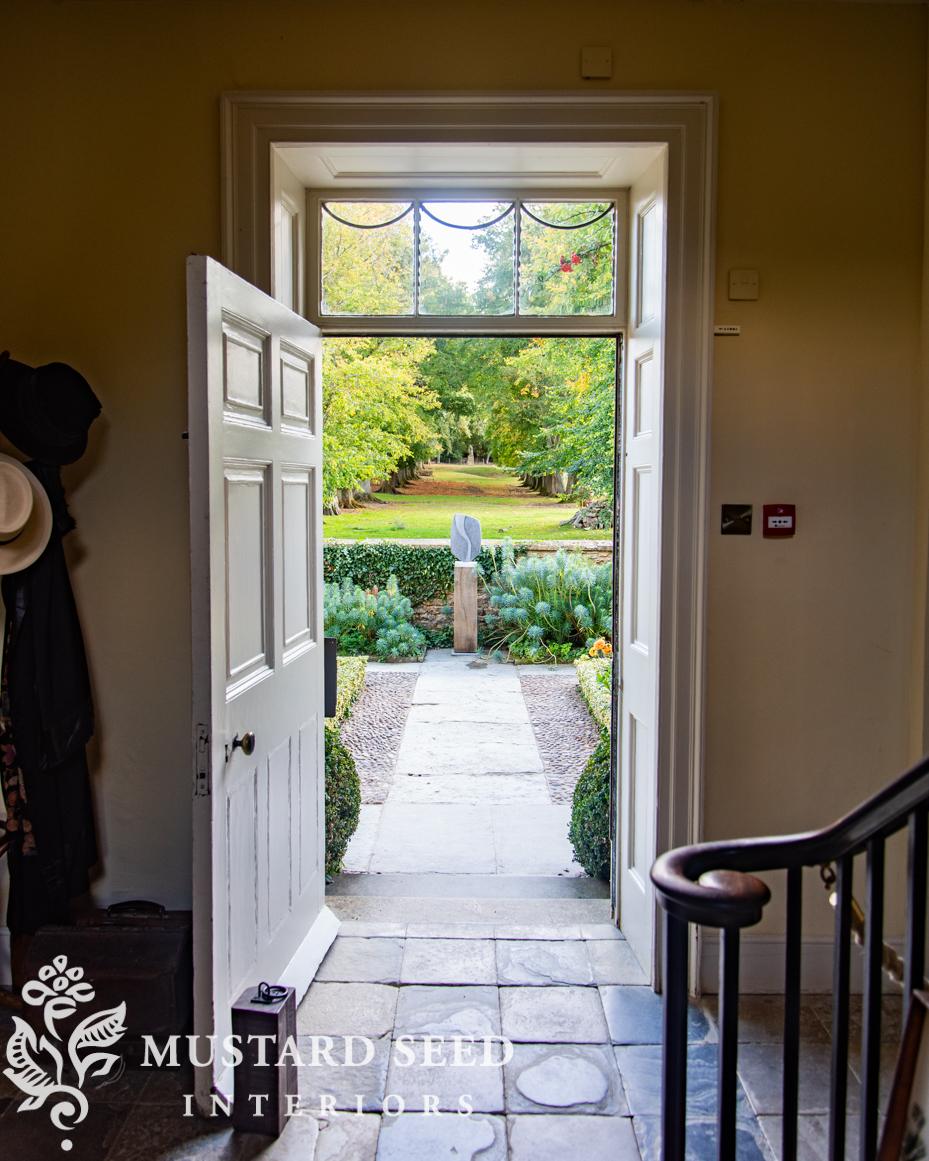
I probably wouldn’t have been too interested in the gardens if I visited even three or four years ago, but I’ve embraced gardening as a worthwhile hobby I want to pursue. I’ve read about the passions of other gardeners like Thomas Jefferson, Bunny Williams, and Bunny Mellon, and their journeys and words have swayed me. I always felt too impatient for gardening, but as I get older, I realize the years are short and next spring is just around the corner even as amber-colored leaves flutter outside my window.
In touring this garden, I wasn’t only interested in the beauty of the place, but in the little details that make up the whole. I snapped pictures of plants to look them up and of borders and combinations I liked and might want to try to replicate. While online plant identifiers are pretty good, if you see a plant you love at Hidcote and can’t identify it, you are invited to email HidcotePlantID@nationaltrust.org.uk with a photo and the location of the plant, and they will share the information.
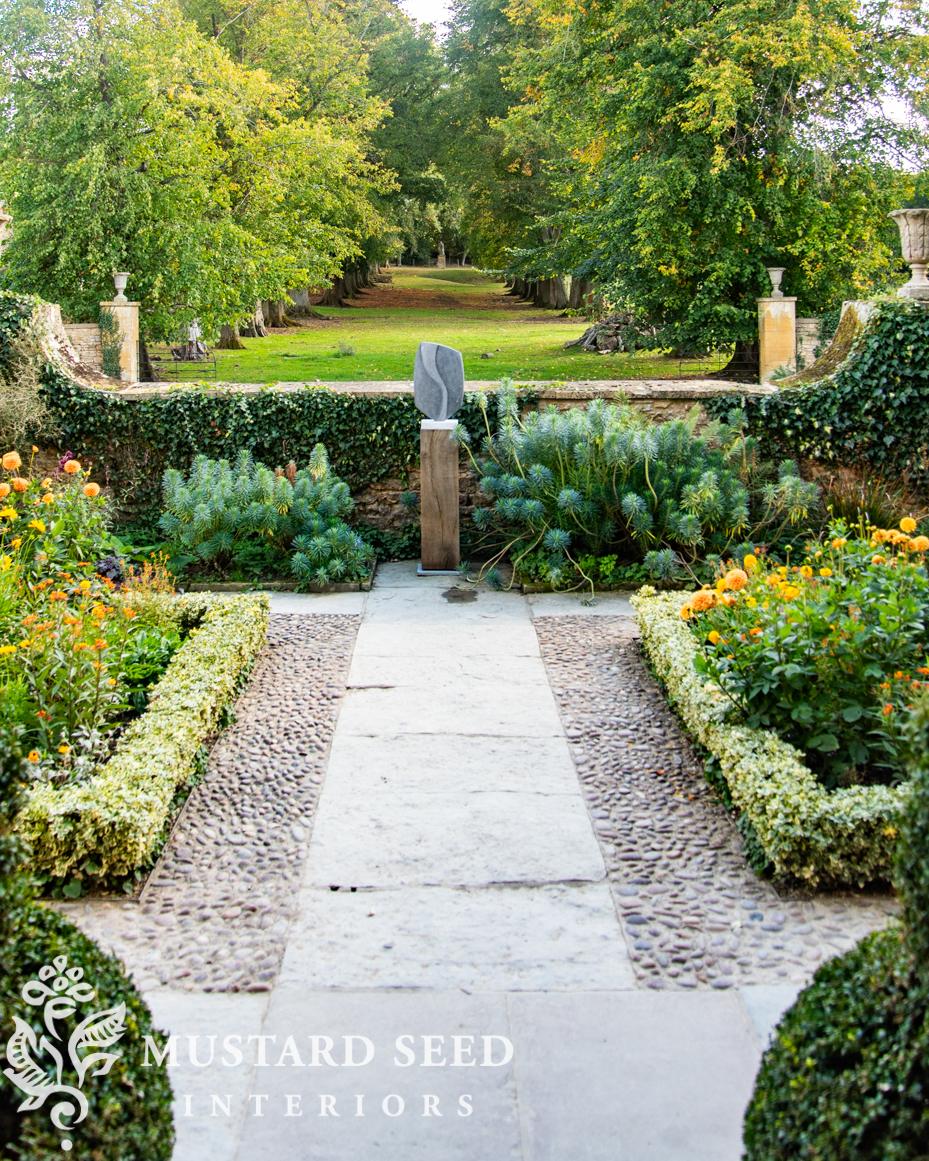
Hidcote Manor Garden is the result of Lawrence Johnston’s 30-year love of gardening and exotic plants. Fortunately for him, his mother had a vast fortune and, while reportedly controlling the purse strings, gave him an allowance to design and develop the impressive garden.
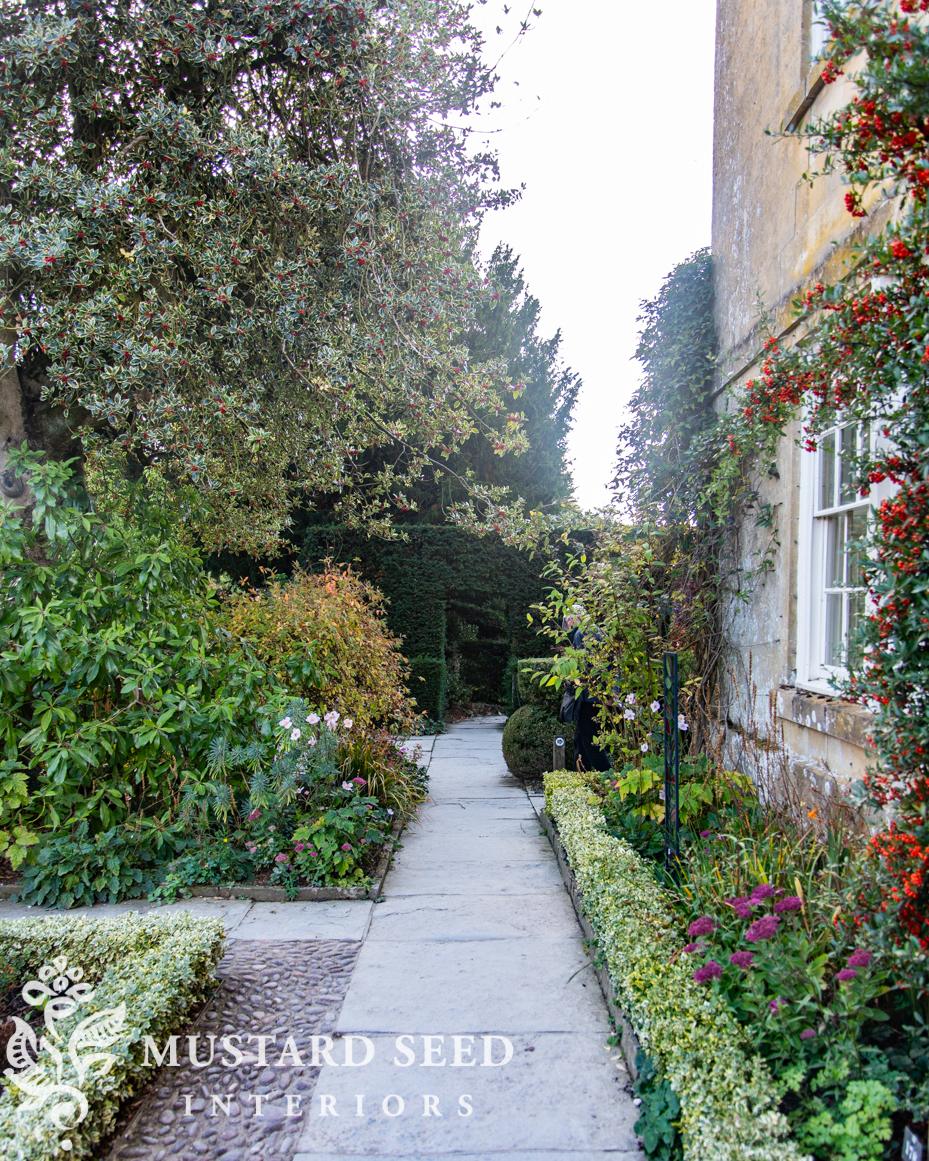
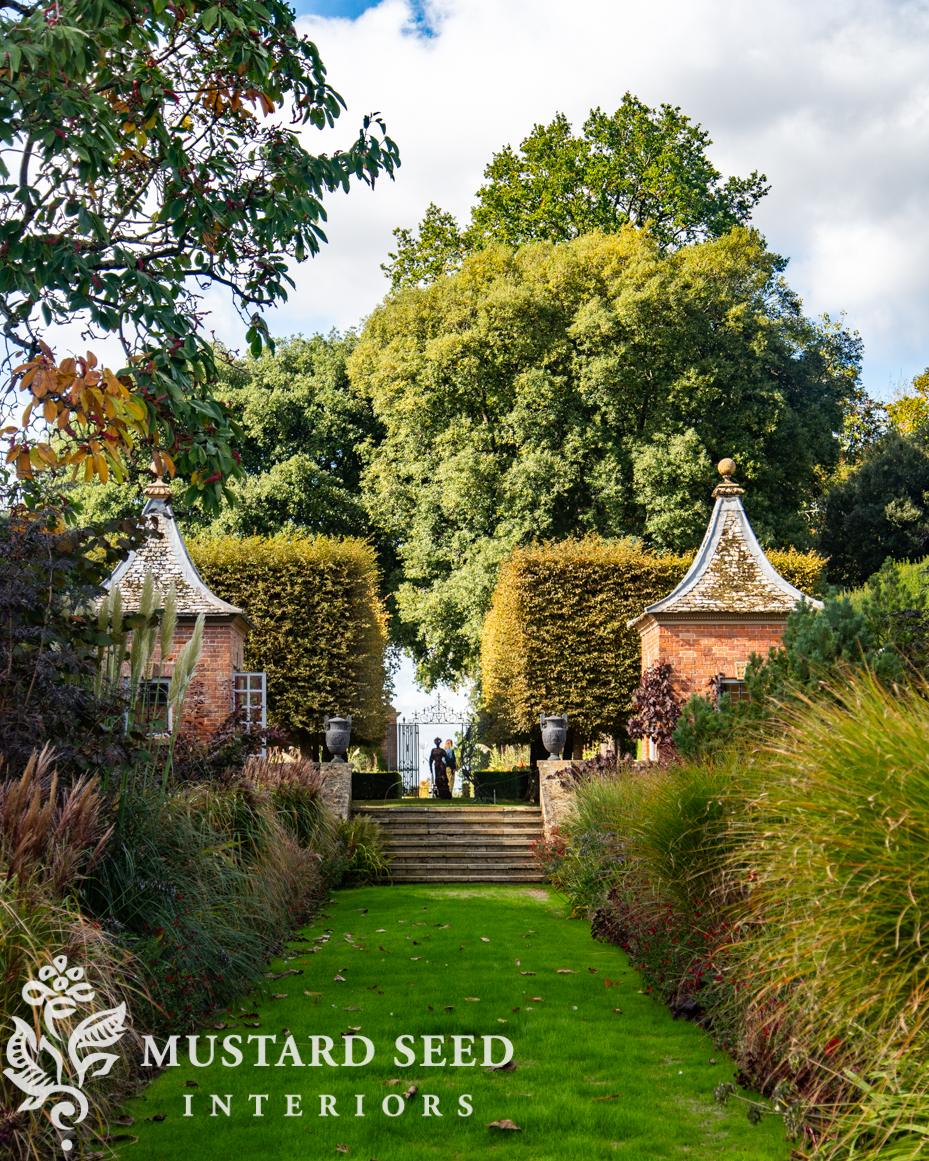
Over two miles of hedges create garden rooms and guide you through different outdoor spaces, such as the great lawn, long walk, pillar garden, orchard, and tennis court.
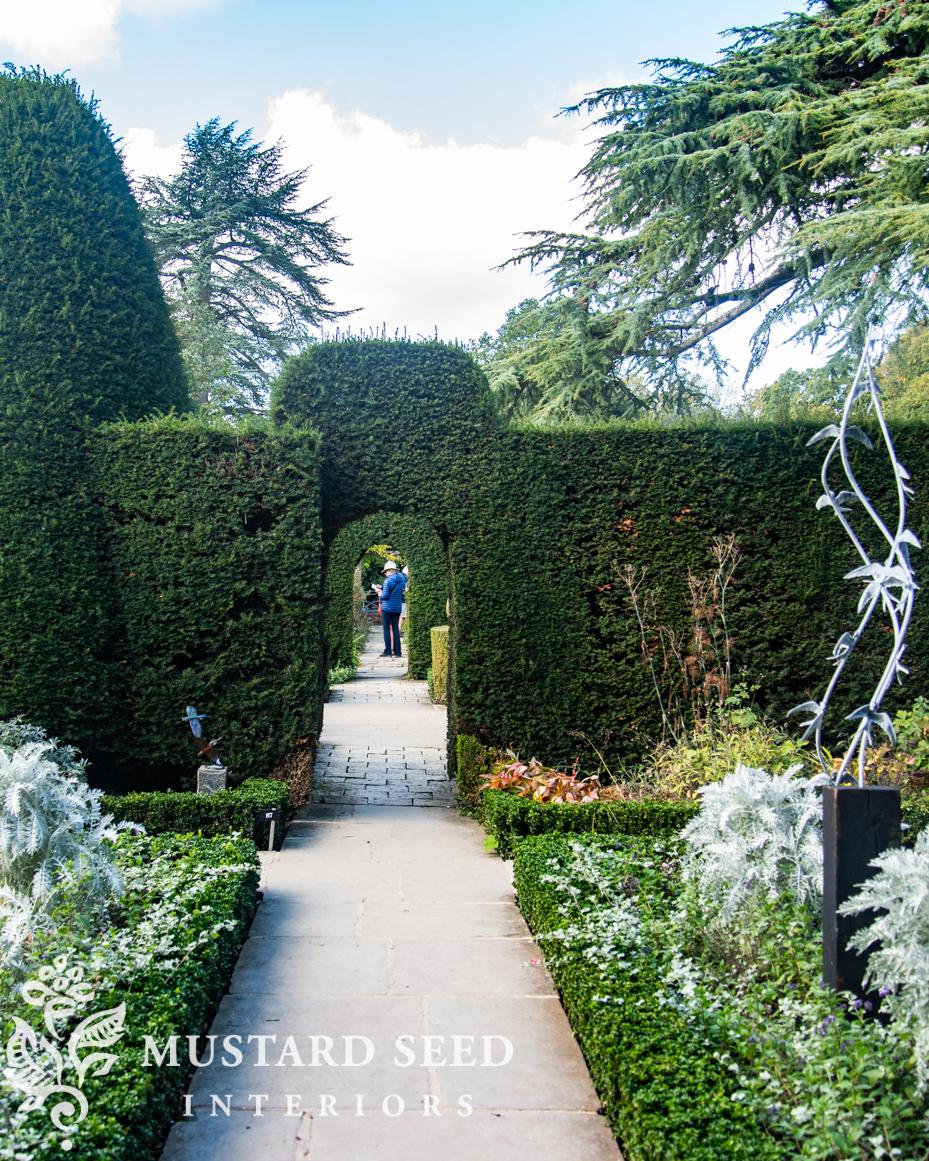
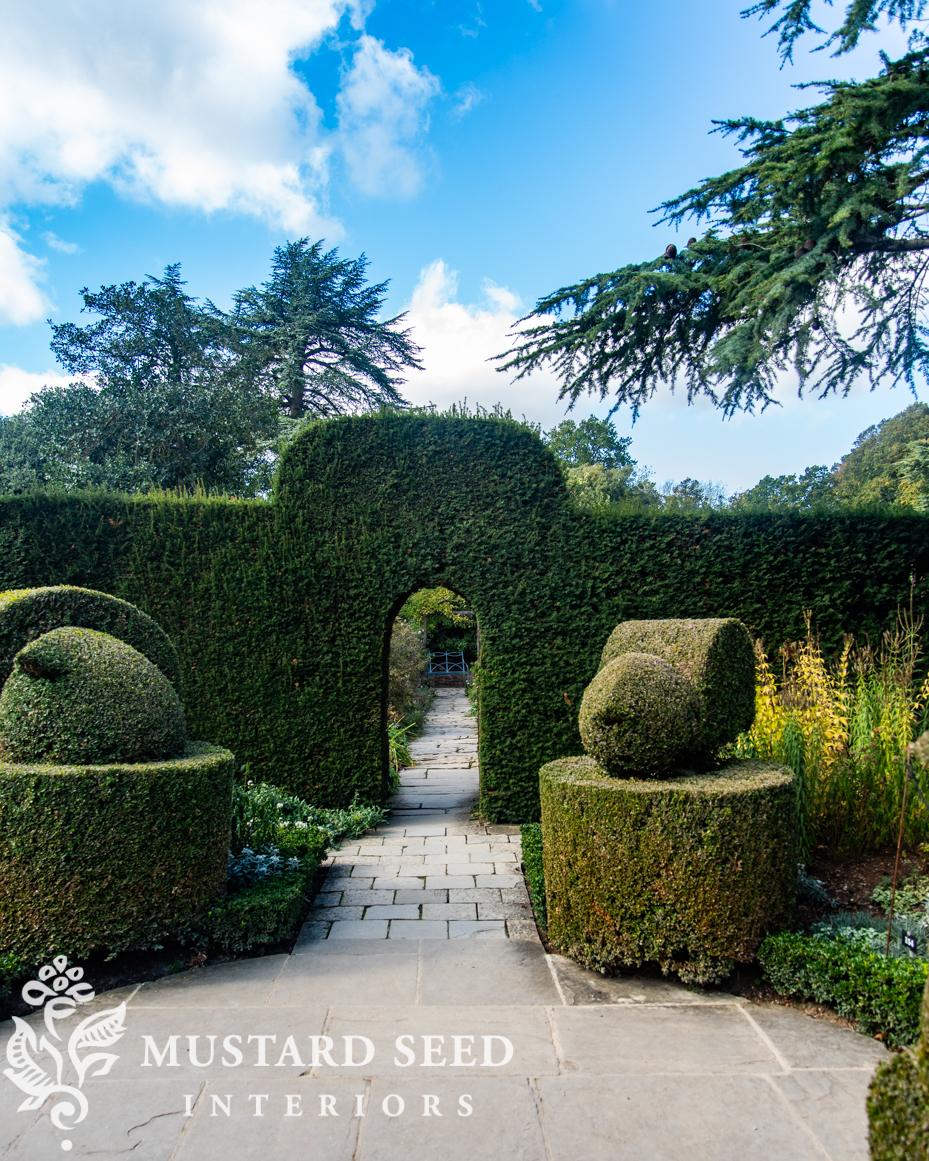
We have a nice L-shaped yew hedge in our yard, so it was fun to see how these yew hedges have been grown, trimmed, and maintained. It made me wonder how long it would take to make a yew arch to our back gate.
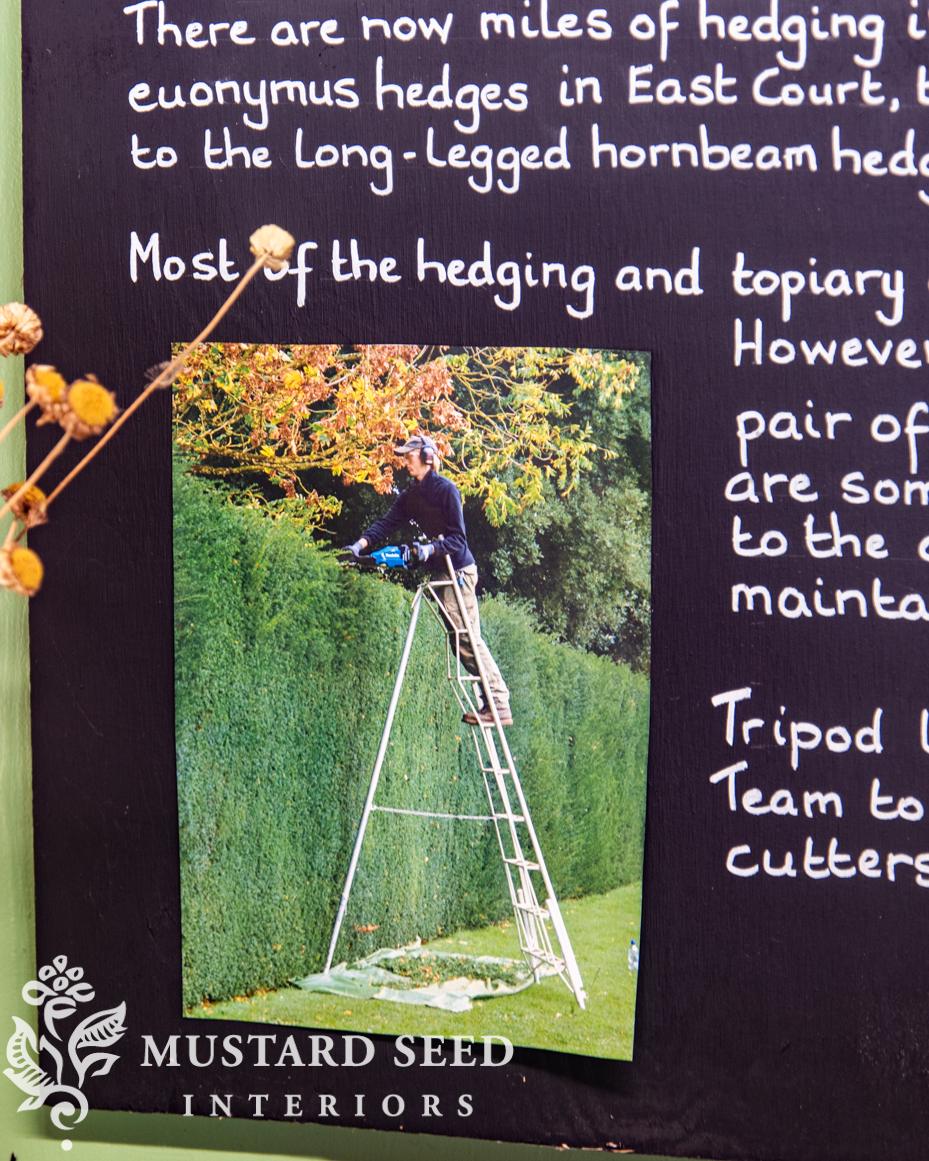
Of course, since trimming our own small hedge is a pain, I did marvel at the amount of trimming that had to be done on hedge after hedge. Hidcote had signage sprinkled around the property to answer that and, I’m sure, other FAQs about the garden maintenance.
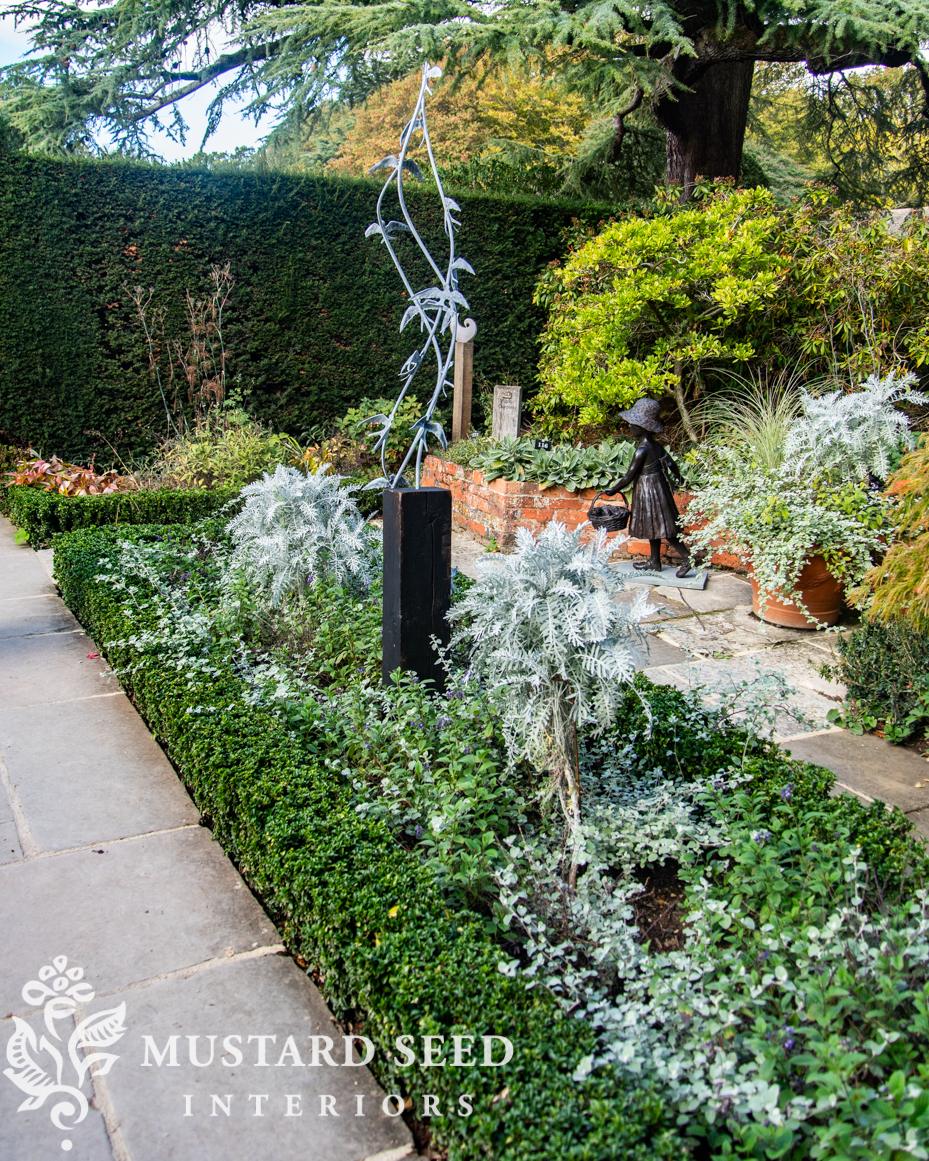
This little bed was one of my favorites…
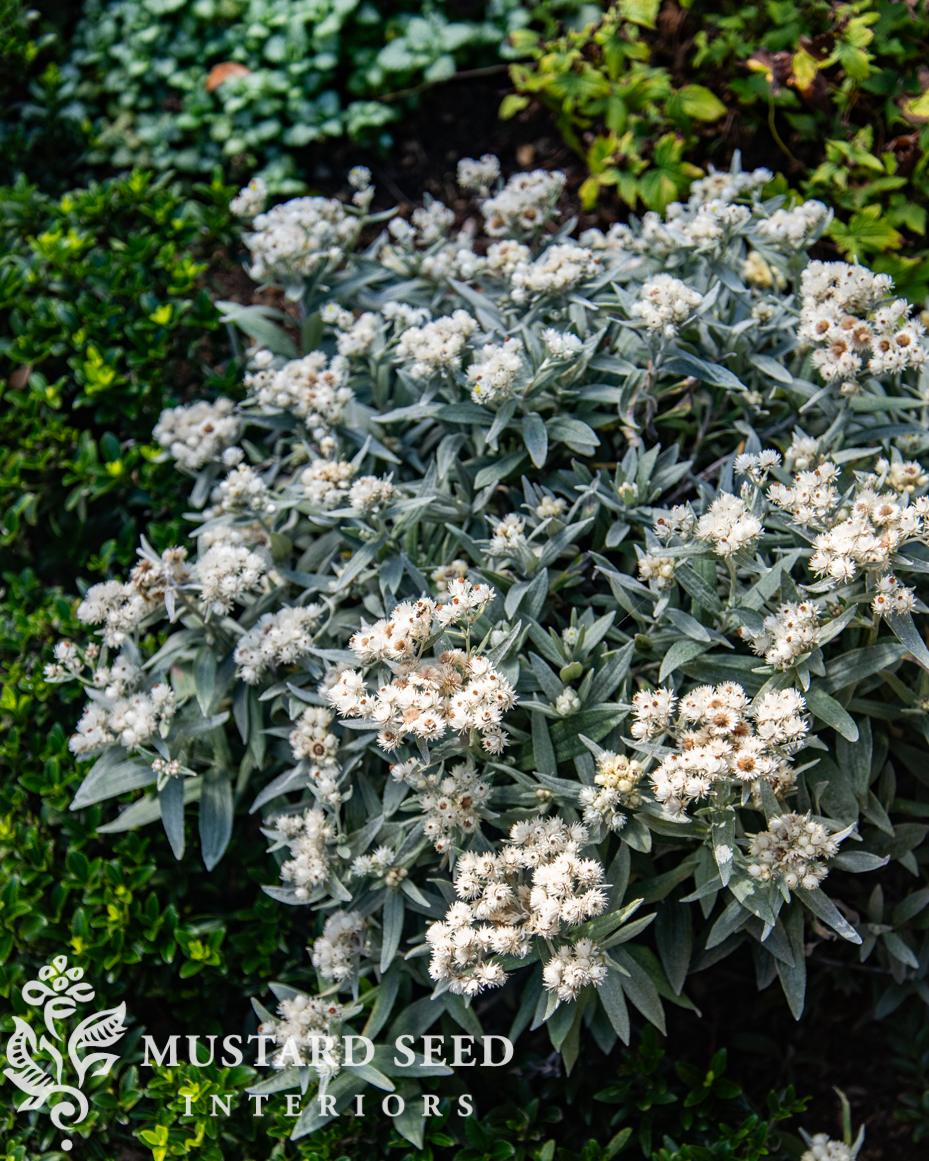
I alos loved this plant… (I haven’t looked it up, but I was drawn to the frosted leaves, texture, and small white flowers.)
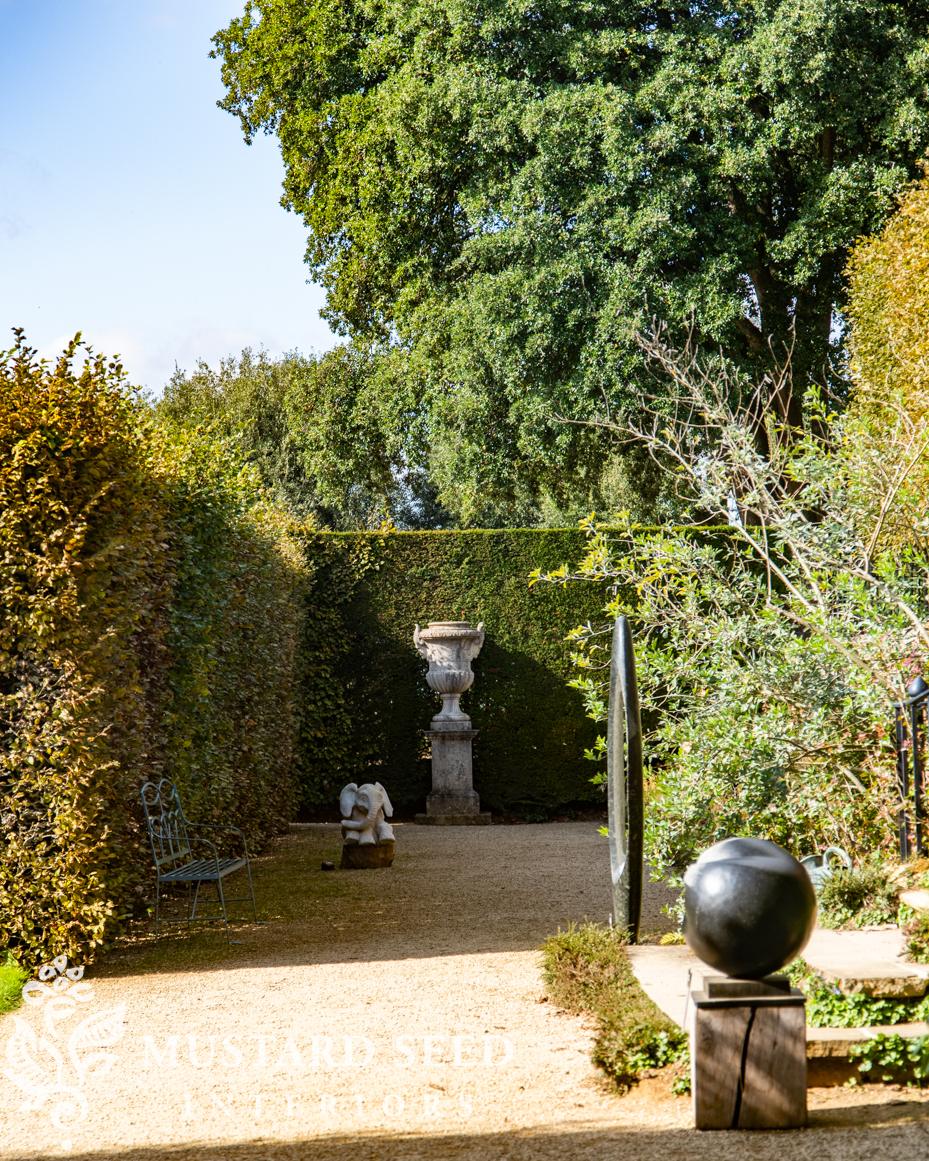
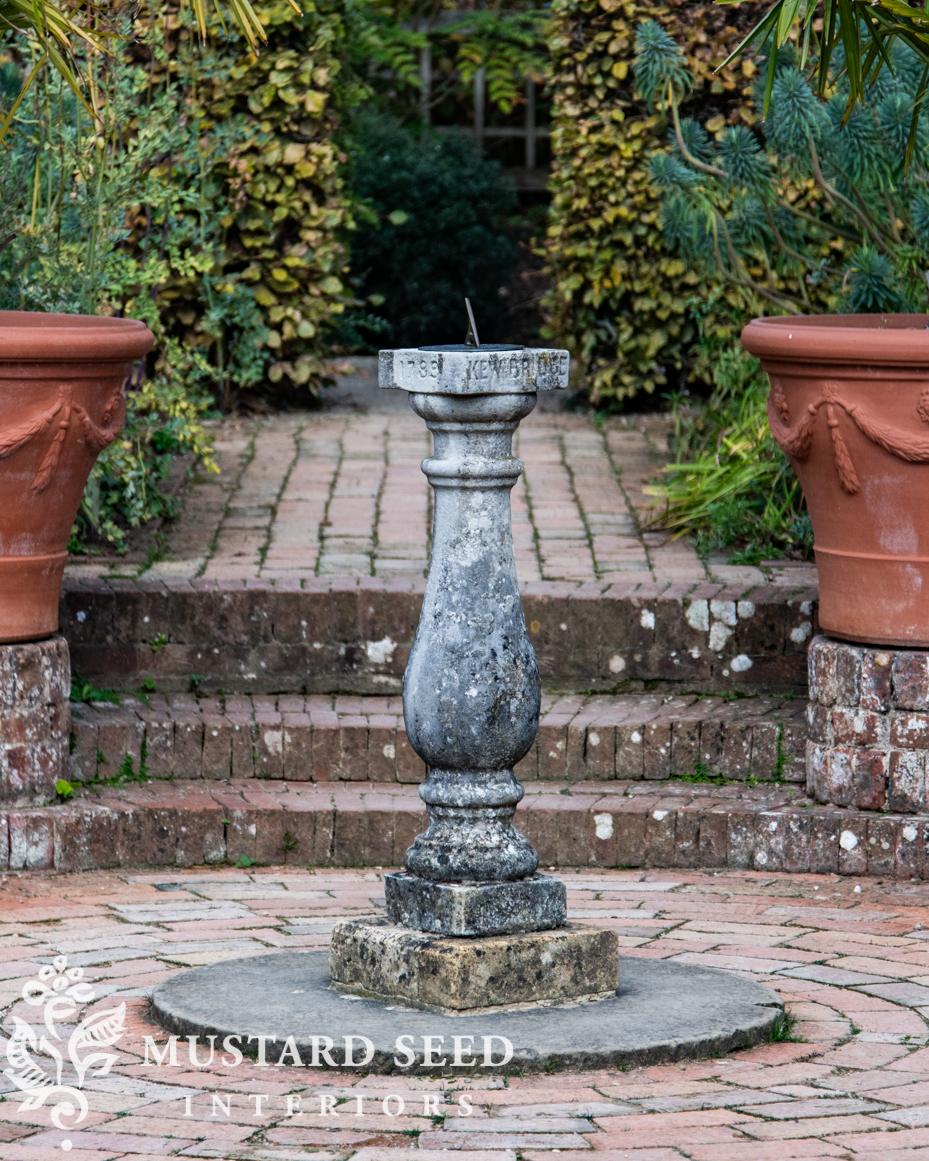
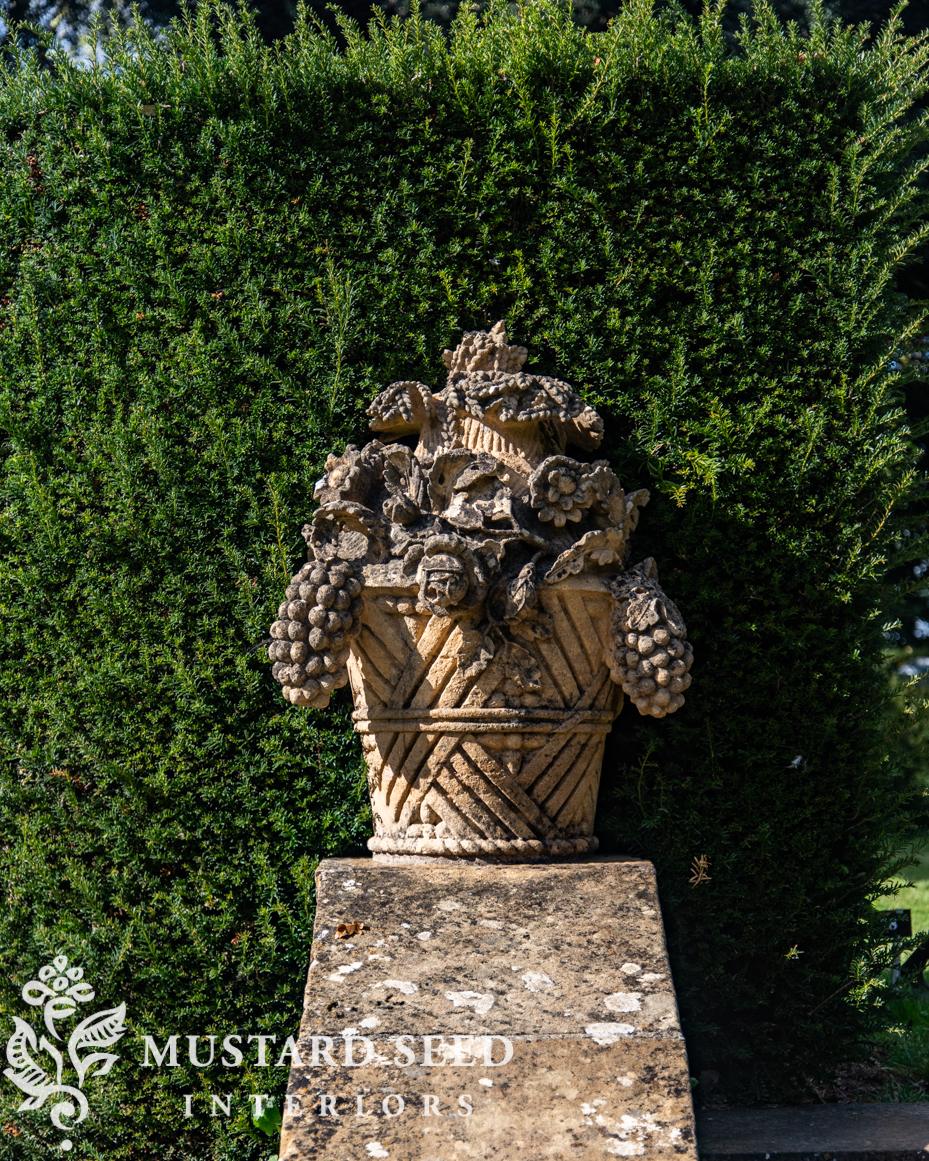
I felt like some of the modern sculptures detracted from the overall aesthetic of the garden, but that’s just my opinion. I loved the original garden structures, though, and decorative concrete urns and statues.
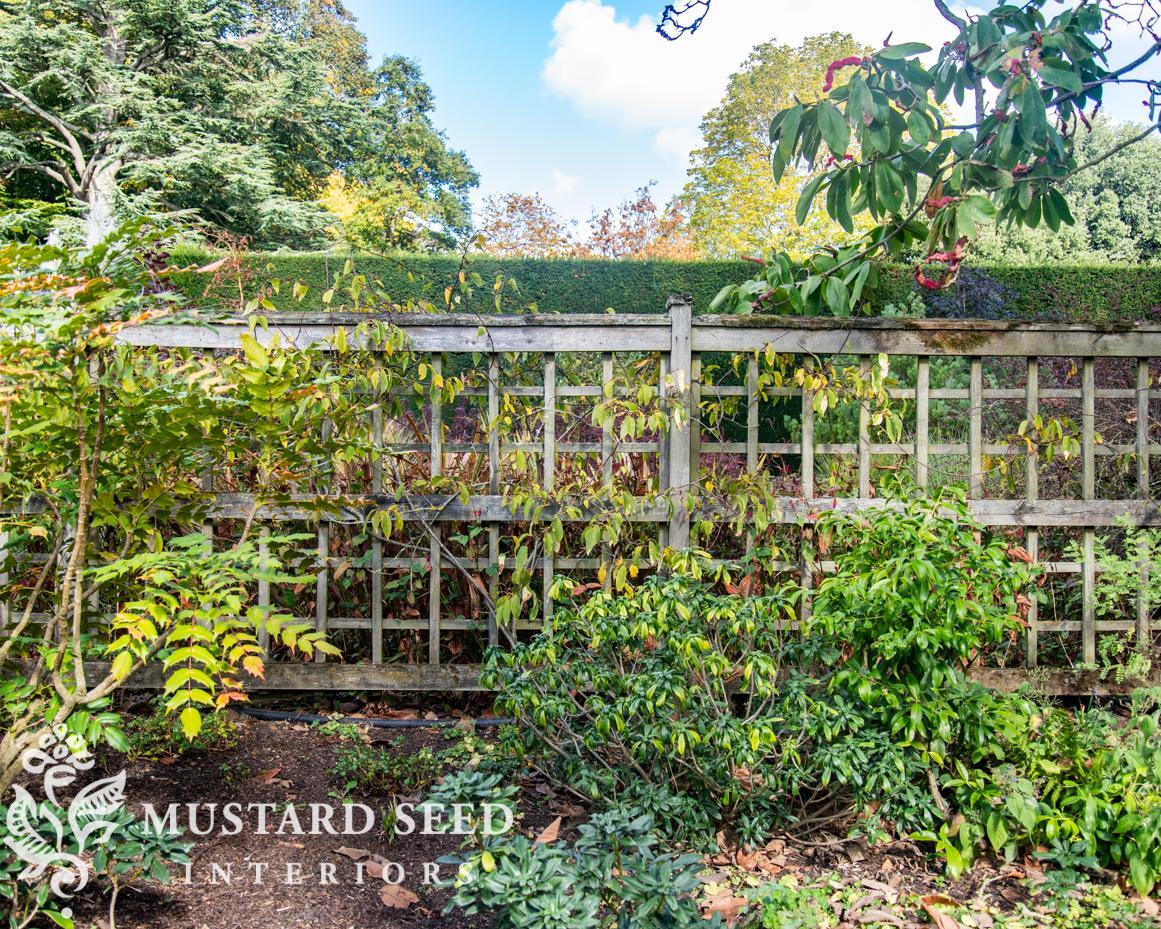
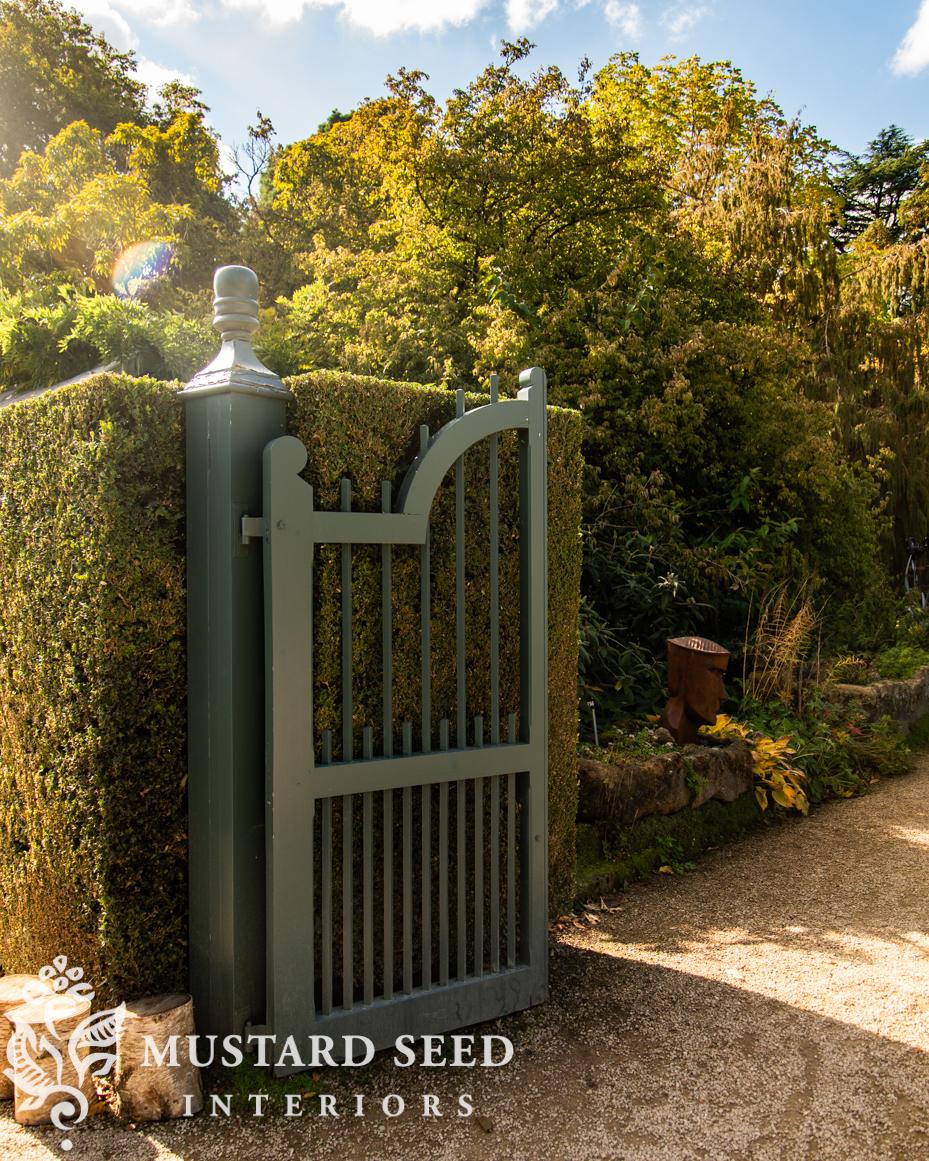
I also took pictures of some of the wood trellises, fences, and gates that I might be able to reproduce. Jeff was blissfully unaware that I was mentally planning new building projects for him.
There was even an outdoor room for making and having tea. I mean, what if you want to make tea in your garden instead of your big manor house? Of course, you need a little folly for that. While I’m saying that sarcastically, I do love the idea of making little outdoor spaces out of luxury, not need. Sometimes things are done out of delight, not because they are necessary or practical.
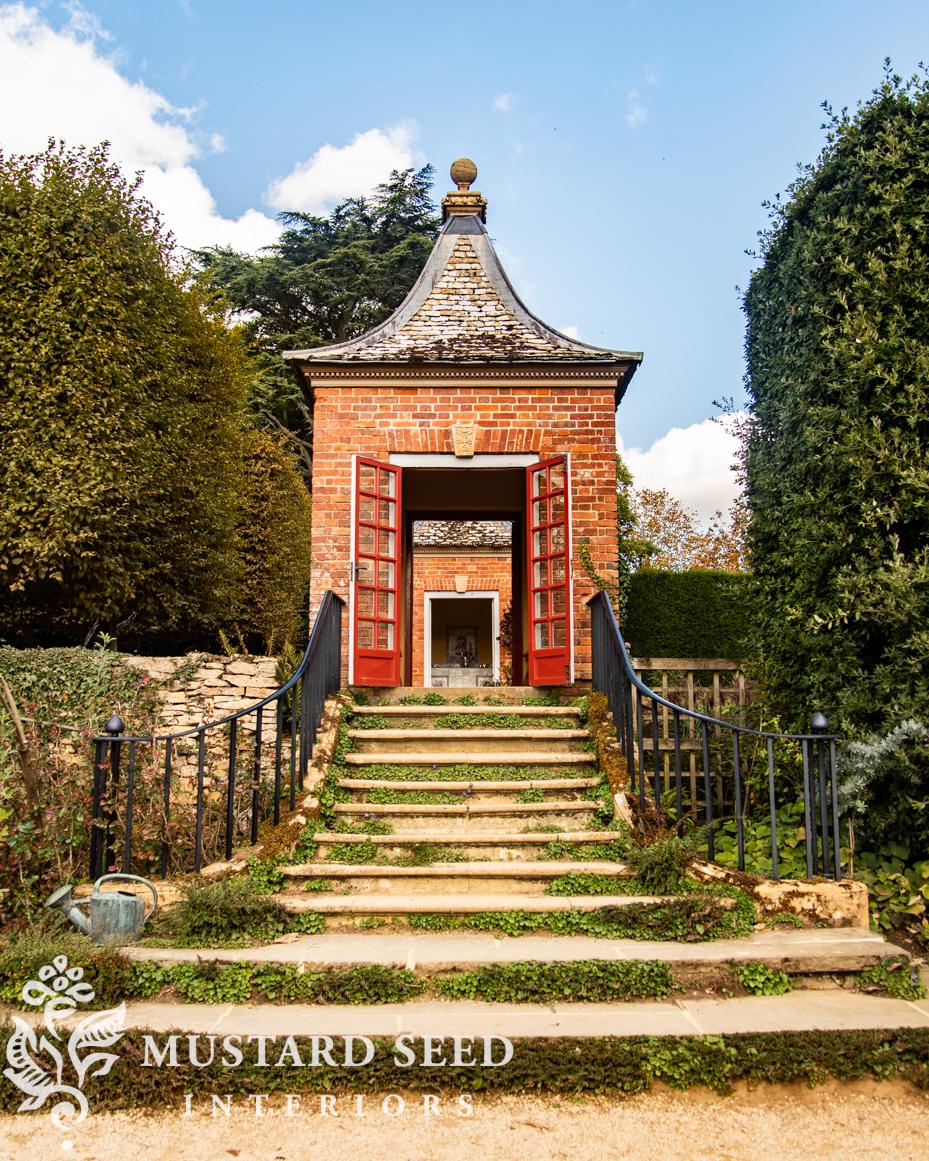
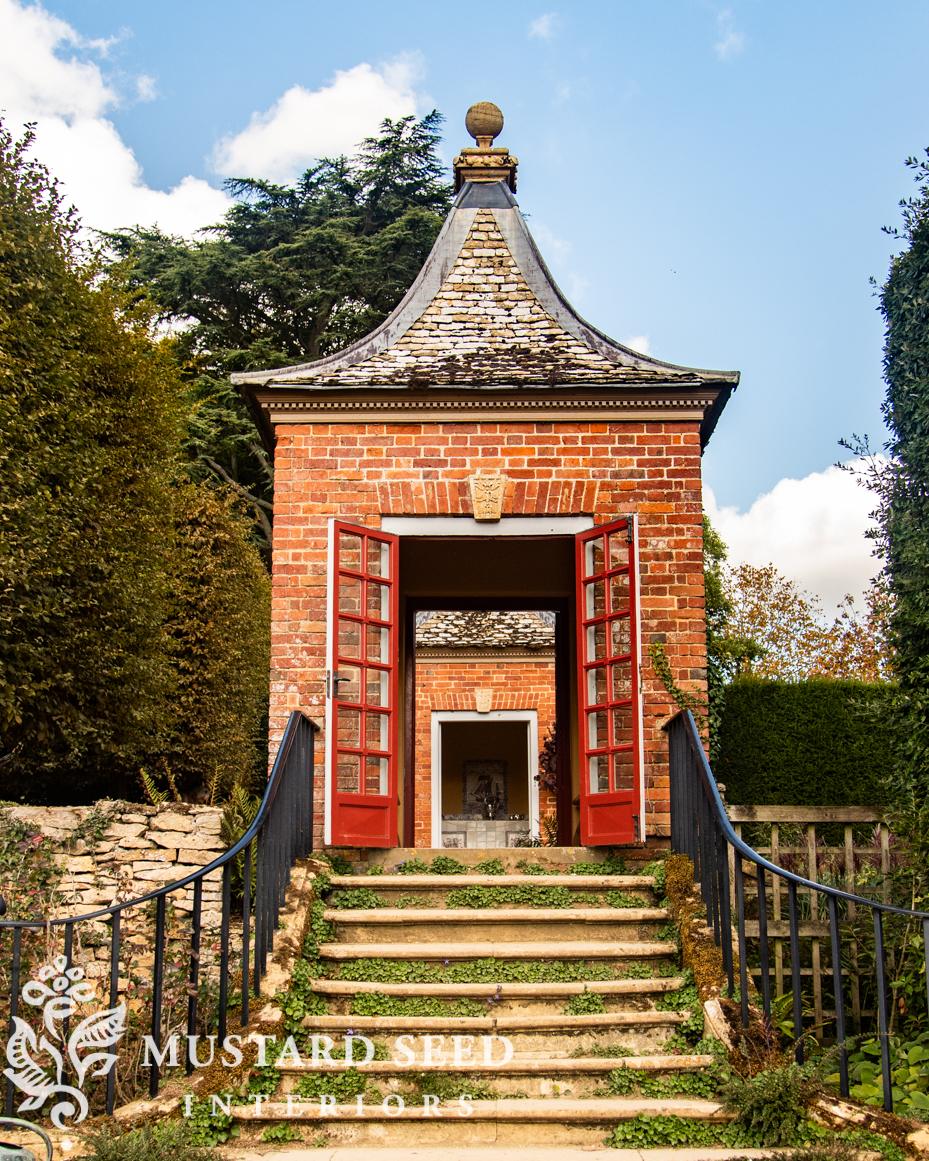
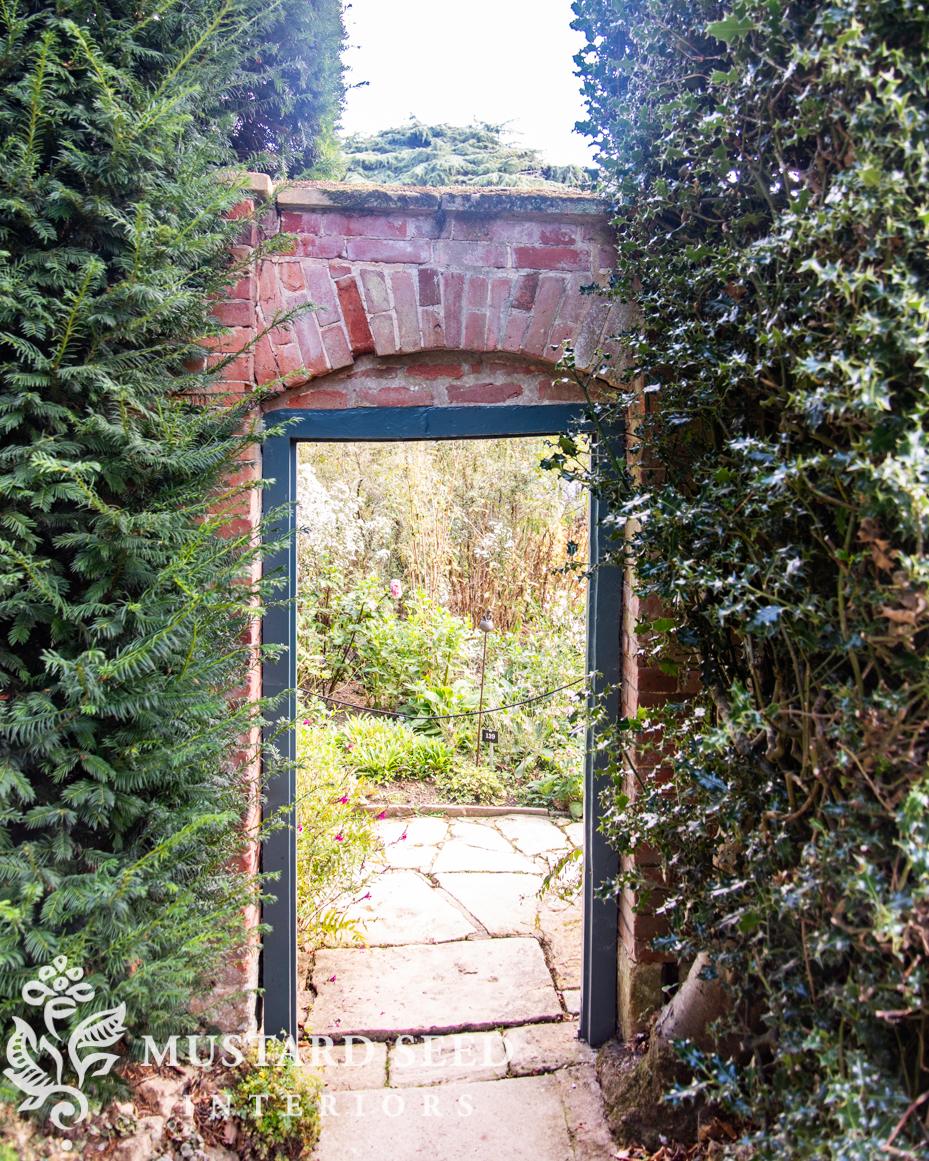
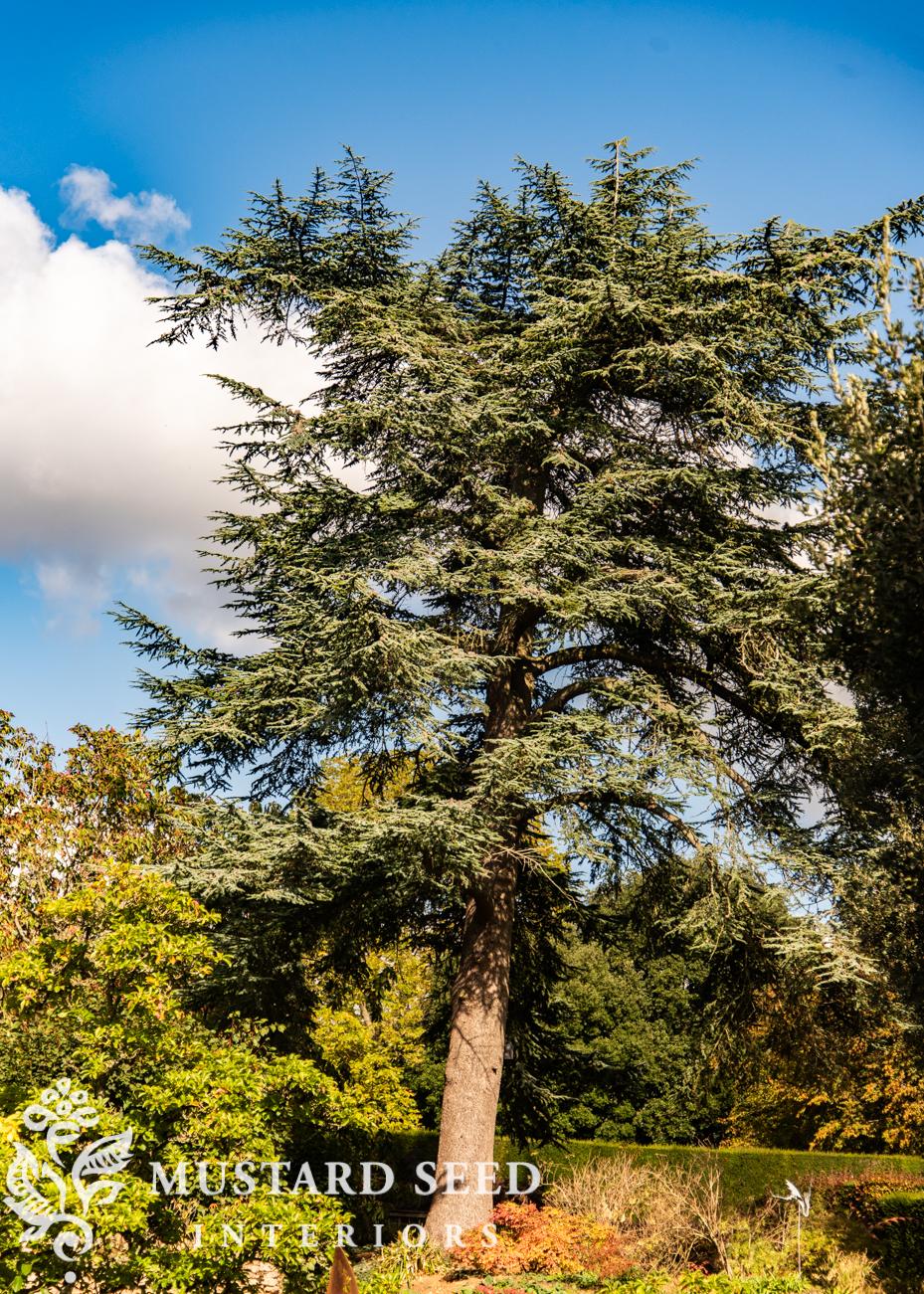
While Lawrence Johnston loved gardening in general, his main passion was exotic plants. He went on “plant hunting” expeditions to seek out plants to bring back to his garden to grow and cultivate.
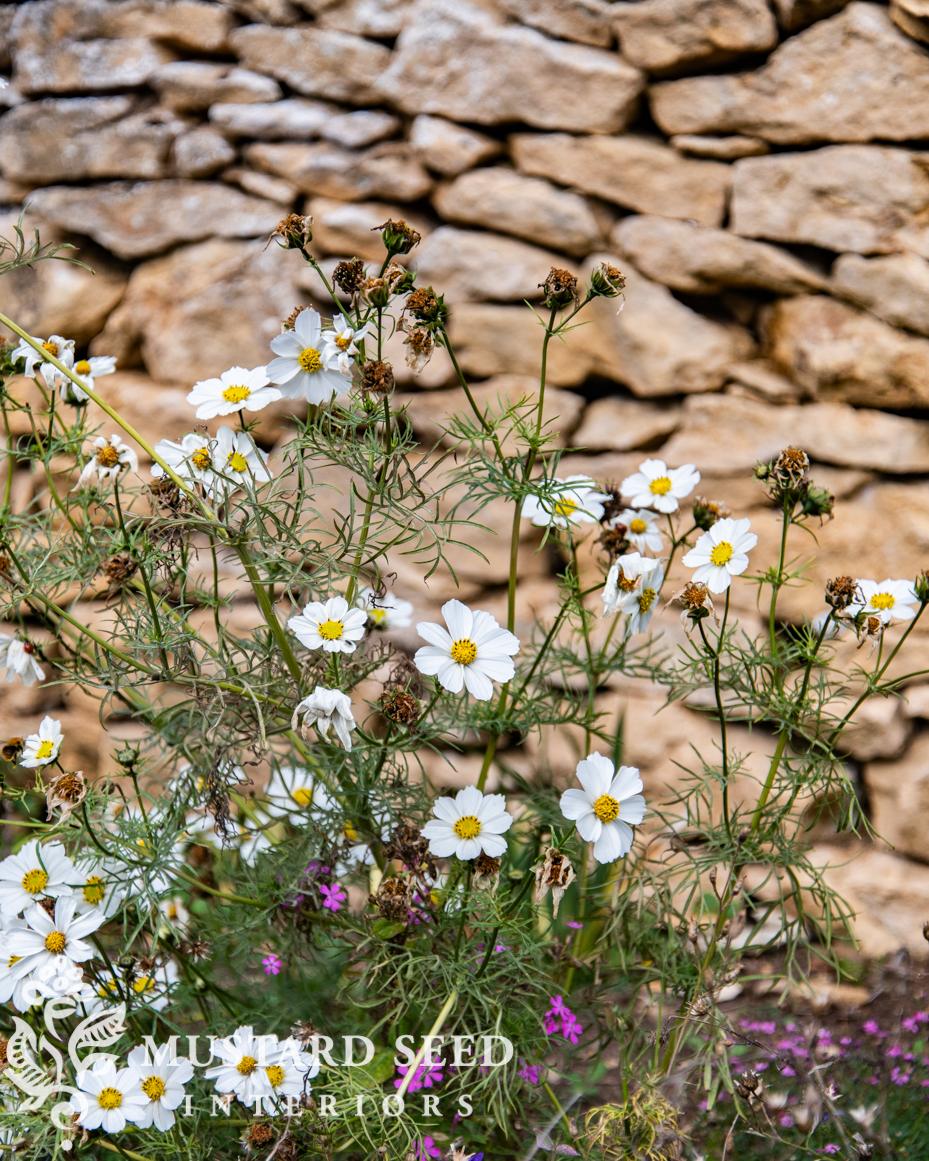
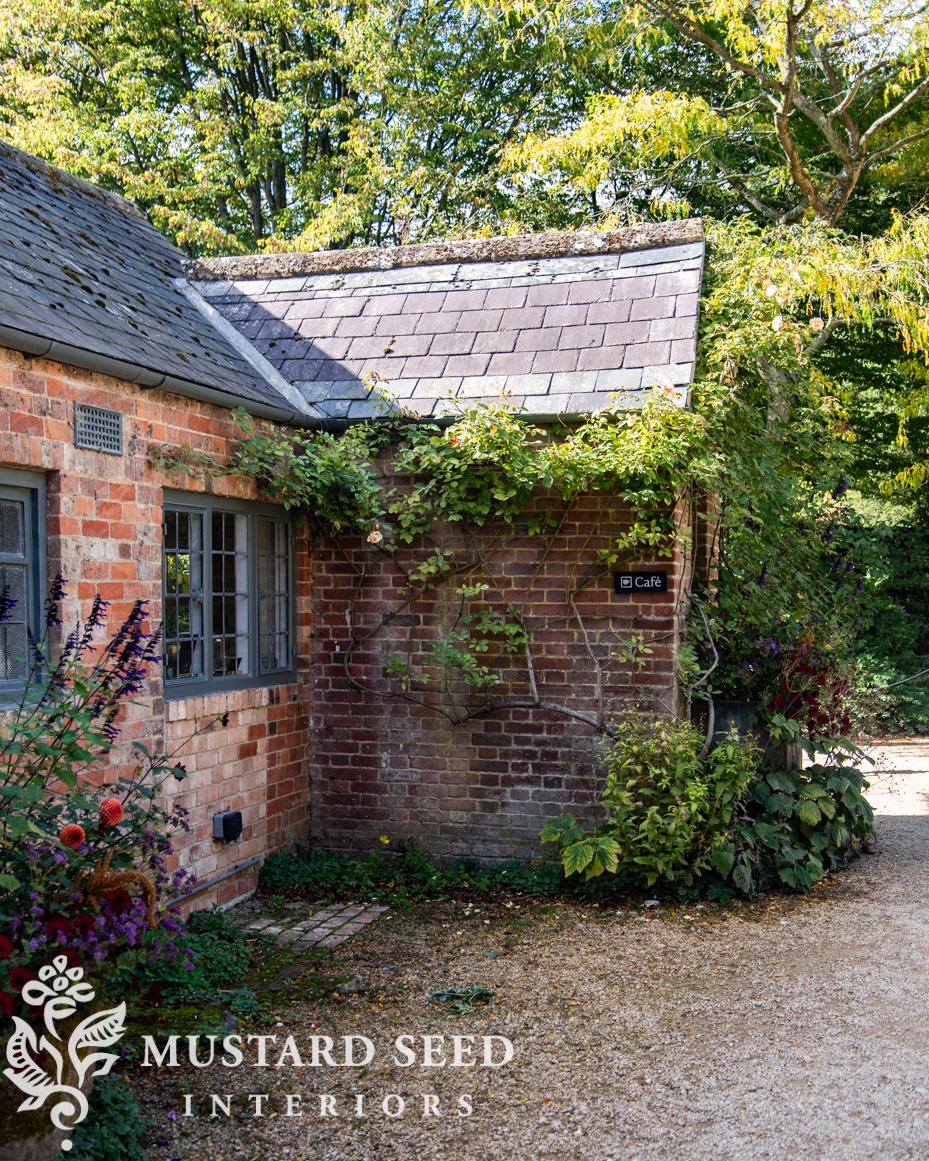
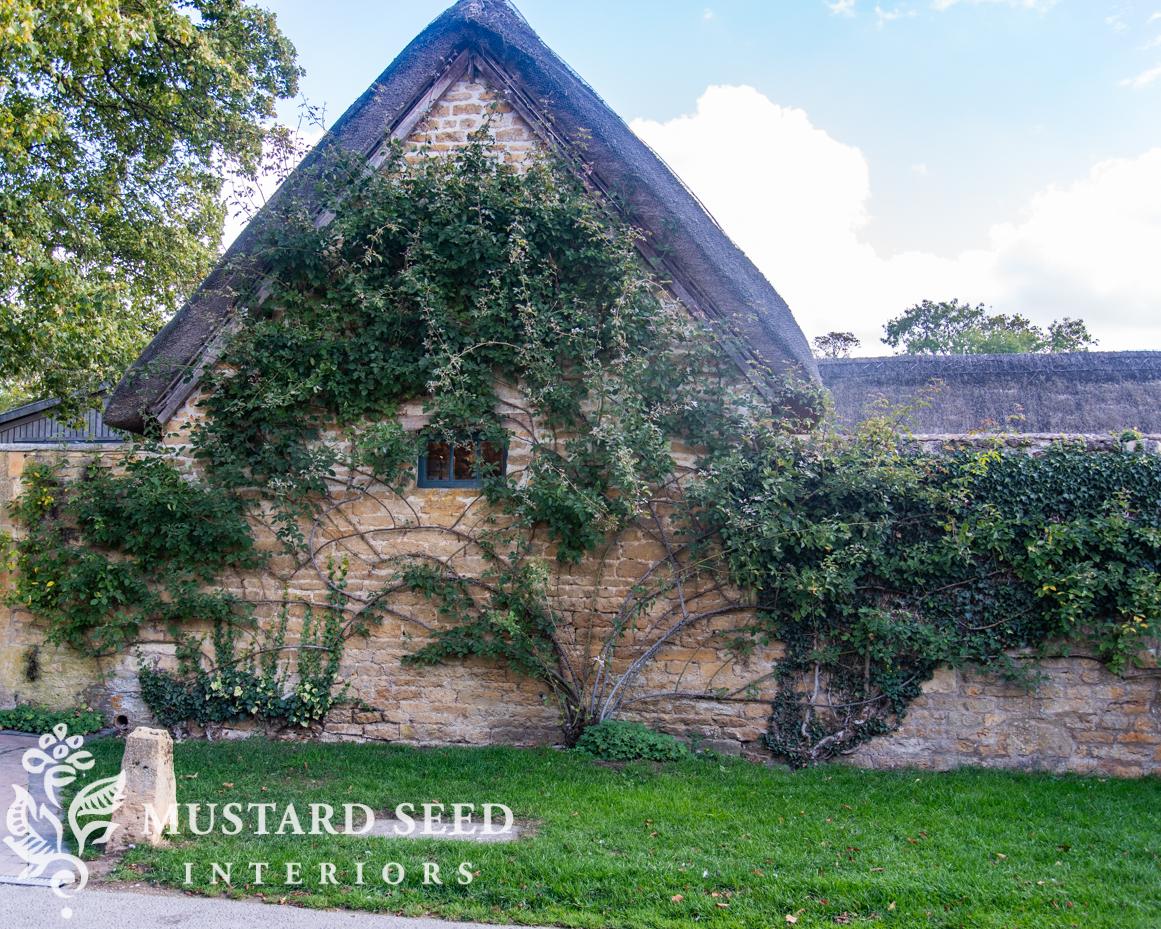
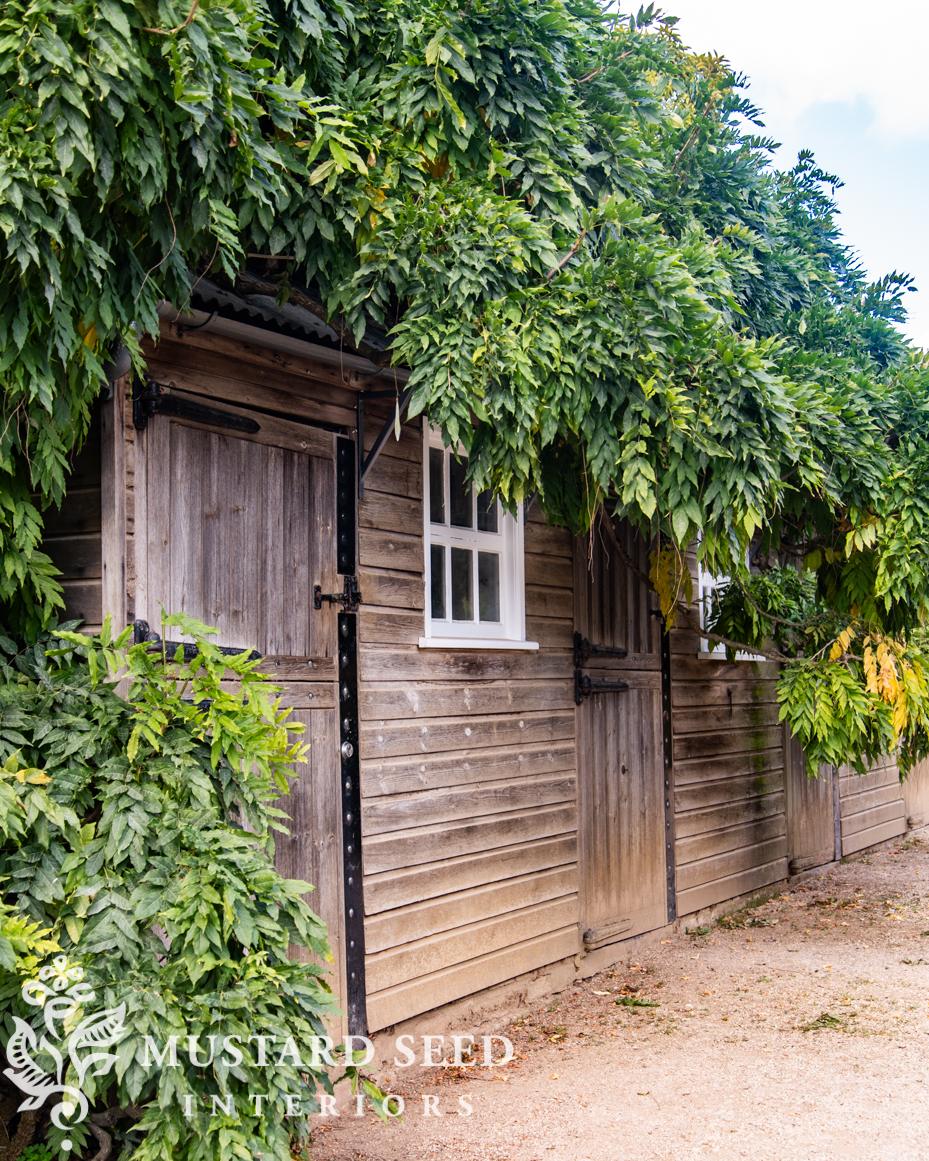
I particularly enjoyed looking at the espelier apple trees (since I’m working on my own) and the plants growing on the house. While I’ve been cleaning aggressive English ivy off my own house, I do love the look of plants growing on a wall, softening the hard lines. I might try some climbing roses or other plants in a few areas on my house and it was nice to get some inspiration.
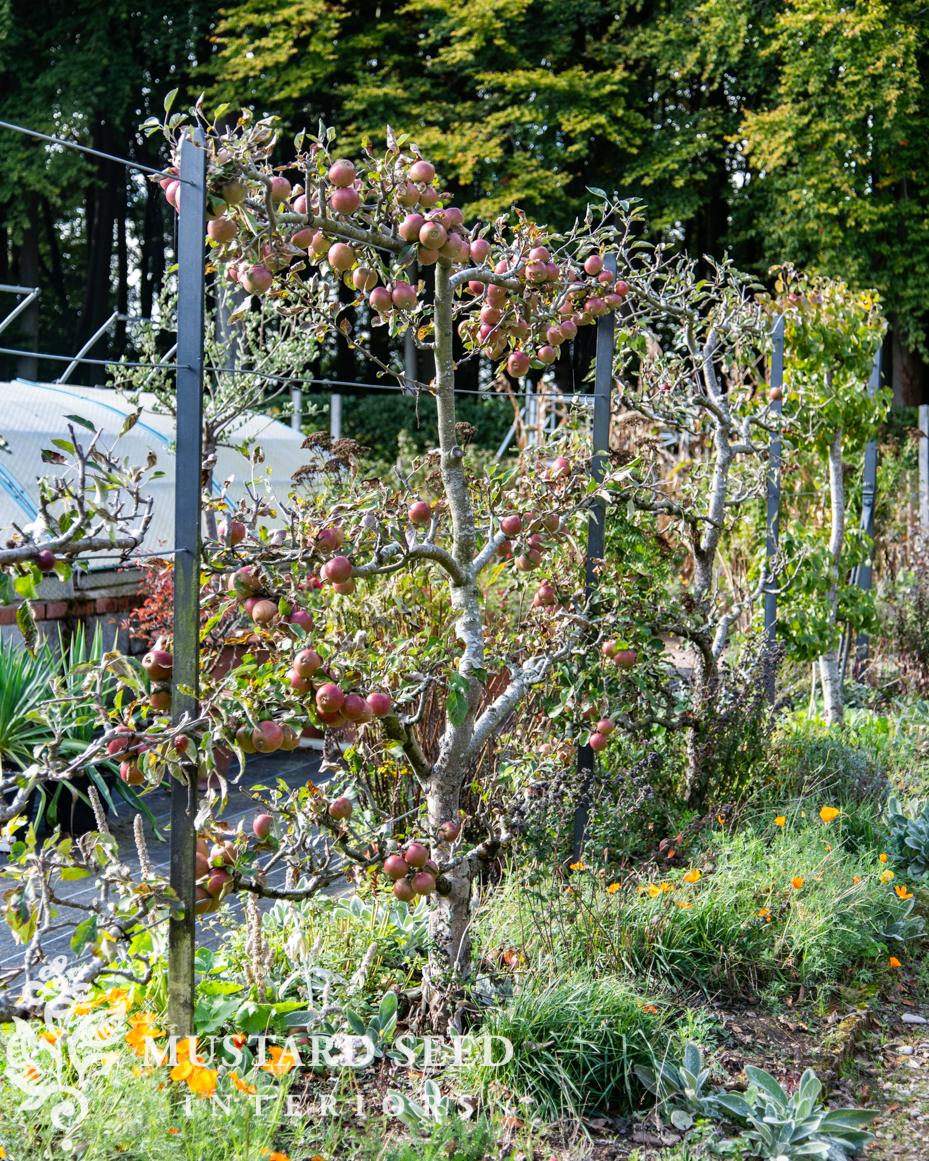
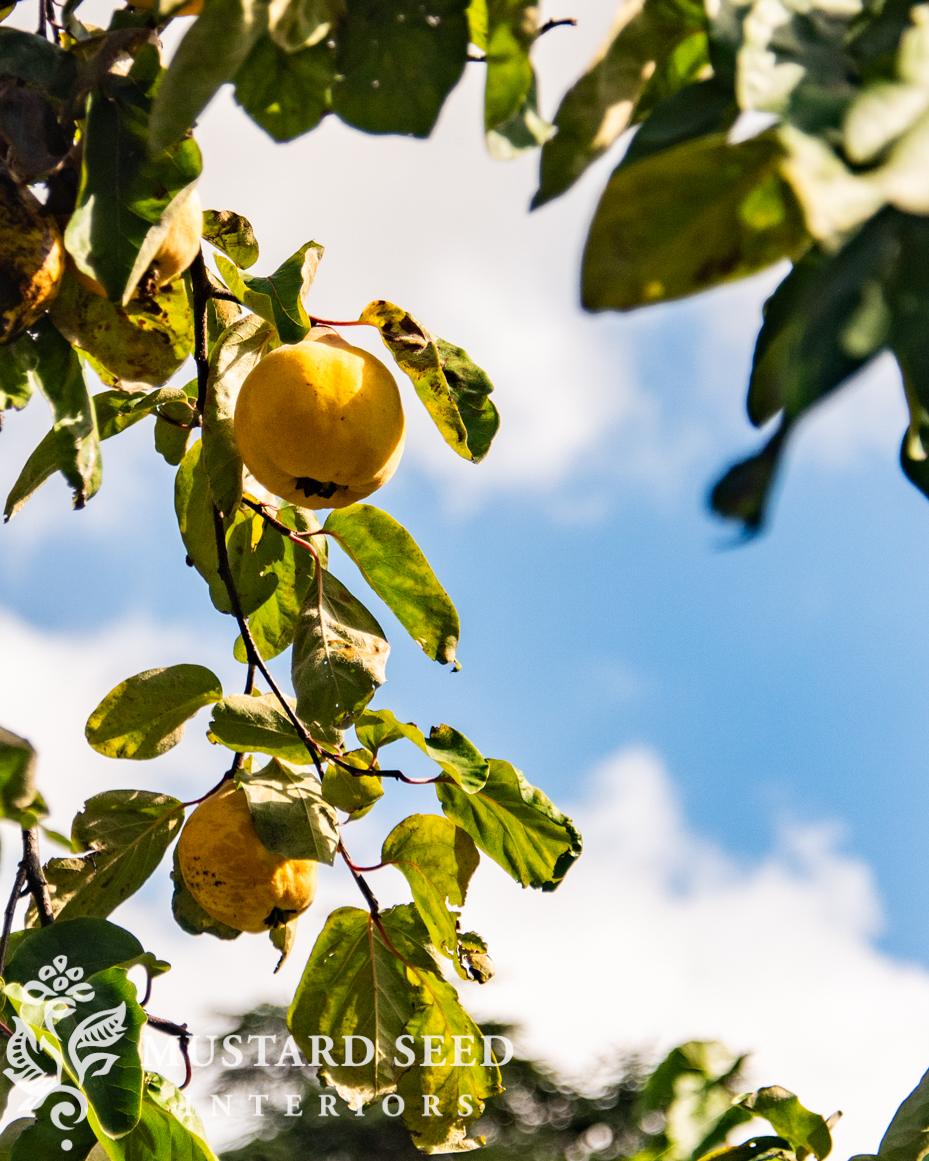
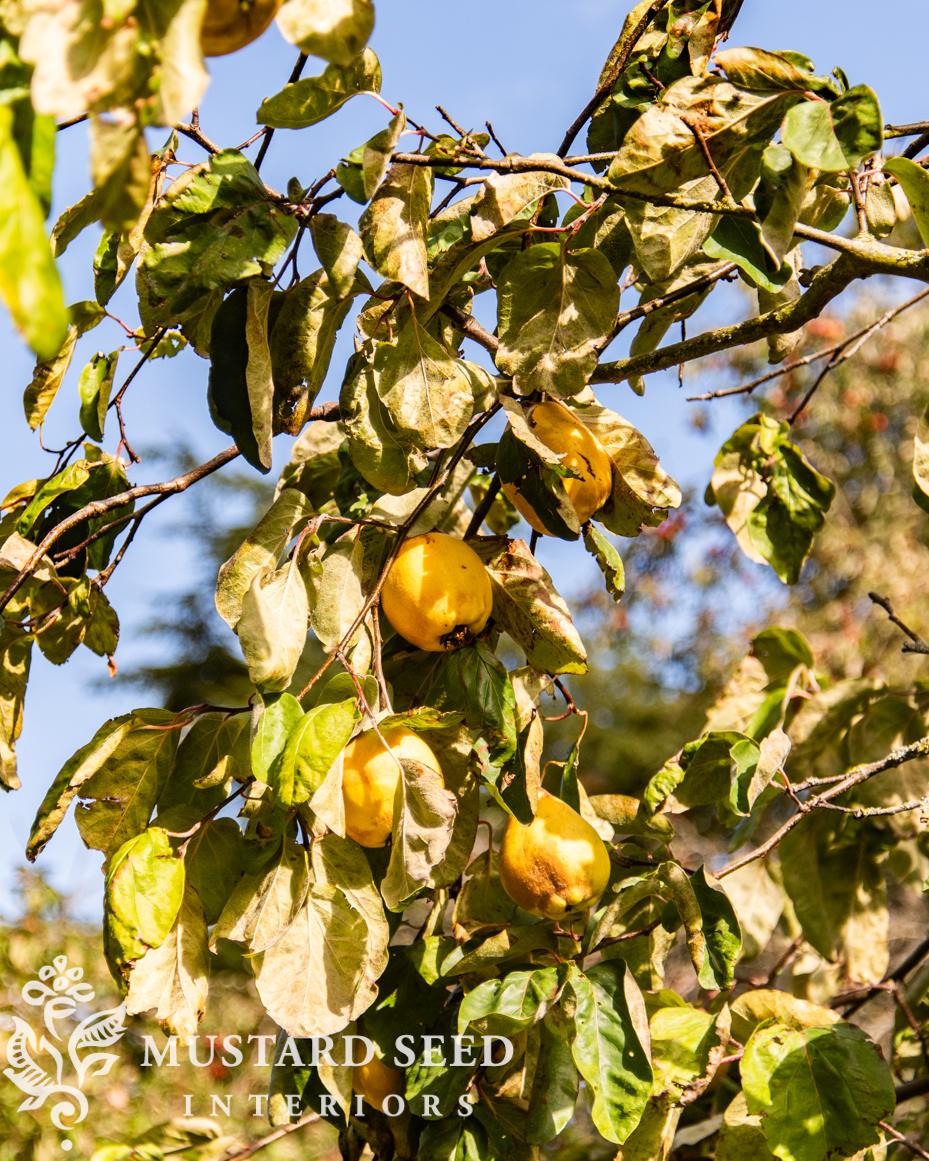
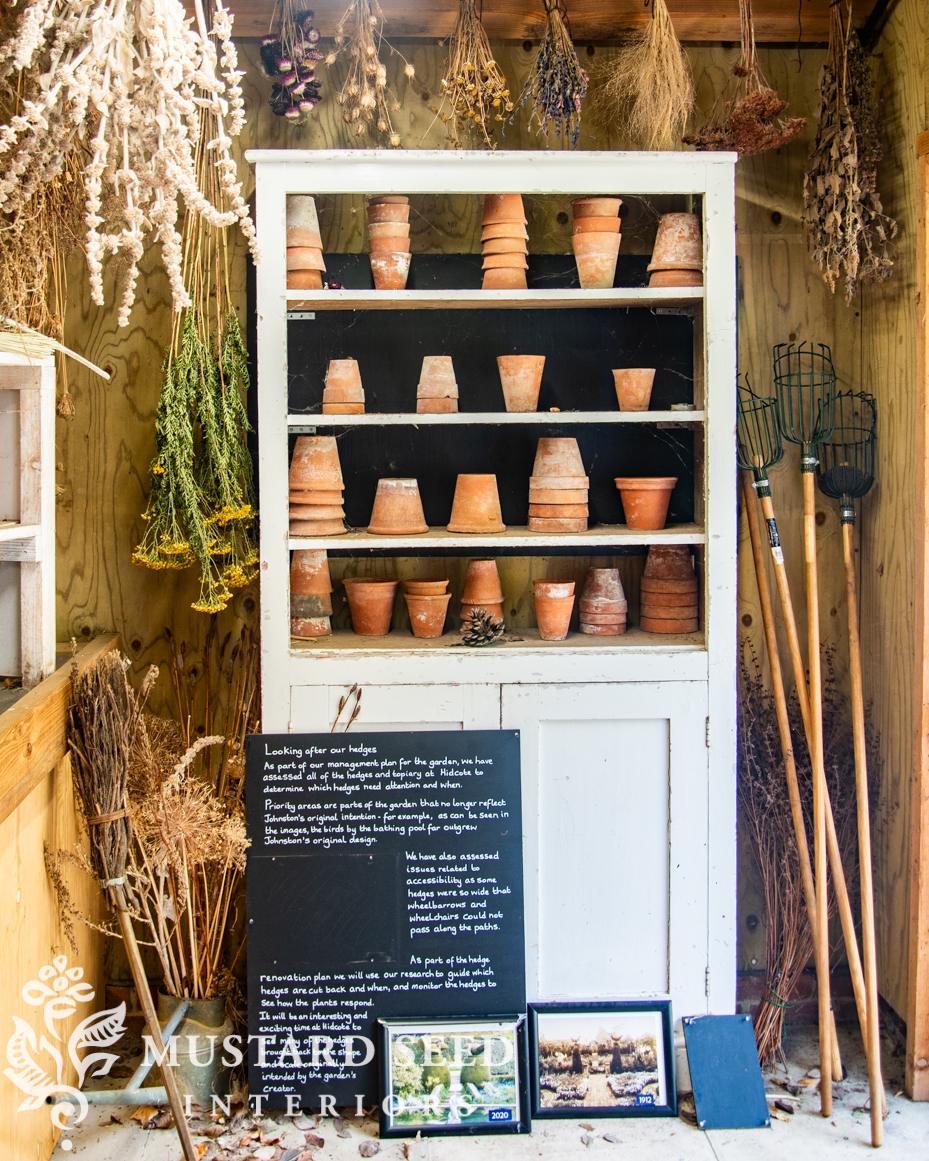
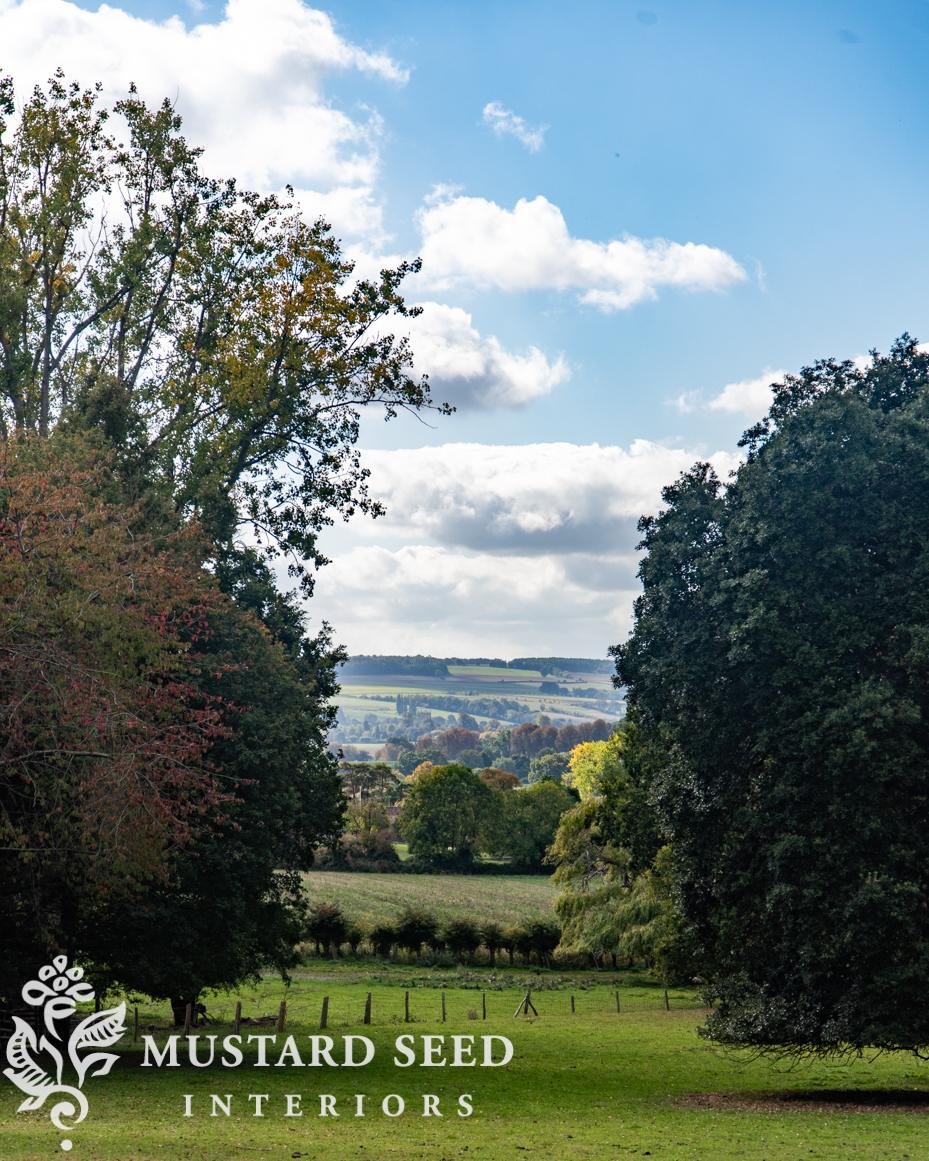
If you visit Hidcote, I would highly suggest walking the entire grounds if you are able. We almost skipped the “long walk” because it sounded potentially arduous, but it really wasn’t that long and there was a beautiful vista at the end as a reward. There were a few places with beautifully-framed views were we stopped and admired the countryside.
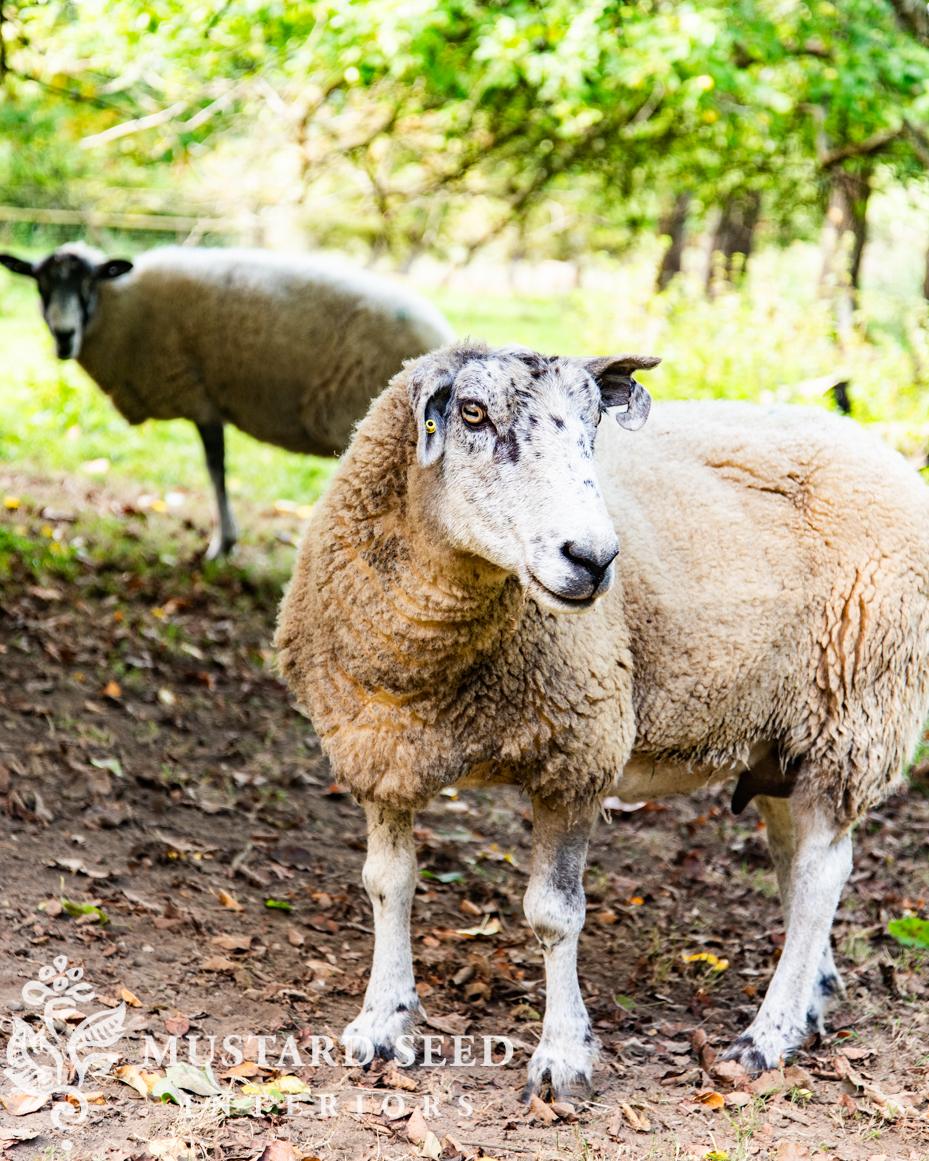
You might also find some sheep grazing in one of the fields near the gardens, as we did.
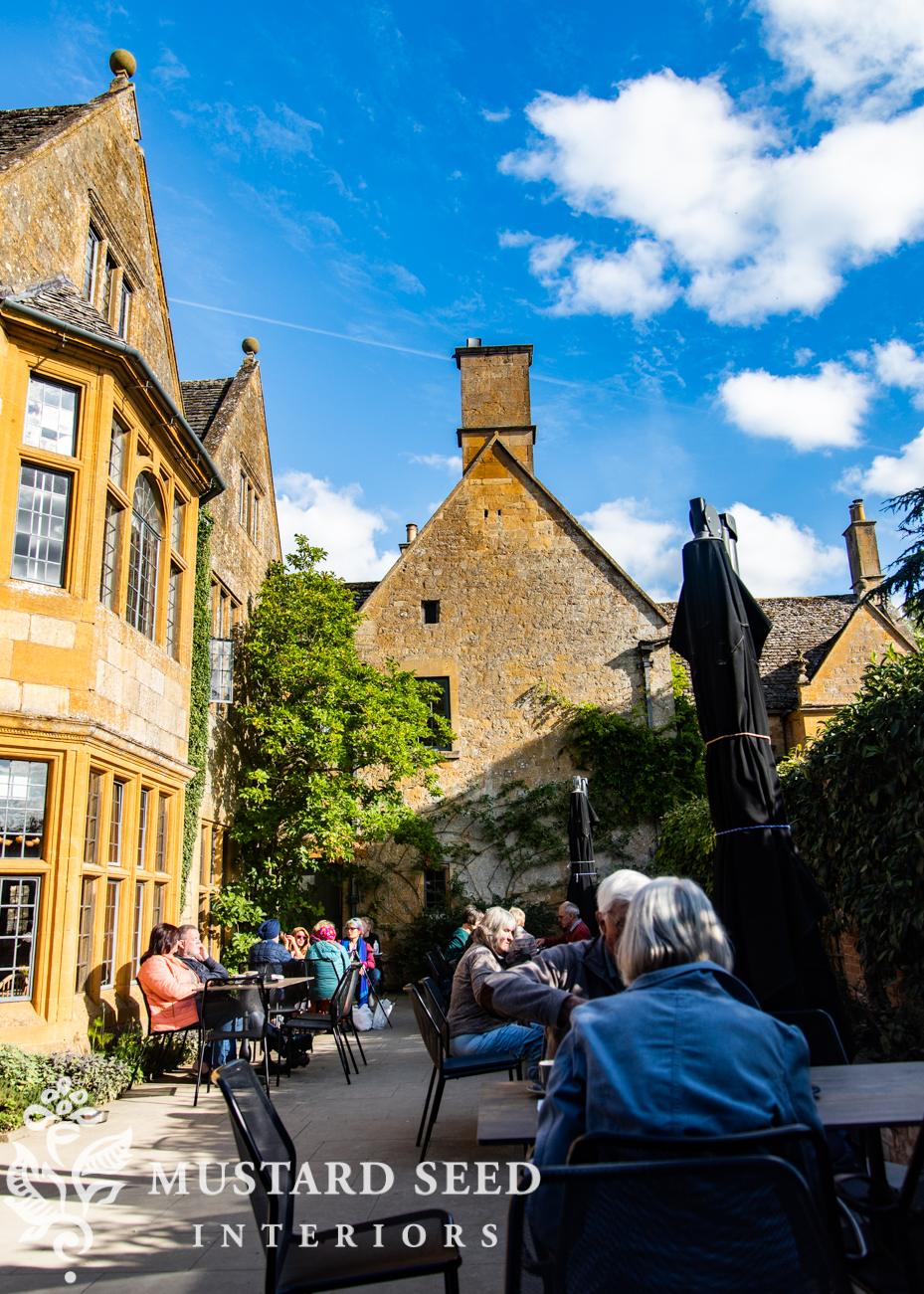
Julia and my mom gave me some time for some painting, which I’ll share about in a separate post. (You can read about that HERE.) While I painted, they sat at the cafe and had tea and cake. I joined them when I was finished and had some cake as well. When in England…
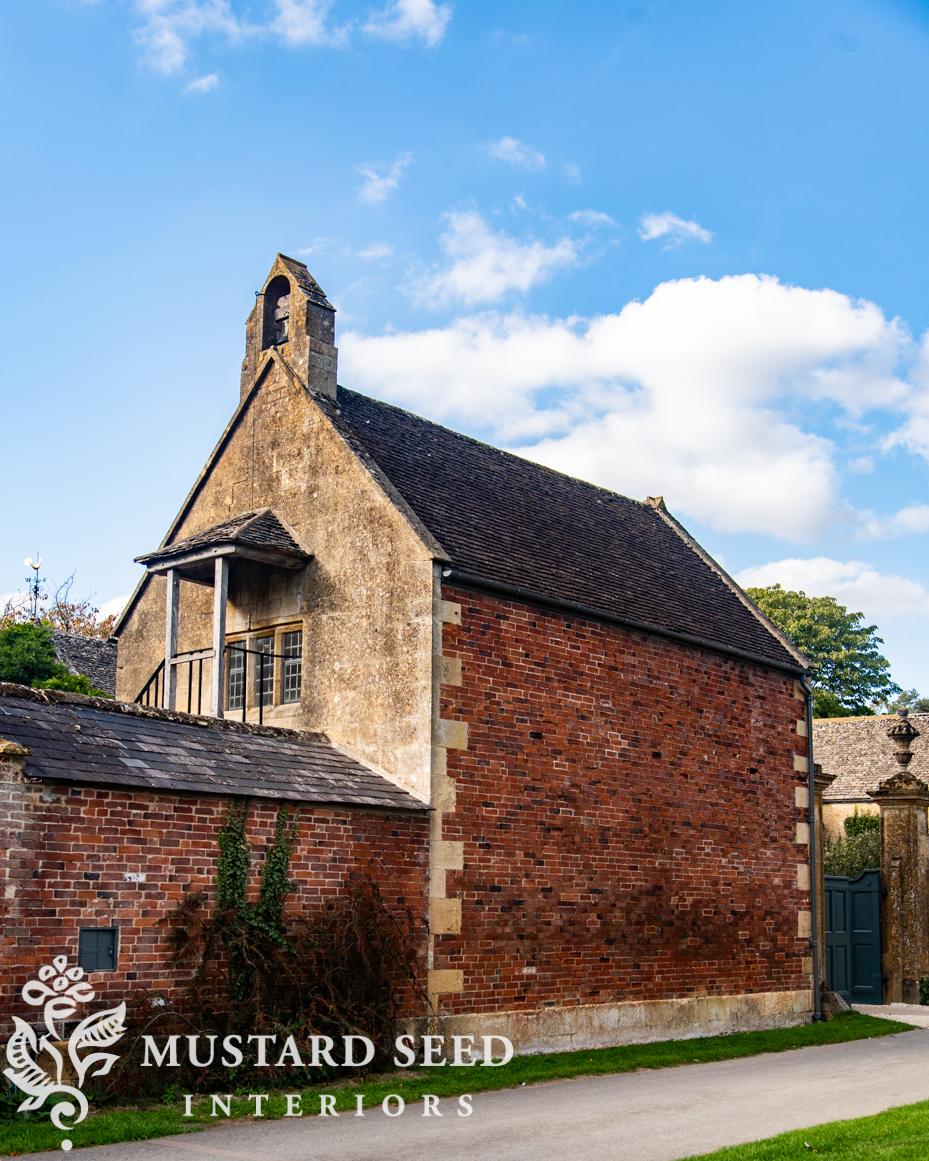
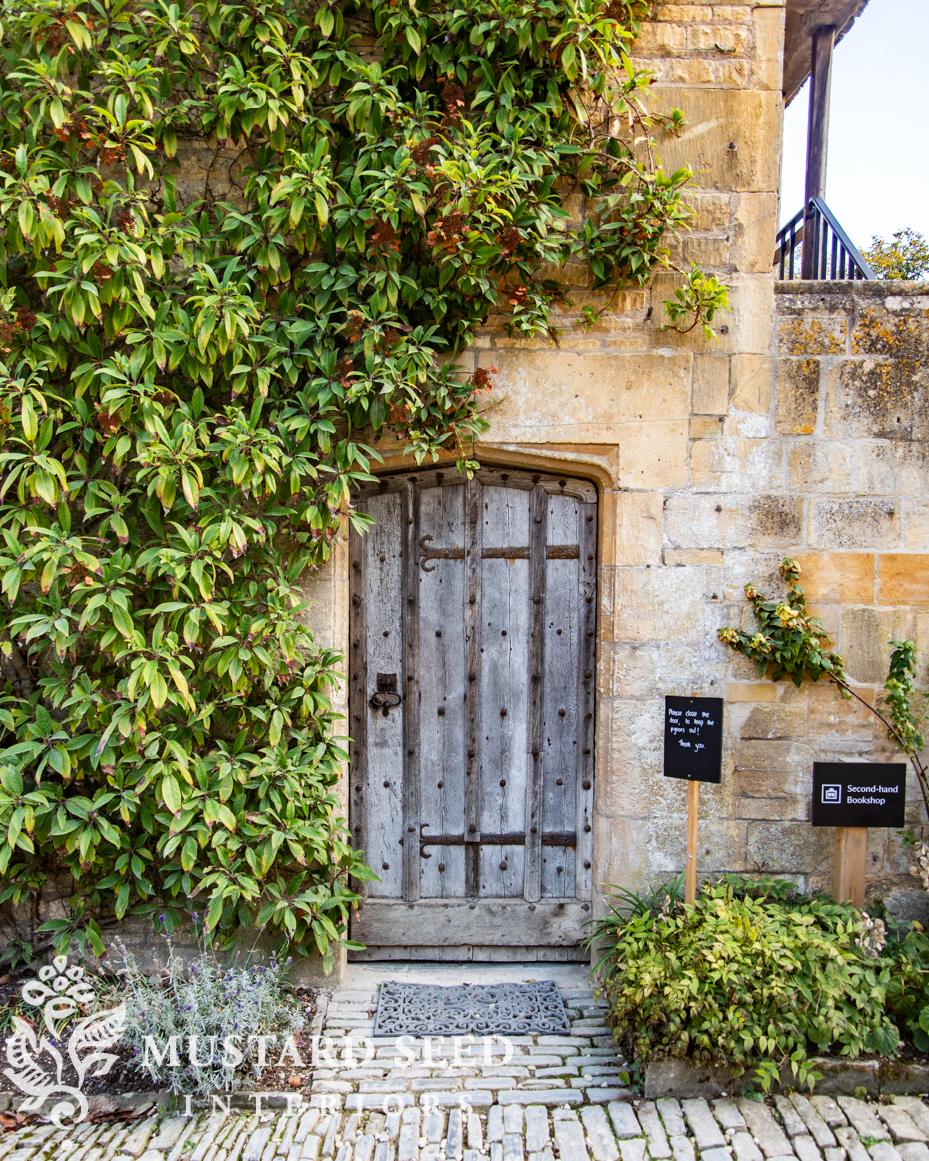
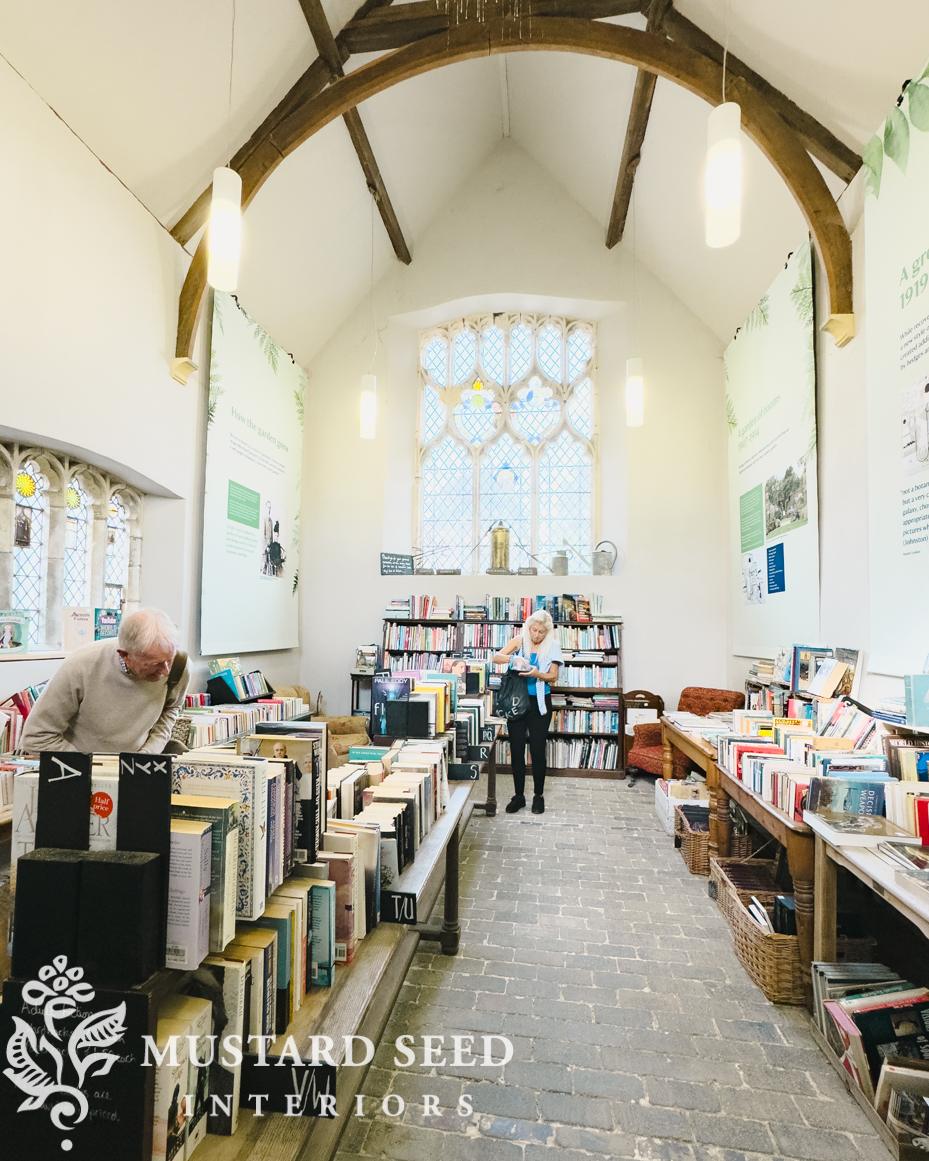
Before leaving, we checked out the used book shop in the former chapel. I knew it would be dangerous, but there was no way I could miss a secondhand book shop!
It was just as perfect as I imagined it to be. The books are all reasonably priced at just a few pounds. Mom and Julia picked out a book for me – The Cottage Homes of England for £3. It is a book of English cottages in Kent, Surrey, Sussex, and more, painted by Edwardian artist Helen Allingham. Stuart Dick’s text accompanies Helen’s paintings and sketches, informing the reader about English people, the history of cottages, and the places Helen painted. It’s dotted with quotes from Wordsworth and English Proverbs. They were right when they said they found my book. It’s the only one I bought on the trip, choosing to order other books online and have them shipped directly home. For me, buying this book in the Hidcote Chapel was a part of the experience and would mean more than if I bought it online.
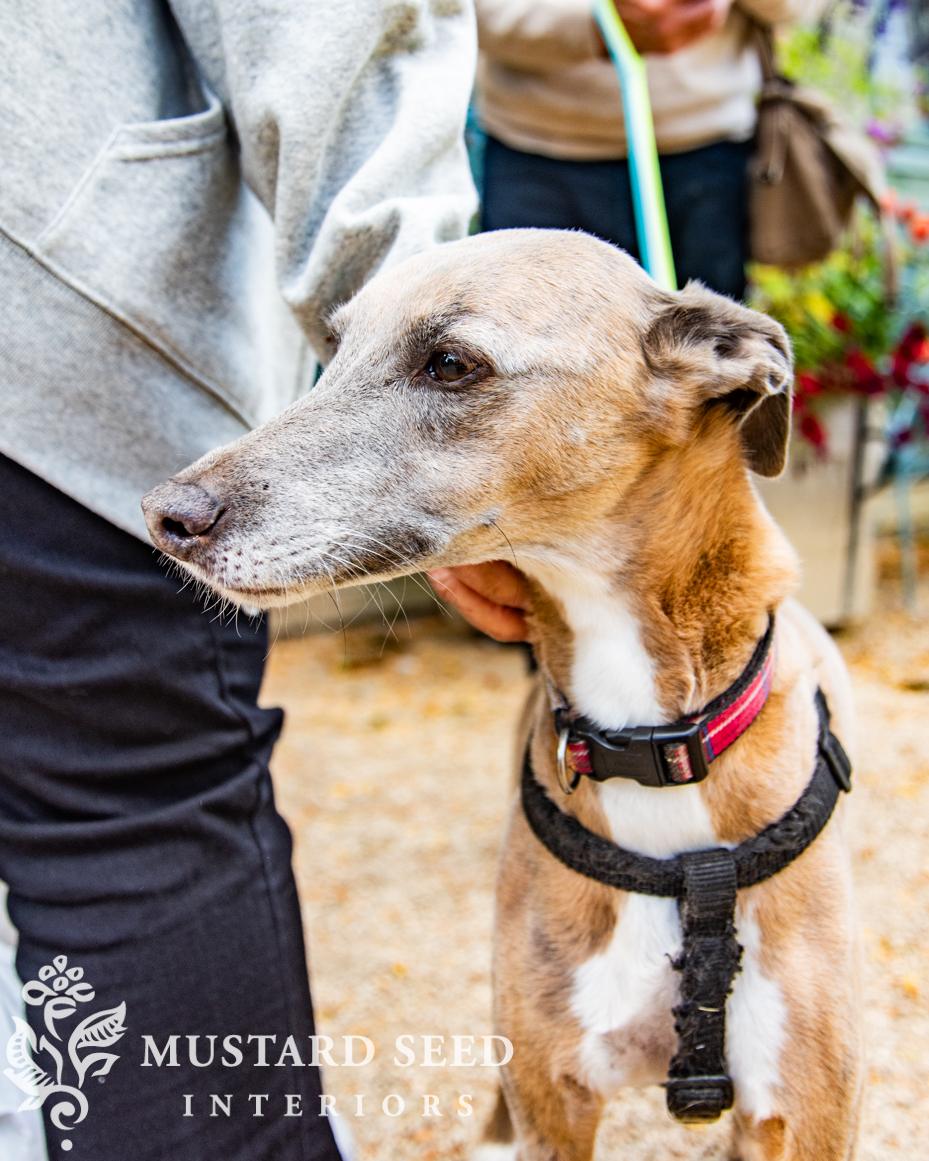
In addition to photographing sheep and architecture, I asked to photograph the dogs we came across. Not only do I collect some great reference photos for paintings, but it’s a nice way to meet people. We met Geoff and Paddy, the Lurcher. You can follow him HERE on Instagram.
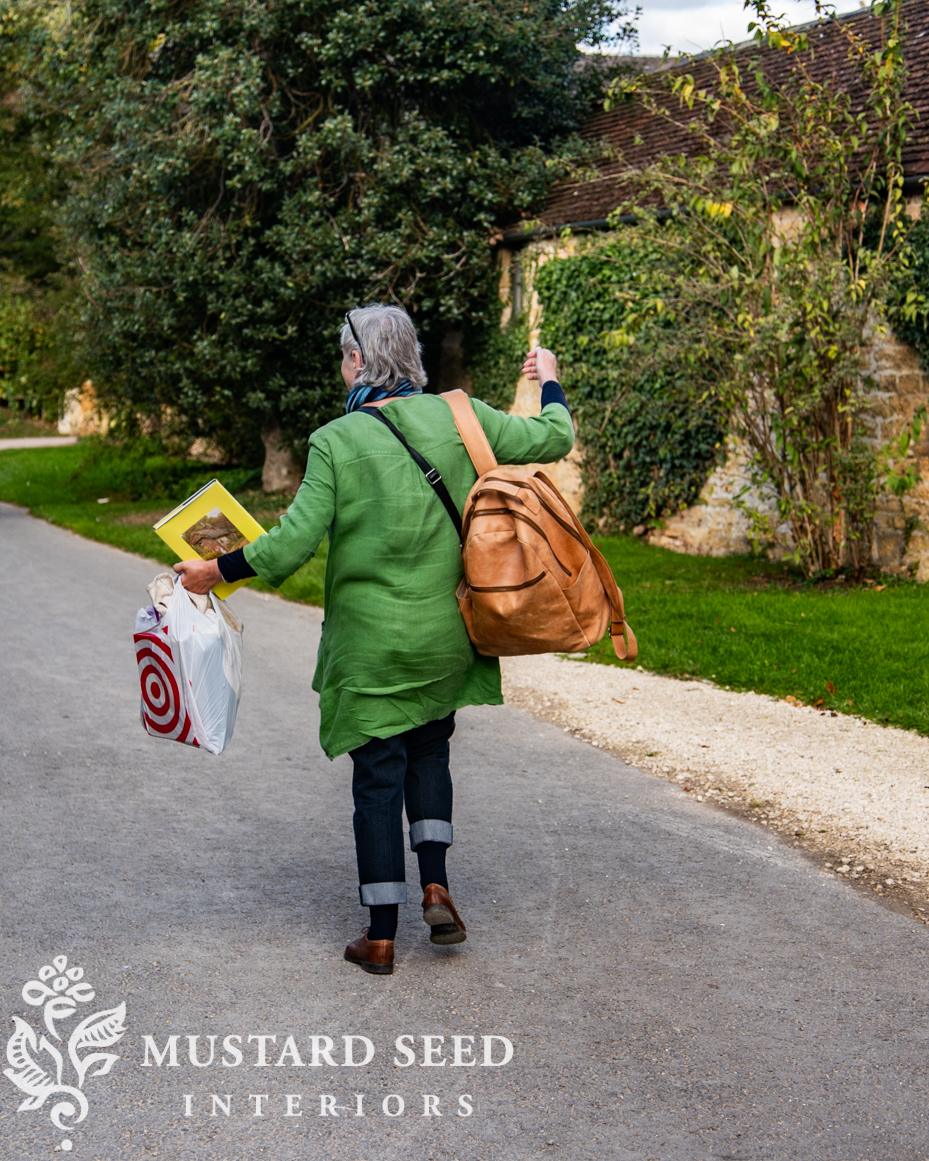
In addition to being our driver and local guide, Julia was the courier when I stayed behind to take photographs of a quaint costwold lane before leaving Hidcote. We had such a great time together and have been sending “I miss you!” texts to each other almost daily.
Our visit to Hidcote was just the kind of experience I was hoping for when planning our Cotswold trip. It was enriching, inspiring, and enjoyable in every respect.
You can get more information about visiting Hidcote HERE.
You can read my next post in this Cotswold series about plein air painting at Hidcote HERE.
You can find my previous posts about visiting the Cotswolds here…
Arrival & Burford | “gateway to the Cotswolds”
Cirencester, Seasalt Cornwall, and Bourton-on-the-Water
The Thatched Cottage in Chipping Campden









11 Responses
Oh my word, what a visit. I read this and STILL have goose flesh! What a thrill and a blessing to be able to see this for yourselves. Thank you so much for sharing it with us!!
Thank you for taking this trip to the Cotswolds. Your photographs and stories made me feel as if I was there. I enjoy hearing about what a wonderful relationship you share with your Mom. I admire you as a reader, writer, painter, creator as well as a “family woman”. I’ve been following you since your boys were small… like reading a
Novel very slowly!
What a thrill in every photo. I love traveling with you.
At 71 and 73 years old, my husband and I are considering a trip to the Cotswolds. Oh my, how your posts bring me closesr to making that decision and book the accomodations. I wish I had a ‘Julia’ to be our guide and save us from our inexperience as to what to see and do. Thank you for sharing your adventures and enthusiasm. I think you have inspired me to look into visiting the Cotswold soon. God bless!!!
Dear Marian,
It’s so heartening to receive a glimpse into the lovely relationship you enjoy with your mom. Thank you for sharing your Cotswold adventures with love filled stories and typical English gardens.
My “Mum” referred to her daughters as “Cornish girls” because that was her heritage. So, of course, our adventures began in Cornwall where I discovered gardens that growing abundantly on rocky coasts. However, we three did adventure to other parts of England including the Cotswolds. Your gorgeous photos bring back poignant memories.
I raised hidcote lavender on the high banks of our home on Camano Island in the Salish Sea. It loves a west exposure, is willing to be shaped and sometimes blooms twice a year. They’re my favorite blossoms for sachets, herbal tea, adding to baked goods, and essential oil for diffusing.
Fall gardening in PNW,
Diney
Loving all your photos! The plant I believe is called Pearly Everlasting.
Yes, it is pearly everlasting. My friend and I used to make dried flower wreaths and used this among the other dried flowers. So dainty.
Beautiful, charming, amazing…thanks for sharing!
i did a garden tour in may this year which included Hidcote and it was a wonderful place. thank you for reminding me of a wonderful place
Thank you for sharing all of the beautiful details of your trip. It is so appreciated.
Oh yes, Hidcote would be a definite MUST VISIT for any avid gardener and fan of the English garden style!