
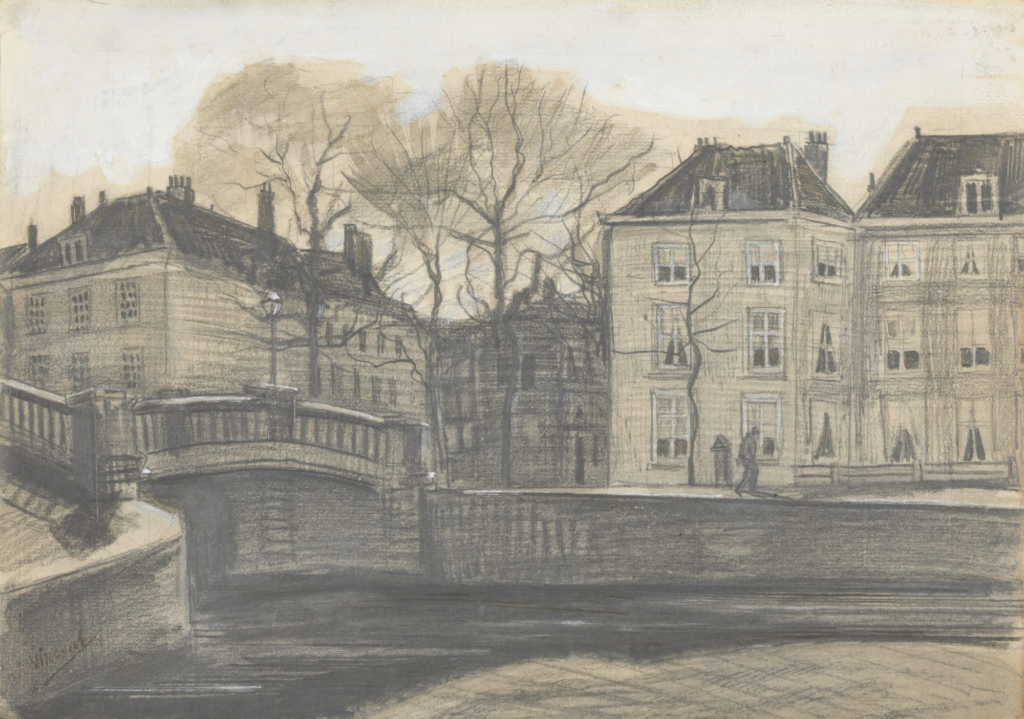
There is an anecdote about Vincent Van Gogh that I’ve heard and even repeated myself. Van Gogh only sold one painting in his lifetime. It’s often used as an encouragement to struggling artists. If his work, which was so unique, brilliant, and beautiful, wasn’t appreciated, then you’re in good company if you find yourself in the same boat. I’ve shared in my Four Things posts over the past few weeks that I’ve been reading THIS BOOK on the life of Vincent Van Gogh. It’s a massive book, and it’s taking me forever to get through the audiobook, even though I’m listening to it on walks and at the easel. I still have over 25 hours left.
But I’ve been taking notes and thinking a lot about Van Gogh as I’ve been listening to the story pieced together from records left by the family chronicler, people who knew him well, and from Vincent’s own words in his letters. I teeter between feeling sorry for him and being really frustrated with him.
He had a lot going for him when it came to connections in the art world, but he was a champion at burning bridges and, at least up until this point in the book, chose the art of art over the business of art.
His brother Theo, who financially supported him during his decade as an artist, worked at a print shop and had the connections and ability to sell Vincent’s work. Van Gogh had an avenue to make money as an artist, and his brother continually pleaded with him to “make saleable work”, but Vincent proved to be too stubborn and idealistic, perhaps distracted by his own obsessions, to produce work that buyers wanted.
Instead of focusing his efforts on marketable watercolor landscapes, he drew black-and-white portraits and figures. He hired models and bought props and costumes to outfit them. He poured his time, energy, (his brother’s) money, and artistic efforts into work that inspired him, convinced others would see what he saw.
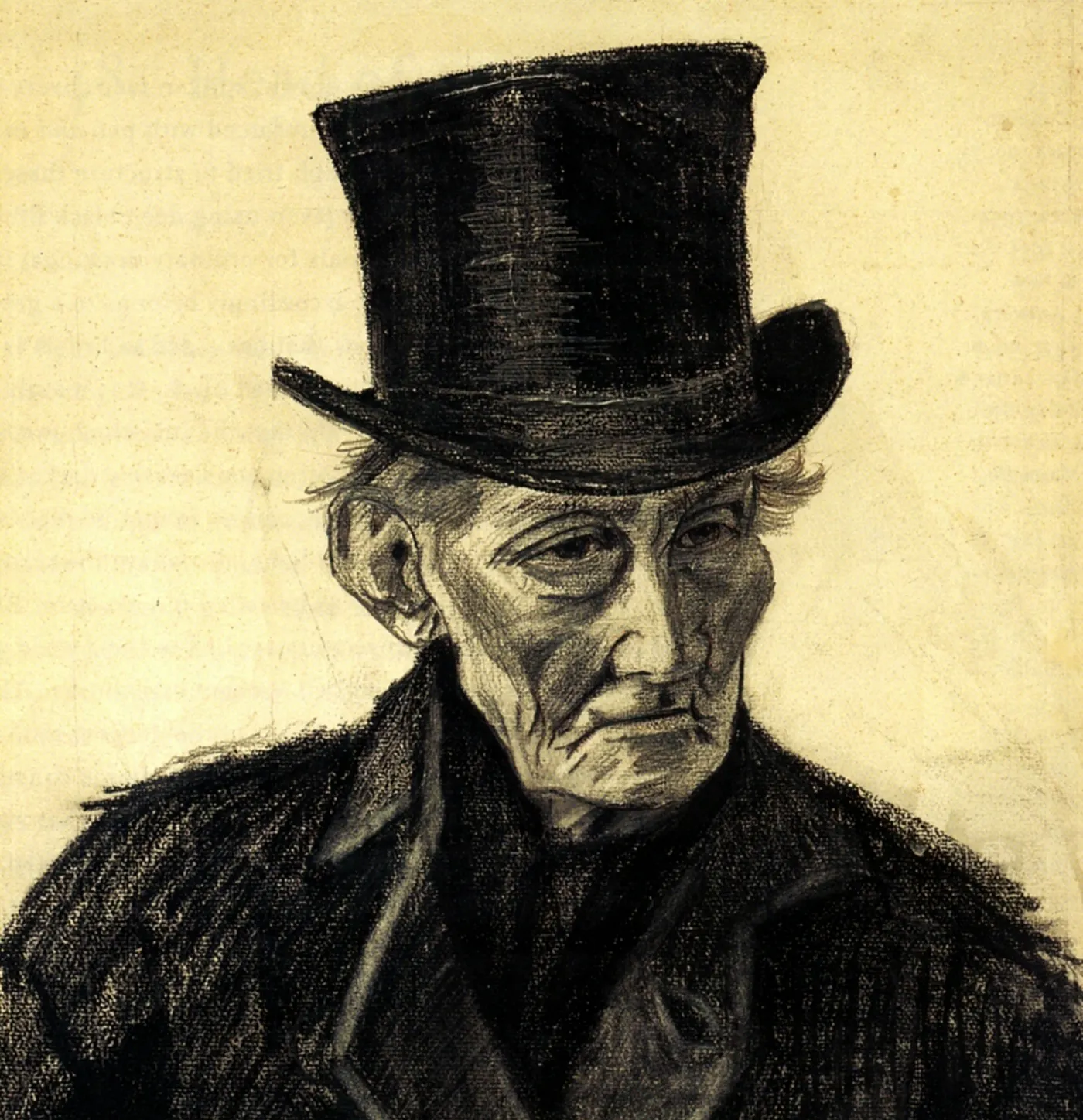
He defiantly stated, “Since when can they force or try to force an artist to change either his technique or his point of view? I think it is very impertinent to attempt such a thing. I will not let myself be forced to produce work that does not show my own character.”
But when all of his hard work, and he did work hard and was an incredibly prolific artist, didn’t produce an income, he wrote to Theo, “I am sorry I have not succeeded in making a saleable drawing this year. I really do not know where the fault lies.” The business owner in me wants to reach through time, grab him by the shoulders, and give him a good shake. The fault lies in the fact that you are not willing to view producing your art as a business. You are hung up on making art that only you care about, not pieces that sell.
I think it’s safe to say we’re all thankful that Van Gogh produced work that reflected his own character. If he had relented and painted commercially viable pieces, we might not know his art today, and that would be a sad thing. But this is a bad business plan for artists, and I use that term generally, who are hoping to make a living from their creative work.
Whether you design gardens, sew quilts, knit mittens, refinish furniture, bake cakes, write stories, or render paintings, there has to be a balance between the art of art and the business of art. We can do creative work that we feel is important, that inspires us, that compels us, but we also have to pay attention to trends, accept commissions, and listen to feedback from wholesalers, retailers, and consumers. Yes, it does mean compromise. Yes, it does mean that your time and attention are split between what you want to do and what you need to do, but that is all a part of being a creative business owner. It’s, in fact, a part of life.
Just something to chew on for myself and my fellow creative entrepreneurs.









10 Responses
I think Van Gogh was possessed by mental illness (cutting off his ear & suicide), so the concept of creating art for business was simply beyond his capacity. ??? I also read that his sister-in-law was the one who created an interest in his art and was the main reason he became famous posthumously.
Yes, there was obviously mental illness at play in his life, but at this point, he was producing high volumes of art and just insisted that the market needed to adjust to him, not the other way around. He’s very articulate in his letters, so he obviously had some understanding of the situation.
I think you know much more about him and I guess he just didn’t want to do what he needed to do. Sad.
This post made me think of a time, many years ago, when my mother was a sewist for hire. She stitched up dresses and other garments for customers to fulfill their dreams and wishes. She created custom wedding dresses, bridesmaids’ dresses, prom dresses, homecoming dresses, church dresses, business garments, and more. She also stitched up some custom draperies. There were so many times when she would comment that she didn’t really like what she was being asked to sew for a customer, but she was fulfilling their request because it helped to pay the family bills. What she really seemed to enjoy most was creating sweet smocked dresses for my daughter and nieces and truly enjoyed stitching up some of those beautiful wedding dresses. What she turned out for people was really a work of art whether it was something she really liked or not. Yet, all of it (except the treats for her grandchildren) helped to pay the bills. Today, even in her 80s, she enjoys cross-stitching and embroidery projects. So, stitchery is something that is a part of her even though it isn’t a requirement for the paycheck these days. I sometimes wonder if those gals who chose designs that Mama didn’t like would have looked better if she spoke up and said, this is not going to be as pretty as that might be… Thanks for sharing what you find in your reading!
Oh, I love this story. Thanks so much for sharing. It’s such a good example of that balance.
I love this post and long for more like it. As a fledgling creative I do not want to blindly follow trends that appear in big box stores but I do agree (or hope) that there can be balance and that if tomatoes are hot this season, I can perhaps do my version of tomatoes that feed my soul and will be well received. In the context of a “trend” it is more likely that mine may resonate with more people than any other time. this is good food for thought. thanks!
My husband and I have decades in as professional artists, me in animation my husband in medical illustration. We are retired and have very different viewpoints of the artists life. I usually only create art to make a buck, commissions or selling at a local gallery works I produce that I think would be sale able. My husband is driven to create every day. He paints, draws, sculpts, etches, his studio is filled with art every where, abstract, whimsy, detailed work and impressionistic. He creates art for himself and his personal fulfillment and happiness. He also sells art in the local gallery though does not compromise to fit what would be sale able. I’m of Marianne’s ilk, my husband Van Gogh. There’s room for both of us to thrive.
I have to say I couldn’t disagree more. I know more than one serious artist, my own daughter included and they would all prefer to work at a different job than compromise their art.
My almost 14 year old son is an artist who has been selling his work for 3 years at various local venues, competing in art contests and displaying his art in shows. We have had this discussion of balance often. His best seller is original art notecards. He sometimes gets tired of them but they reliably sell and he gets so many compliments from customers. He has taken the approach of doing about half what he knows sells (certain kinds of flowers, colors, etc.) and half what just excites him (all kinds of themes.) It has been interesting to see that people respond to all of it positively and he draws a wider range of customers because of the variety. I will share this post with him as he has studied Van Gogh and I think this discussion will resonate. Thank you!
Instead of just producing art that he wouldn’t compromise, he could’ve done some that would sell. It would prevent him from leaching off of his brother.