
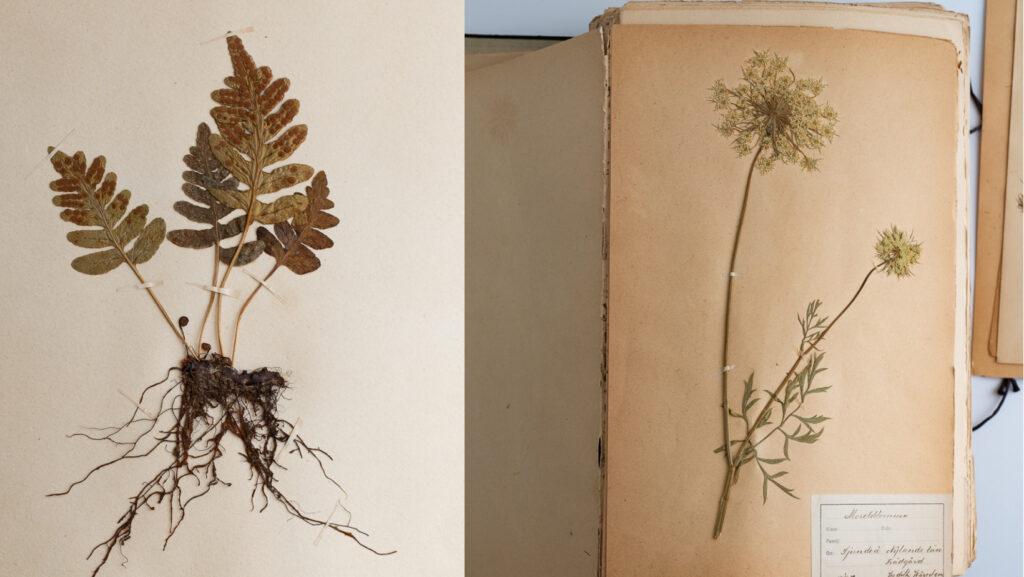
As I shared this summer, I decided to start pressing flowers, herbs, leaves, and other interesting bits from my garden. (You can read about that HERE.) I thought it would be an artsy way to record what I’m planting and how things grow. I also thought pressed plants might be a good jumping-off point for paintings, sketches, and pattern design. Since I struggle so much with painting flowers, maybe I can paint them better if they are flat. I knew pressing and mounting plants had been around for centuries, but I had never heard of a Herbarium until I got lost down the rabbit hole of record keeping. If you’ve followed me for a few years, you know I am enamored with old journals, sketchbooks, diaries, sewing sampler books, and ledgers, and I have collected many fine examples of those over the years. Now, I not only wanted to make my own Herbarium (more on that excursion later), but I wanted to find an antique one.

So the hunt begins…
I looked around on eBay and Etsy for a while and finally, one spoke to me. It was massive, with over 200 samples, and made in Sweden in the early 1900s. Best of all, it was a reasonable price for the age, condition, and amount of samples. It was still an investment, so I decided to paint an antique herbarium sample I found online to make sure I was excited about painting more.

Yes, I loved it. The more muted tones of the pressed flowers are more in keeping with the colors I gravitate towards and I enjoyed painting them so much more than bouquets of flowers. I even enjoy the trompe l’oeil aspect of it, which will be more obvious when I’m painting from samples in person instead of a photograph.
So, I bought the antique Swedish Herbarium. The cover isn’t too spectacular, but I love the little ties on the side so the portfolio can expand as it is added to.

And this herbarium needed room to expand! It’s so big that I haven’t even been able to go through all of it.

I haven’t figured out how (or even if) the plants are categorized (if by family, date, etc.), but there are several in each book signature/folder. Some of the samples are in better condition than others and some have been removed or fell out, so there is just a ghost of a 100-year-old plan sample, a few pieces of tape, and a label. But, even with those missing samples, there are over 200 complete herbarium pages.

It is incredible that these plant samples were collected, mounted, and stored by an amateur and have lasted over 100 years. Although, I haven’t researched Judith Wernbom yet. Update – So, my wonderful readers are already on it! It looks like this might’ve belonged to Judith Linnéa Wernbom (1903-1973.) If that is our Judith, she would’ve been in her early 20s when much of the book was assembled. She is Finnish, though. Can anyone confirm if the language on the labels is Finnish or Swedish? (Obviously, there is Latin used as well for some of the plant names, so it’s hard for me to tell.)

I love the labels and handwriting almost as much as I love the samples and little bits of tape holding them in place.

Here are some of the pages…


I recognized this one without even looking up a translation!


I was guessing morot means carrot in Swedish and, indeed it does. There’s even a tiny little carrot. (So, morot in Finnish is moron, so I’m guessing this is Swedish!)

It looks like this page was jostled a bit or perhaps a sample from another page was tucked in. I plan on going through the book and carefully cleaning it up and securing any loose samples.

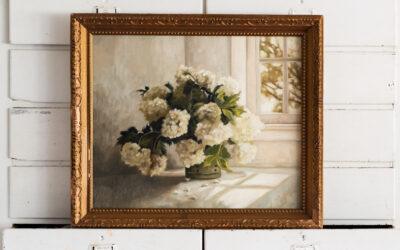
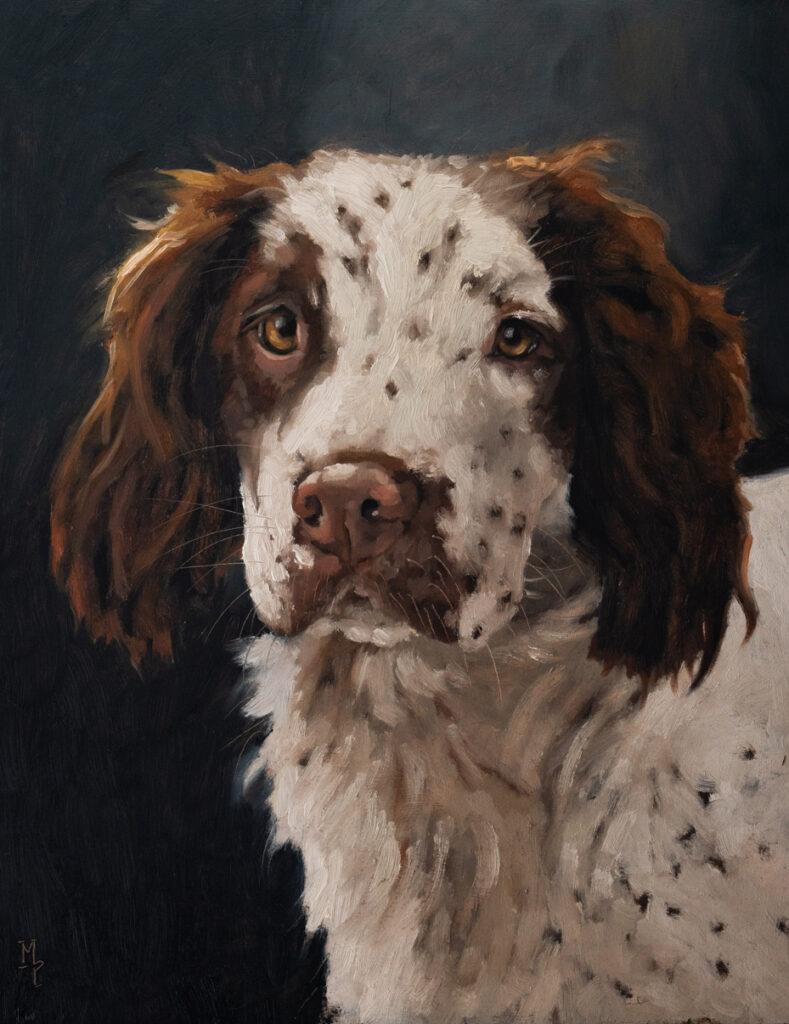
I have already started painting them, too. Believe it or not, the trickiest thing is painting the antique paper! I still need to work on that a bit, but these have been fun to paint so far.


I think the thing that draws me into the world most is how universal and historic it is. People have been collecting, pressing, mounting, and preserving plants for hundreds of years and all over the world. It transcends culture and language and it’s still useful and applicable today. As handy as a smartphone photo is, it’s plant samples that are going to be the real source of information for future generations when it comes to what was happening at that given moment in the life of the plant.
I really never know where my curiosity will lead me next…







26 Responses
You are a precious soul.
My exact response.
So cool, and such innovative drawing, painting models. Kim
Do you have any idea what tape is used. I’ve been using washi which isn’t very sticky.
This is really beautiful to study.
So, welcome to a week-long conversation I’ve been having with another creative friend I’m pulling down the herbarium rabbit hole with me! We haven’t found tape made specifically for herbariums, but we’re guessing it’s a gum paper tape. We’re both testing out different hinging tapes (for bookbinding) since they are archival and come in paper, cotton, and linen. I am going to share more about making a herbarium as I get further in my own research.
You were right, it is Swedish.
It was very fun to see.
Who knew I was creating a herbarium of my own while pressing tree and fern leaves from our property. I just need to get them out of the dictionaries and put them in an official book. I always gravitate to botanical prints/art, and these are wonderful. Enjoy your new treasure.
Yes, isn’t it so exciting to discover you’re a part of an age-old practice? I will be a bit more scientific with how I collect, mount, and label my specimens this year. (Although, there are plenty of history herbariums that have multiple samples on a page.) I love the little labels, though.
I wonder if the spores from that fern are still fertile? That would be a fun thing to try!
It has held up SO very well being 100 years old. WOW. That is pretty neat, Marian.
I enjoyed looking at your antique herbarium. I am showing my age but when I was in high school we had to make a binder of wild flowers and leaves. Fun fact we use to find leaves and take them to our teacher and ask him what tree they came from and he would always say an apple tree…I don’t think he knew either. Thankfully by the time my son and daughter had to do it we found an arboretum at a nearby college and the trees were all labeled.
I love this!!!! I did this in high school and wished I kept up with it. It is a beautiful book. How funny that a young Judith, could never have guessed an “internet” would come long and everyone would be able to see her noble work!!!!
I am seeing Judith’s last name to begin with a “W” not an “H”. Perhaps “Wernbom”???
Marian (and others who may be interested):
Here is a link to look up the approved scientific names of plants by family, genus, species. One of your photos shows Polypodium vulgare. You would choose to look up the scientific name by genus. It will present the results and you can check the box for common names and it will list them for you. It will also tell you if the name is a synonym and what the approved name is. It is an excellent resource for gardeners, although there are no photos. Here is a link: https://npgsweb.ars-grin.gov/gringlobal/taxon/taxonomysearch
These are wonderful and I like your renderings.
You found a rare jewel with this book of collections! You will get so much enjoyment out of it.
Your blog is both lovely and inspiring! I recommend that you check out Marian McEvoy’s IG account, @gustthepoodle. She does dried greenery and floral collages as well as pinecone and cork items such as mirror frames and obelisks. I believe she sells them at KRB New York.
The name Linnea, and the word ‘plants’ triggered something I remembered from Botanical watercolor classes. The famous 18th century Swedish botanist: Linnaeus created a form of biological classification of plants.
People have named their children in his honor. Linnea being the female side of the masculine: Linnaeus.
Also, Linnea, is a name related to a Linden tree or Twinflower…..Google search.
A class in a beginning botanical art would get you painting flowers and leaves in short time. There may be a branch of ASBA ‘American Society of Botanical Art’ in your area.
Have fun!
You constantly amaze me with where your creativity leads you.
If you need any help with translating the swedish name where there is no Latin name, I can help you. Just send an email if so. 🙂
Dear Marian,
I’m so moved by your Herbarium adventure. As someone already mentioned, your curiosity leads in unexpected directions resulting in your artful life. This in turn inspires so many.
The generosity of the knowledgeable women in your “comment” section is remarkable. Translators, scientists, botanists, and others, offer their gifts and talents while widening the possibilities for all those interested in preserving nature. It makes me wonder how many of their names will be added to Judith’s.
Awaiting your paintings,
Diney on Mercer Island
This find is UN-BELIEVABLE!!!!!! OH MY GOSH!!!!!! You certainly have an
eye for old and wonderful!!!!!
The ASBA, (American Society of Botanical Artists might be a great resource for you. A wonderful group with classes and more. The group is associated with the Society of Botanical Artists of Great Britain. I’ve been a member for years.
I immediately thought how beautiful a curated collection of those pages framed for a gallery wall would be! (Recommend museum framing specifications to help preserve for another 100 years.) What a great find!
It’s interesting to easily recognize all of the plants that you have pictured here from the herbarium, because they are all common wildflowers here today in North America.
I absolutely LOVE how you translated these to canvas! So special!
So fun and so interesting! I also admire how your varied interests take you down such amazing rabbit holes and your kind enough to share them with us, which then starts us on amazing journeys too!