
We’ve now owned two homes older than 50 years and two homes younger than 20 years. Older homes are much more my style. They are typically built with higher-quality materials and they offer story, character, and charm. You also tend to get a lot more for your money simply because the house is old and perhaps needs some work. There are things, however, that aren’t fun about owning homes that have more than half a century behind them. Termites is one of those things. Both of our 50+-year-old homes had termite issues before we purchased them. The 1940s Cape Cod in PA just had some dormant mud tubes in the basement. Our current 1970 house in Maryland had an infestation around one of the bedroom windows and the infestation and house were treated so everything was under control before we purchased it. We looked into a few different termite treatment options and decided to go with Terminex. They would set up bait stations similar to what had been installed around the house by the previous owners and would be included as a part of their monthly pest-control package.
The upside to the termite bait stations is they are monitored yearly and provide some peace of mind (as well as insurance) against any new termite damage. Given the history of this house, that was pretty important. The downside is they are a little ugly. They certainly could be worse and more intrusive than they are, but they are still plastic circles sitting in your yard or garden beds. As I’ve been planting and mulching, I’ve also learned that inadvertently losing track of where they are can be easy! So, I have come up with a solution to mark them as well as camouflage them – shells!
If you look at the picture below, you’ll notice a large whelk shell tucked under one of the limelight hydrangeas. That’s hiding one of the termite bait stations.

If you’re not familiar with these, this is how a termite bait station looks. I’ve heard from some people who said theirs are bright green, which would probably be nice if they were in the grass, but not so great if they’re surrounded by mulch. Since they are flush with the ground, you can see how easily they could be covered by dragging a hose, a hard rain, or scooting mulch to plant some annuals.

I tried to use large shells that could cover the plastic circle entirely, but when I ran out of those, I nestled two together and that’s effective as well.

It just looks like a little whimsical decoration in the garden, it gives me another clever use for the shells I collect, and it serves as a visual marker when technicians check the stations.

I’m using shells because that’s what I have, but this would work well with a variety of things depending on your decor and home style. I think glass fishing floats, interesting rocks, small garden cloches, and planter pots or saucers would be some good alternatives, but you could use a variety of unconventional items as long as they have a bit of weight to them and can handle being out in the elements.

As I’ve shared in a few other posts about decorating with shells, I love using them in my garden. I keep adding more to the rock bed with each trip and they bring me so much joy. I find myself picking through them now and then to appreciate some of my favorites.
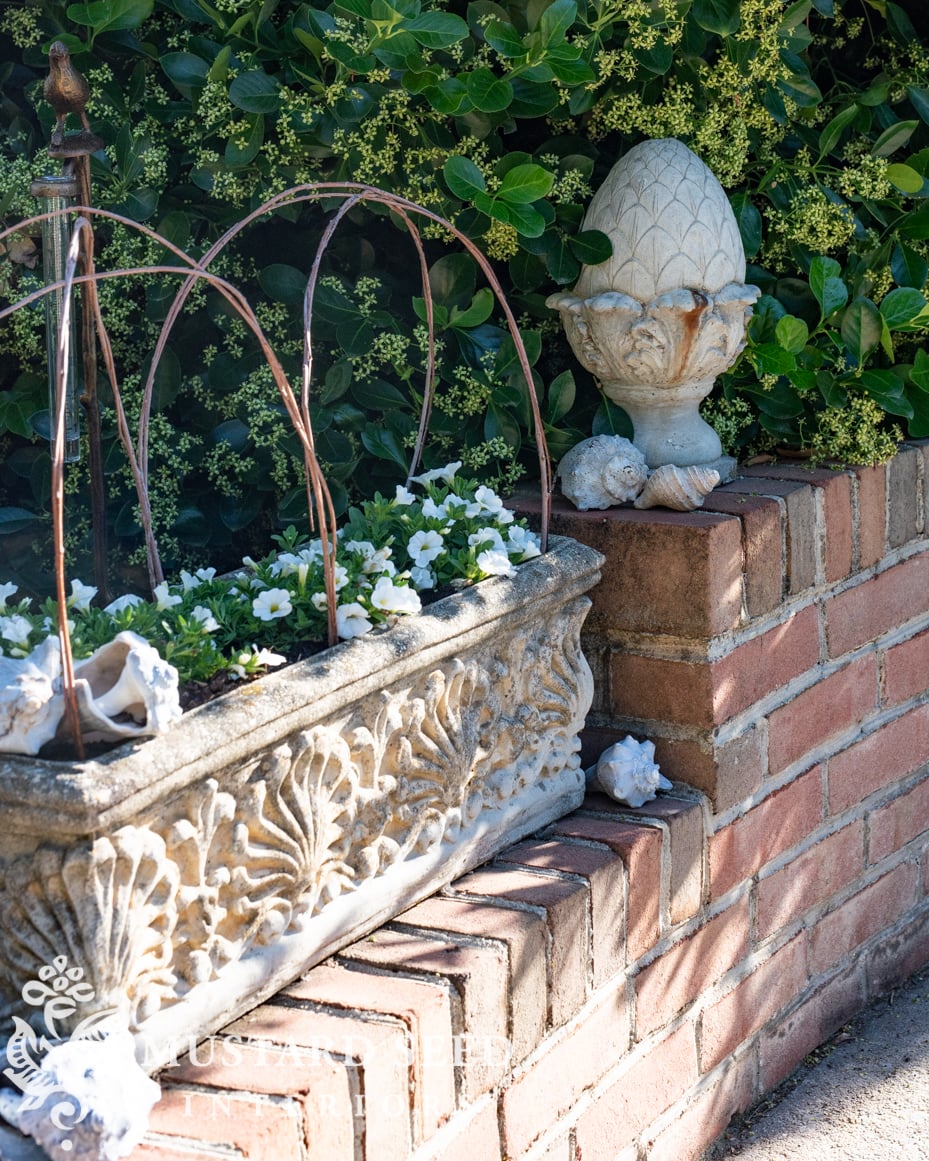
I also tuck them around plants in pots…

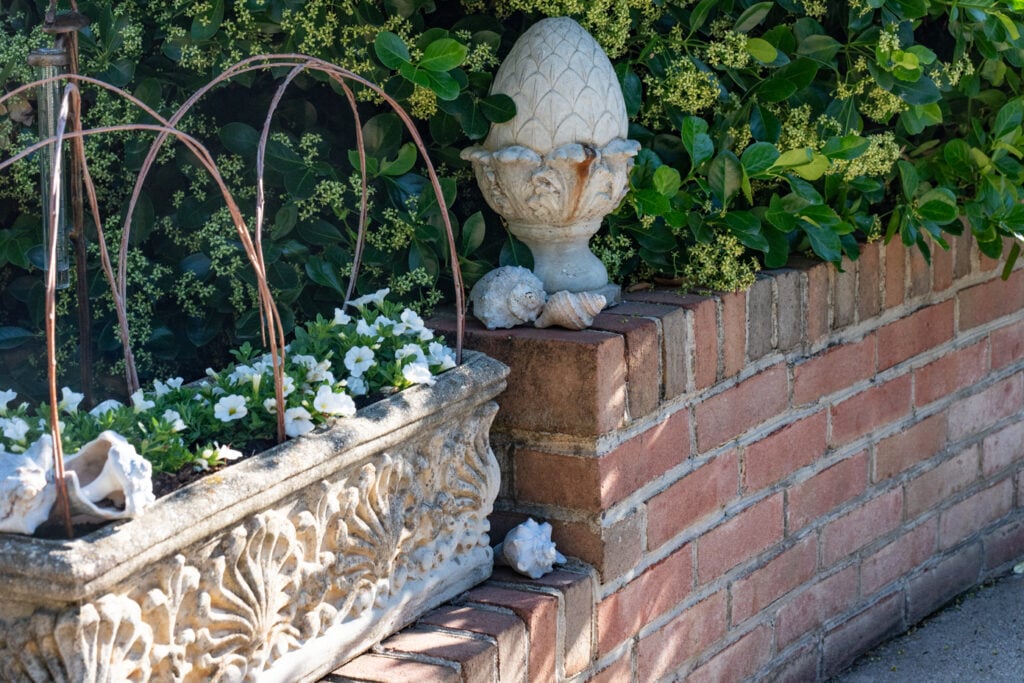
…and have them sitting out on the brick retaining wall and on side tables…
I know many people feel like they can’t decorate with shells if their house isn’t near the beach, but to me, shells aren’t specifically beach decor. To me, they have more to do with nature than the beach and, obviously, I don’t hesitate to collect and display them in and around my home.


As a sweet little side note, when I was working on one of the garden beds by the driveway in early spring, I unearthed two clamshells. I don’t know how they got there (if they were put there intentionally or dropped by accident), but I love the idea that the previous owner might’ve put shells in this garden, too. I washed the dirt off of them and put them on the old concrete gutter along with some of my shells.

You can find more blog posts about decorating with shells HERE. You can find tips on collecting shells HERE.















4 Responses
We just had the same bait stations installed at our new beach house as preventative. We noticed swarmers this Spring and since we have an empty wooded lot next door it just made sense. Swarmers are the ones that are sent to see where they want to set up a new colony. It doesn’t mean you have active termites. It just means there is a colony nearby. I recall the technician telling us it was okay to cover them up with stones (we have stone yards here) because they have locator chips in them. I did read that sometimes the chip fails, but I just thought I would share.
I found loads of oyster shells in my home’s garden when we bought it. I read they’re great for soil enhancement!
I am born next to the sea, and live deep inland now. Still, shells have been decorated the garden over time and space. It feels so at home seeing them.
Reading this just reminded me of something long ago I had forgotten about. I grew up on the Gulf Coast & we always had a clamshell drive way as everyone did back then. They were glistening white & my brothers & I would have fun picking out the pretty ones! Haven’t lived there in ages so not even sure if clamshell driveways are a thing anymore!