
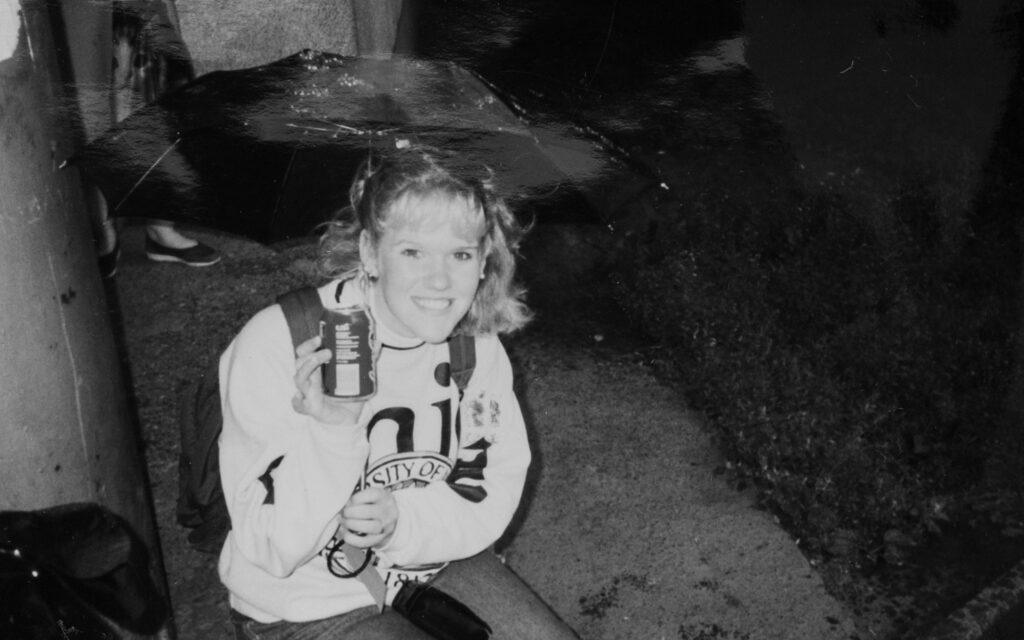
It’s hard to remember how we functioned before smartphones; before we had a map, a full phone directory, Google Translate, and all the information available by tapping a question into an internet browser in our pocket. Well, this story happened before that time.
I was supposed to meet my friend Misha that morning. I don’t remember why we were meeting. It actually wasn’t to find potatoes or other rare summer produce this time. I also don’t recall why I was going alone or why I was okay with navigating a foreign city with only vague directions. To fill in my own memory gaps, I’m guessing I had gotten to the point that I felt at home in Izhevsk, Russia, and riding public transportation to get to a destination was a normal, everyday part of life. Hopping on a bus to meet a friend didn’t sound like a harrowing adventure. It sounded like a boring part of the day I’d never think about again.
I walked from our apartment to the tram, and then took the tram to the bus stop. I can’t remember the exact directions over 30 years later, but the problem was, I didn’t remember the exact directions at the time, either. They were something like, get on bus number 8 and get off on the third stop. I’ll meet you there. I waited at the stop for a while until my bus arrived. I climbed on and stood towards the front, holding onto one of the vertical bars to steady myself. The bus was crowded, but not packed. Older women in head scarves were sitting in the seats, holding their purses and sometimes a bag with recent purchases. Men held onto the handles overhead, swaying with the movement of the bus. I always tried to find a spot where I could have some personal space. The buses and trams usually smelled like body odor, and some men took advantage of the close quarters, pressing up against young women.
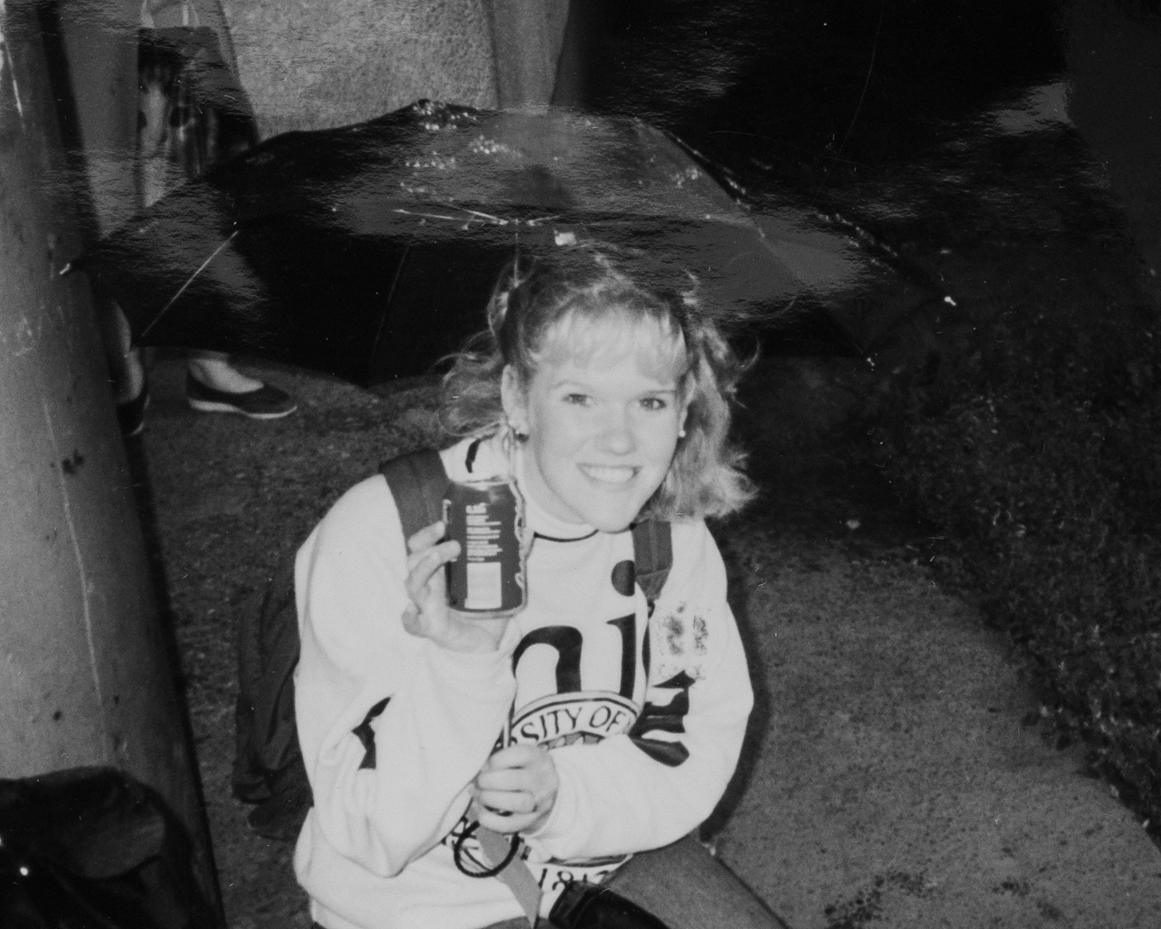
I watched out the windows, ready to count the stops and get off when it was time. I remember feeling antsy as the city passed by and the bus didn’t stop. There should be pretty short distances between these three stops, right? The scene was becoming more rural. The people and buildings were thinning out until the road was surrounded mostly by trees and fields. Where was Misha sending me? I felt a knot growing in my stomach. This didn’t seem right. It didn’t feel right. I knew how to count to ten in Russian. I was learning to sound out each letter in the Russian alphabet. I could say simple phrases like, my name is Marian, I don’t understand, and I’m an American. I didn’t know how to ask if I was on the right bus. I didn’t know how to ask if I was heading in the right direction. I didn’t even know how I would explain where I was trying to go since it was just stop number three on bus eight. Had I gotten on the wrong bus? Or maybe I started from the wrong stop?
I looked around, growing more panicked as the bus drove further out of the city and hadn’t yet stopped once. It seemed like forever, but the bus probably drove 10-15 minutes before it stopped. I looked around at the faces on the bus, hoping for some comfort, recognition, direction, maybe. I made the split-second decision to hop off the bus even if it looked like the middle of nowhere. I was already in for a long walk to get back to the city, but I figured it was better than staying on a bus going in the wrong direction. I was the only person to get off at that stop, which was simply an intersection. I stood there for a few minutes as the bus drove away, wondering if I made a mistake.
I started walking back towards the city, hoping, praying I would come across something familiar. I wished I had paid more attention to the route of the bus. I relaxed a bit once I passed the sign for Izhevsk, which I did recognize, and was surrounded by more civilization, but I still wasn’t sure exactly where I was. I had plenty of time to think about my options as I walked, and I realized I was completely ill-prepared to find my way home. I didn’t know the address of our apartment or my dad’s school. I didn’t know phone numbers of people who would be able to direct me. I didn’t know where a police station was, or if it would even be wise to go there. We had a healthy skepticism and fear of the Russian government, knowing we were foreigners subject to their good graces and whims.
I tried to take an inventory of what was working in my favor. I had my passport and visa in my bag. I had some Russian and US money. That was something.
I came across a pay phone and used a coin from my purse to call the one number I did have – Misha’s home phone number. I dialed the number and a man’s voice answered. Misha’s dad. Of course it wouldn’t be Misha because he’s supposed to be meeting me. I started pouring out my story, but only received Russian spoken in a confused and apologetic tone in reply. We weren’t going to be able to understand each other no matter how slowly I spoke. He would probably tell Misha the American girl called, but he wouldn’t be able to relay that I was lost.
I hung up the phone and hopelessness started to sink in. The knot in my stomach became a pit, and I had to fight back tears. I took a few deep breaths… Okay, I can’t panic. I need to think. I need to keep my head. I had been lost before. In Disneyland as a preschooler. I cried until a woman lifted me and I was able to spot my dad’s bobbing head as he searched for me in the crowd. He wasn’t looking for me, though, and this wasn’t Disneyland.
I decided to keep moving. I didn’t recognize my surroundings, but maybe, if I kept walking, I would get lucky. I finally spotted a cluster of buildings and, even though it wasn’t familiar, I had a feeling it was a place where I could get help. It was a college campus. Someone on a college campus would speak English. I tested a few double doors, but they were locked. The school was closed, and my heart sank. A few people were milling around the sidewalks and on the lawn, but none of them looked like students. I walked around, trying to find a friendly face that felt approachable. While I desperately hoped someone would see me, I had a fear that I would ask for help from the wrong person, someone who wasn’t kind and took advantage of my helpless position. I finally gave up on the college, picked a direction, and started walking.
This was my low point. I managed to hold it together for hours, but it was getting later, the sun was lowering on the horizon, and my fear was growing into terror. What would I do if I was still lost at night? I was out of ideas, and my imagination started to run wild with all of the possibilities of what would become of me. I started to cry, and once the tears started, they became uncontrolled sobs.
I don’t know how long I cried and walked, but my eyes were puffy and blurry when I heard someone speak to me. In English.
“Are you an American?”
Those three words were all that was required to open the floodgates of my despair and relief.
“Yes! And I’m lost!”
The man was taller than me, of average build, with wavy brown hair that was parted on the side and glasses. He was probably in his mid-to-late twenties and wore a sympathetic, comforting look. He hunched down, tried to make himself unassuming, and approached me as if I were a wounded animal. He reached his arm around me and let it hover in the air over my shoulders, trying to comfort me without being too familiar.
“I know where you belong.” And he started to guide me in the opposite direction I was walking.
I trusted him because I didn’t have any other option. I trusted him because he spoke English and said he knew where I belonged. I trusted him because the prospect of spending the night on the sidewalk was unthinkable. My sobbing ceased, and my tears dried up. With my eyes still puffy and my face blotchy, I followed him and spilled the story of how I ended up lost and crying on the sidewalk where our paths met. I would find out later that I started at the wrong bus stop.
It was a short walk down a few blocks, with only one turn, and then we were at my dad’s school. He knew where I belonged. There were only a handful of Americans in Izhevsk at the time, so we were a novelty. I was so overwhelmed with gratitude and relief that I never asked for his name or anything about him, for that matter. I also started to feel foolish for getting lost in the first place, and then being so close to my destination when I broke down crying. I thanked him, and we parted ways. I was able to easily make my way home from the school, and I entered our apartment that evening, changed from when I left that morning.
To this day, being lost in Izhevsk is one of the most frightening experiences of my life. If you’ve ever been truly lost, in the woods, in a foreign city, somewhere with potential dangers, then you know how terrifying it can be. In the end, I basically wandered around by myself for the day with no harm done, but it could’ve ended in a dramatically different way if that kind man hadn’t found me. It really was Providential, like an angel put in my path to bring me home.
The funny thing is, no one knew I was lost all day. My dad thought I was with Misha. Misha thought I just didn’t show. No one was even looking for me. I would’ve been missed eventually, but I had so much free rein that summer that my absence wouldn’t have been concerning until night fell. I hugged my dad and yelled at Misha the next time I saw them. I was only going to stick to my known routes from now on.











7 Responses
Marian, it sounds like his out an angel in your path they day! Did anyone even know who this man was that showed up to your aid?
Sorry for the typos. It sounds like God put an angel in your path.
I got lost in a ski town in the Carpathian Mountains of Romania. I was going to walk to our morning destination but took a wrong turn and got very lost. Nobody spoken English but luckily for me, Romanian is a Latin-based language, and I do speak some Spanish. So, I asked directions in Spanish and pointed in various directions. I did catch the word, Escala, or stairs. So, when I came to them, I went up and had people point me in the right direction again. I wound up where I was supposed to be thirty minutes before the bus!
Glad both of our adventures wound up with us being where we needed to go.
Wow…. God was certainly watching over you….protecting you. I would have been petrified.
I am so enjoying this Russia series! Thanks for sharing!
Well, there is an example of Jeremiah 29:11. …..Not to harm and protect you!!!!
Enjoying this story….thank you for sharing.
I got lost in a pine tree plantation across from our house when I was 8 and my brother was 6. I couldn’t let him see me panic but every direction I turned it looked exactly the same endless even rows of pines so thick they blocked the sun so I couldnt even gauge direction by the light. I kept turning and walking and eventually we stumbled out onto the road a 1/4 mile from our house. I could have cried with relief. It was like a tricky fun house horror show in there and dead quiet because of the carpet of needles on the ground. The dense trees seemed to even block the noises I was hoping to hear on our lonely dirt road. To this day I dont know how I found our way out. It was acres of dense trees and we were small.