
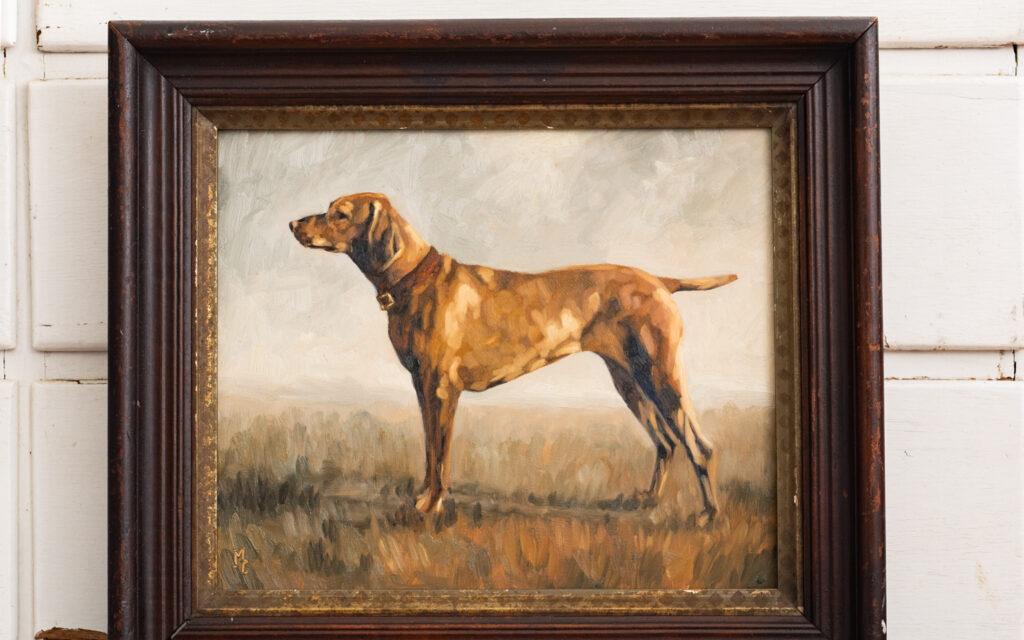
When I first started painting with oils, I bought a smattering of substrates to test. I painted on stretched canvas and linen, canvas and linen panels, oil paper, and gesso board. Over the years, I learned that I didn’t like the bounce and fragility of stretched canvas and linen. I didn’t like the texture of canvas panels, but I’m okay with the texture of a fine Belgian linen panel. I also learned that not all gessoed plywood, MDF, and hardboard are the same. Some are rough and grippy. Some are slippery, and the paint almost resists the surface. Doing “the thing” is the best teacher, and through doing, I learned that my favorite surface was plywood panels I gessoed (primed) myself. (THIS is the gesso I use.)
I like that they are easy to store in my studio, inexpensive to ship, rigid and unlikely to be damaged, and have a smooth surface that isn’t too grippy or too slippery. It’s perfect for what I like. The other benefit is that I have a husband with a table saw and woodworking knowledge, so he can cut custom and hard-to-find sizes for me. That means I can buy antique and vintage frames that aren’t standard sizes without worrying about finding a panel or canvas to fit.
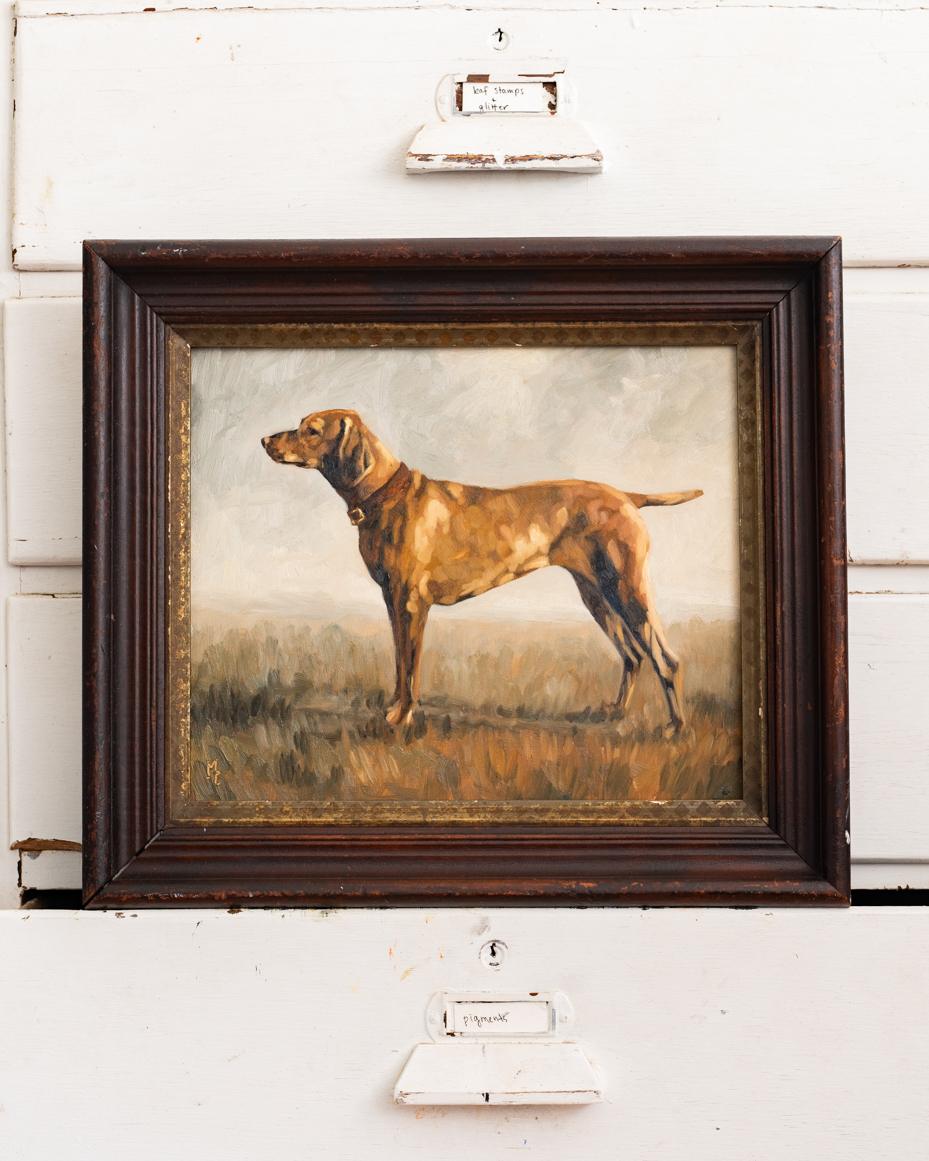
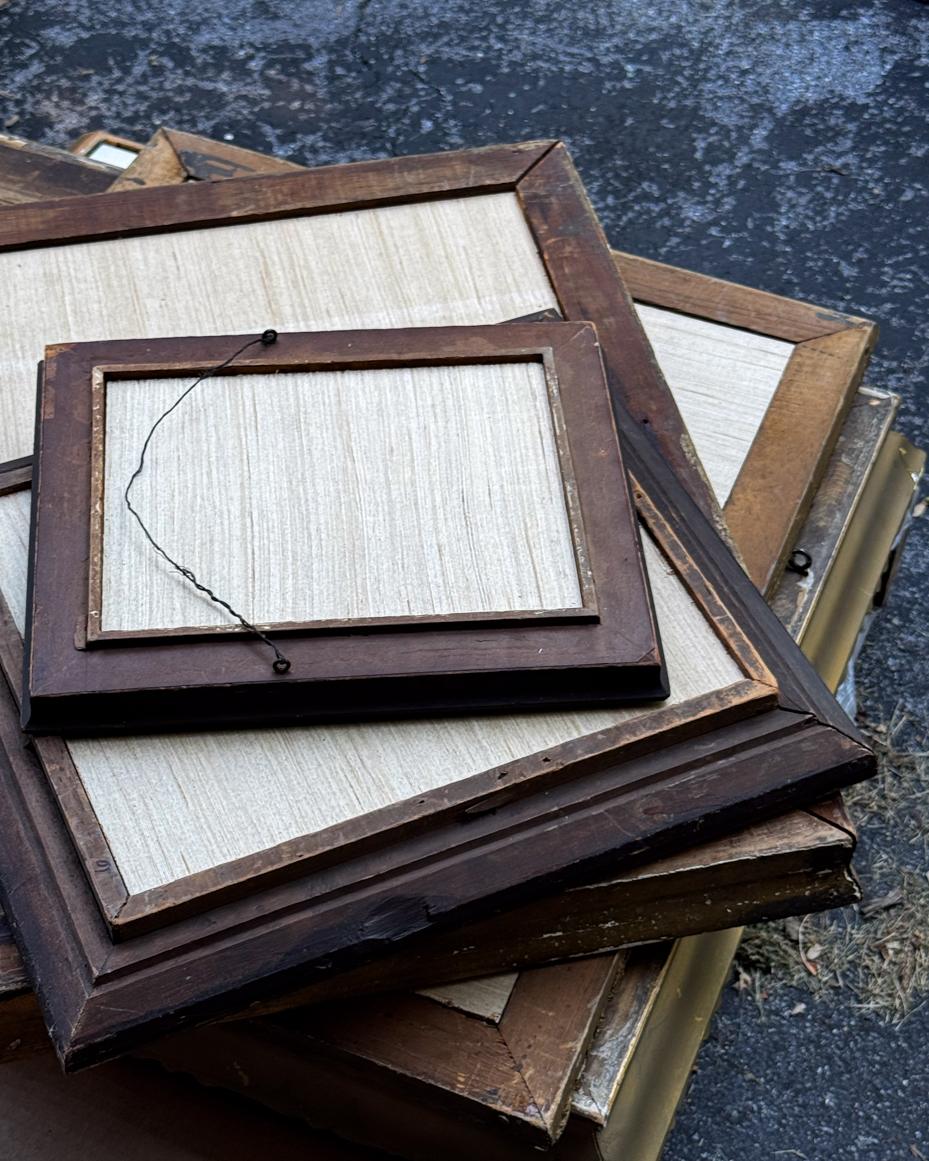
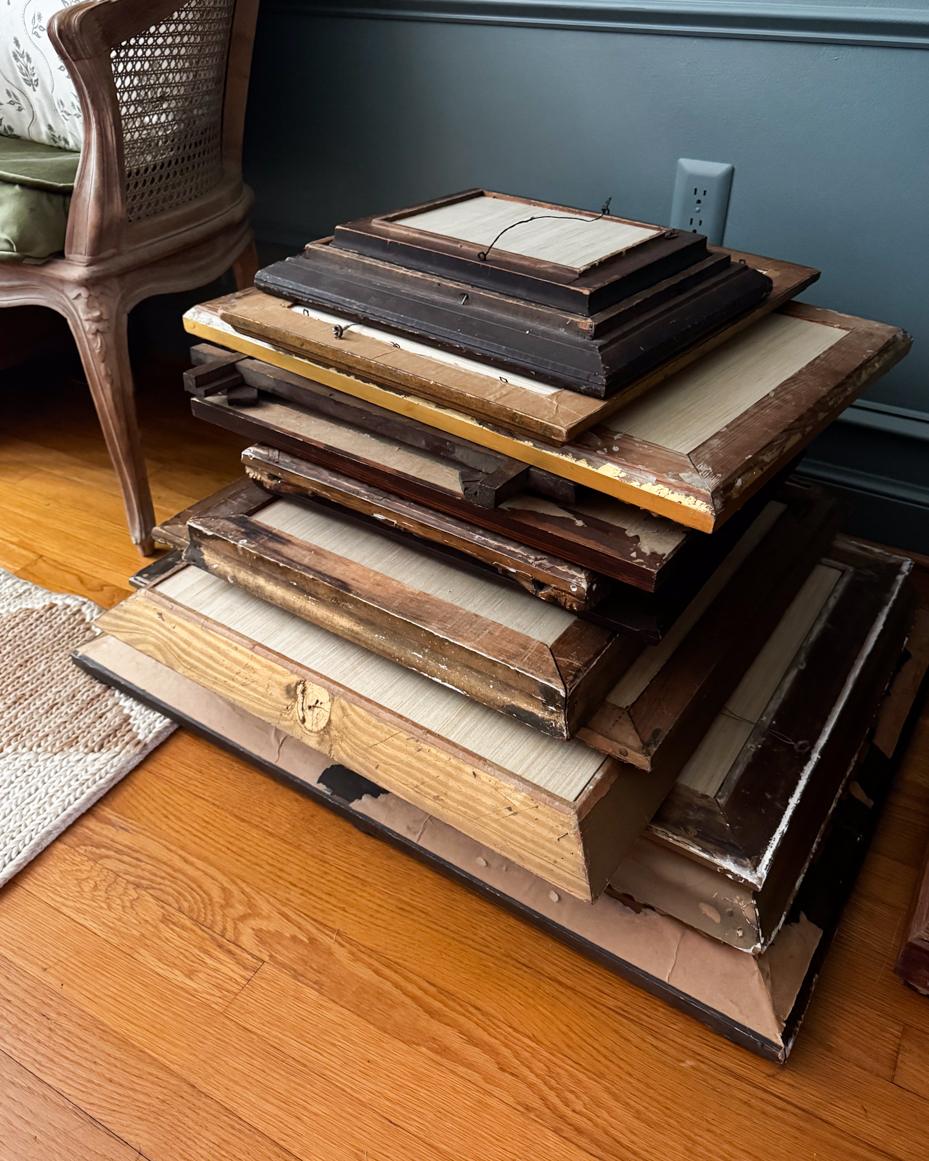
So, I have a stash of frames that needed panels, and I also needed 9 x 12 and 11 x 14 panels, since my preferred brand no longer carries those popular standard sizes. (THIS is my favorite brand of art panels, which are still available in 8 x 10.) The stash of frames, while nice to have on hand, was out of control and feeling a little overwhelming, so I wanted to get panels cut for all of them and put them to good use. I made this same mistake when I first started refinishing furniture. I felt like having a big stash was somehow a benefit, but the cube of furniture in our basement just stressed me out. I can keep a few frames on hand for standard sizes, but I don’t need 20+ random frames. Almost all of them need some form of repair and require a custom panel.
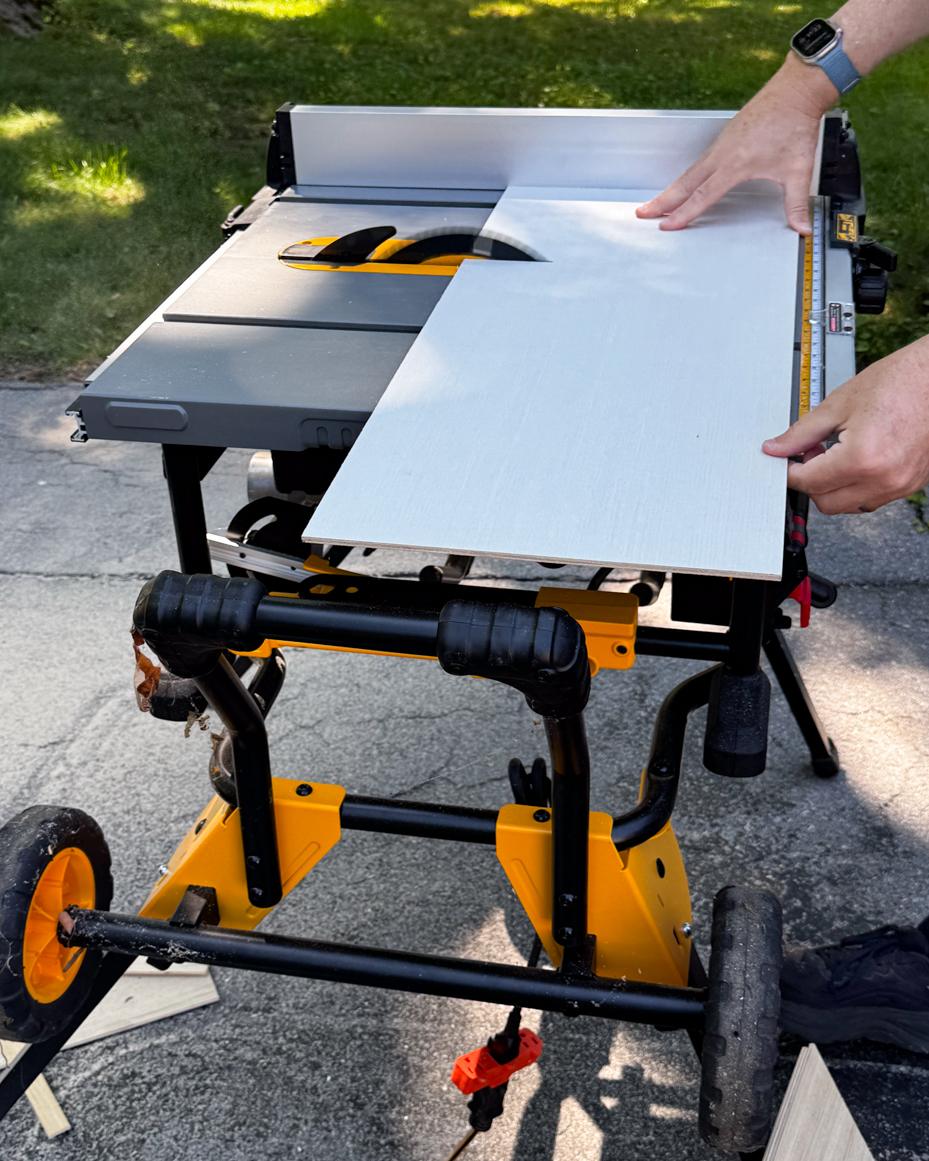
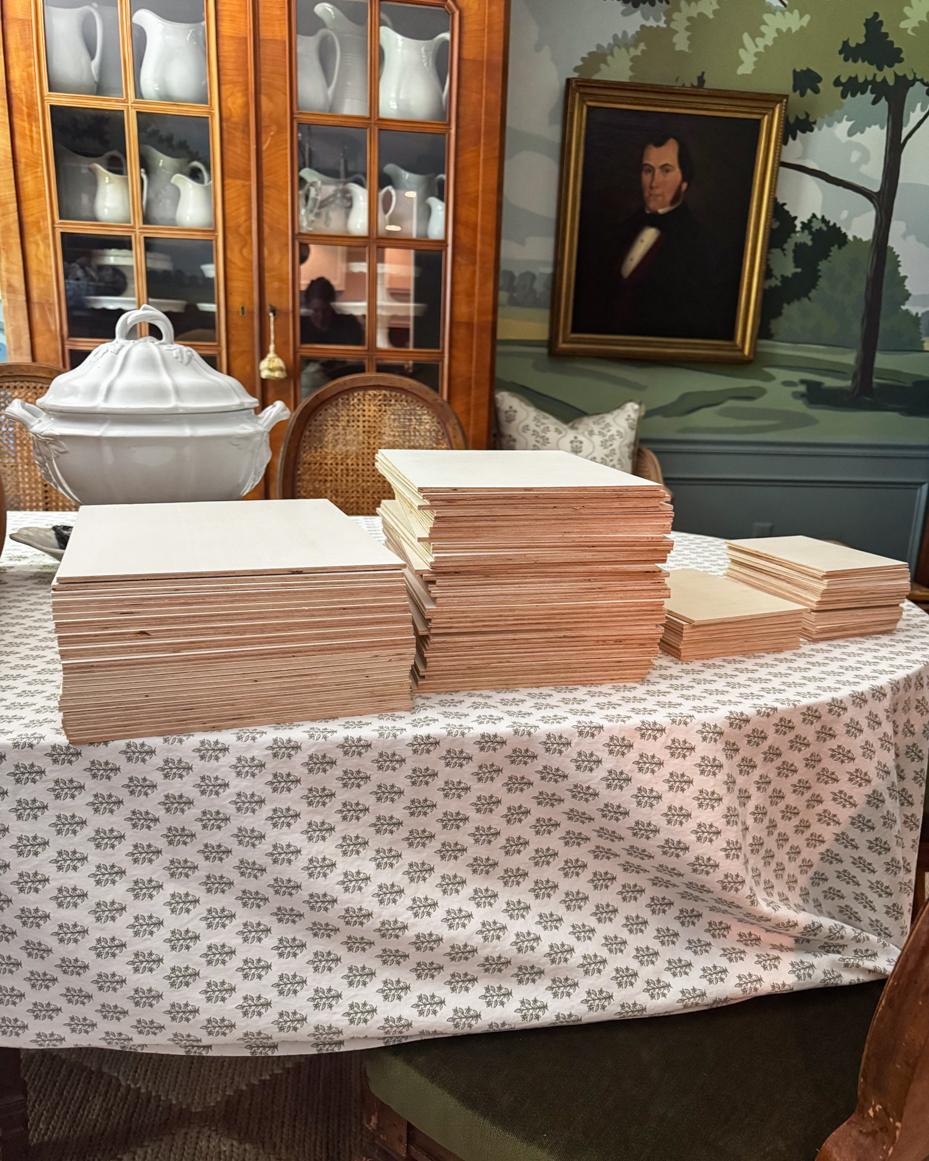
Jeff took advantage of a beautiful Saturday a few weeks ago and cut down dozens of panels for me. He uses a 1/4″ thick, finish-grade plywood so it’s free from knots, heavy grain, and other imperfections. Since I had several large frames, he started with the custom-cut panels. He measured each one and cut a panel on the table saw to fit.
Then, he set up the fence and cut 11 x 14s, 9 x 12s, and 6 x 8s out of the remaining plywood.
He even sanded the panels for me, so they were ready for a few coats of gesso.
And I ended up with a huge stack of panels in standard sizes, which, unlike random old frames in need of work, I do need to have on hand. Now, I am set for a few months.
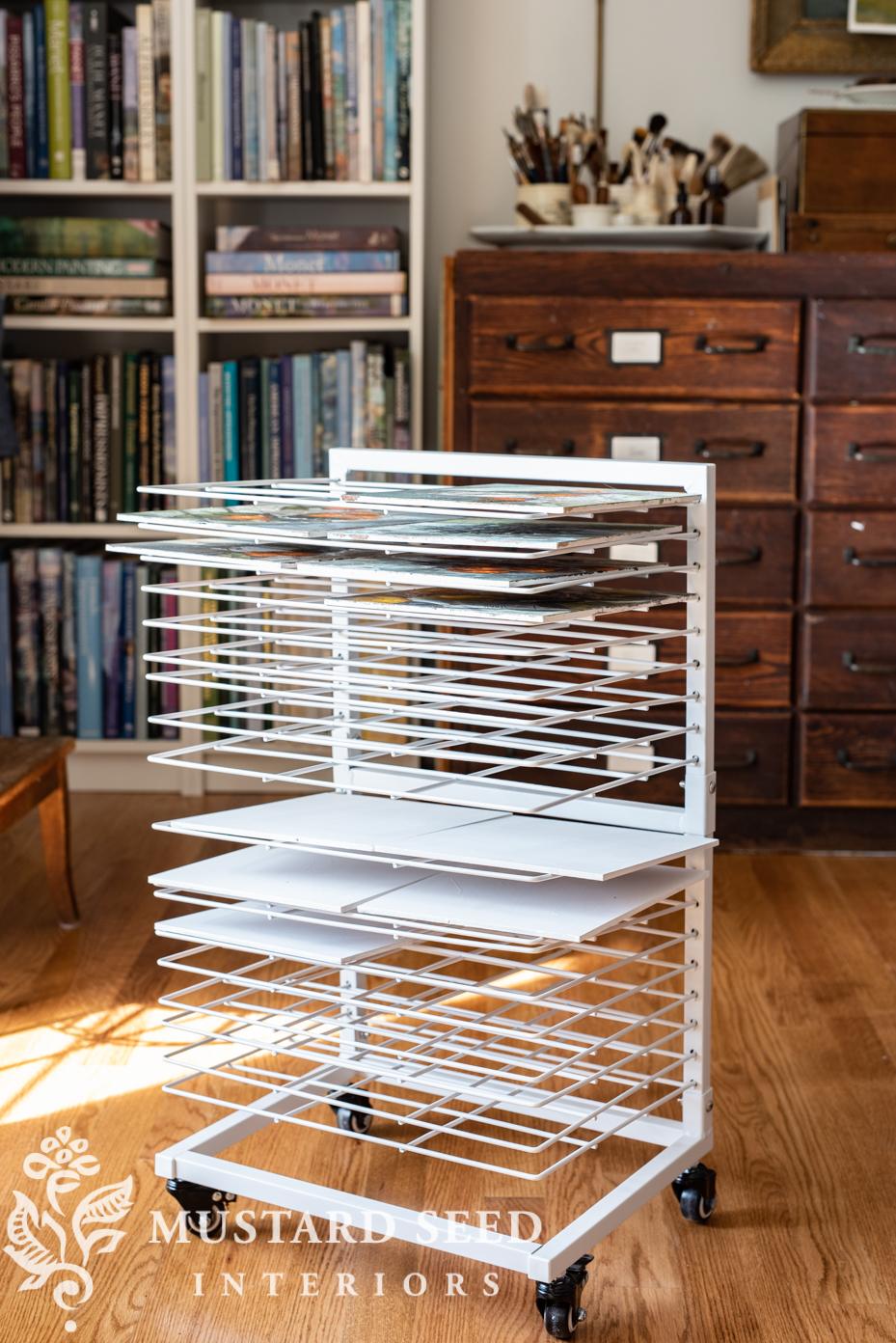
Since I had so many panels to do, I have had to gesso and tone them in shifts. At some point, I might need to get a second drying rack so I can work on more panels at once. (THIS is the one I have, and I use it all the time.) I also didn’t need to prep all of the 9 x 12 and 11 x 14 panels right away, so I did several of each to have them ready for commissioned pieces and paintings to sell.
So, there is a little behind-the-scenes look at my art business. I am going to try to share more of the business side of selling art since that’s primarily what I’ve been working on. I’ve been hesitant to write too much about the art side of things, since I know I have a lot of blog readers who signed up for the home, furniture, and garden content, but I don’t have much time to work on those things in this current season. This blog has always been about sharing what I’m currently working on, so I’m going to roll with it and hope my “home people” find it interesting too.








16 Responses
Thanks for sharing. I enjoyed reading about your process. I am wondering if you seal the plywood with any sort of primer before the Gesso?
I’m also an artist so this is very interesting content to me! Keep sharing!
Kitty
I live in Australia and my hubby also buys mdf board and cuts them into different sizes for me! I gesso them and my husband makes my frames for me aswell, but then I have to paint the frames and the trim, hard work!
How does plywood impact the longevity of the project? Is this a substrate artists have used for ages and it’s well understood? My first thought was plywood doesn’t seem very “archival” and I worried that the adhesives used in the process could impact the painting over time.
Yes, artists have been painting on wood, plywood, and even cardboard for a long time. The key is to use quality birch plywood and seal it properly. I’m not super particular about it because it will last my lifetime, and then, after that, people can sort it out if my work is very valuable! 🙂 I want to use quality materials, but I’m not going to stress if something isn’t graded to last 500 years.
Your blog is one of the the small few that I follow. I’m one of the “home people” but I truly enjoy catching up with what you’re working on, your faith, your family, your writing, your art and learning new things so I am here for the long haul! This process is very interesting. I’ve learned so much from you through the years—maybe creating artwork for my home with a vintage frame is next ☺️ Blessings to you and your family!
Thank you! I appreciate that.
Thank you Marion! Dear friend, who was one of the ones who got me going again give me a whole bunch of antique frames that are pretty large and I have a huge stack now and everything you shared is exactly where I’m at. I can’t stand canvas anymore. I was taught on it and I’ve used it for years, but I really do like these wood panels. I’m always looking for sales and have a good supply so far what I’m not a big fan of anymore are those thin panels that are gessoed. I really don’t like textured panels. But will take your information and consider it. You mentioned to me a ways back that you got yours from Michaels and I’ve been looking ever since. Dick Blick has some good sales too. Your husband is a dear for doing that! I’ve had so many problems with these frames, not fitting the actual artwork so that is such a great idea to do. Since our house is up for sale, I’ve needed to pack all these frames which some days I just wanna take them to the thrift store and say have at it lol. But what I did do is there are these light blue plastic storage bags that you can get at Amazon and I swear by them. I’ve been able to put a whole bunch of these frames in there and sent to storage.
Funny. I’m not a fan of canvas either. I’m going to give those boards a go. For 10 bucks, it’s worth trying. Thank you.
Many of us are interested in all you are doing even if we are not artists or authors, etc.
This is wildly interesting to me, and I struggle with stick figures. Thanks for including us.
We do, we do! We find it all interesting!
I love both your home and art content, but I’m currently more interested in the latter so I’m thrilled you’re posting about it.
After following you for so many years, it is always interesting to read about what you are up too. It is like connecting with an old friend…..a busy friend…but a good one!!!
Thanks for all you share.
I think I can speak for most of your blog followers when I say, “we will follow you anywhere your business takes you”! We are a loyal bunch.
While I love all things home on your blog I find your art work so inspiring. You have inspired me to begin oil painting, so far I have only used stretch canvas. I’m definitely interested in your processes. I would be interested in a bit more information about how many coats of gesso you use and what you mean by toning your panels.
Thank you for all you share!