
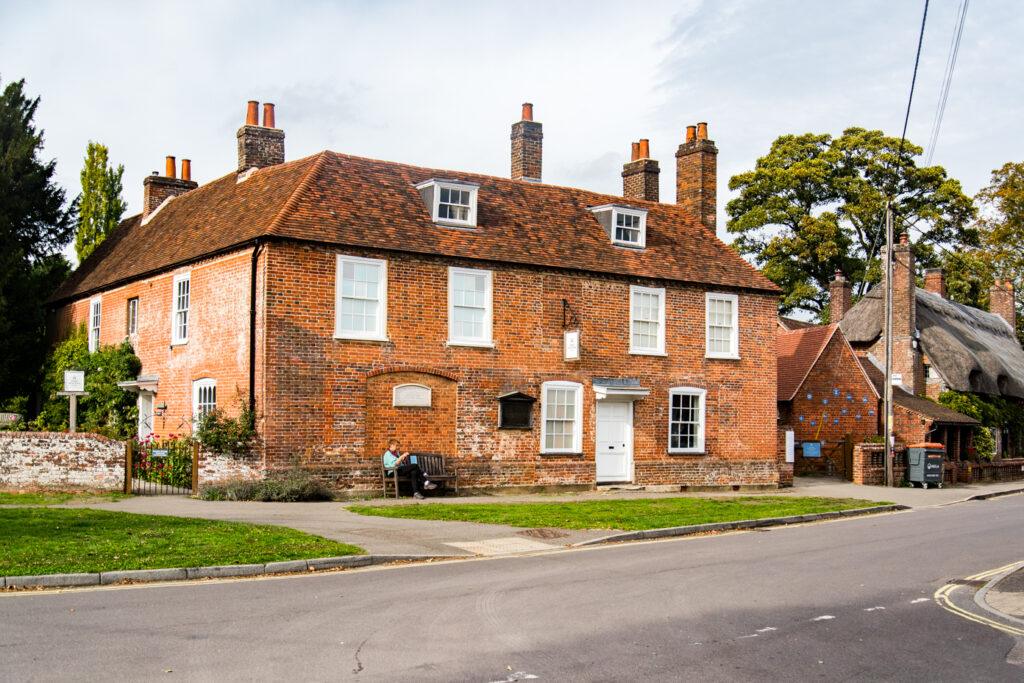
After our morning in Minchinhampton and Winchester, we headed over to Chawton, Hampshire, to walk around the village and arrive in time for our scheduled unguided tour of Jane Austen’s House. This is the home that Jane lived in during the final eight years of her life (aside from the months of illness just before her death, when she lived in Winchester to be closer to her doctor). It’s also the home where she completed all six of her novels and published four of them. The other two, Persuasion and Northanger Abbey, were published posthumously.
The village of Chawton is charming, with its mix of thatched and tiled-roof cottages and shops.
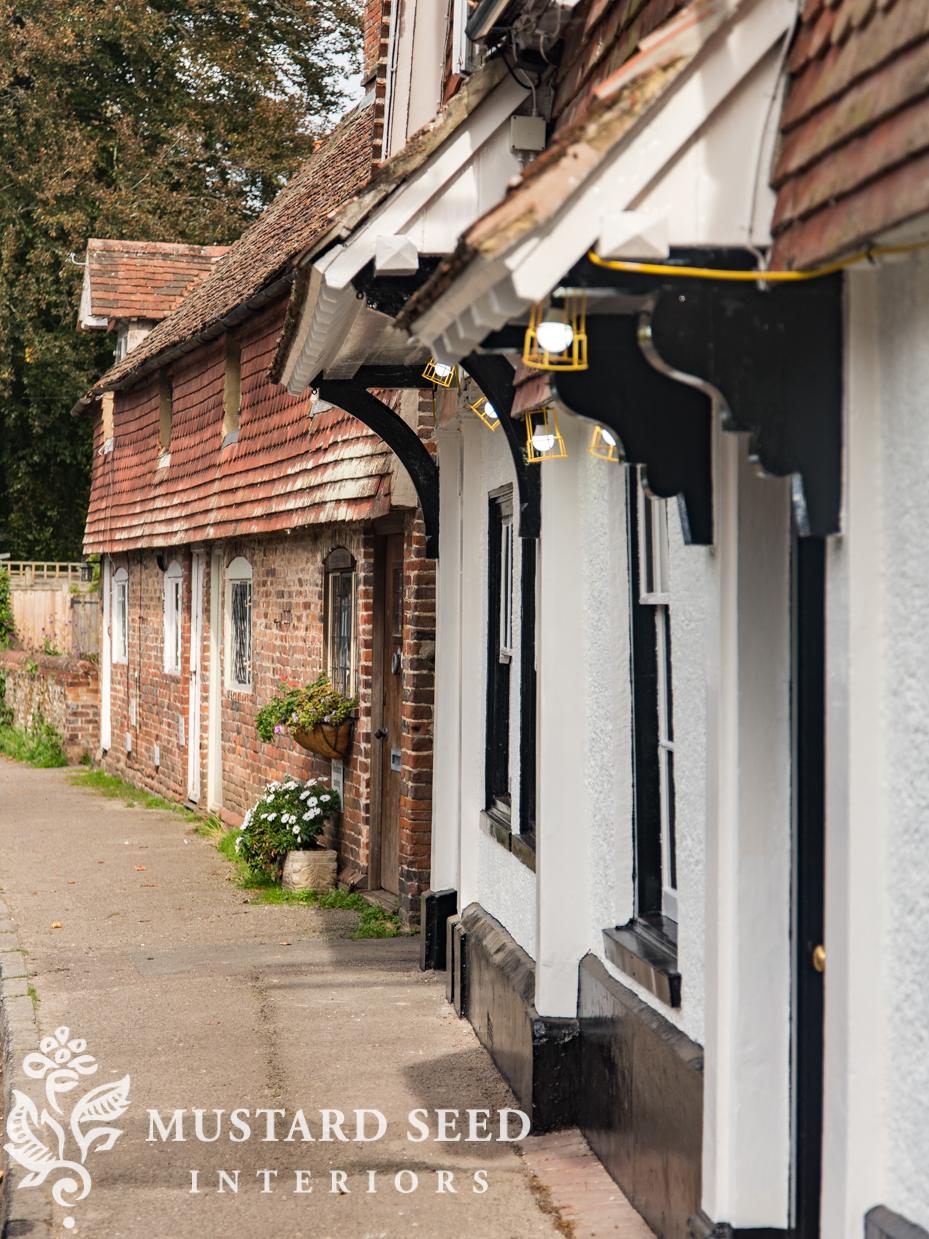
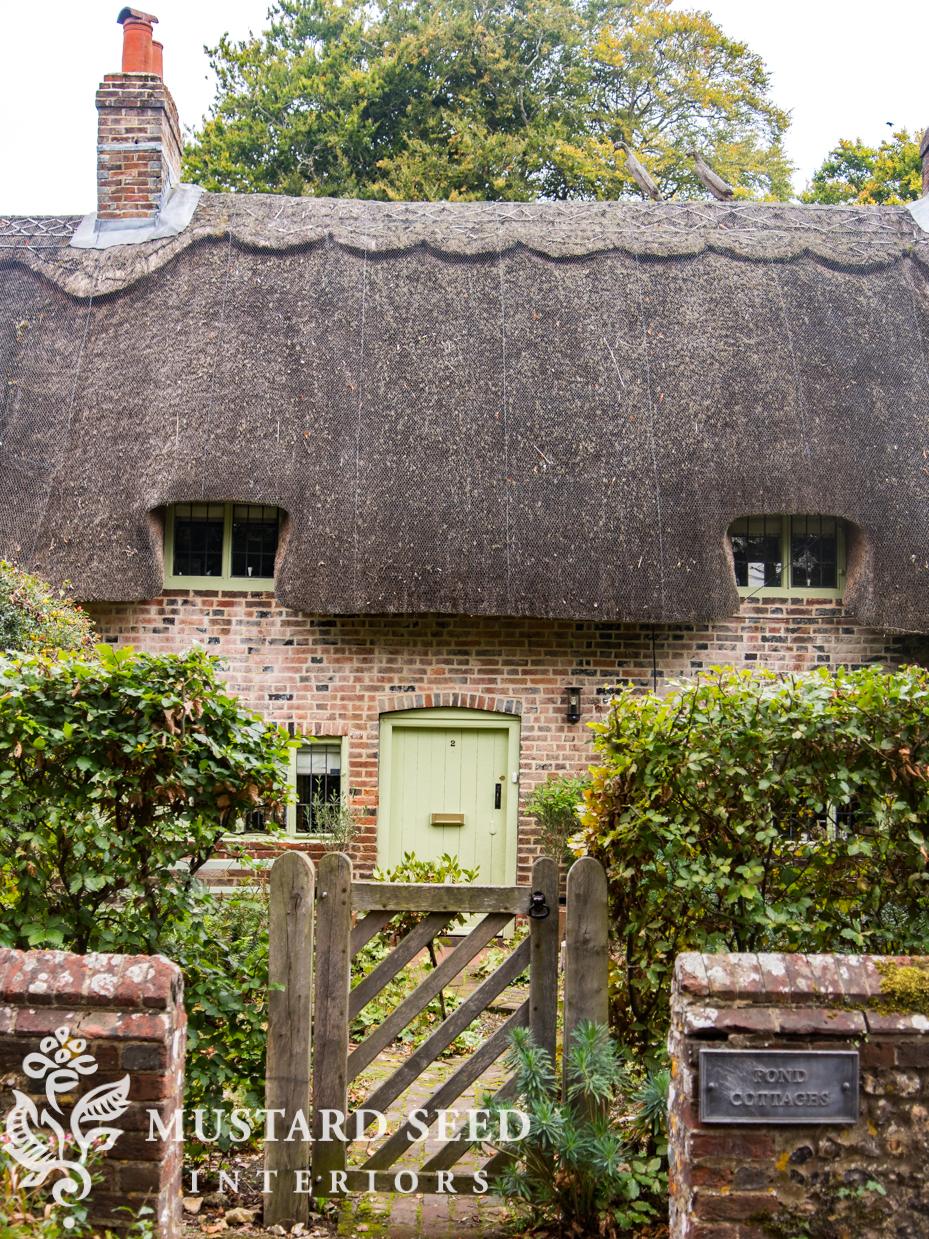
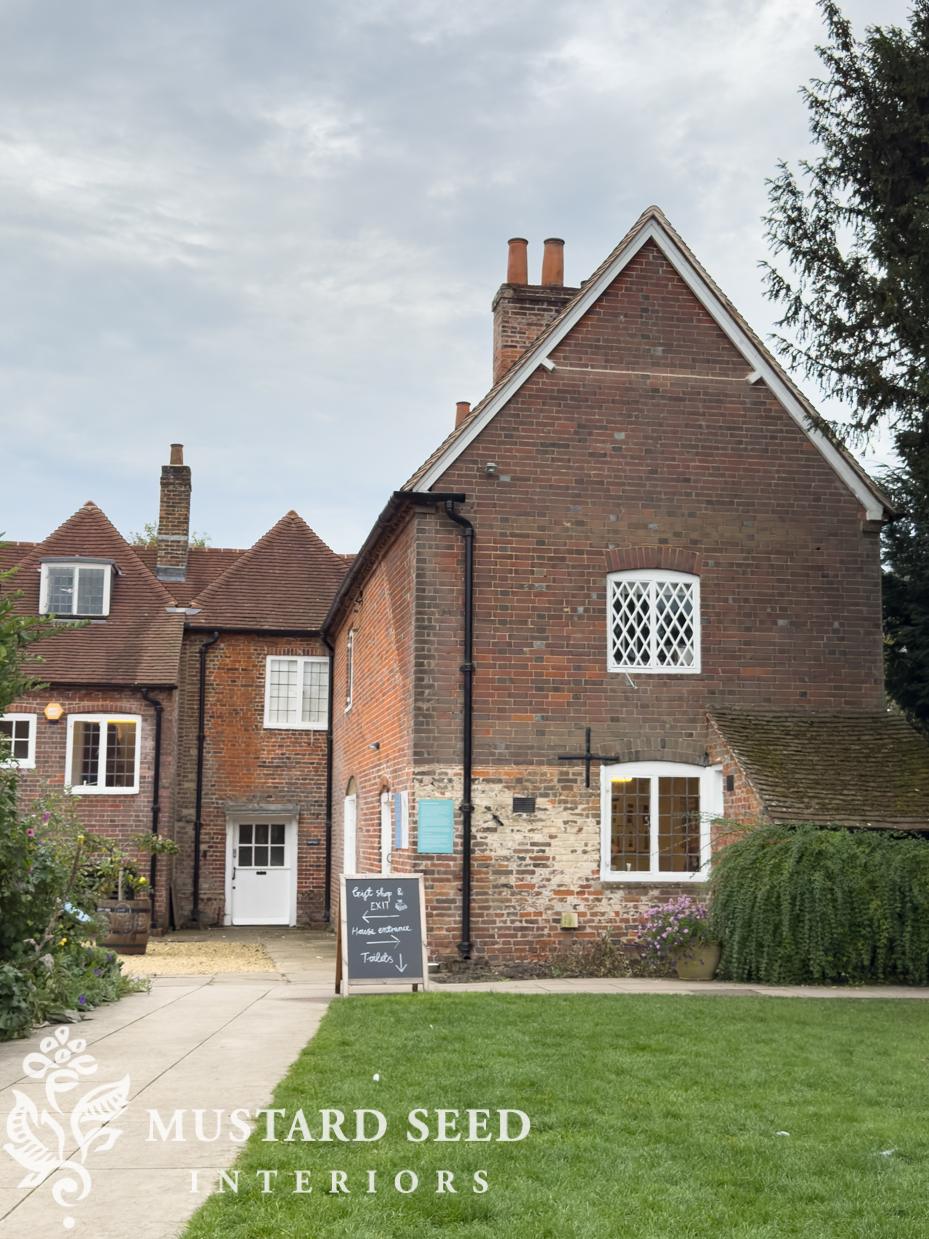
The home where Jane lived with her sister, Cassandra, mother, and friend, Marth Lloyd. The house was a thatched and timber farmhouse when it was first built in the 1500s, and then a coaching inn, before it was bought by the Knight family in 1769. The Knight family, distant relatives of the Austens, had no heir, so they adopted one of the Austen boys, Edward, to inherit their estate. This estate included Chawton House and the home Jane, her mother, and Cassandra eventually selected to live in. You can read more about the house’s history HERE.
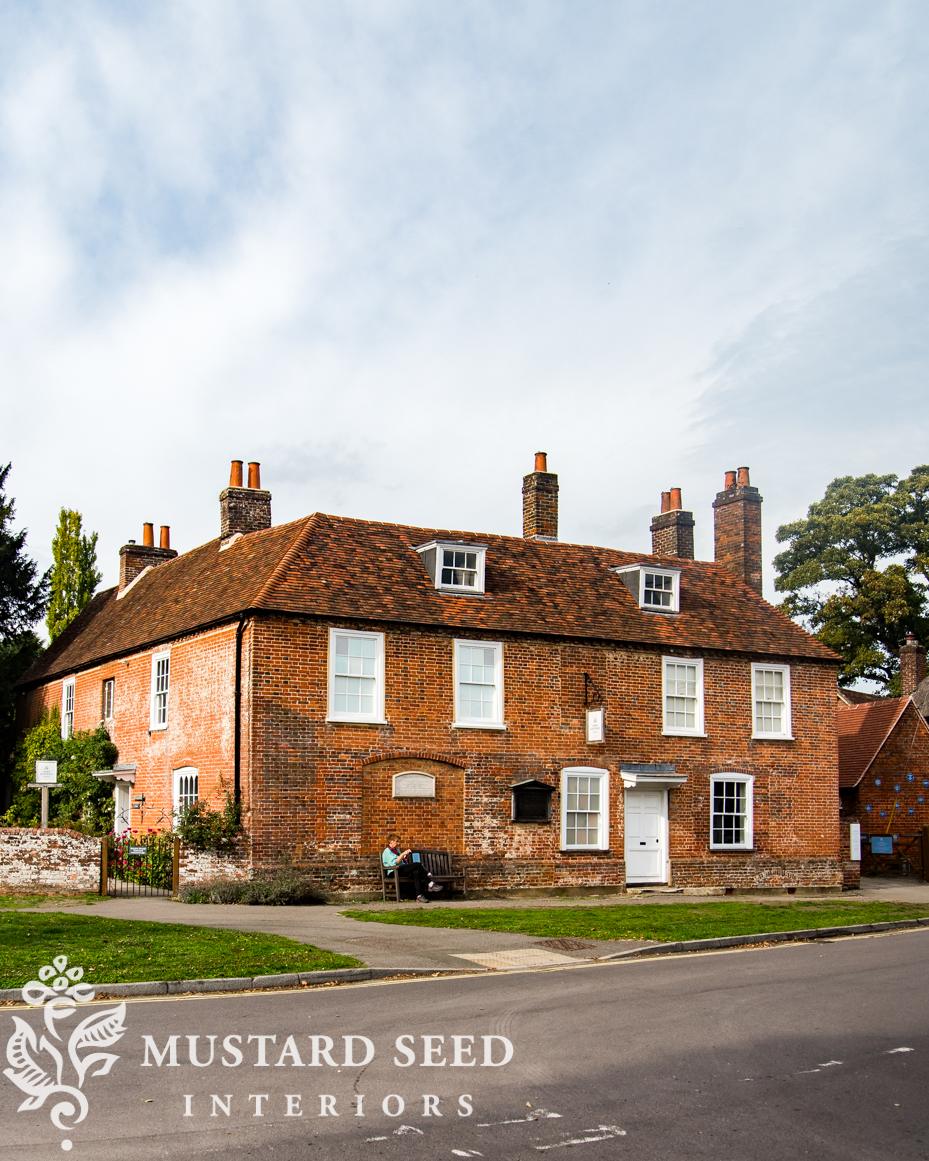
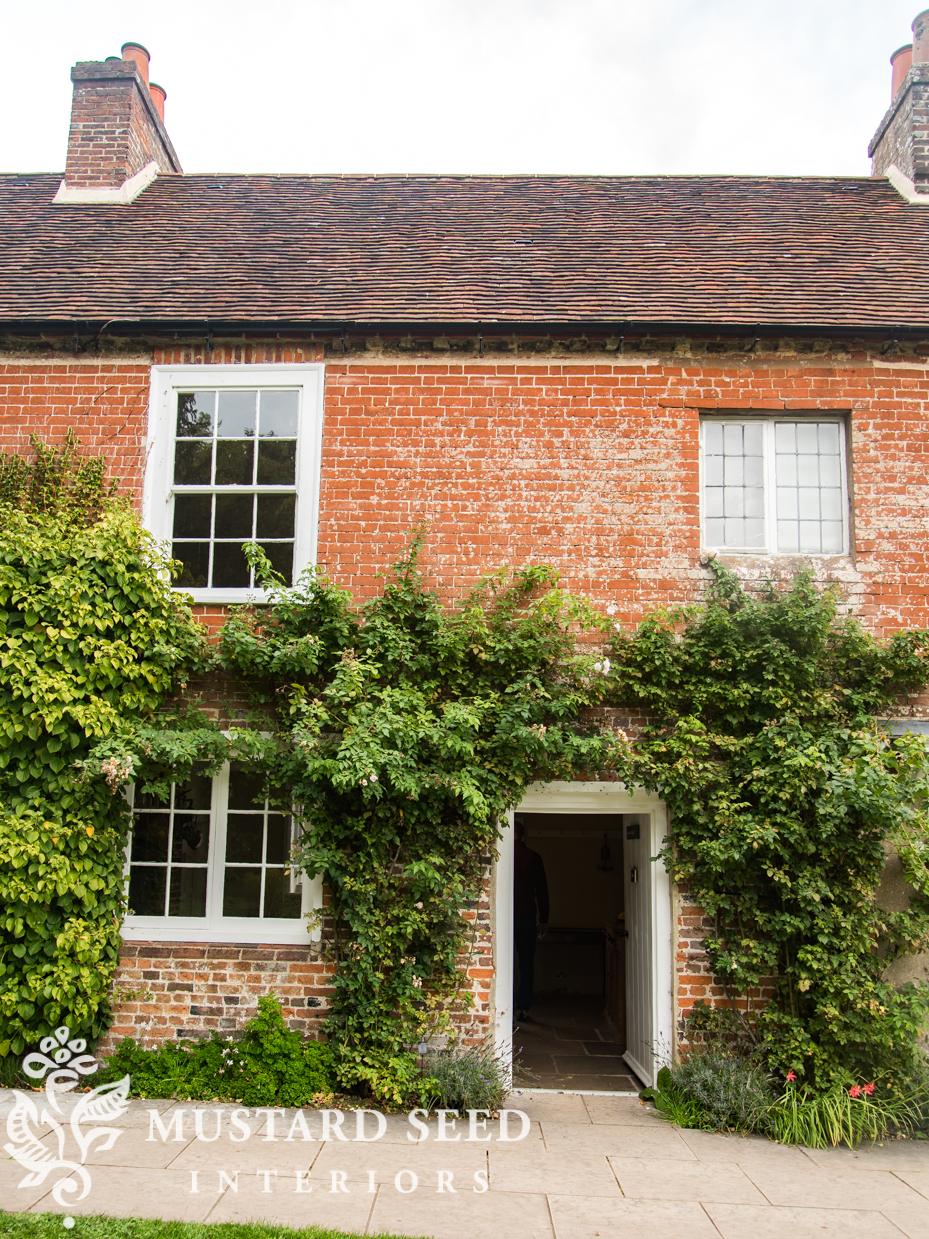
I know, when I pictured Jane Austen’s house, I imagined a symmetrical, Georgian-style home, so I was surprised by the square, somewhat clunky brick home situated on the corner of two streets. Because the house was split into three smaller homes after Cassandra died in 1845, it has needed extensive renovation to restore the house to the way it looked when Jane lived there. This restoration and maintenance of the house and collections has been a privately funded effort supported by Jane Austen fans from around the world, and is still ongoing.
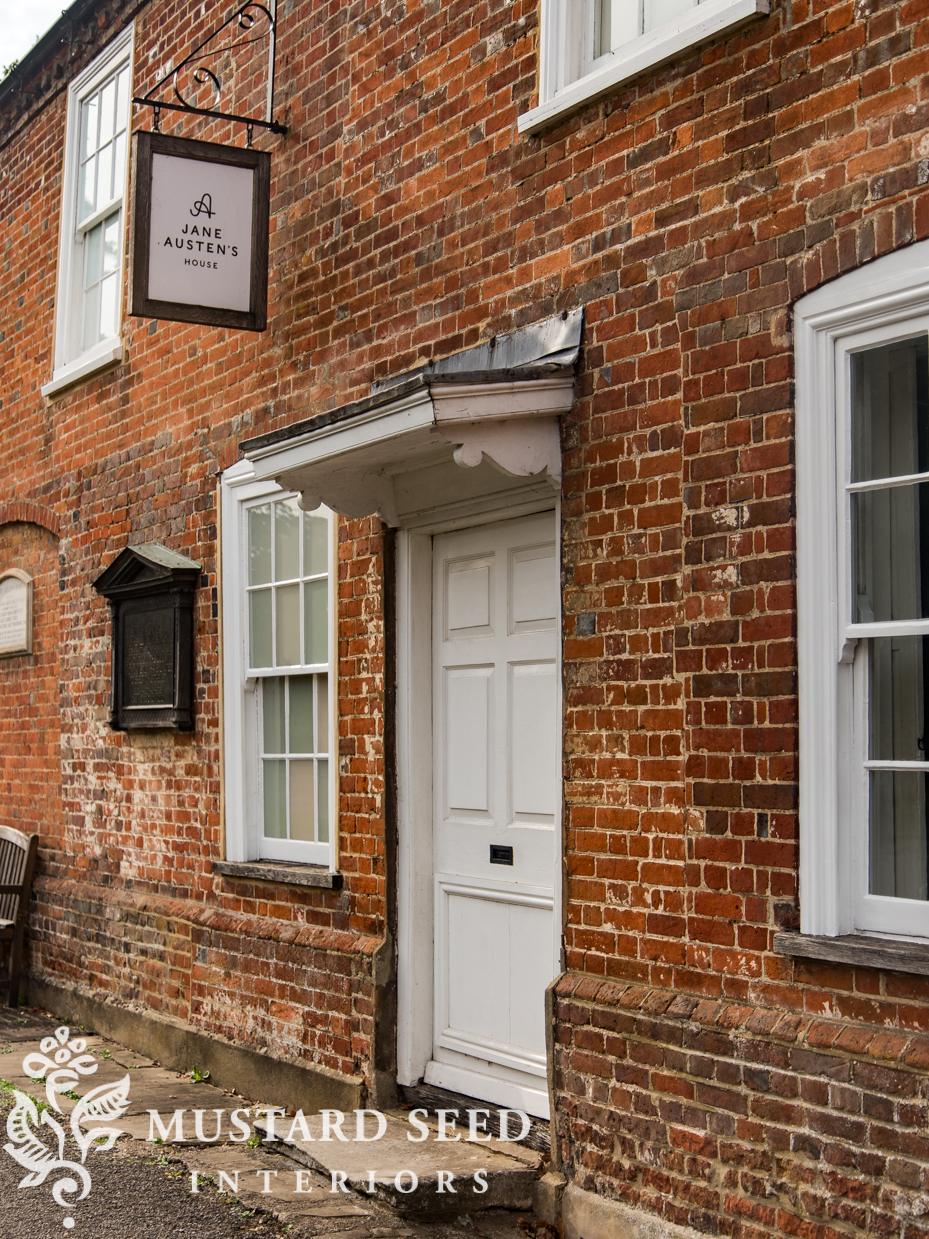
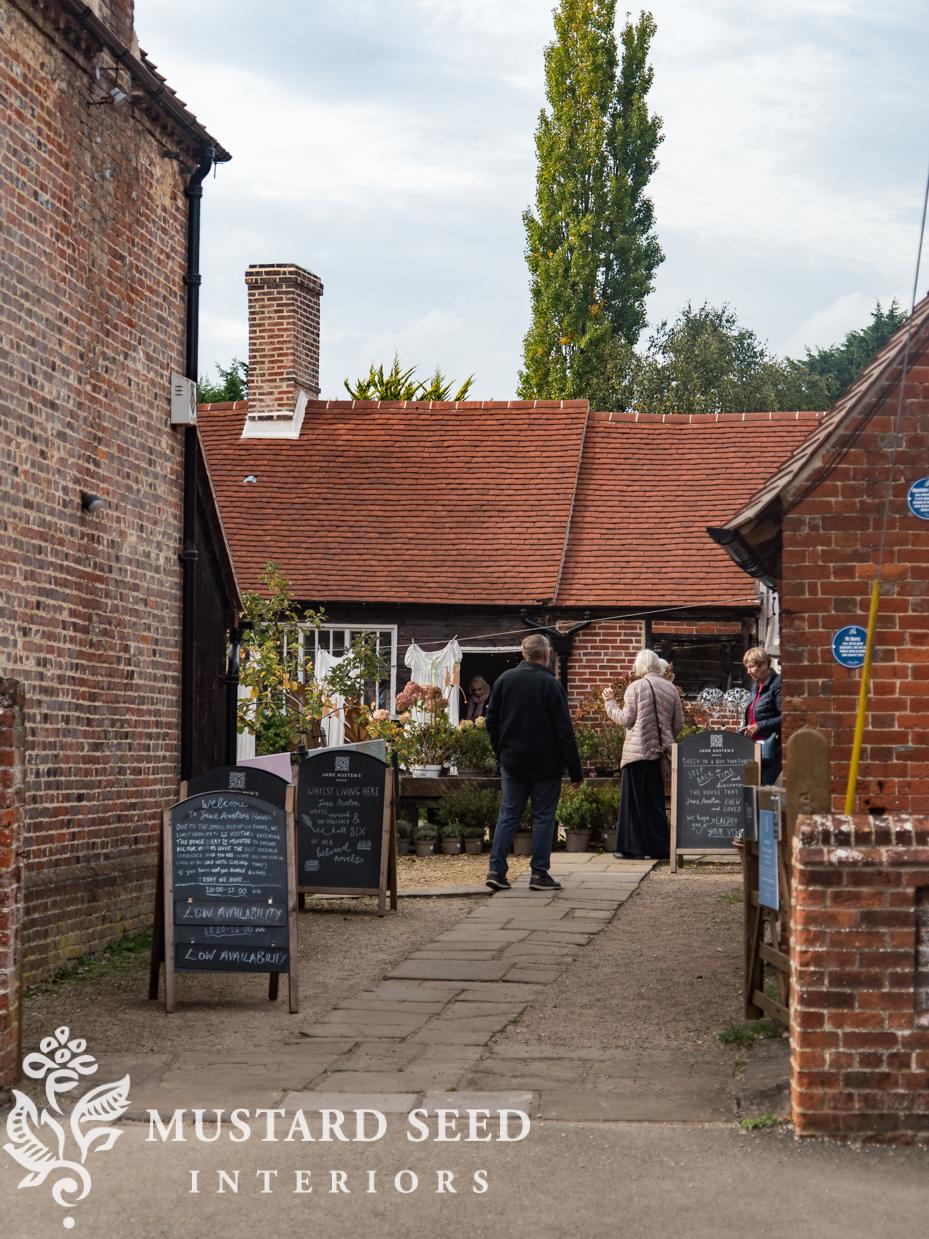
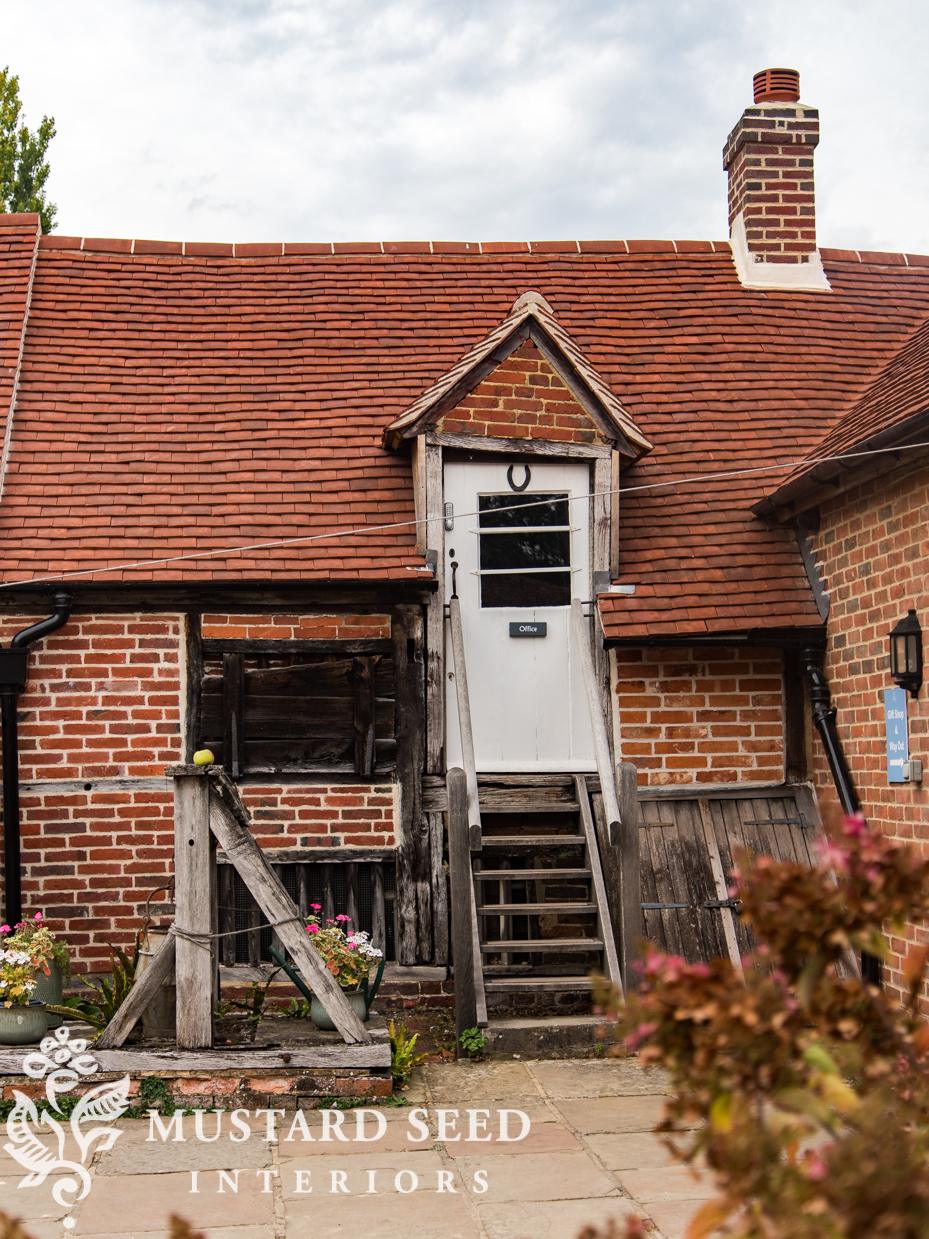
You enter the museum through the courtyard, so you can pick up your tickets and t0 browse the outbuildings while waiting for your tour to start. As I said at the beginning, the tour is an upguided tour, but time slots are reserved to ensure the house doesn’t become overly crowded. Our timeslot was the last of the day, so the crowd had thinned out and, at times, we had rooms entirely to ourselves.
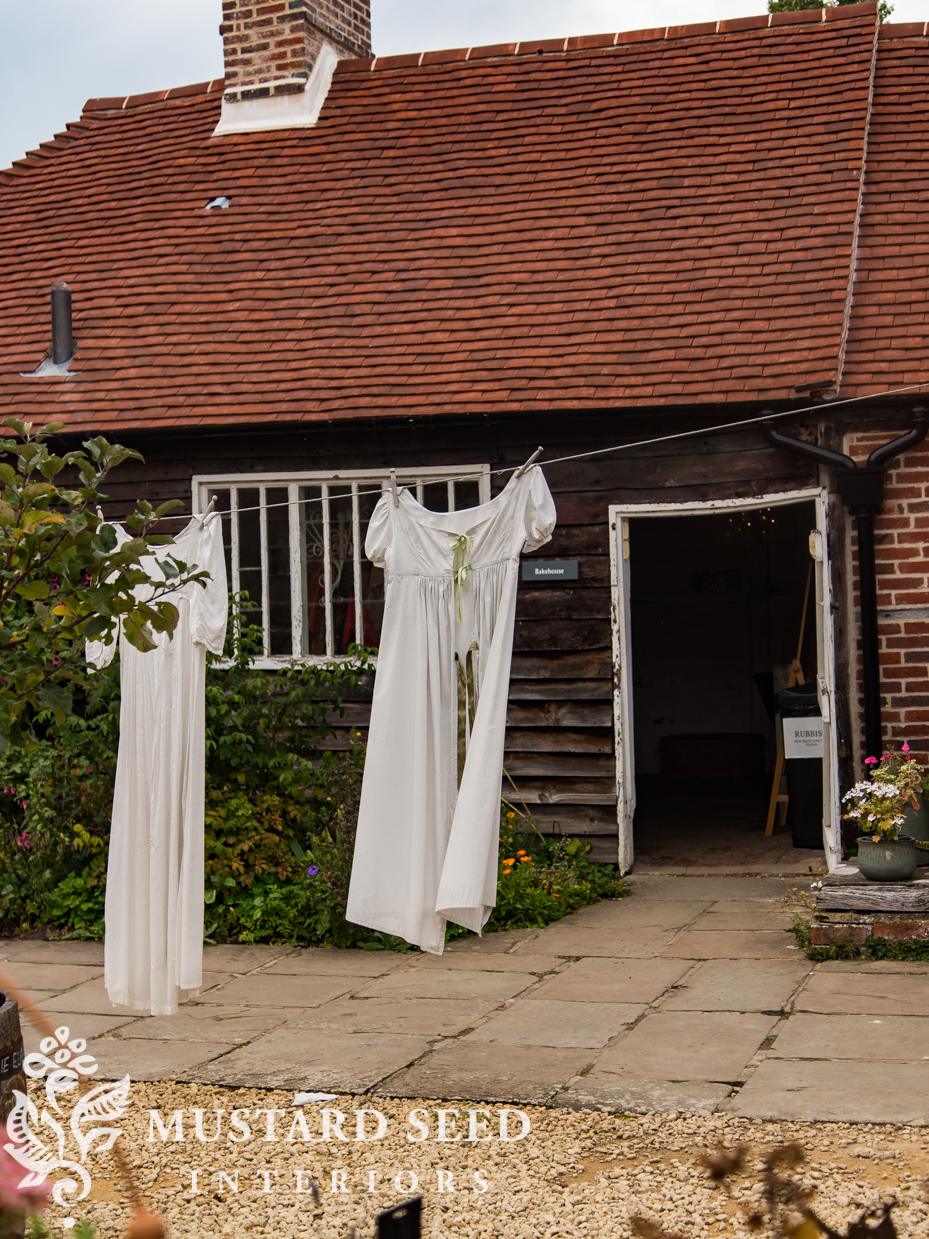
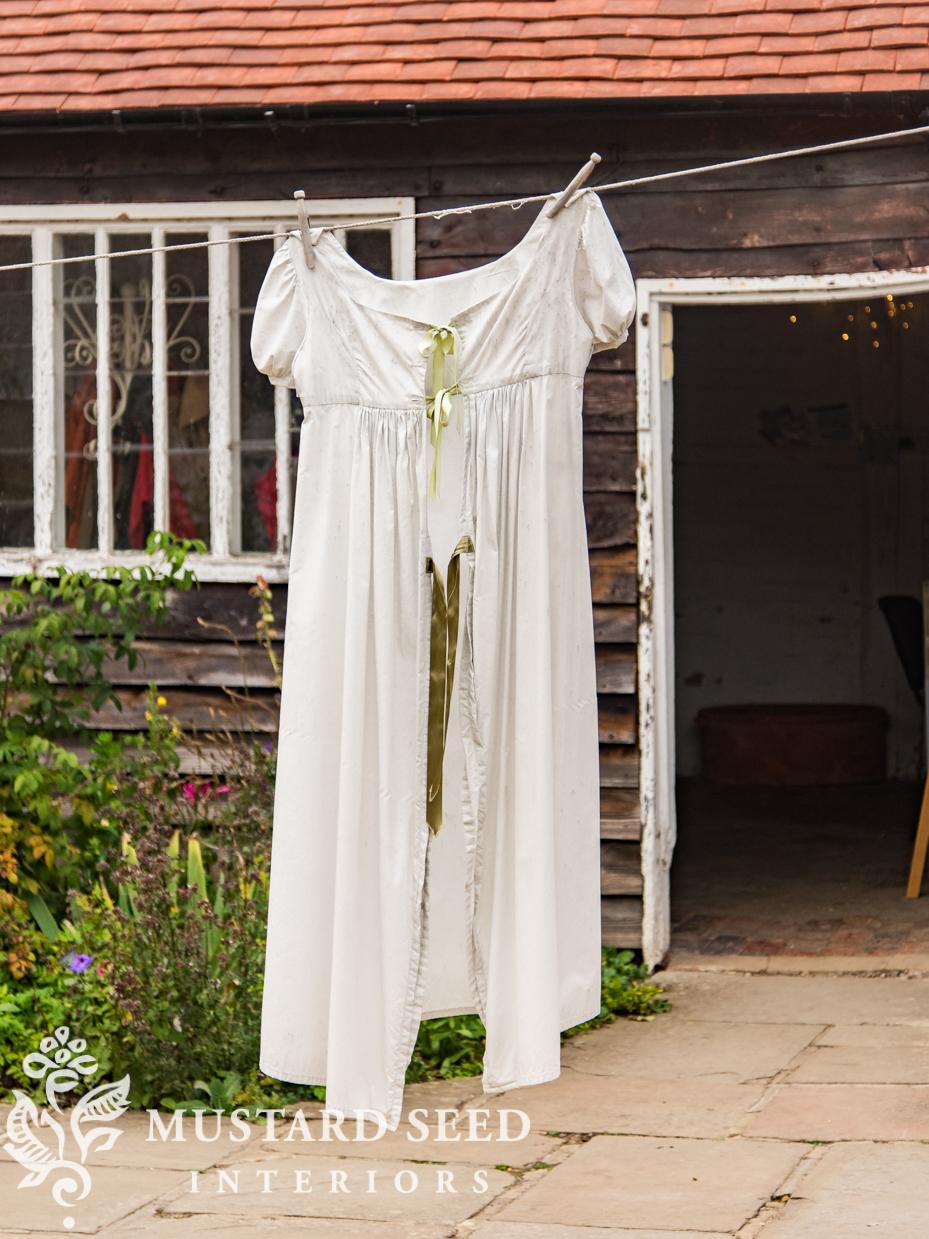
They had regency-style cotton dresses hanging from the line to add life and story to the courtyard, to stimulate the imagination.
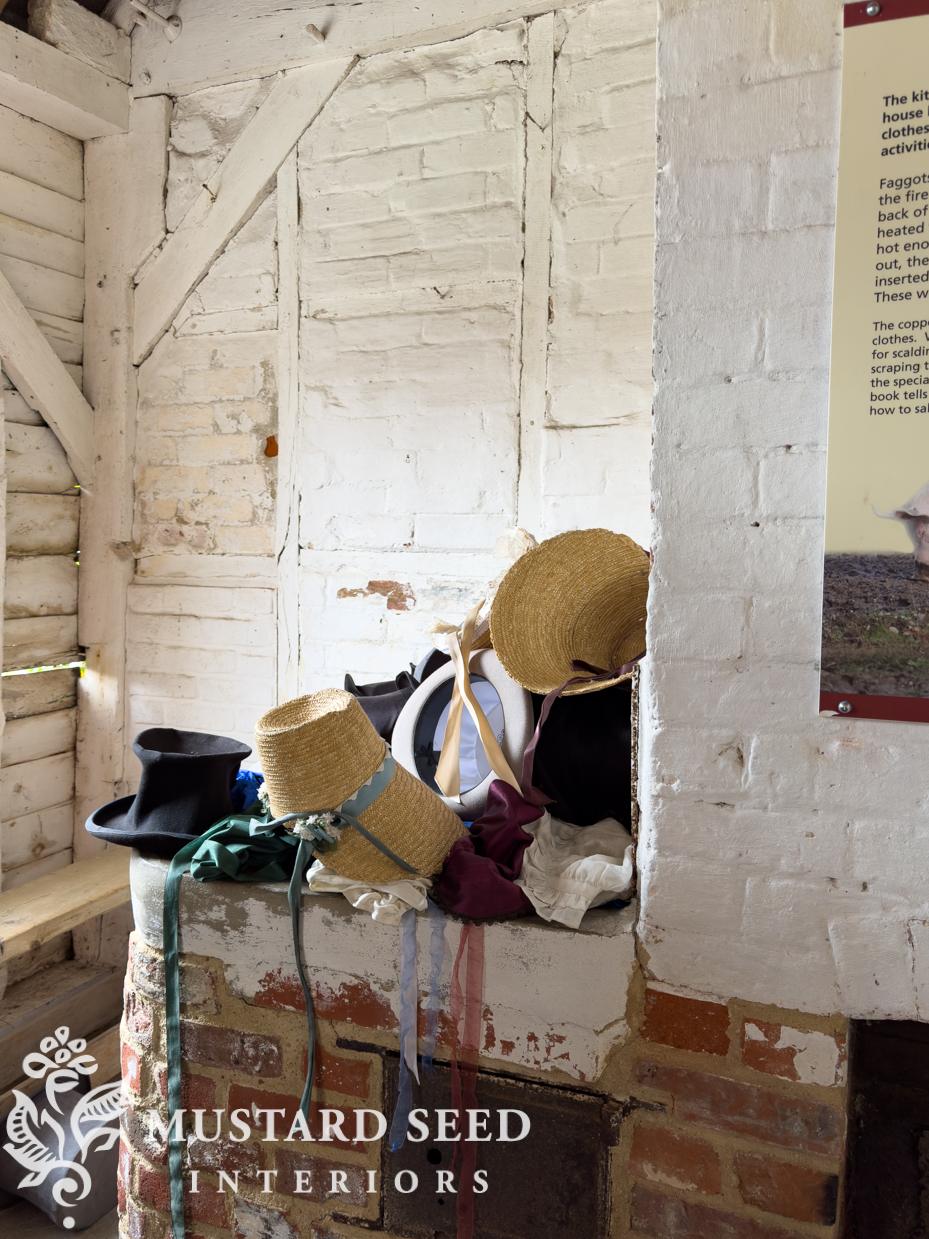
There were more costumes, bonnets, and top hats in the smoke room, I’m guessing, to engage young visitors.
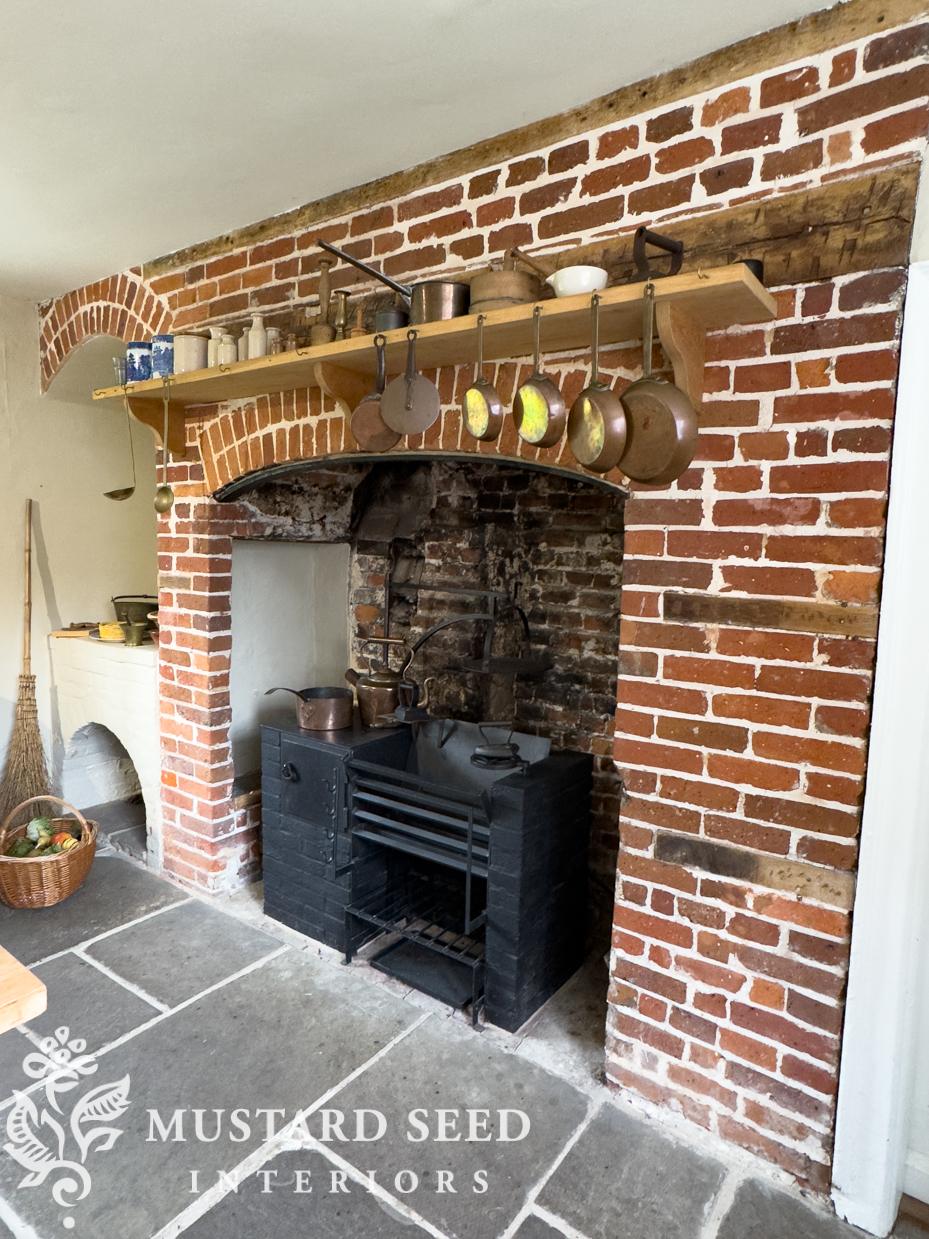
Around the corner, the tour starts in the kitchen, where a recorded narration provides some details of domestic life when Jane lived in the house.
From there, you enter the parlor. An older gentleman was sitting in a chair by the window and welcomed us in. He pointed out little details in the room, like the original swatch of wallpaper that was matched to take this room back in time. He also told us that, based on a letter written by Jane, it is believed this is the very room where the first printed copy of Pride and Prejudice was read aloud by Jane herself.
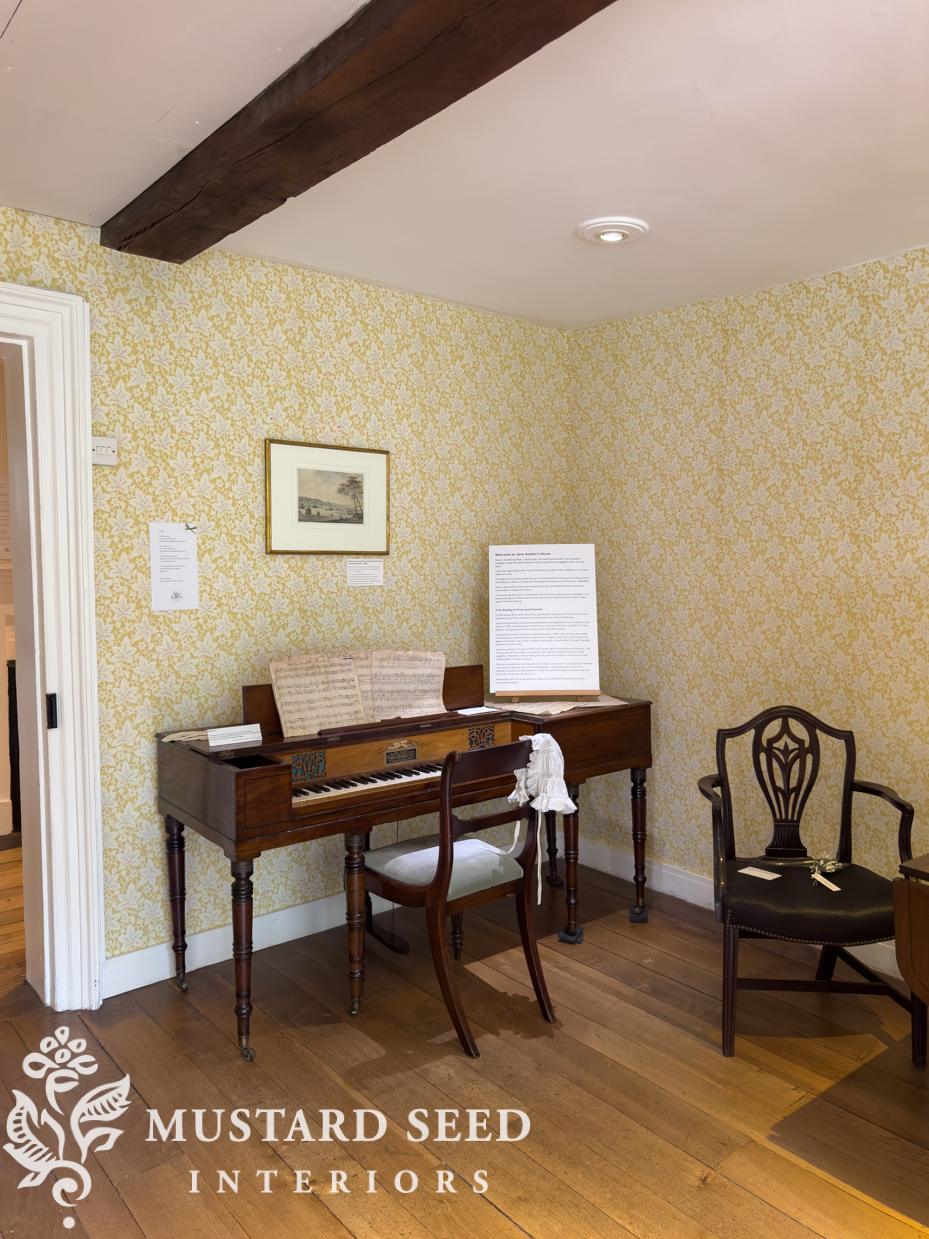
At one point, as we were examining the furnishings and exhibits, he casually opened a book and began reading a passage from Pride & Prejudice. There was something sweet and special about that moment. I wanted to pull up a chair (which I’m sure you’re not allowed to sit in) and listen to him read more.
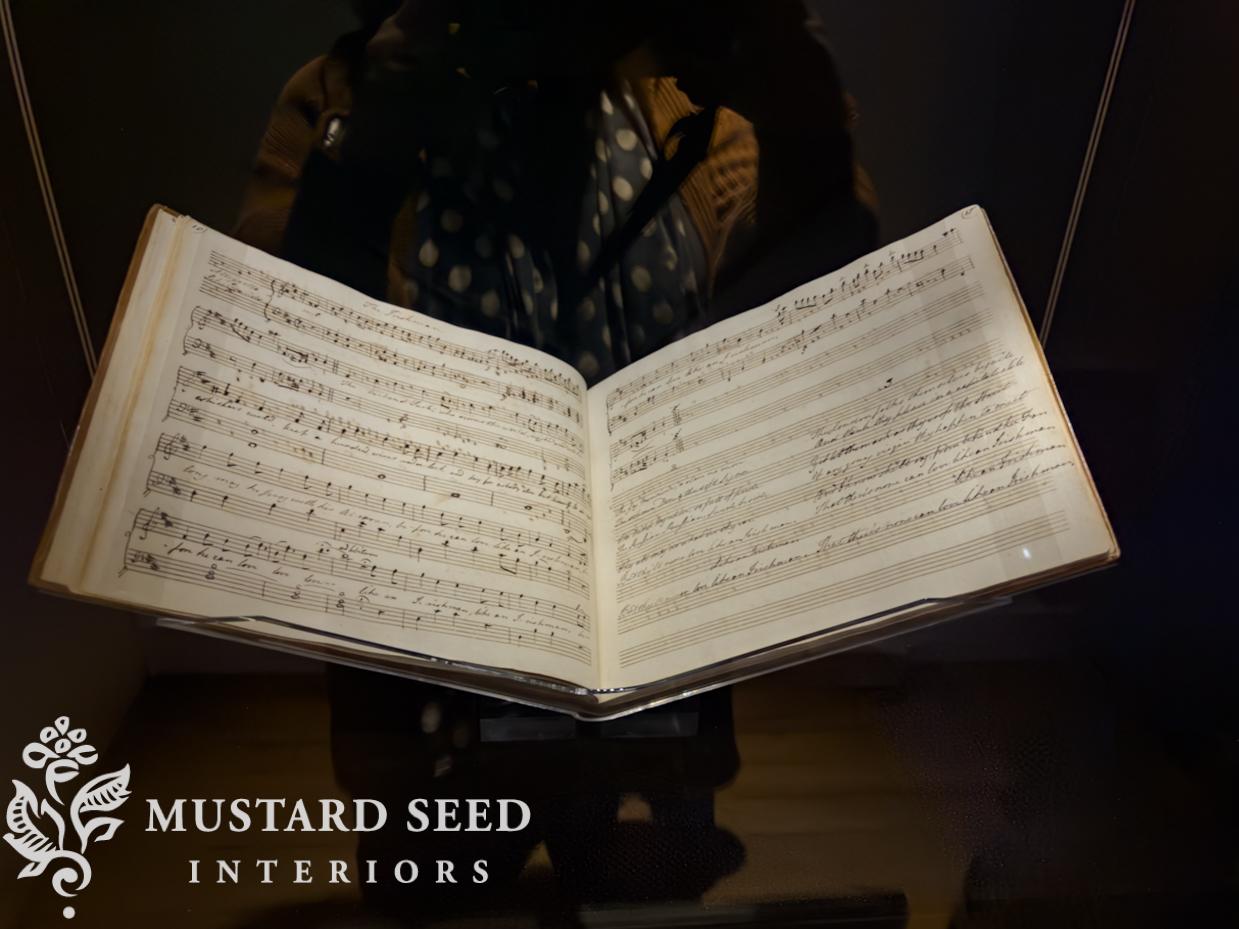
In a passageway, there was a sheet music book written by Jane. Apparently, sheet music was prohibitively expensive at the time, so most people would borrow or rent sheet music and copy it into a book.
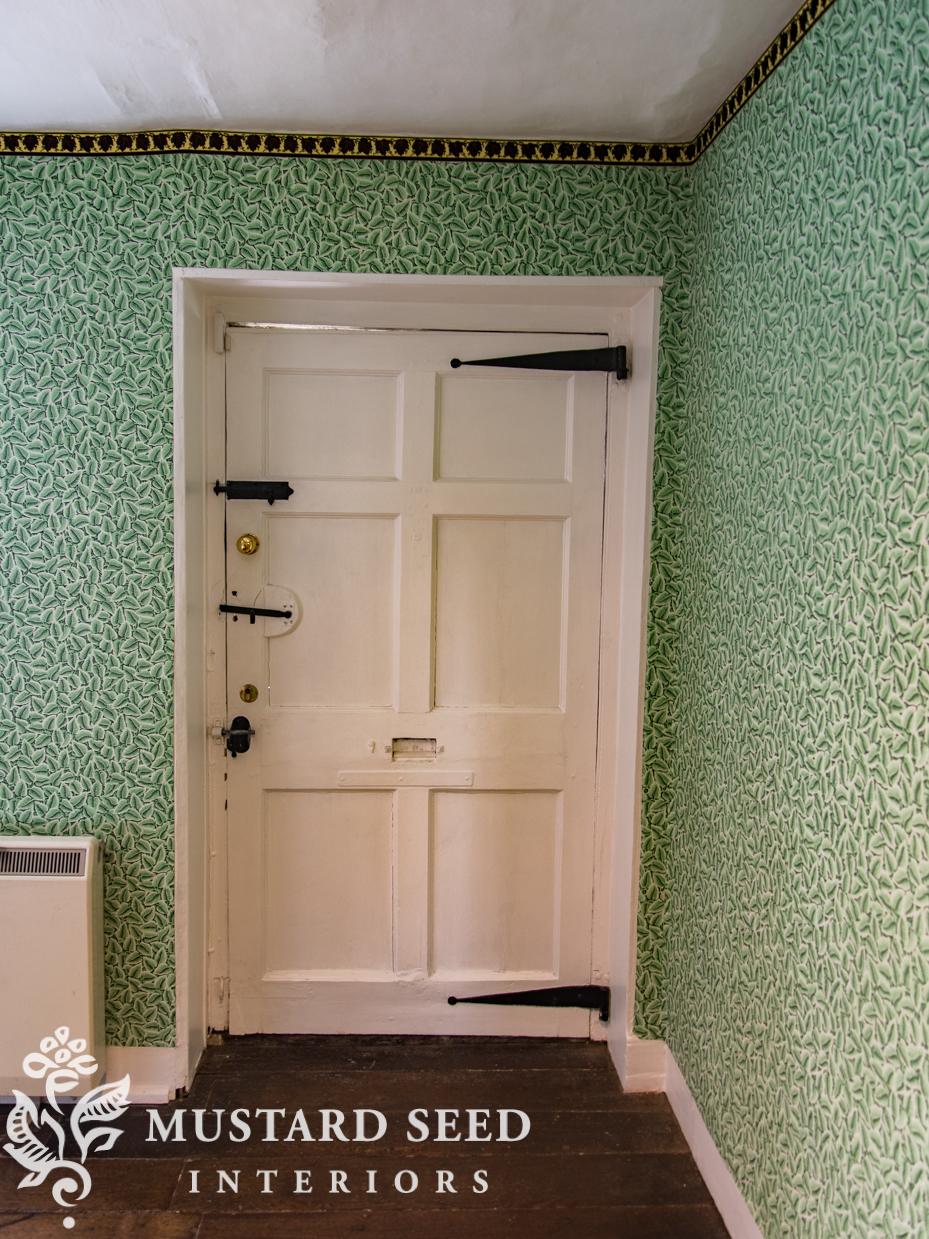
The dining room is off the front door, which opens to the street, and is also adorned with historic wallpaper that matches a sample uncovered in the room during the renovation. As a pigment/paint nerd, I’m guessing the original wallpaper contained arsenic based on the bright green color.
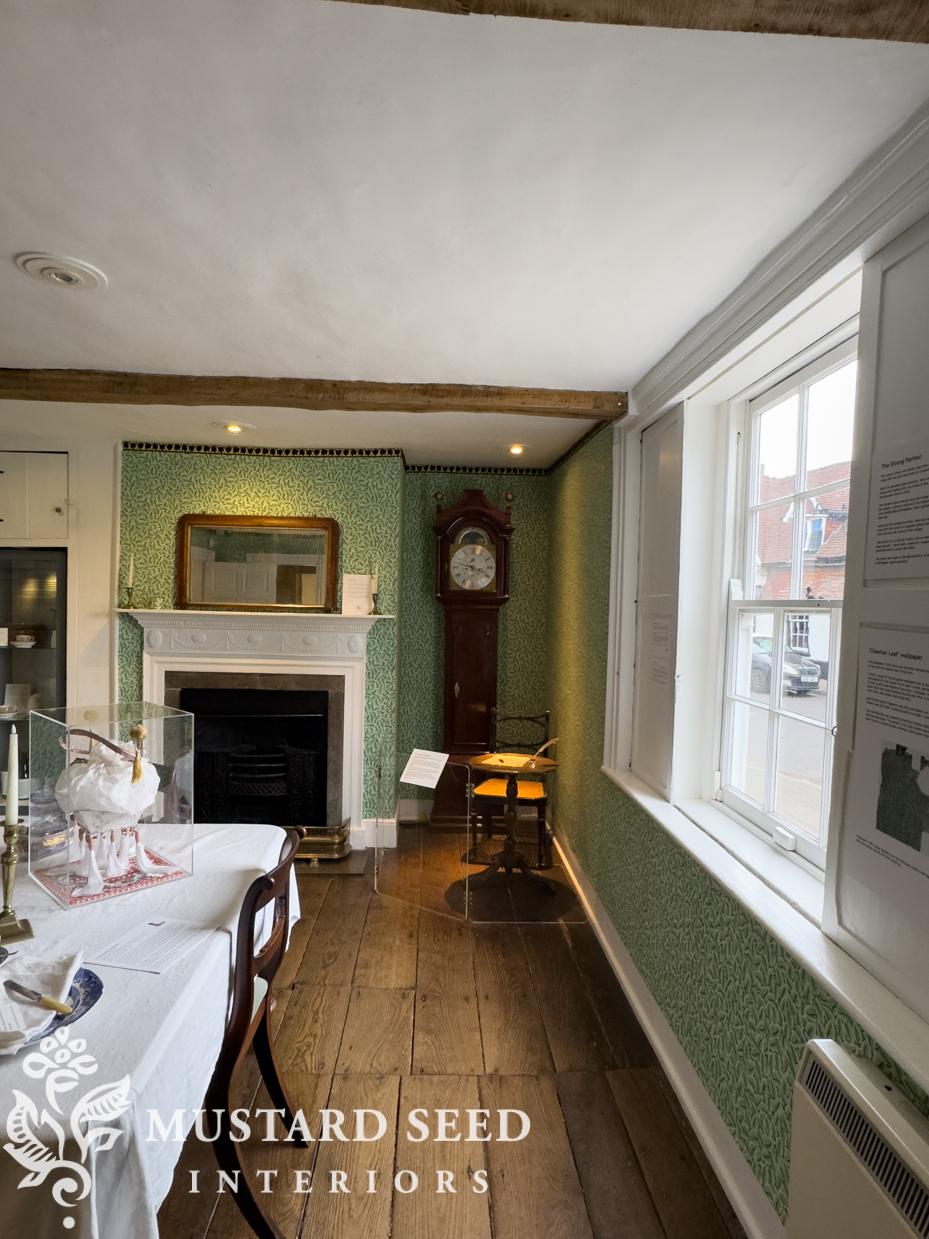
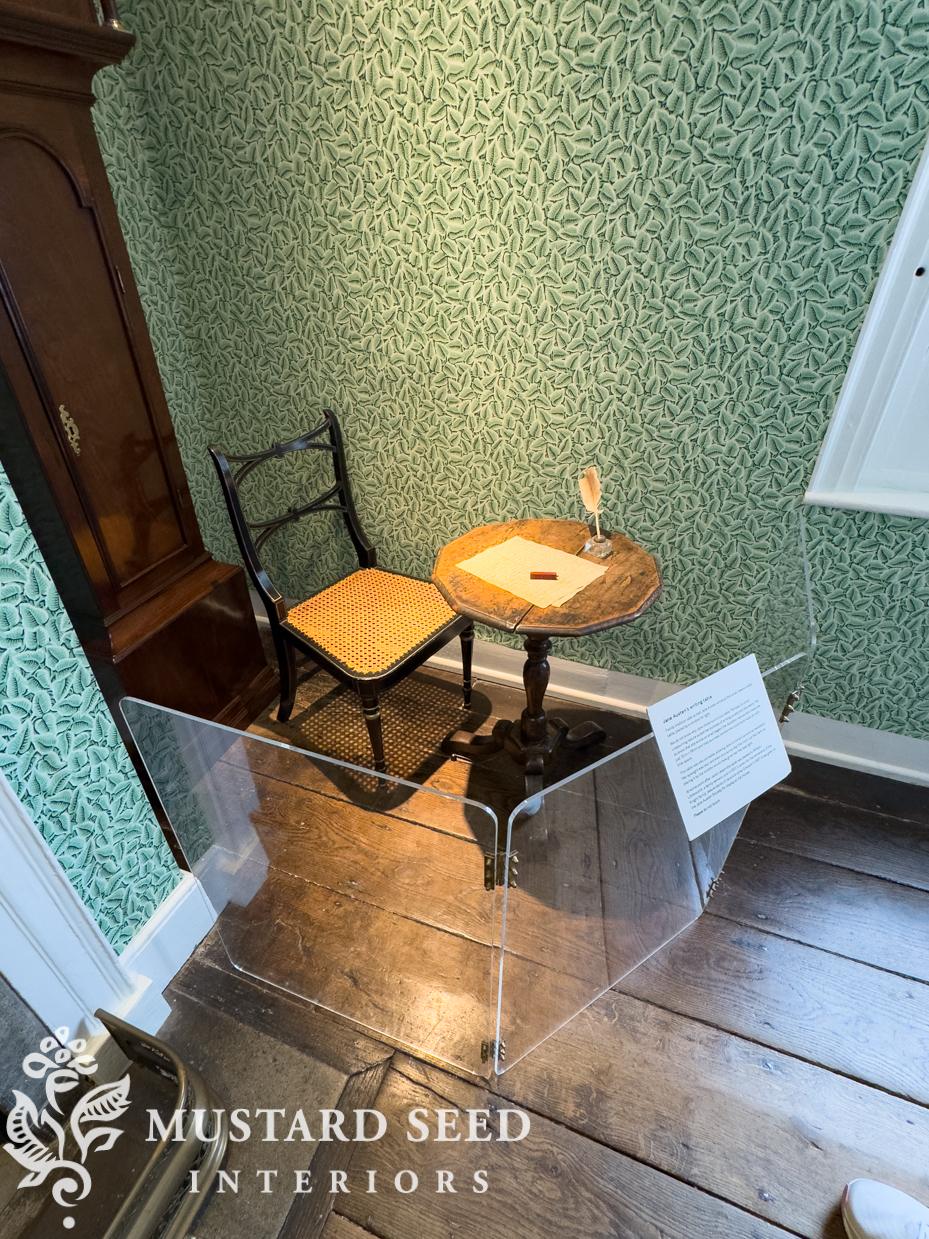
Jane’s small writing table is in the corner of the dining room. Her “desk” is barely larger than a plant stand, so I almost missed it! They believed that much of her writing was done in the company of others, so she preferred a small table so the writing could be done discreetly. She also wrote on small paper signatures (about 5 x 7″), so they could be quickly tucked away when visitors arrived.
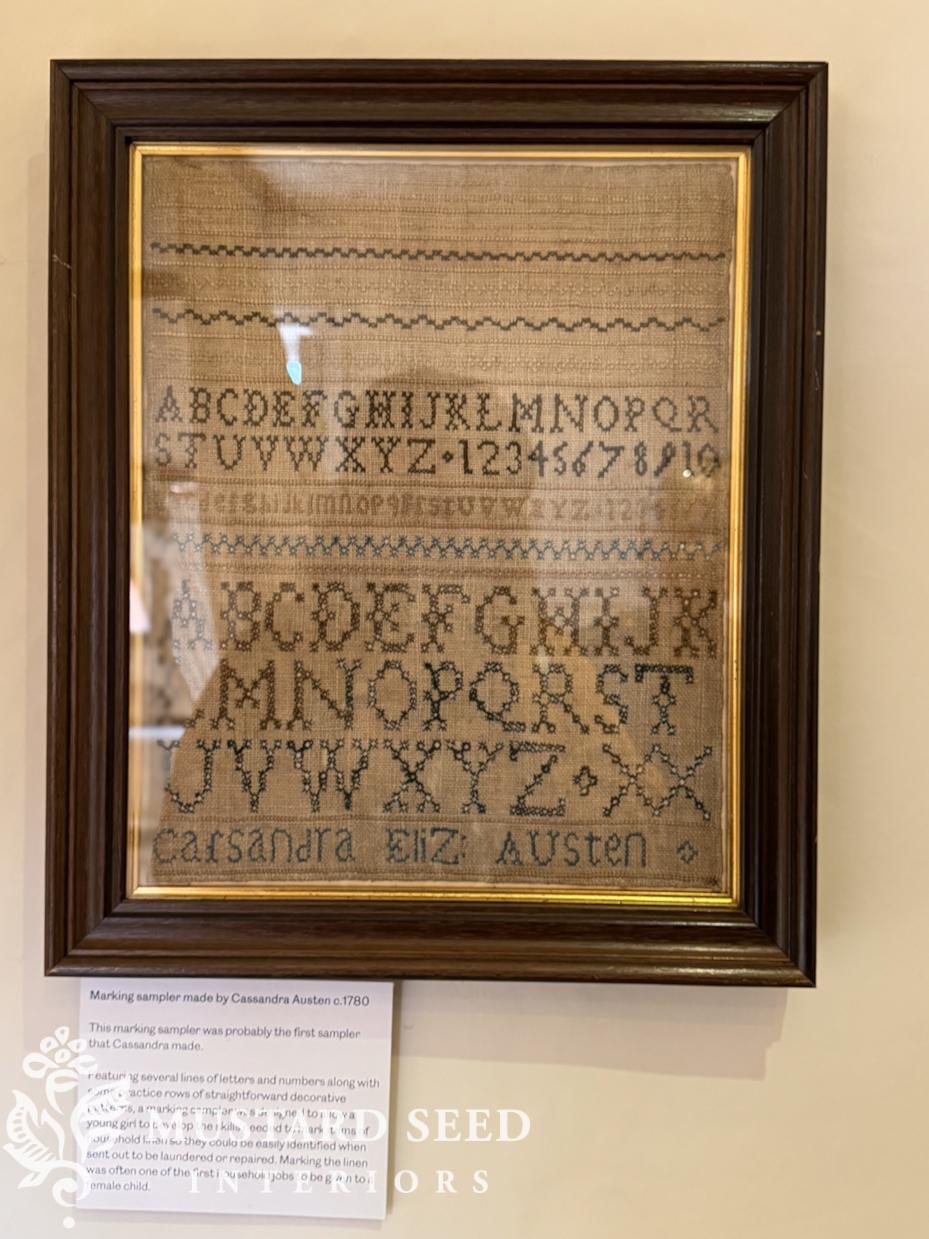
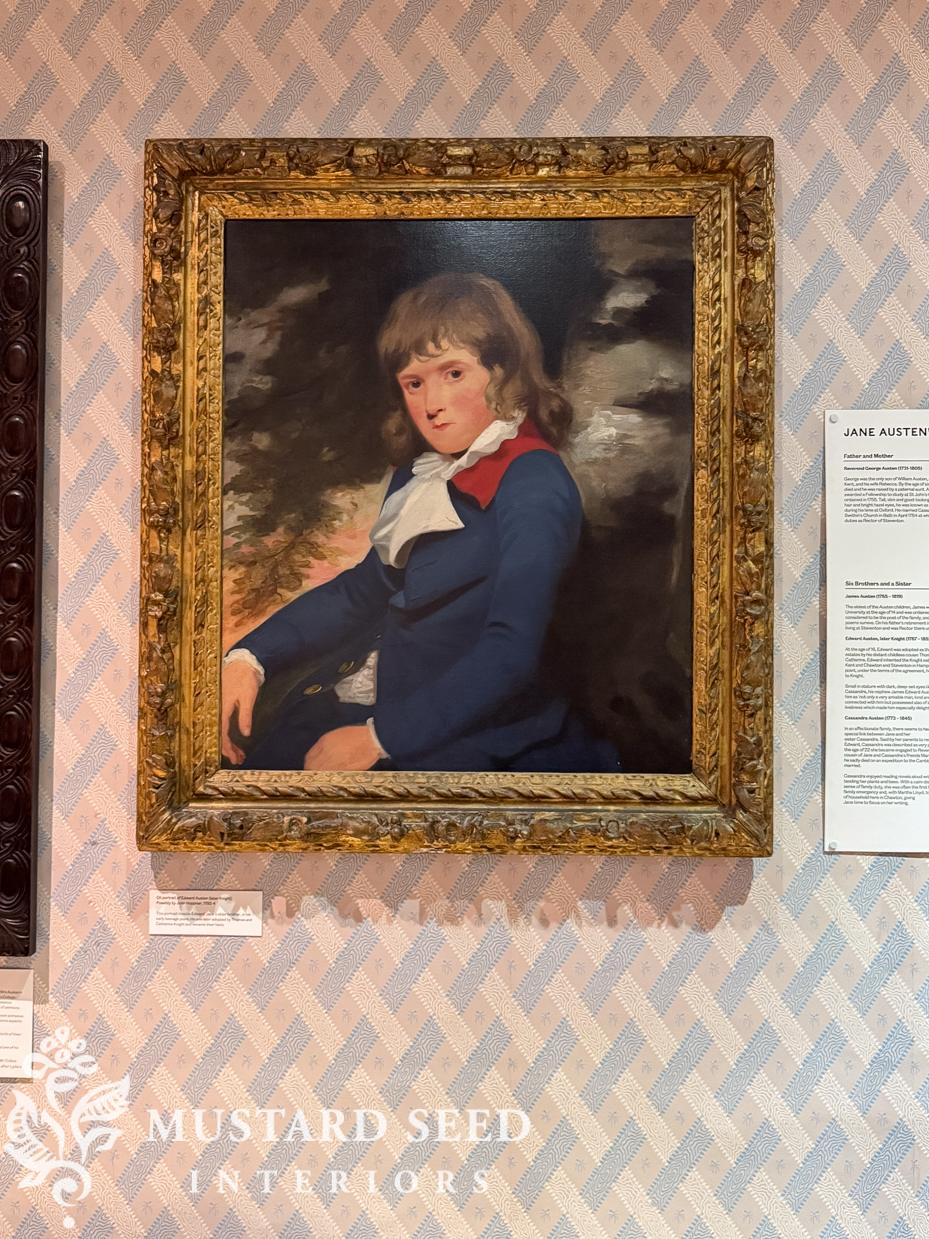
There are so many amazing pieces curated by the museum over the years, from a spectacular quilt made by Cassandra and Jane to a sampler made by Cassandra, jewelry worn by Jane, and original oil paintings and miniatures of family members. You can see all of the pieces of the collection, including letters, first editions of Jane’s books, and more, HERE.
Everything really is so well done.
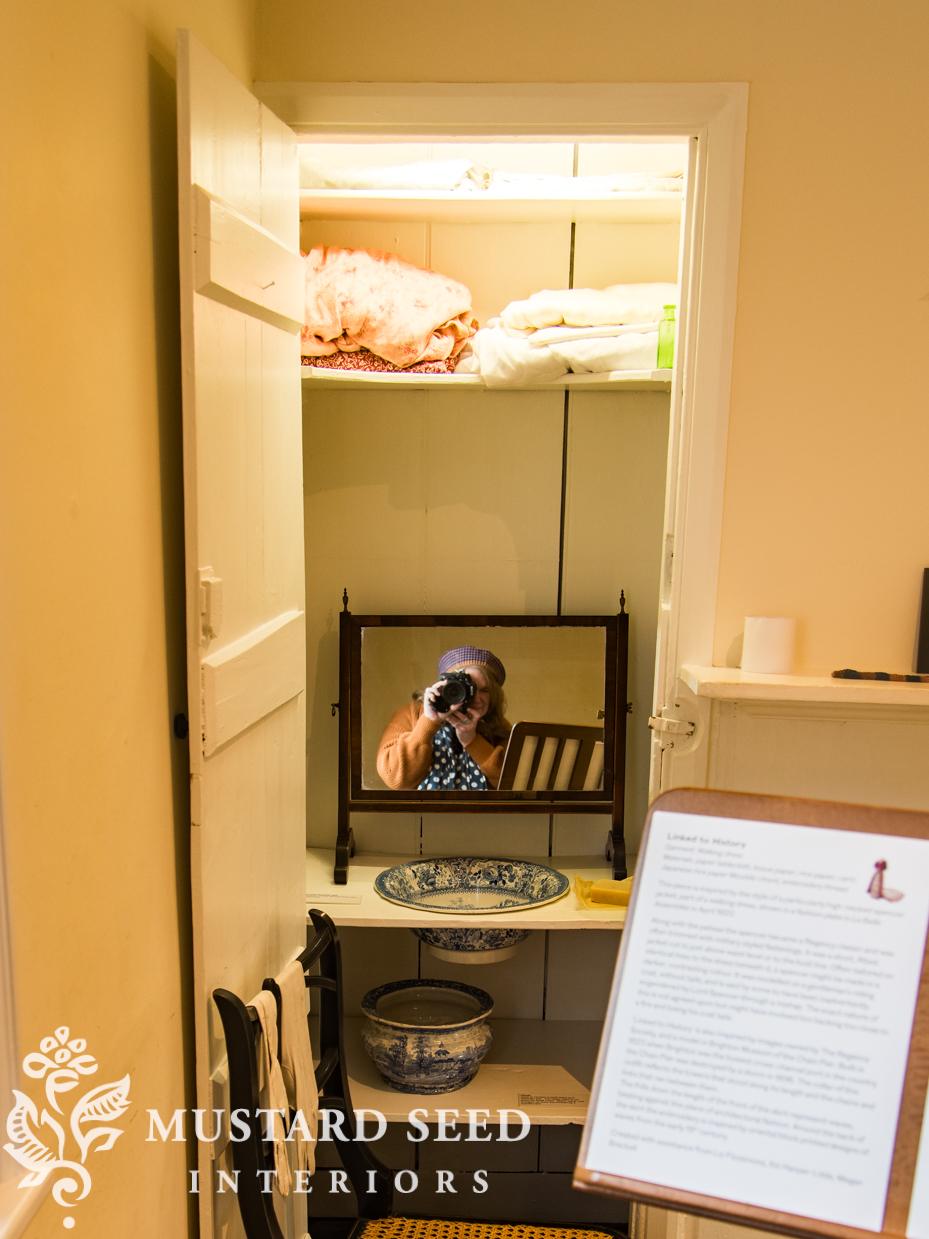
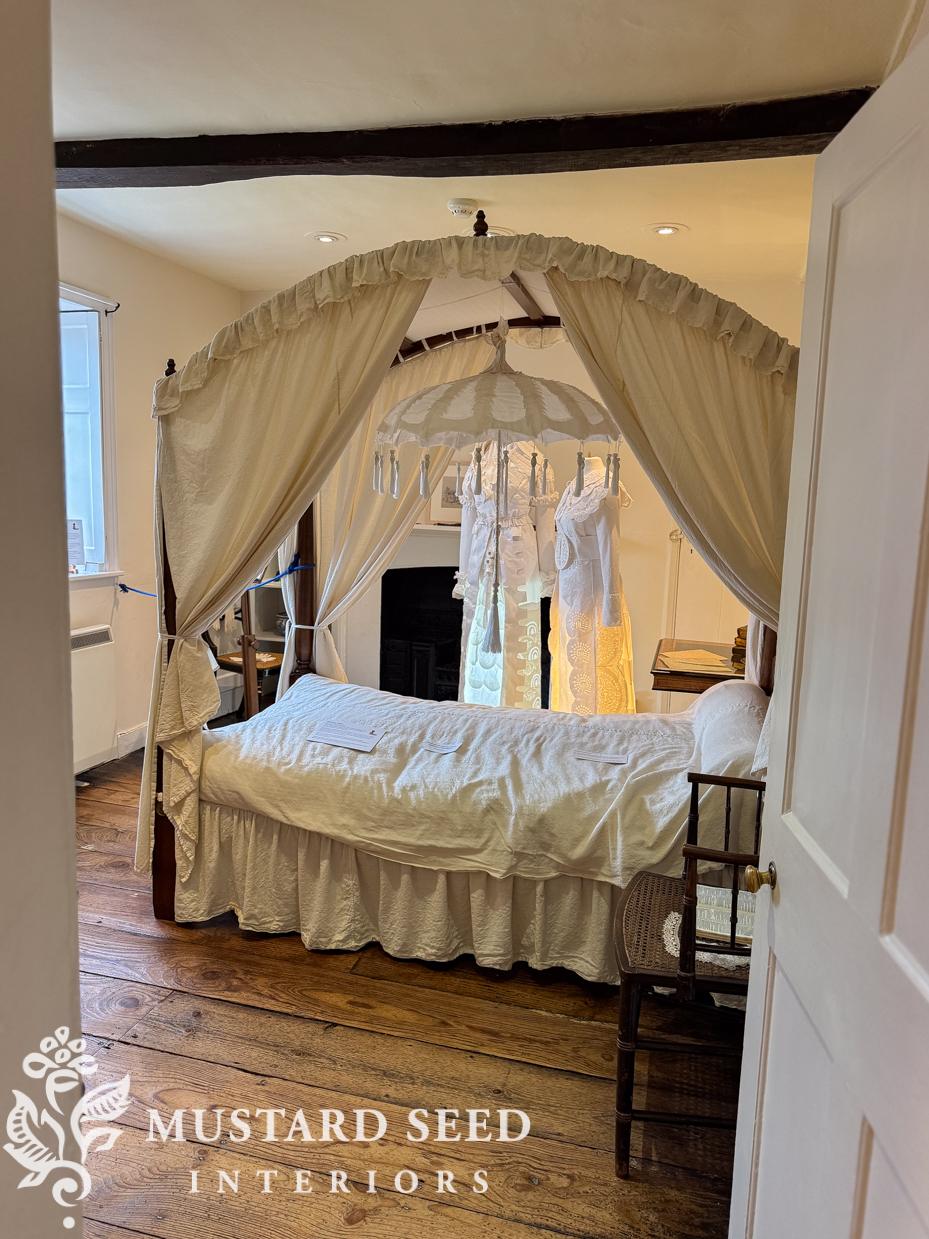
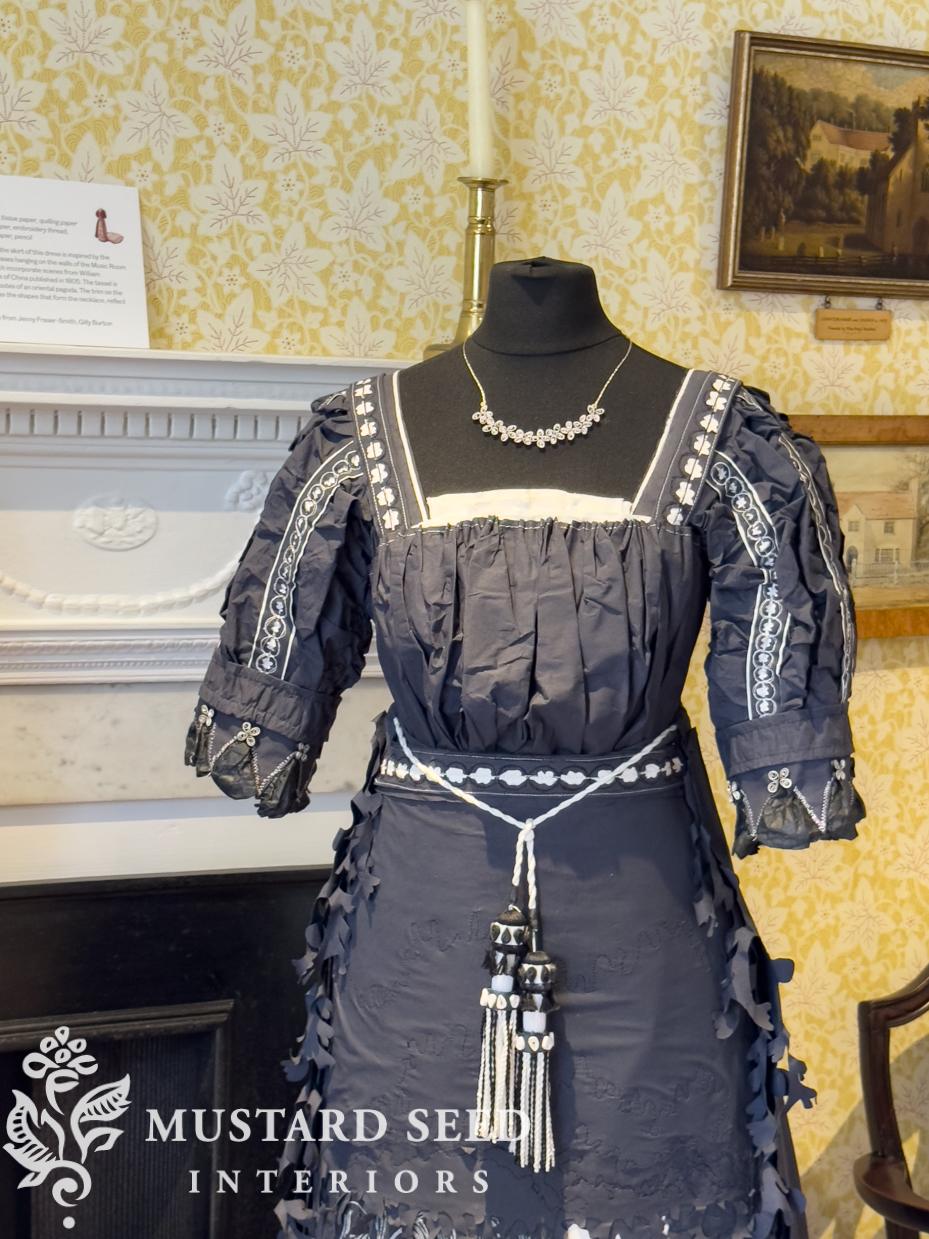
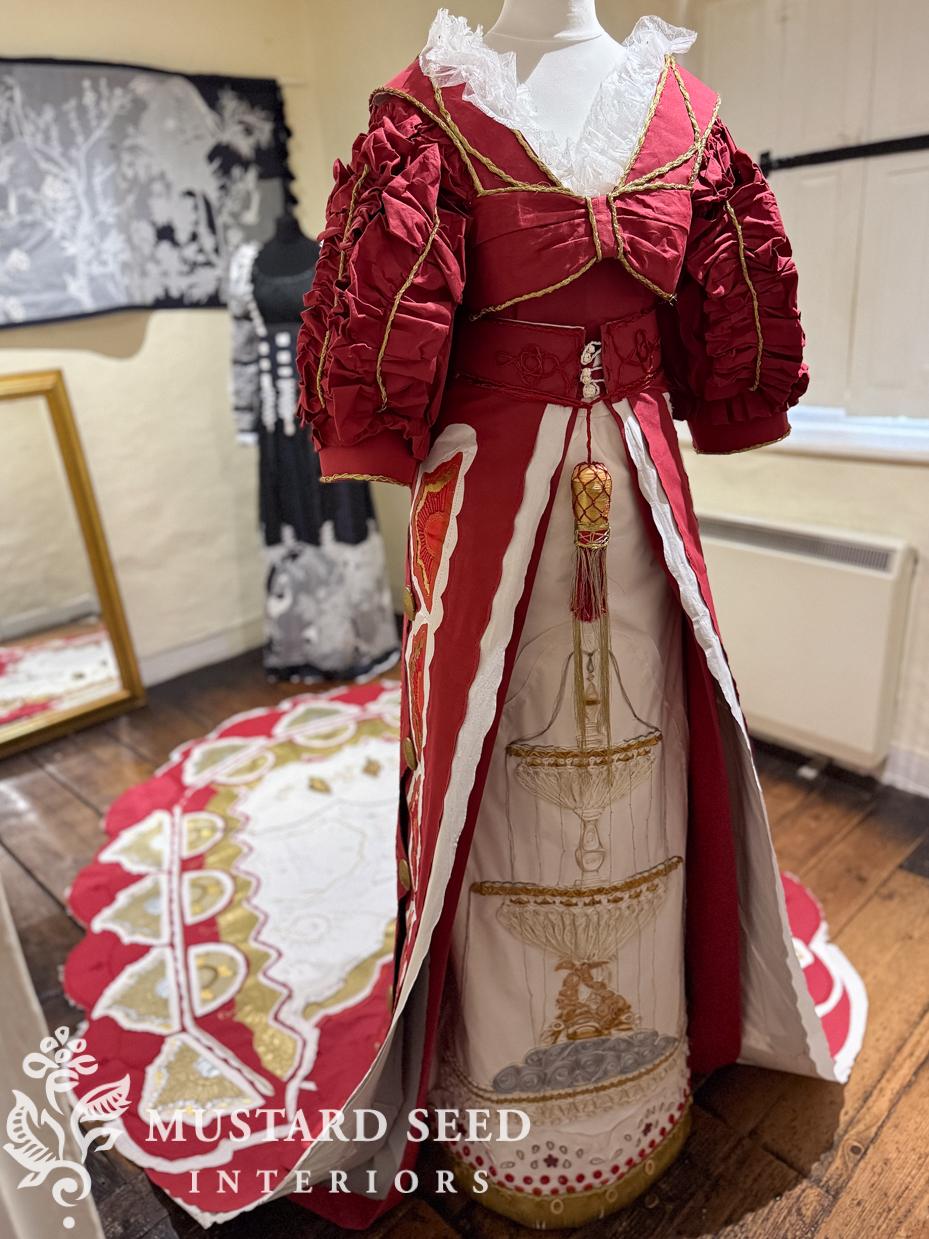
In addition to pieces directly related to Jane and her family, a collection of Regency era-inspired gowns made from paper and thread was displayed throughout the house.
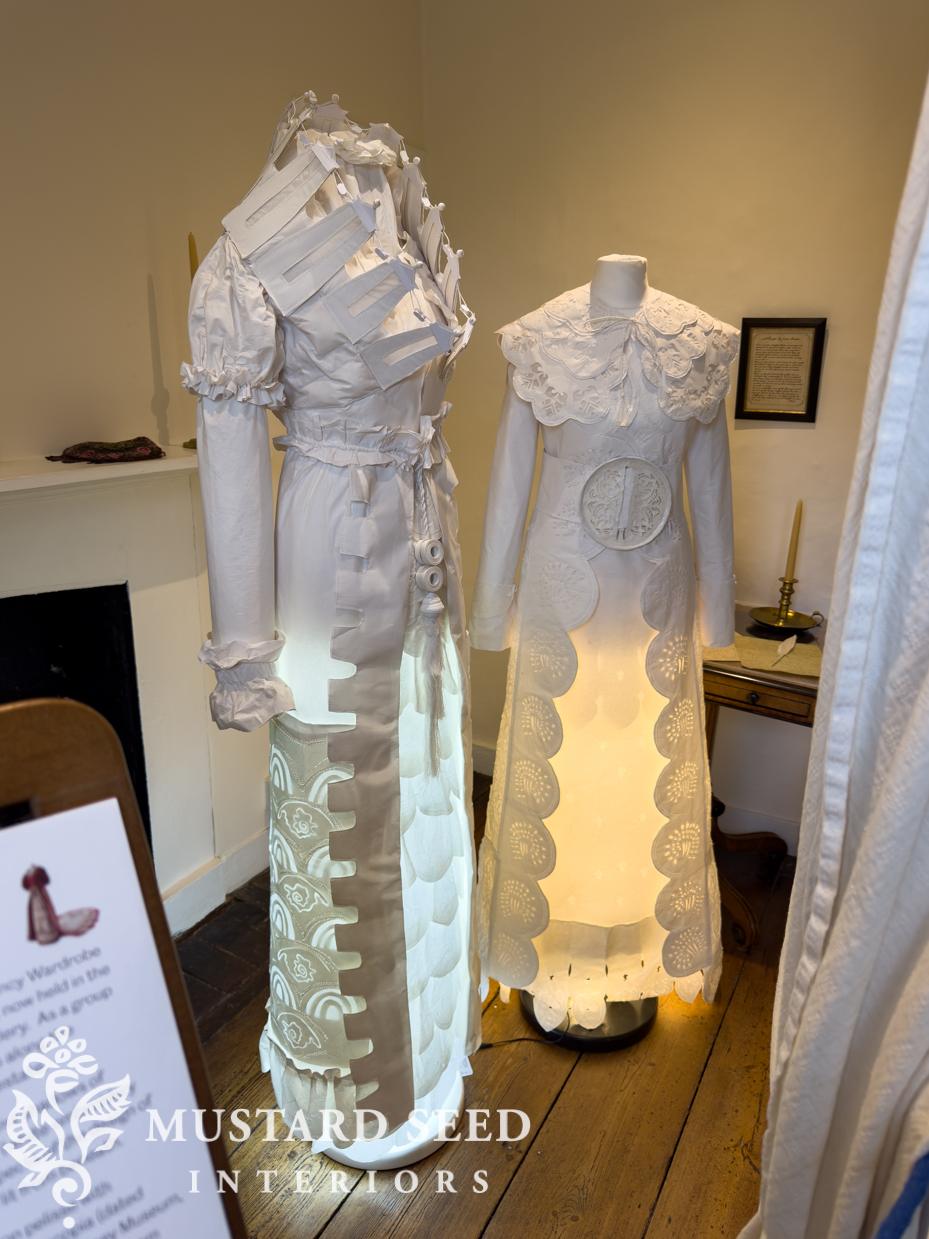
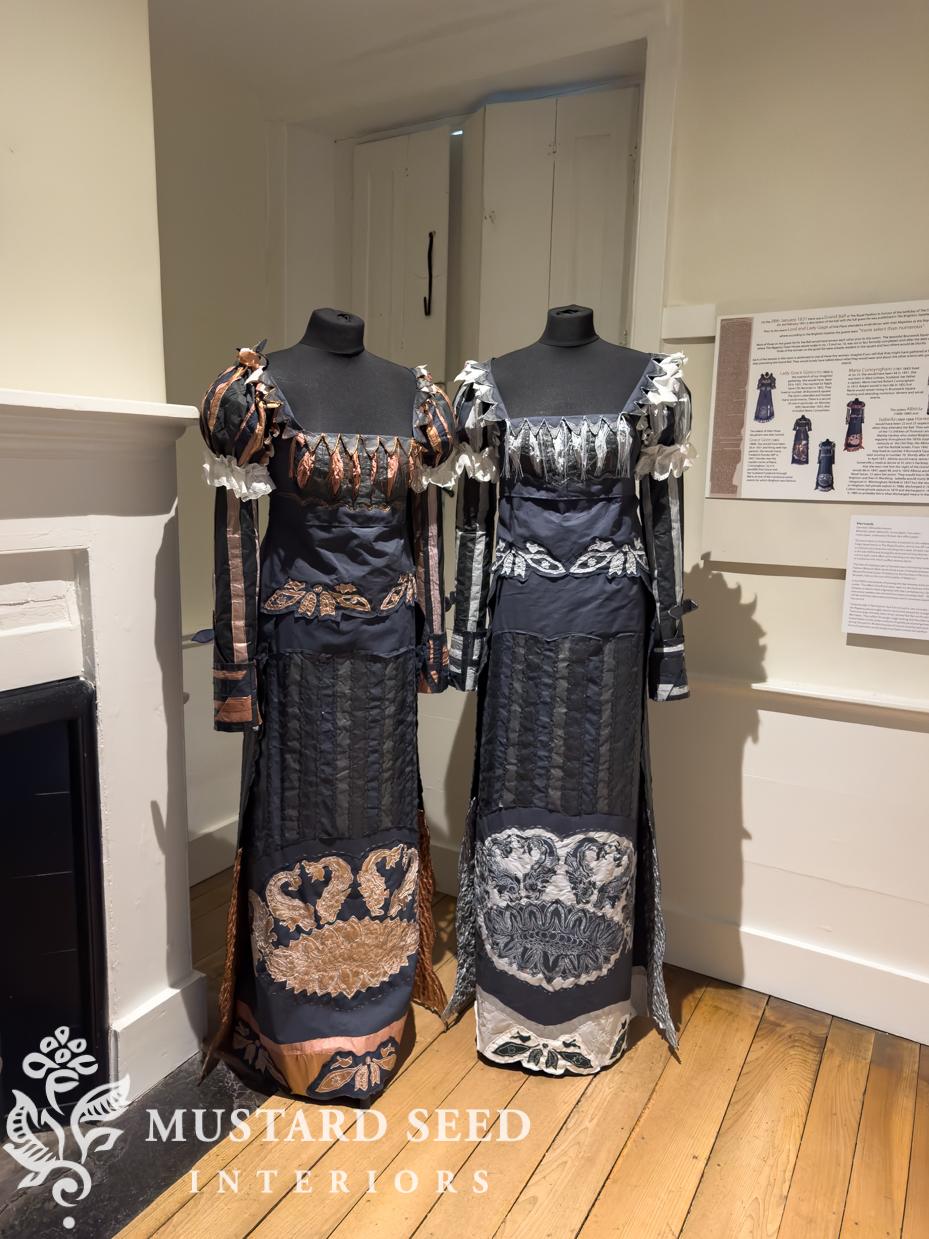
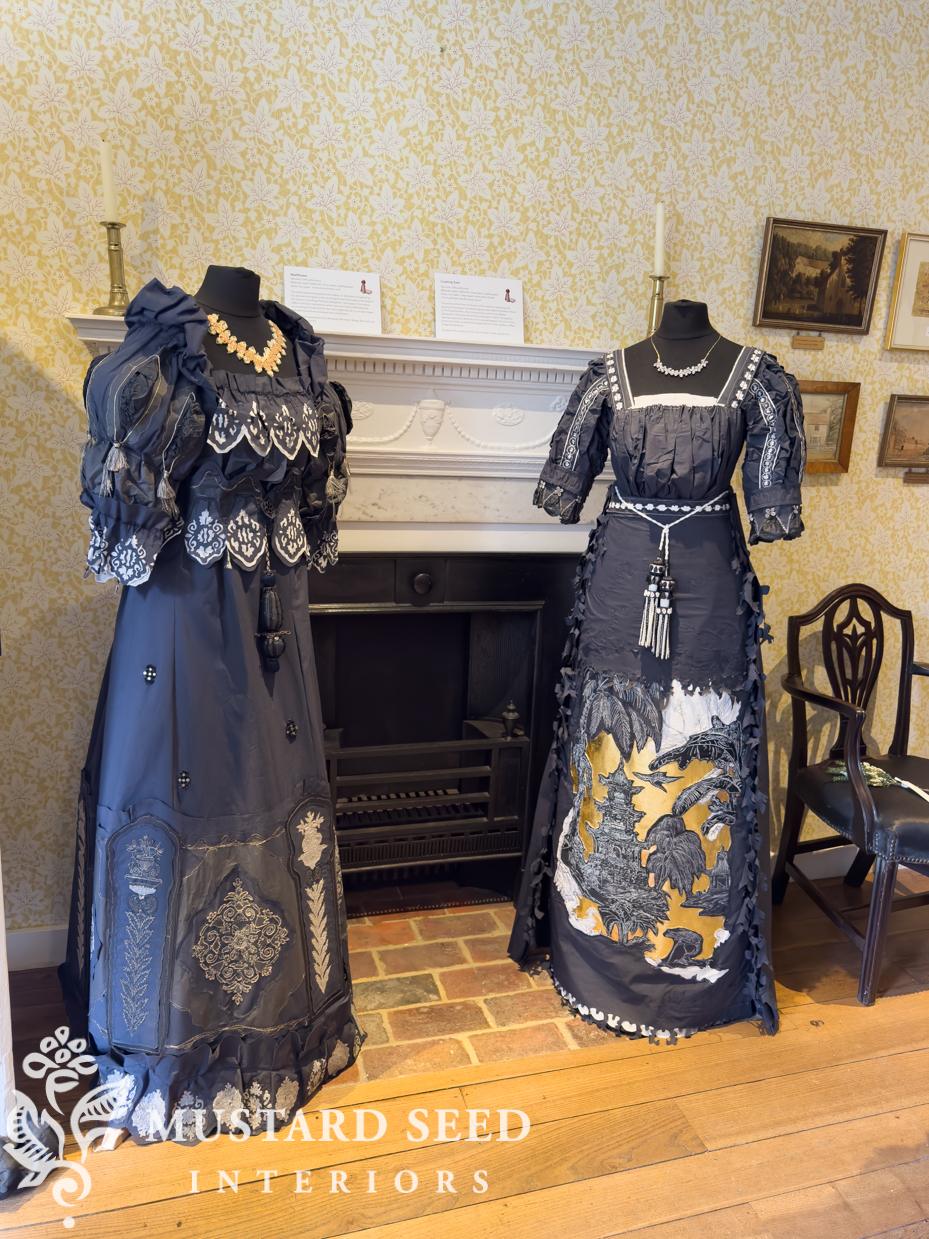
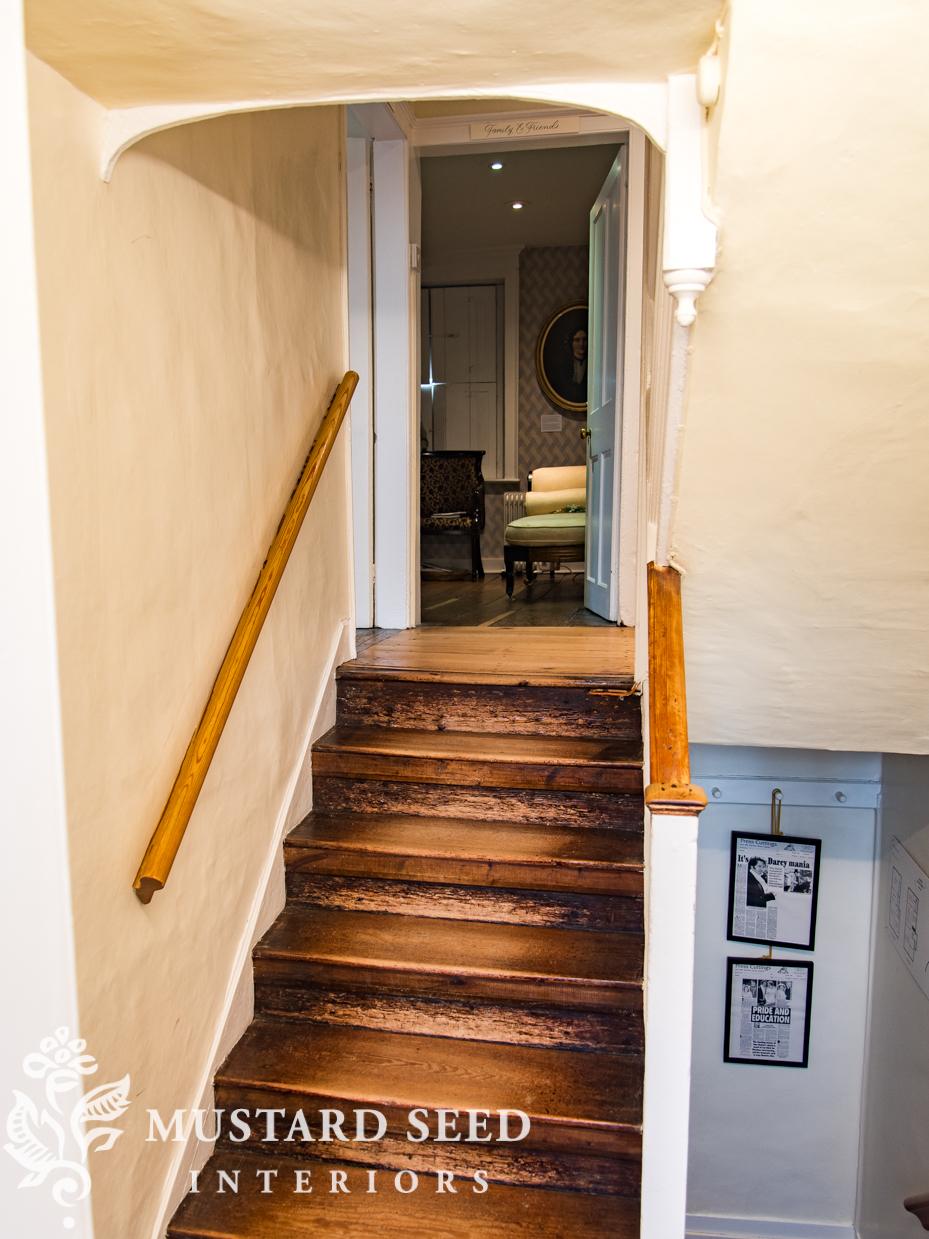
Aside from the displays, my favorite parts of the house were the unsung corners. The little places I imagine Jane would pass through multiple times each day.
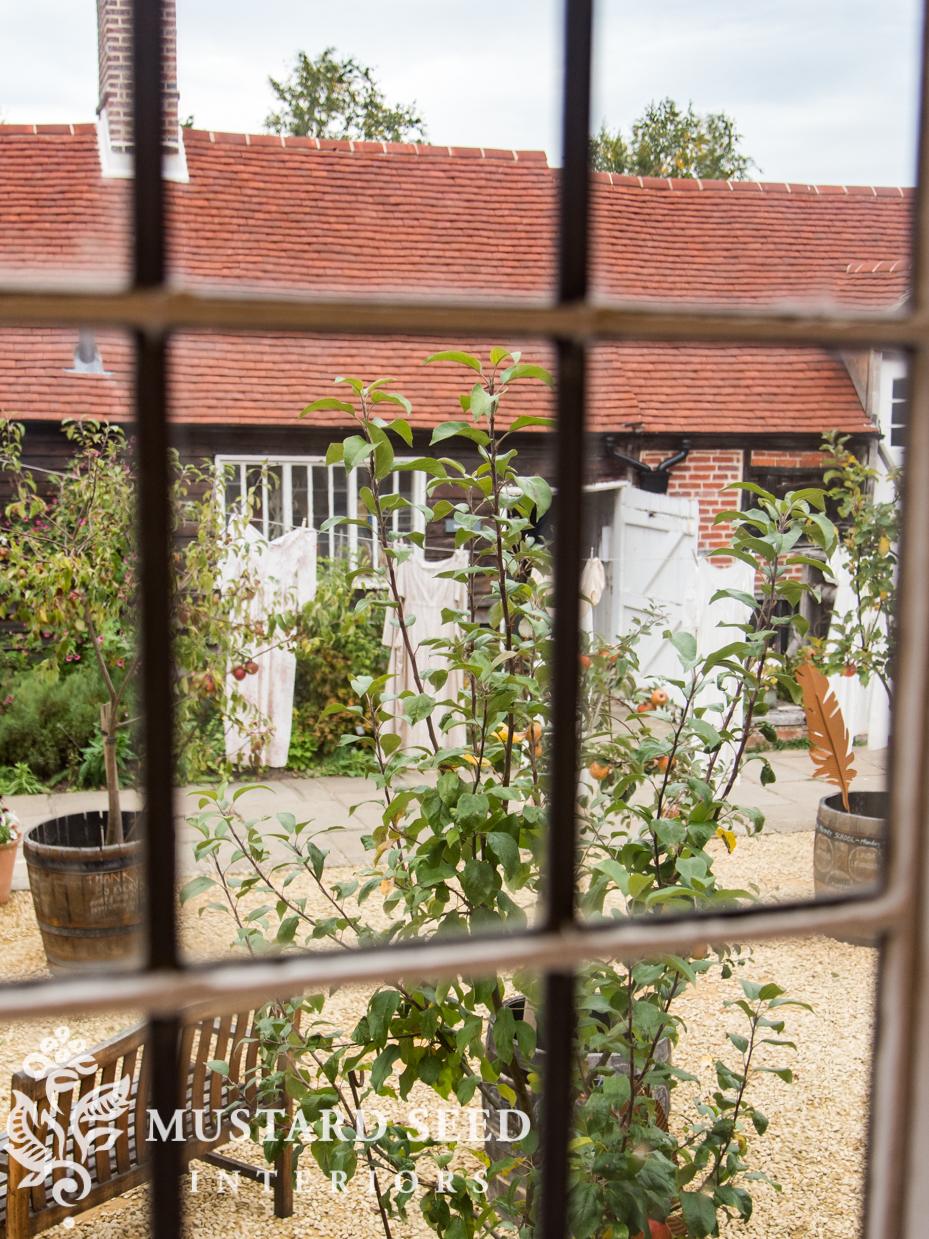
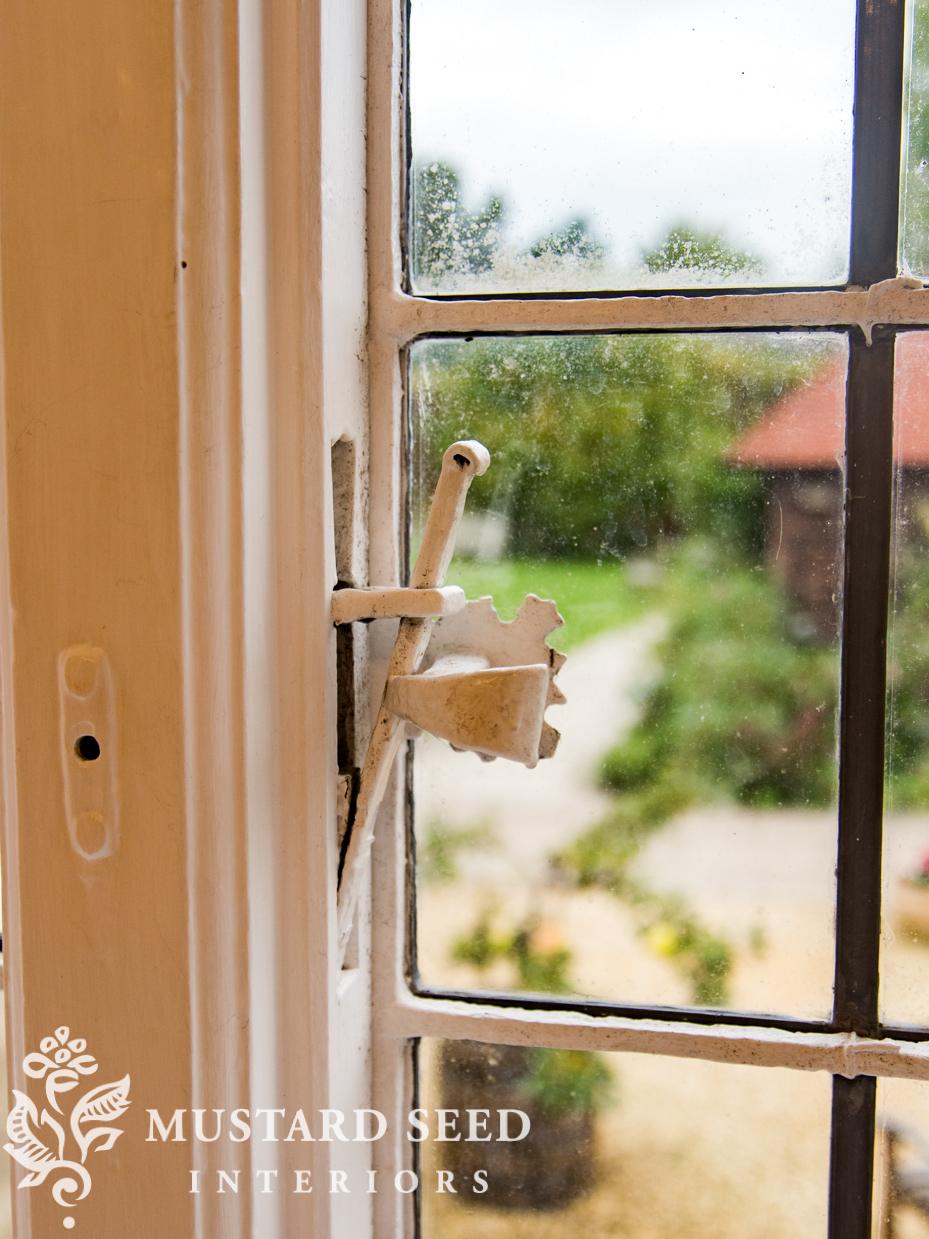
And I admired all of the little details, down to the hardware on the windows.
As I’ve shared in other posts —and as you might guess if you’ve read my blog for a while —I have a very active imagination. In historic places, I often imagine people from hundreds of years ago moving through the space, my mind wandering to what it must’ve looked like, felt like, sounded like. I definitely drifted to those places as I walked through the house.
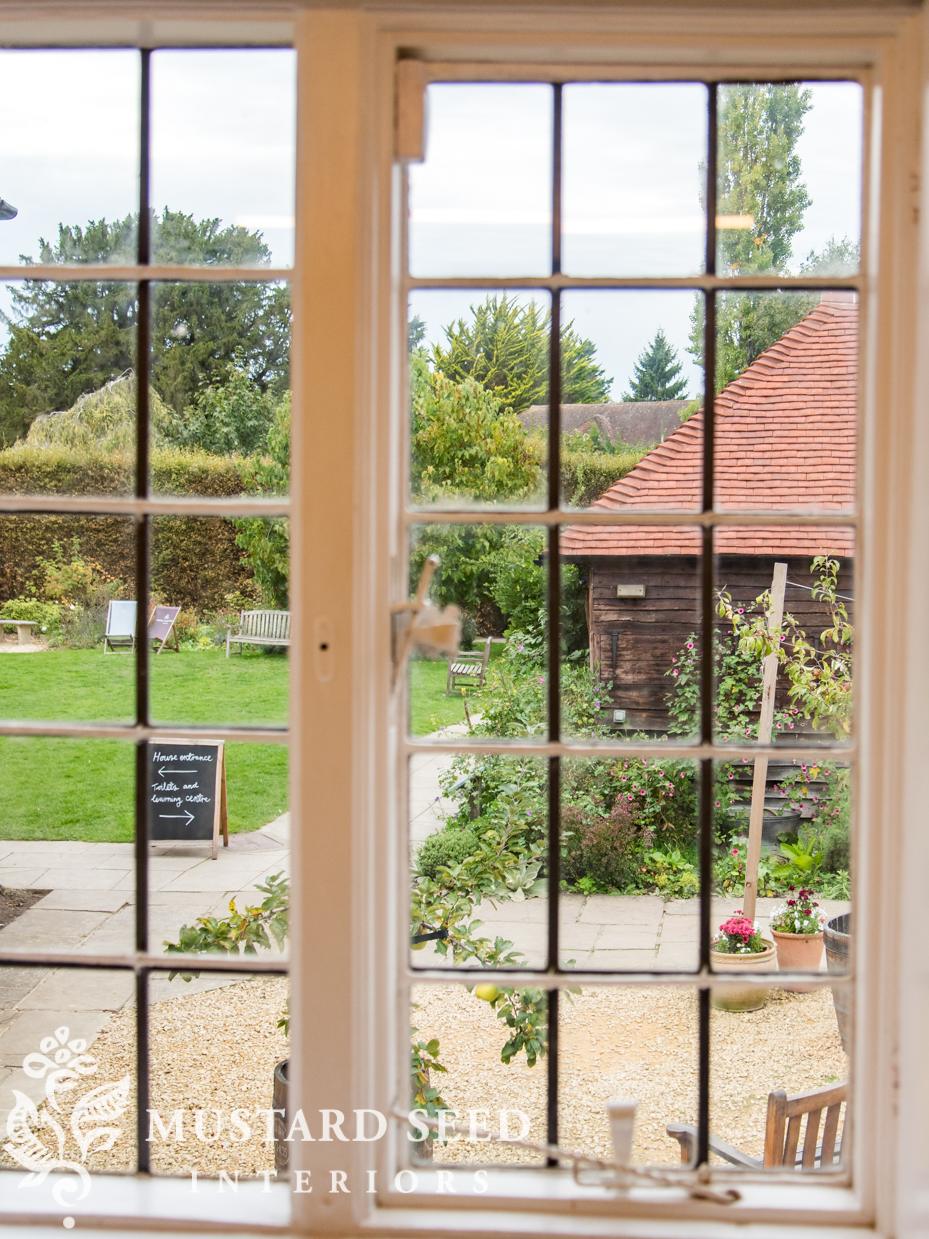
Once we were finished touring the home’s interior, we walked around the garden for a bit, which was now almost empty of other people.
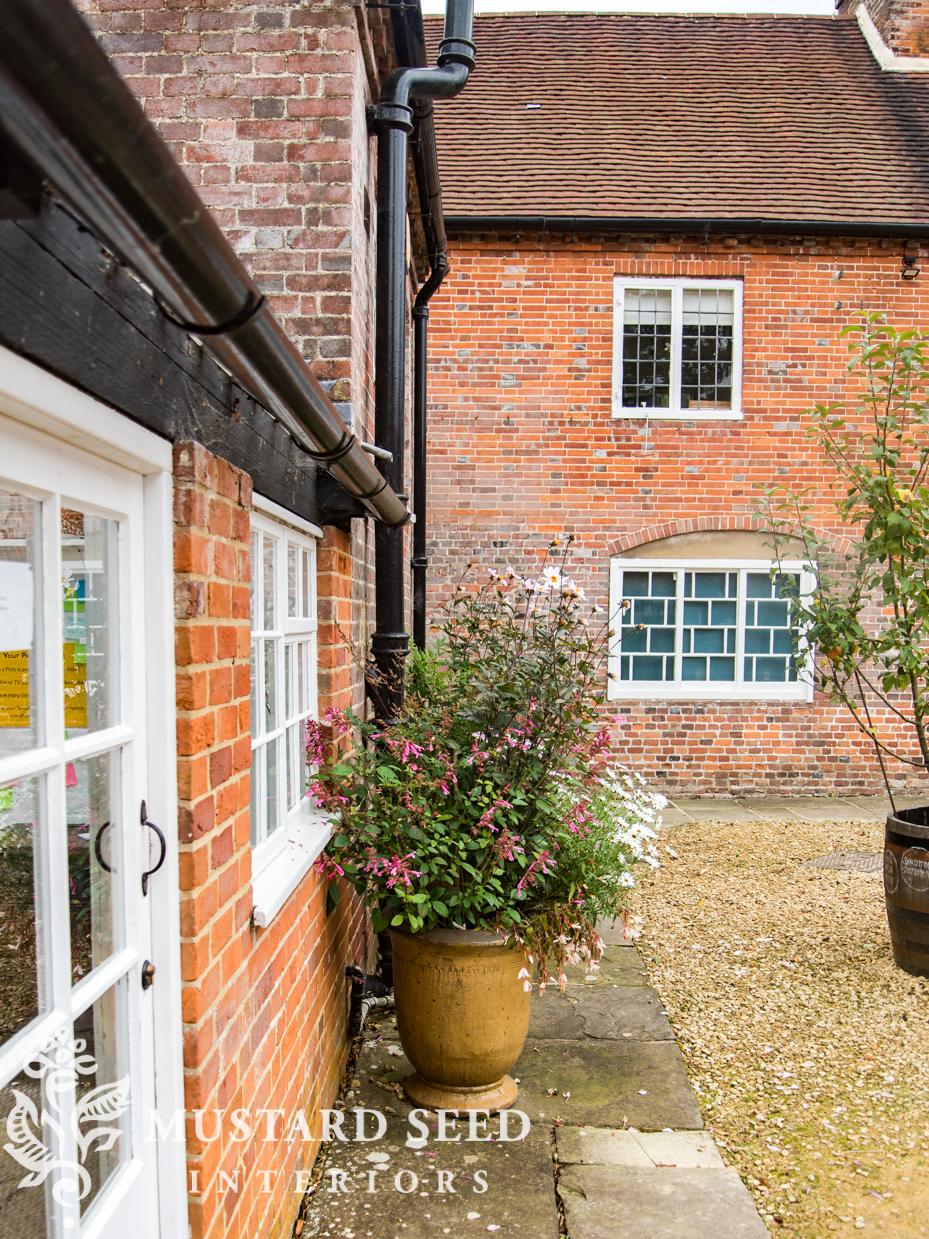
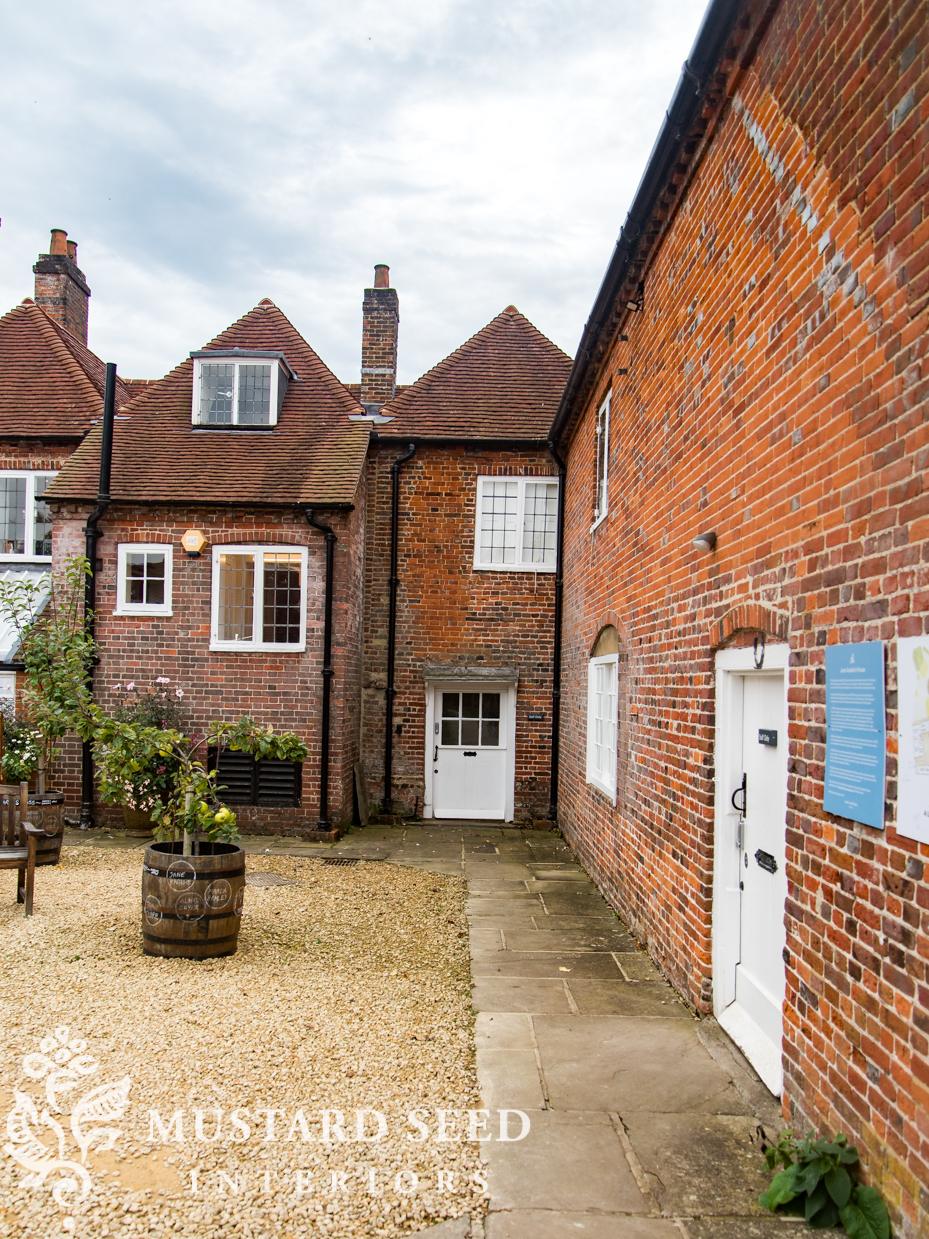
Here are some details about the garden and how it is maintained today…
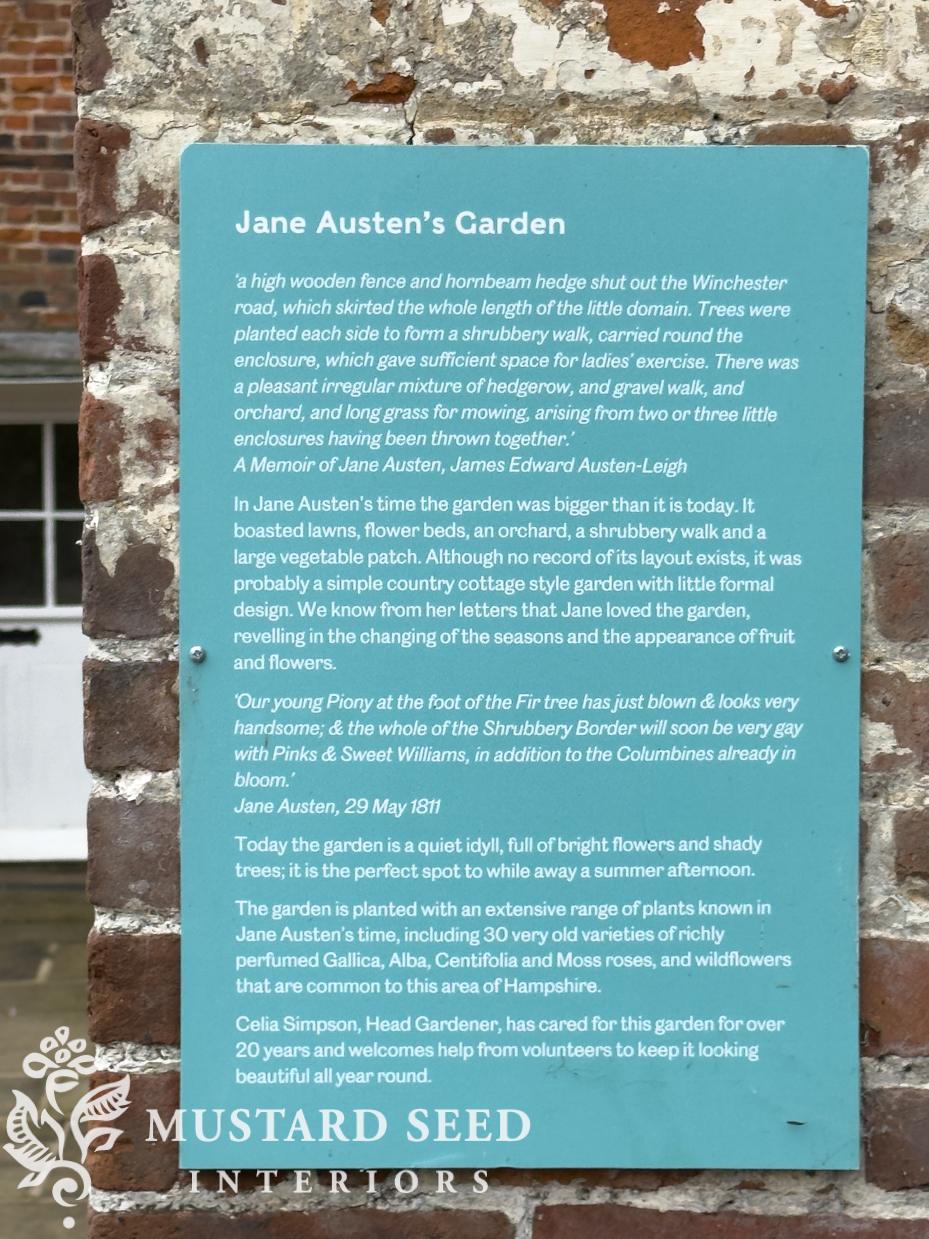
As I read through Sense & Sensibility last week, it stood out to me how often lavender water was used as a remedy, and reinforced what a garden staple lavender would’ve been. I now realize I have been grossly underutilizing lavender water when my constitution is poor.
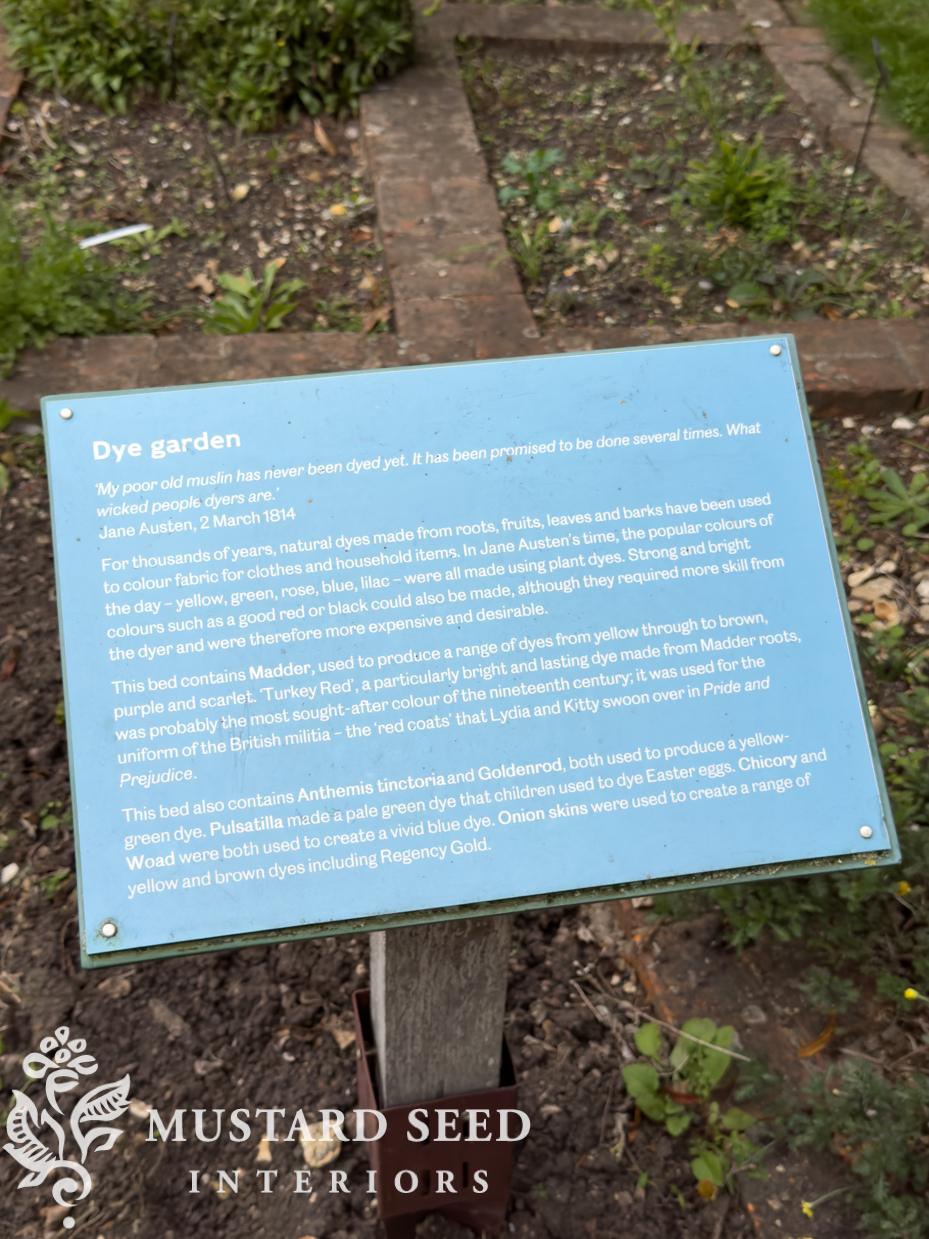
The most interesting part of the garden, to me, was the dye garden. I didn’t realize dye gardens were even a thing, and now I feel woefully incomplete for not having one.
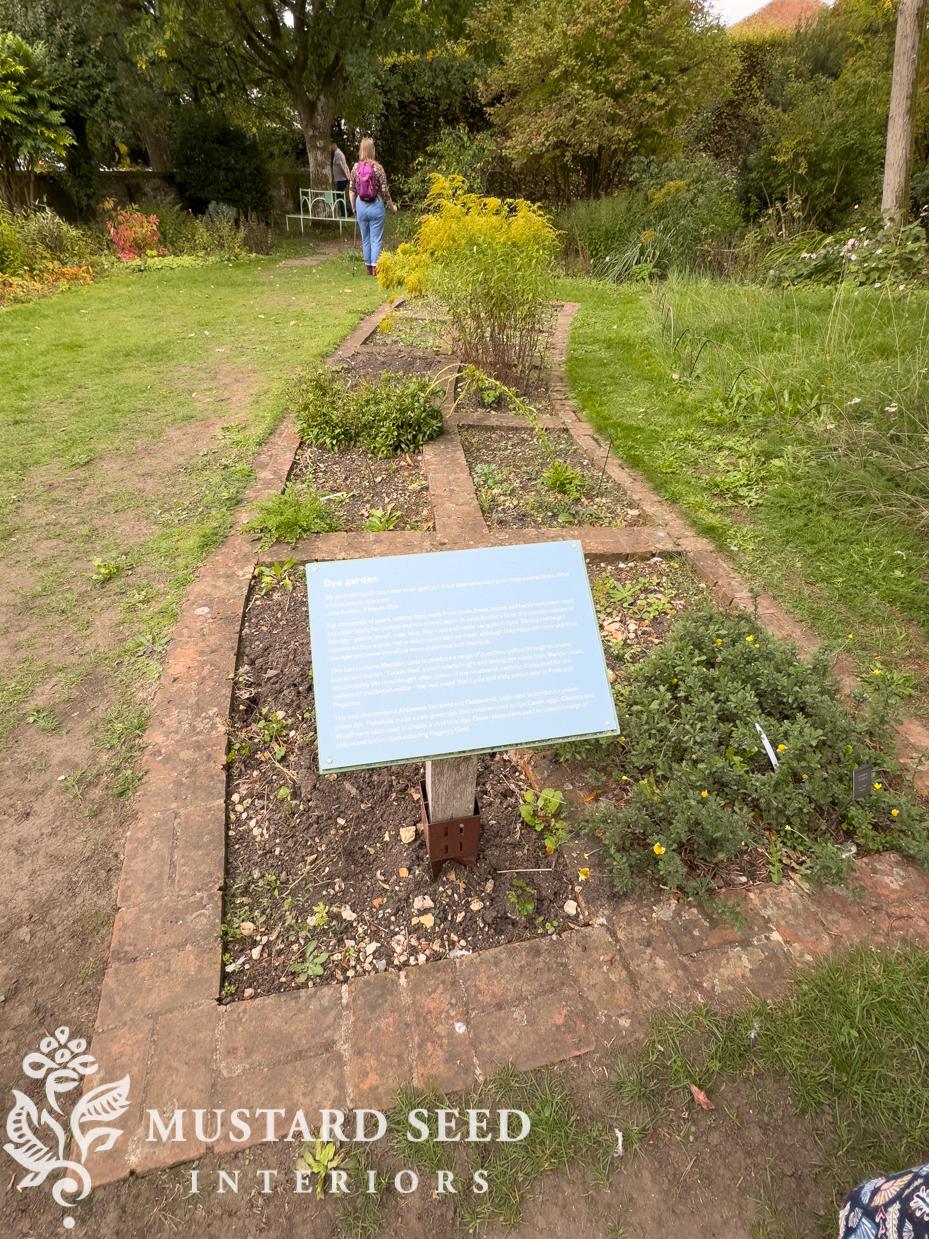
Here are the details of the essential plants for a dye garden in case this knowledge has stirred up similar feelings in you…
In touring the house and reading more about Jane Austen’s life, I realize I didn’t know as much about her as I thought I did. It’s been fun reading through her letters and books to get to know her more.
Once we were finished touring the garden, we walked through Chawton and paid a quick visit to Chawton House. I’ll share about that in my final post about my time in England…
PS – Dye garden incoming.

You can catch up on the rest of my English travelogue in these posts…
Arrival & Burford | “gateway to the Cotswolds”









11 Responses
Thank you for this post! Wonderful, and your timing is spot-on … I’ve just finished watching the PBS 4-part series “Miss Austen,” much of which was filmed at this house. Your photos make me want to watch it again, just to enjoy the house!
Thank you, Marian.
A dye garden can be stunning; they used bright, beautiful colours. It would be such a lovely addition to your garden.
Thank you, Marian for posting this!
It is gray here in Ohio and this post brightened it up!
Truly, thank you for sharing. I, too, enjoy the little things when touring a dwelling museum and imagining the day to day goings-on of the occupants. Fascinating! I’ve been thoroughly enjoying your posts from England. I think I know where our next holiday will be.
What a wonderful little view into the life of Jane Austen! Thank you so much for making her come alive so much more than just reading about her in her environment. Now I can imagine Jane in there, writing, entertaining and living her life with her books and her garden.
I had many of the same feelings when we toured Anne Frank’s house, imagining how it was to live there and remain utterly quiet during the day. The attic they lived in, was so so tiny for all the people that were there. And speaking of dyes, I recently learned about the cochineal bug which leaves a cottony material on the pads of prickly pear here in Arizona. If you touch it, rub it between your fingers it looks like you pricked your finger. The color is so bright red. Mexicans use it as a dye for clothing and also coloring some foods. Recently, the Schmincke Co came out with a limited edition, watercolor paint called Cochineal Red that is a gorgeous hue; you can be sure that I grabbed a tube immediately!
Dear Marian,
“Clunky”, and homely, and historically refreshing. Thank you for this marvelous glimpse into the life of my favorite Jane,
Diney from Mercer Island
I really enjoyed this post for several reasons. I recently watched PBS miniseries Miss Austin and this was several months after I had seen, on PBS as well, Lucy Worsley’s tour on all of Jane Austin’s homes. Jane Austen is a favorite subject of British Historian Lucy Worsley and she wrote a book about her, which should be arriving any day so I look forward to reading that as well. After all these years so many of us our fans of Jane Austin.
On another note, K3Ncloths on YouTube is a British women who is a textile aficionado and she has done several videos on dying fabric with natural plant materials. Thanks for the lovely post.
That was fun sitting on my sofa at home. Warm and Cozy and No Jet Lag. Thank you it was delightful walking through Jane Austen’s home, and garden. Thank you for the free tour ha ha. Have A God Day 🤗
I love this tour! Thank you so much for taking the time to take photos and share your experience. Personally, I LOVE the clothing displayed. Especially the simple white dresses. I am astounded her desk was so small and that she wrote on small cards. Also, now I need a dye garden too. Oh the possibilities!