
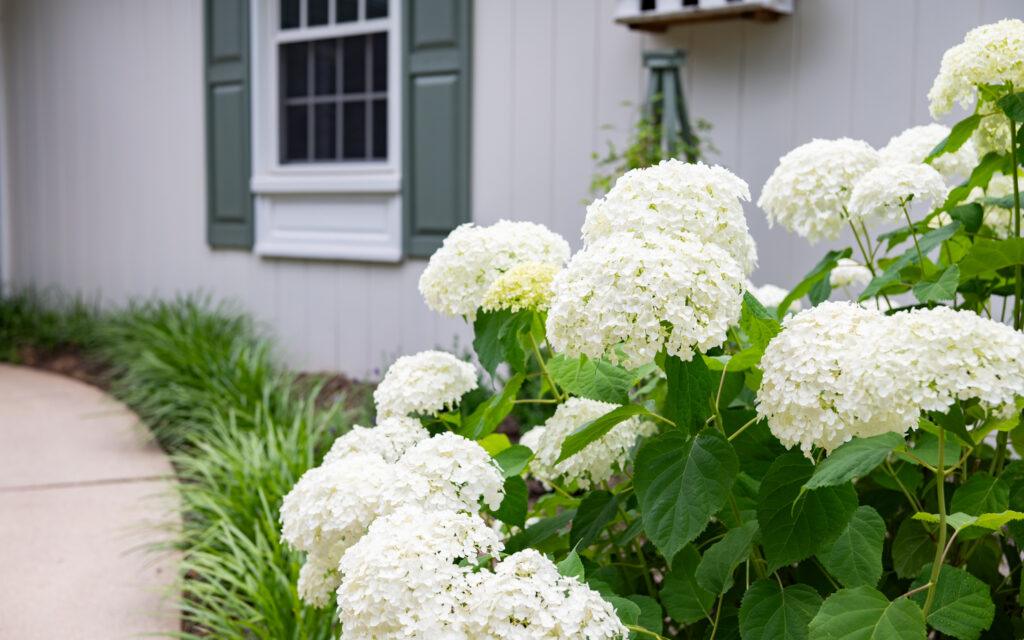
If you’ve been following our landscaping projects over the past few years, you are probably somewhat familiar with the Annabelle hydrangeas I was determined to plant. I purchased Annabelle hydrangeas for our house in Minnesota on a whim at the grocery store for around $15/each, and they thrived. They were the best hydrangeas I ever had. Prolific bloomers, great for drying in the fall, and so beautiful. They were also pretty easy. I didn’t really do anything for them in our Minnesota yard beyond watering and adding a bit of HollyTone fertilizer when I remembered to.
Knowing they would also work in our current gardening zone in Maryland, I hunted for them a couple of years ago and ended up purchasing four from a nursery about 30 minutes away. Well, they haven’t been as successful in our Maryland yard. They’ve started out pretty strong, but end up turning yellow and just look sad. You can see in the photos below from last year that their leaves are greenish-yellow and nowhere near the rich, dark green they should be.
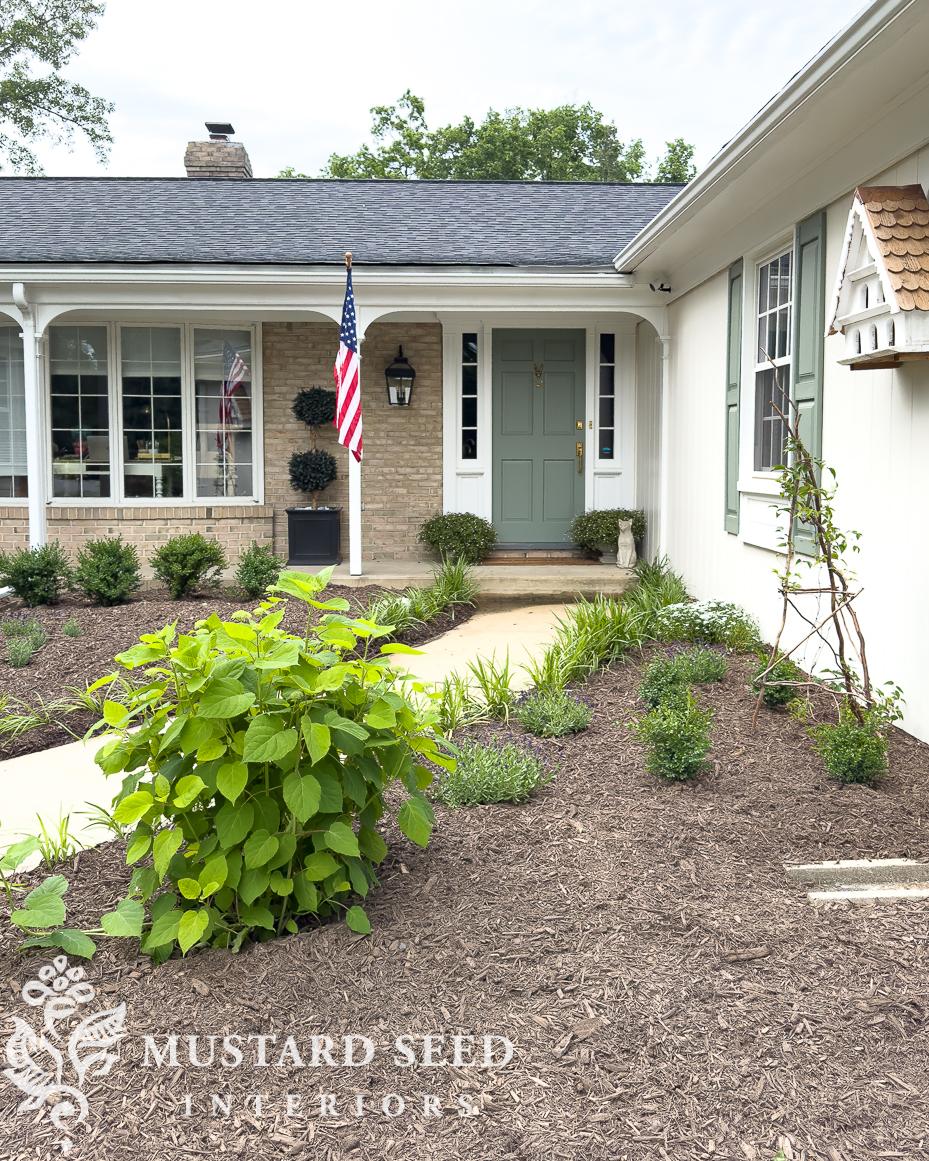
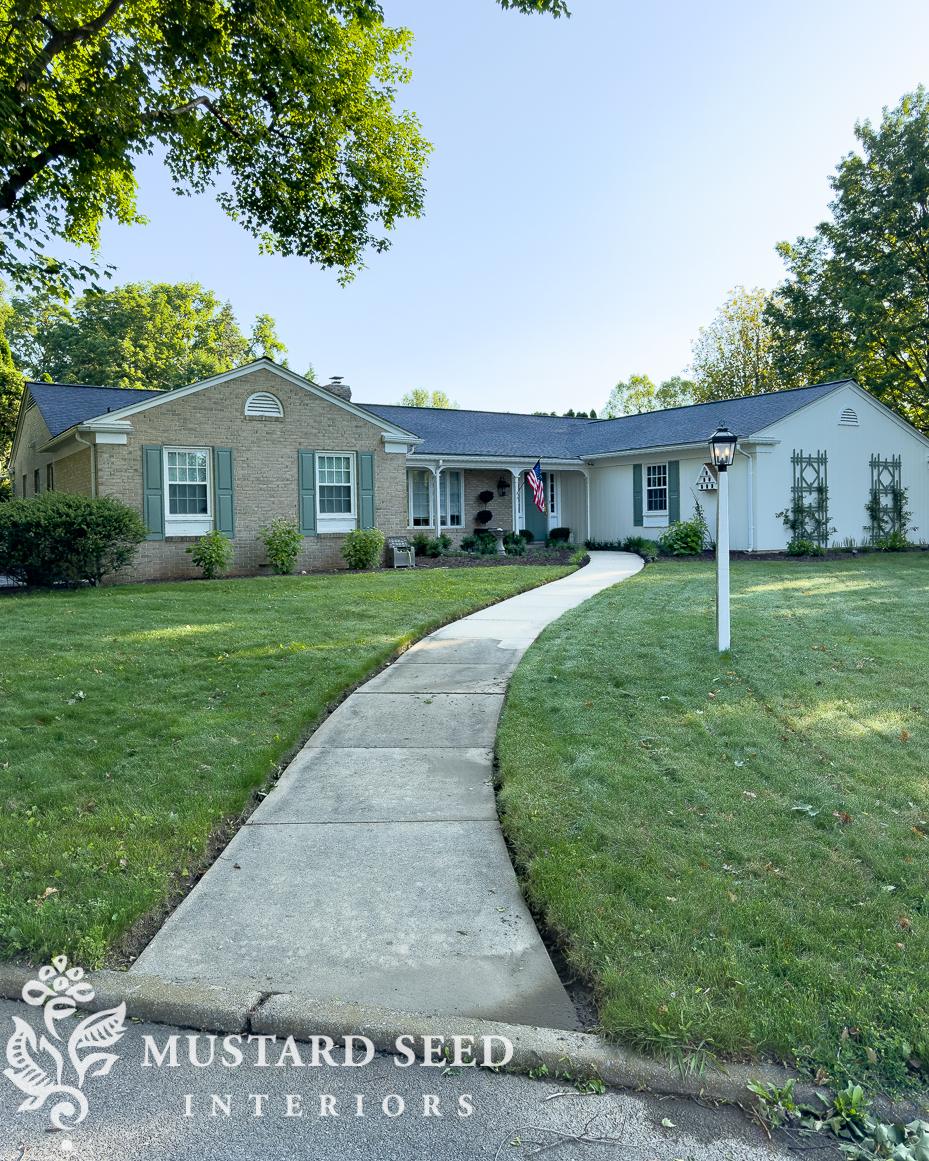
They started looking even worse as the summer wore on. (Marshall ran out of gas when powerwashing our front walk last year, and Jeff finally finished it this spring! It looks so sharp now that it’s finished.)
I was frustrated because I knew they had the potential to do well here. One of our neighbors has an established Annabelle hydrangea hedge, and they don’t seem to give it much attention (it’s never trimmed or pruned), yet it’s always lush, green, and loaded with blooms.
Anyway, I decided to try amending the soil around the Annabelles this year. I figured it couldn’t hurt and would at least rule out one possible problem. The soil here is rich clay, and not all plants and bushes love it. Since the bushes are already established, I dumped a bag of compost around the base of each one and raked it in a bit. It only took about 20 minutes or so for all four bushes. I watered each day, not only because hydrangeas are thirsty, but in the hopes that the nutrients from the compost would trickle down to the roots.
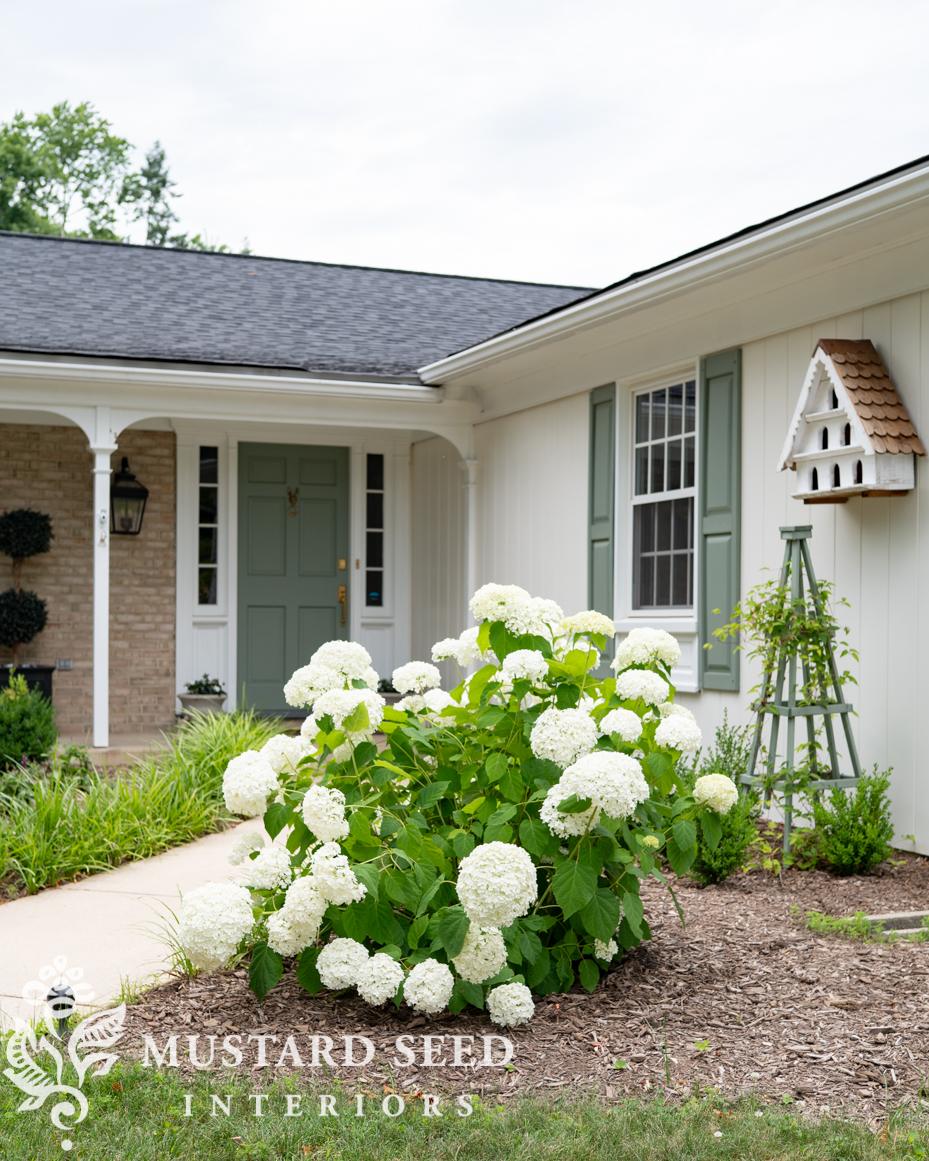
Well, it has been a success! I think I am going to even add another bag of compost around each one to see if I can get them even happier. The leaves still aren’t as dark green as the ones were in my Minnesota garden, but are definitely darker, the blooms look healthier, and the stems are stronger.
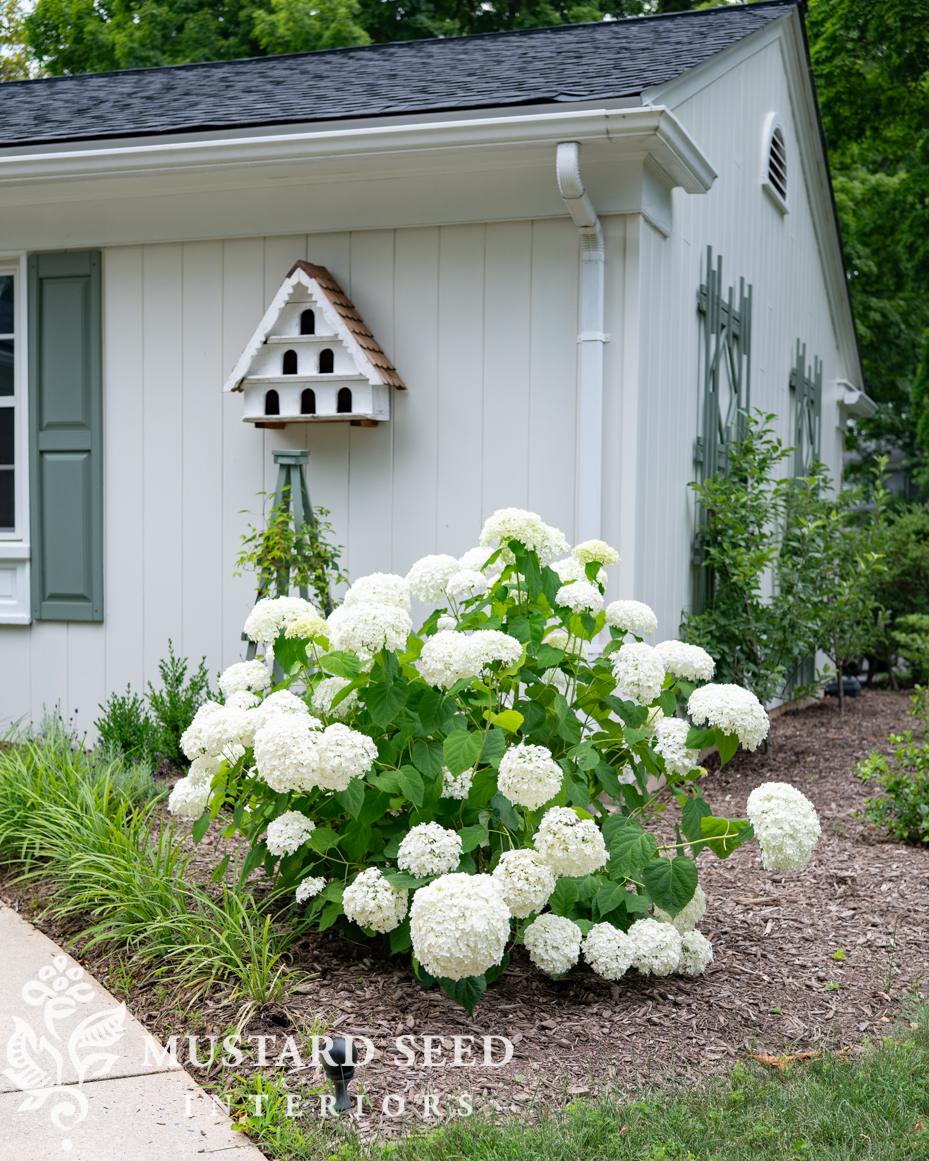
It makes me so happy they are doing well now. I was about ready to wave the white flag and move them somewhere else because they looked so pathetic.
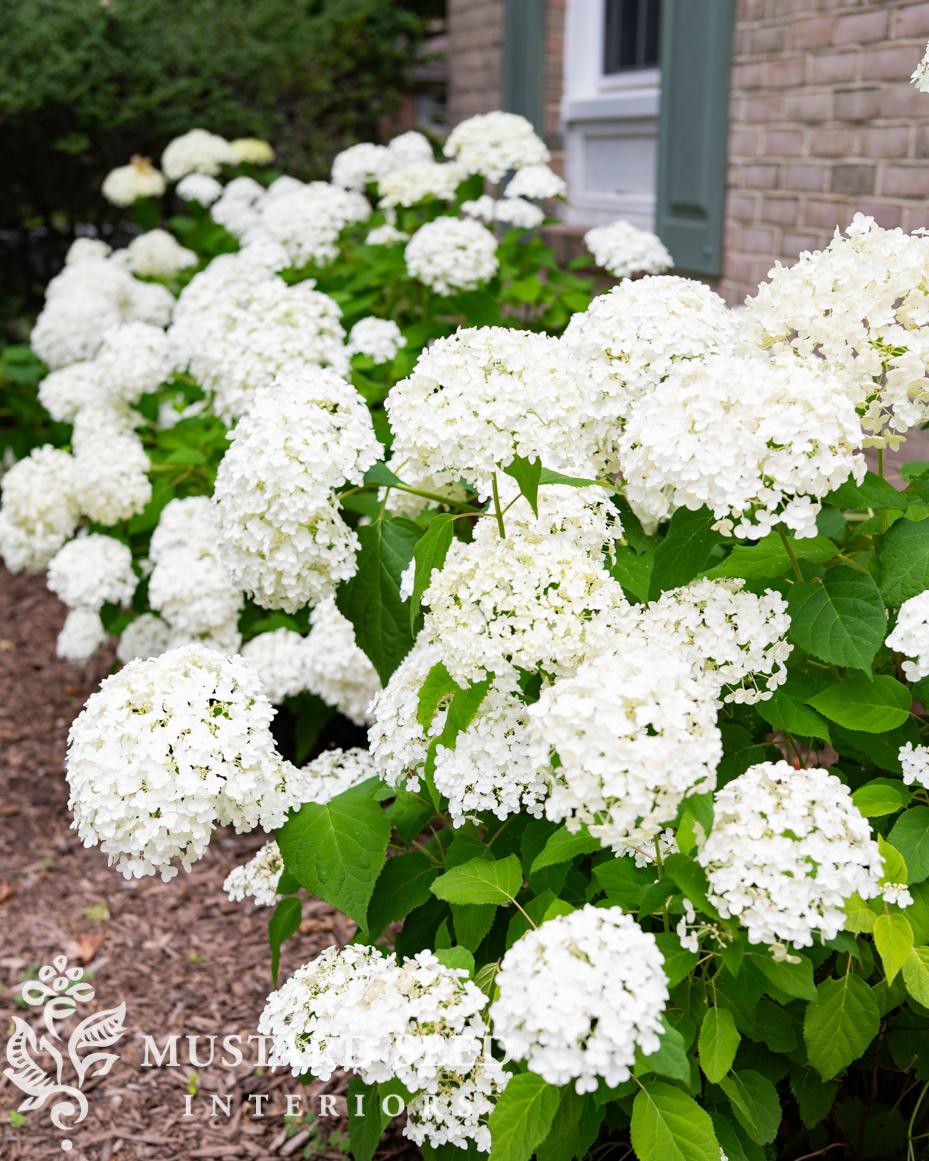
The only downside to Annabelle hydrangeas is that they will flop over in heavy rain. We’ve had a few significant rains, and these have stood up pretty well, but some sections have flopped. You can use peony cages and other supports to hold them up. When I inquired about them at some of my local nurseries, they told me that most places are now carrying Incrediball hydrangeas, or similar modern hybrids that won’t flop. Annabelles are old school, though, and I tend to lean in that direction when the option is available.
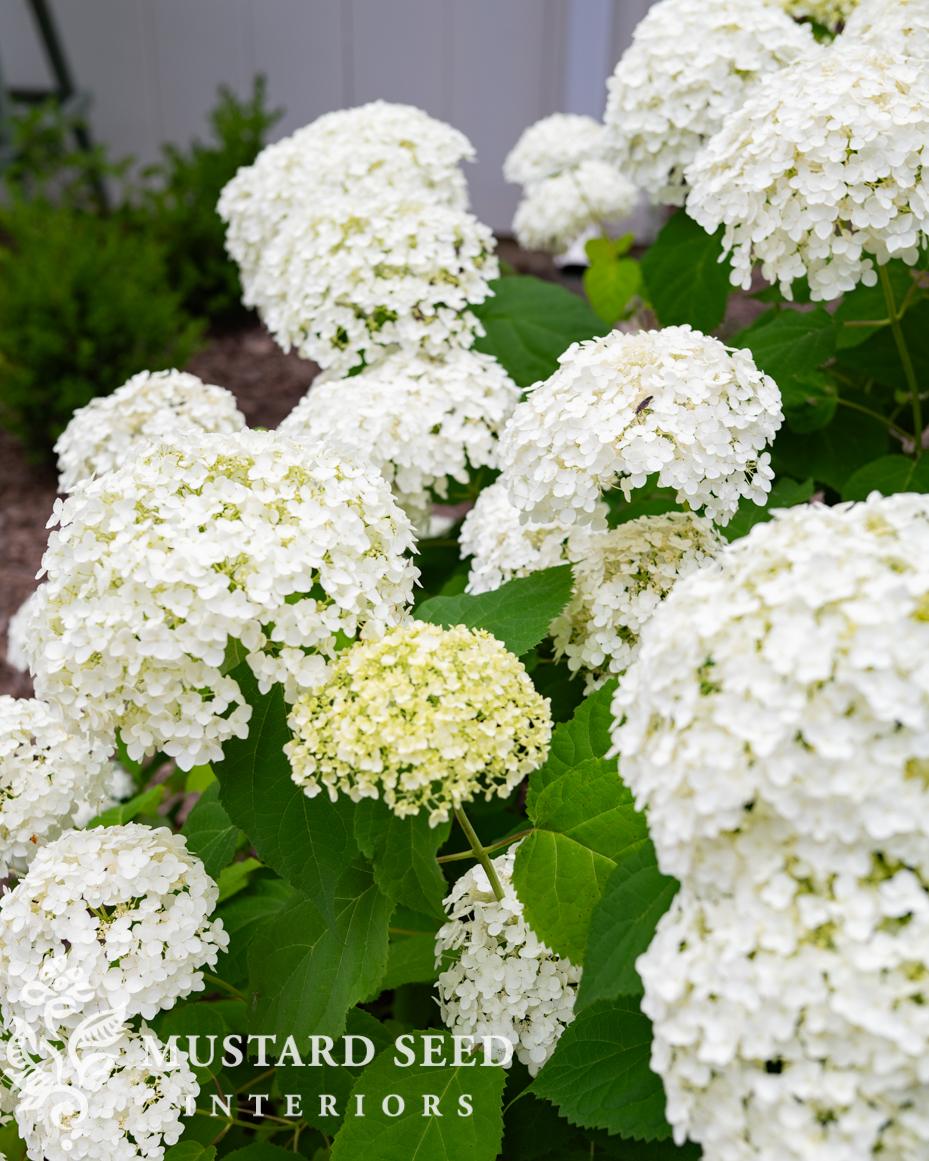
Everyone who goes on and on about how important soil is for plant health was right. Who knew? I always figured that if something wasn’t thriving, it was due to my ineptitude, not simply because it needed better dirt. Next time I plant a bush, I’ll show a bit more patience and care, and amend the soil while the ground is open. Gardening lesson 846 learned.

You can read about how to dry Annabelle hydrangeas HERE.
Find more gardening notes, posts, and inspiration HERE.













4 Responses
Marian,
I have learned this same lesson recently. We planted six new Daphnes in our front garden beds recently. I decided to actually look up “how to plant a shrub”, since the one Daphne planted by the prior owner died shortly after we moved in. We followed instructions to the letter, most of which had to do with enriching the soil. Five weeks in all six are happily adjusting!
Now if I can just make sure the deer don’t eat them…
It’s a good gardening lesson to learn for all of us. I think, too, the fact that our soil here on the east side of the Appalachian Mountains is older and more worn out than the soil in the upper mid-west. It needs all the help we can give it. I recall on a trip to Alaska, I was stunned at how lush and BIG the flower blooms were. A local told me it was the volcanic dirt. Who knew?
Soil is composed of organic matter (plant material breaking down), minerals such as nitrogen, potassium, potassium, etc, gasses (i.e. oxygen, which the roots of plants need and why compacted soils are so bad for plants), water, and organisms (earthworms, nematodes, fungi, bacteria, etc). The bedrock will affect pH (limestone leads to a higher pH and a “sweeter” soil, while granite can contribute to a more acidic soil). So it is constantly being replenished, with winter freeze/thaw cycles and worms and microbes digesting organic matter, which allows nutrients to work their way down into the soil. The best thing you can do for your herbaceous and woody plants is to site them appropriately and to give them organic matter in the form of wood or leaf mulch!
Oops-darn autocorrect changed potash to potassium!